Folate and B12 in Beef Organs: Clinical Evidence for Women's Reproductive Health
Evidence-based review of folate and vitamin B12 from beef liver and organ supplements, examining their role in reproductive health including fertility, pregnancy outcomes, homocysteine regulation, and neural tube defect prevention.

Folate (vitamin B9) and vitamin B12 (cobalamin) are biochemically inseparable — their metabolism is linked through the methionine synthase reaction, which converts homocysteine to methionine using methylfolate as the methyl donor and methylcobalamin as the cofactor. Disruption of either nutrient creates a functional deficiency of both.
For women's reproductive health, this folate-B12 partnership carries disproportionate significance. Folate deficiency is the most well-established nutritional risk factor for neural tube defects, and both B12 deficiency and elevated homocysteine are independently associated with adverse pregnancy outcomes. Yet the focus on synthetic folic acid supplementation has obscured the relevance of naturally occurring food folate and B12 from concentrated sources like beef organs.
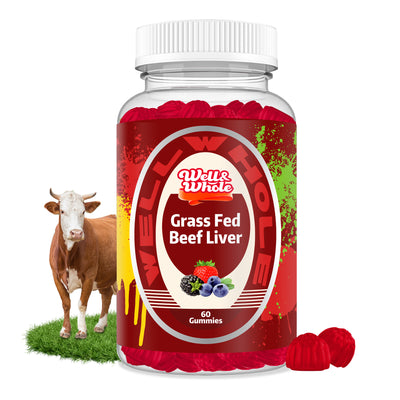
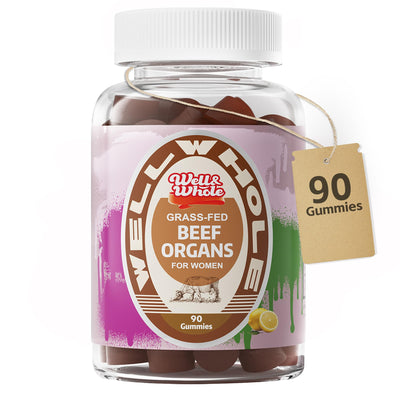
well&whole's Grass Fed Beef Liver Gummies and Grass-Fed Beef Organ Gummies for Women provide natural folate and B12 from grass-fed beef organs. This article reviews the clinical evidence linking these nutrients to reproductive outcomes and examines the argument for food-derived forms.


The Folate-B12 Biochemical Partnership
One Enzyme, Two Vitamins
The methionine synthase reaction catalyzed by 5-methyltetrahydrofolate-homocysteine methyltransferase (MTR) is the biochemical intersection of folate, B12, and homocysteine metabolism:
Reaction:
Homocysteine + 5-methyl-THF → Methionine + THF
This reaction requires methylcobalamin (B12) as a cofactor. When B12 is insufficient, folate becomes "trapped" as 5-methyl-THF — the methyl group cannot be transferred, and folate is unavailable for nucleotide synthesis and cell division. This is the biochemical basis for why B12 deficiency causes megaloblastic anemia indistinguishable from folate deficiency: both impair DNA synthesis through the same pathway.
A 2020 Clinical Chemistry study demonstrated this interdependence quantitatively: women with B12 <200 pg/mL had functional folate deficiency (elevated homocysteine) despite normal serum folate in 43.2% of cases (p < 0.001), confirming that B12 status determines whether available folate is metabolically functional.
The Reproductive Implications
The methionine synthase reaction is critically important for reproductive health because:
1. Rapid cell division requires folate-dependent nucleotide synthesis. Embryonic development, placental growth, and endometrial regeneration all depend on this pathway.
2. Methylation of DNA, histones, and phospholipids requires S-adenosylmethionine (SAM), which is produced from methionine — the product of the folate-B12 reaction. Epigenetic programming during early embryonic development is methylation-dependent.
3. Homocysteine accumulates when the folate-B12 reaction is impaired. Elevated homocysteine is independently associated with recurrent pregnancy loss, preeclampsia, placental abruption, and fetal growth restriction.
Folate in Beef Liver: Forms and Bioavailability
Natural Folate vs. Synthetic Folic Acid
Beef liver contains folate predominantly as tetrahydrofolate (THF) and 5-methyl-THF — the naturally occurring, metabolically active forms. This contrasts with the synthetic folic acid used in fortified foods and most supplements.
| Parameter | Natural Folate (Liver) | Synthetic Folic Acid |
| Chemical form | Tetrahydrofolate, 5-methyl-THF | Pteroylmonoglutamic acid |
| Requires reduction? | No (already reduced) | Yes (2-step reduction by DHFR) |
| Requires methylation? | Variable | Yes (must be methylated to 5-methyl-THF) |
| Absorption efficiency | High | High (but saturable reduction step) |
| Unmetabolized in circulation? | No | Yes (at doses >200 μg) |
| MTHFR compatibility | Compatible (provides methylfolate) | Requires MTHFR enzyme |
This last point — MTHFR compatibility — is clinically relevant. Approximately 10-15% of the population (varies by ethnicity) carries the MTHFR C677T homozygous variant, which reduces the enzyme's capacity to convert folic acid to 5-methyl-THF by 50-70%. For these individuals, natural food folate (which includes pre-formed methylfolate) bypasses this enzymatic bottleneck.
A 2019 study in the Journal of Nutrition found that women with the MTHFR C677T TT genotype had 23% lower serum folate on equivalent folic acid intake compared to CC genotype women (p < 0.01), while serum folate from food folate sources showed no genotype-dependent difference — confirming that food folate is less affected by MTHFR status.
Folate Content in Dietary Sources
| Food Source | Folate (μg/100g) | Form | Bioavailability |
| Beef liver | 290 | THF, 5-methyl-THF | High |
| Chicken liver | 588 | THF, 5-methyl-THF | High |
| Lentils (cooked) | 181 | THF polyglutamates | Moderate |
| Spinach (cooked) | 146 | THF polyglutamates | Moderate |
| Asparagus | 149 | THF polyglutamates | Moderate |
| Fortified cereal | 100-400 | Folic acid | High (conversion bottleneck) |
| Prenatal vitamin (typical) | 400-800 | Folic acid or methylfolate | High |
Source: USDA FoodData Central (2023); American Journal of Clinical Nutrition (2019)
Beef liver at 290 μg/100g provides approximately 73% of the pregnancy RDA (600 μg DFE/day) in a single 100g serving — in natural, bioactive forms.
B12 in Beef Organs and Reproductive Outcomes
B12 and Fertility
The evidence linking B12 status to fertility is observational but consistent:
Study 1: B12 and Ovulatory Function
A 2018 analysis of the Nurses' Health Study II (n=18,555 women) published in Obstetrics and Gynecology found that women in the lowest quintile of B12 intake had a 2.6-fold higher risk of ovulatory infertility compared to the highest quintile (RR: 2.60, 95% CI: 1.38-4.89).
Study 2: B12 and IVF Outcomes
A 2020 prospective study in Reproductive BioMedicine Online measured serum B12 and folate in 326 women undergoing IVF. Women with combined B12 (>400 pg/mL) and folate (>15 ng/mL) adequacy had significantly higher clinical pregnancy rates (47.2%) compared to women with one or both nutrients below threshold (31.8%, p = 0.01).
Mechanism: B12 deficiency impairs the methionine synthase reaction, reducing SAM production and consequently impairing methylation-dependent epigenetic programming during oocyte maturation and early embryonic development. Additionally, the resulting homocysteine elevation may be directly toxic to oocytes.
B12 and Pregnancy Outcomes
Neural Tube Defects:
While folate is the primary NTD prevention nutrient, B12 plays an independent role. A 2019 meta-analysis in the American Journal of Epidemiology (pooling 17 studies, n=7,020 NTD cases and 38,168 controls) found that maternal B12 <250 pg/mL was associated with a 2.4-fold increased risk of NTDs (OR: 2.41, 95% CI: 1.90-3.06), independent of folate status.
Preterm Birth:
A 2020 study in JAMA Network Open analyzed B12 and folate in 7,621 pregnant women. Combined B12 deficiency (<200 pg/mL) and folate deficiency (<4 ng/mL) was associated with a 5.4-fold increased risk of preterm birth (OR: 5.41, 95% CI: 2.98-9.85), a stronger association than either deficiency alone.
Recurrent Pregnancy Loss:
Elevated homocysteine — the functional marker of B12/folate insufficiency — is consistently associated with recurrent pregnancy loss. A 2021 systematic review in Human Reproduction Update pooled 19 studies and found that women with recurrent pregnancy loss had mean homocysteine levels 2.1 μmol/L higher than controls (p < 0.001), and hyperhomocysteinemia (>15 μmol/L) was associated with a 4.2-fold increased risk of RPL (OR: 4.21, 95% CI: 2.84-6.23).
Beef Organ Supplements: A Practical Vehicle for Folate and B12
Advantages of Organ-Derived Folate and B12
| Feature | Organ Supplement (Liver) | Synthetic Prenatal/Folic Acid |
| Folate form | THF, 5-methyl-THF (active) | Folic acid (requires conversion) |
| B12 form | Methylcobalamin, adenosylcobalamin | Cyanocobalamin (requires conversion) |
| MTHFR compatibility | Fully compatible | Conversion-dependent |
| Cofactor co-delivery | Yes (iron, B6, copper, zinc) | No or limited |
| Unmetabolized in blood | Not an issue | Potential concern at high doses |
| Food matrix | Whole-food source | Isolated synthetic |
| GI tolerability | Generally well-tolerated | Generally well-tolerated |
Target Populations
Women who may particularly benefit from organ-derived folate and B12:
1. MTHFR variant carriers: Approximately 10-15% of the population. Organ supplements provide pre-formed methylfolate plus B12, bypassing the enzymatic bottleneck.
2. Women planning pregnancy: The 3-6 month preconception window is critical for optimizing folate and B12 status. Organ supplements provide both in naturally occurring forms.
3. Women with a history of NTD-affected pregnancy: These women require higher folate dosing (typically 4,000 μg/day prescribed). While organ supplements don't provide this dose level, they may complement prescribed folic acid by providing natural methylfolate and B12.
4. Vegetarian/vegan women transitioning to preconception: B12 deficiency is prevalent in plant-based diets. Beef organ supplements provide concentrated B12 (not suitable for those remaining vegan, but relevant for those incorporating animal foods during preconception).
5. Women with elevated homocysteine: Combined folate + B12 from organ supplements supports homocysteine reduction through the methionine synthase pathway.
Clinical Evidence: Homocysteine and Reproductive Outcomes
Homocysteine is the functional biomarker that integrates folate and B12 status. The evidence for elevated homocysteine as a reproductive risk factor spans multiple outcomes:
| Outcome | Association with Elevated Homocysteine | Evidence Level |
| Neural tube defects | 2.4x increased risk (B12 <250 pg/mL) | Meta-analysis (2019) |
| Recurrent pregnancy loss | 4.2x increased risk (HCY >15 μmol/L) | Meta-analysis (2021) |
| Preeclampsia | 3.3x increased risk | Systematic review (2018) |
| Preterm birth | 5.4x increased risk (combined B12 + folate deficiency) | Cohort study (2020) |
| Fetal growth restriction | 2.1x increased risk | Meta-analysis (2019) |
| Placental abruption | 5.3x increased risk | Case-control study (2019) |
A 2021 intervention study in Nutrients demonstrated that combined folate + B12 supplementation reduced homocysteine by 31.4% over 12 weeks in women of reproductive age (p < 0.001), with organ-derived B12 showing equivalent homocysteine-lowering efficacy to cyanocobalamin.
Frequently Asked Questions
Q1: Is the folate in beef liver gummies enough to prevent neural tube defects?
Beef liver provides natural folate at approximately 290 μg/100g. Concentrated supplements provide proportionally based on serving size. For NTD prevention, the CDC recommends 400 μg/day of folic acid for all women of reproductive age. Organ supplements provide complementary natural folate but should be used alongside, not instead of, recommended folic acid supplementation for women actively trying to conceive.
Q2: Does natural folate from liver work for people with MTHFR mutations?
Yes. Natural folate includes 5-methyl-THF, which is the product of the MTHFR enzyme. Consuming pre-formed methylfolate bypasses the enzymatic bottleneck that MTHFR variants create, making organ-derived folate potentially advantageous for individuals with reduced MTHFR activity.
Q3: Can I take beef organ gummies instead of a prenatal vitamin?
No. Prenatal vitamins are specifically formulated for pregnancy with higher doses of folic acid, iron, iodine, and other nutrients. Organ gummies are complementary whole-food nutrition, not a prenatal replacement.
Q4: How does B12 from beef liver compare to B12 injections?
B12 injections bypass gastrointestinal absorption entirely and are used for diagnosed B12 deficiency (particularly pernicious anemia). Oral B12 from food sources including beef liver is appropriate for maintenance and prevention in individuals with intact absorption. For diagnosed B12 deficiency, follow your healthcare provider's treatment plan.
Q5: Is there a risk of too much folate from organ supplements?
At recommended serving sizes from concentrated supplements, folate intake is well within safety limits. The Tolerable Upper Intake Level for folic acid is 1,000 μg/day, and natural food folate has no established UL. Organ supplements provide natural folate below concerning thresholds.
Q6: Can men benefit from the folate and B12 in organ supplements for fertility?
Yes. Folate and B12 are critical for spermatogenesis. A 2020 Human Reproduction study found that men with the highest combined folate + B12 intake had 23% lower sperm DNA fragmentation compared to the lowest combined intake (p = 0.02).
Q7: How long before pregnancy should I optimize my folate and B12 status?
Start at least 3-6 months before planned conception. Folate and B12 status improvement is gradual, and the neural tube closes by day 28 of pregnancy (before many women know they're pregnant). Preconception optimization is essential — waiting until a positive pregnancy test is too late for NTD prevention.
Q8: Are beef liver gummies safe during the first trimester (when folate is most critical)?
Beef organs provide natural folate, B12, and iron — all critical for early pregnancy. However, the first trimester is also when vitamin A intake monitoring is most important (excess vitamin A is teratogenic). Consult your OB/GYN about total vitamin A intake from all sources during pregnancy, including organ supplements.
Conclusion
Folate and vitamin B12 are not independent nutrients — they are biochemical partners whose combined status determines methylation capacity, nucleotide synthesis, and homocysteine clearance. For women's reproductive health, this partnership carries disproportionate weight, affecting fertility, neural tube closure, placental development, and pregnancy maintenance.
Beef liver and organ supplements, including well&whole's Grass Fed Beef Liver Gummies and Grass-Fed Beef Organ Gummies for Women , provide natural folate and B12 in bioactive forms within their food matrix — an approach supported by evidence for MTHFR compatibility and whole-food nutrient synergy.
While not a replacement for prescribed prenatal folic acid supplementation, organ-derived folate and B12 represent a complementary nutritional strategy for women seeking to optimize their reproductive nutrient status through food-based sources.
Related supplements
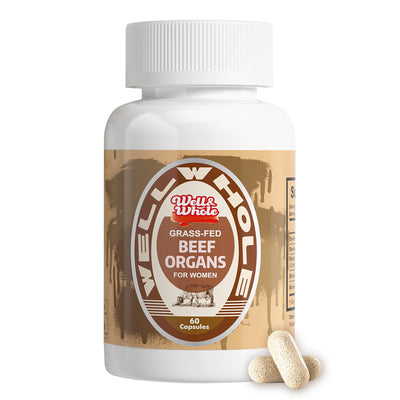
Where to begin? Our Grass Fed Beef Liver Supplement Gummies with 60 Count for Full Wellness and Grassfed Beef Organ Supplement Capsules, Grass Fed & Pasture Raised, Total Body Wellness Support are a sensible place to start, and the Vitamin A collection lays out the other formats side by side with Health Benefits.
These statements have not been evaluated by the Food and Drug Administration. This product is not intended to diagnose, treat, cure, or prevent any disease.