Evening Primrose Oil: What the Research Actually Shows

Evening primrose oil has been studied for several women's health complaints, and the honest summary is mixed: the strongest signal is for breast pain tied to the menstrual cycle, the evidence for PMS overall is weaker than its reputation suggests, and trials in menopause comfort and eczema have largely been disappointing. Here is what the research actually shows, and where this oil fits beside fish oil rather than replacing it.
Key takeaways
- Evening primrose oil is rich in gamma-linolenic acid (GLA), an omega-6 fat the body converts into anti-inflammatory signaling molecules.
- The best-studied use is cyclical mastalgia, breast pain that follows the menstrual cycle, with mixed but not dismissive results.
- Large reviews have found little reliable benefit for PMS symptoms or menopausal hot flashes.
- It works through a different pathway than fish oil, so the two are complements, not substitutes.
- Typical study doses run 1 to 3 grams daily, and people with seizure disorders or on certain blood thinners should talk to a clinician first.
What GLA Actually Does
Most modern diets contain plenty of omega-6 fats but very little gamma-linolenic acid. The body converts dietary linoleic acid toward GLA only through a slow, rate-limited enzyme step, which is why direct GLA from evening primrose oil interested researchers in the first place. GLA is further converted into molecules such as DGLA, which can dampen inflammatory signaling. In theory, supplementing bypasses the bottleneck. In practice, how much of that theory shows up in symptoms depends on the condition being studied, and this is where the women's health evidence needs a careful look.
Cyclical Breast Pain: The Strongest Case
Cyclical mastalgia, breast pain and tenderness that rises and falls with the menstrual cycle, is the complaint with the most direct research. Small trials of evening primrose oil in women with cyclical breast pain have reported meaningful relief in some studies, while a well-known randomized trial in 1996 and later reviews concluded the effect may be largely placebo. Later reviews in the breast-health literature found the overall evidence inconclusive but noted some women do report real benefit. The practical reading: not a proven remedy, but a reasonable low-risk option a woman may discuss with her clinician for menstrual breast discomfort.
PMS, Menopause, and the Weaker Evidence
For premenstrual syndrome as a whole, the picture is less kind. Reviews of trials in women with PMS have generally found evening primrose oil no better than placebo once study quality is accounted for, despite decades of marketing aimed at exactly this audience. For menopause, trials in menopausal women looking at hot flashes and night sweats have mostly been small, short, and negative. A randomized trial in menopausal women found only modest differences from placebo.
Claims about skin have a similar shape: GLA is involved in skin barrier biology, and several eczema trials in children and adults examined primrose oil, but systematic reviews concluded it is unlikely to be effective for eczema. If a woman takes it and feels better, the placebo component is doing quiet work.
Evening Primrose Oil vs Fish Oil
The two oils are often compared and should not be. Fish oil delivers EPA and DHA, long-chain omega-3 fats with a deep evidence base for cardiovascular and triglyceride support. Evening primrose oil delivers GLA, an omega-6 that follows a separate enzymatic path. They compete for nothing in the body, which is why some formulations pair them. A woman already taking fish oil gains no omega-3 benefit by adding GLA; she is simply adding a different experiment.
Where It Fits in a Women's Wellness Routine
A woman weighing evening primrose oil should place it in context. Women's health supplement marketing is crowded, and hormonal claims are easy to make and hard to verify. The female body also changes across decades, and what a woman in her twenties notices around PMS is not what a menopausal woman is chasing. Primrose oil is best treated as one narrow, time-boxed experiment with a clear endpoint, while the fundamentals with stronger evidence behind them, consistent sleep, resistance exercise, confirmed iron status, and stress management, carry the heavier load for most women.
Doses, Safety, and Sensible Boundaries
Study doses range from roughly 1 to 3 grams of evening primrose oil daily, standardized by GLA content rather than total oil. It is generally well tolerated, with mild digestive upset the most common complaint. Two cautions matter: women with seizure disorders, and women taking anticoagulant or antiplatelet medication, should involve a clinician before use. Anyone choosing to try it for cyclical breast pain should give it two to three full menstrual cycles before judging, and should stop if nothing changes, because the honest answer may be that this particular woman is not a responder.
Frequently asked questions
What is evening primrose oil good for?
The best-studied use is cyclical breast pain tied to the menstrual cycle, where some small trials show benefit. Evidence for PMS generally, menopausal hot flashes, and eczema is weak to negative.
How long does evening primrose oil take to work?
For cyclical breast pain, trials typically run two to three full menstrual cycles before effects are judged. If nothing changes by then, you are probably not a responder.
Is evening primrose oil better than fish oil?
They are different tools, not competitors. Fish oil supplies omega-3 EPA and DHA with strong cardiovascular evidence; evening primrose oil supplies GLA on a separate pathway. Some people take both.
Who should not take evening primrose oil?
People with seizure disorders and anyone on anticoagulant or antiplatelet medication should consult a clinician first. Mild digestive upset is the most common side effect.
Related supplements
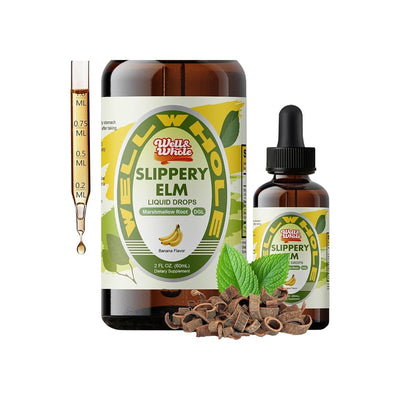
If you'd like to try it, Slippery Elm Liquid Drops, Marshmallow Root, Slippery Elm Bark Drops for Women, DGL Licorice Extract, Digestive Health, is the closest match to what we've covered here. Browse Health Benefits and Digestive Support to see how the alternatives compare.
These statements have not been evaluated by the Food and Drug Administration. This product is not intended to diagnose, treat, cure, or prevent any disease. Talk to a healthcare professional before starting any new supplement, especially if you are pregnant, nursing, taking medication, or managing a health condition.
These statements have not been evaluated by the Food and Drug Administration. This product is not intended to diagnose, treat, cure, or prevent any disease.