Essential and Nonessential Amino Acids List: Your Complete Guide to Protein Building Blocks

Essential and Nonessential Amino Acids List: Your Complete Guide to Protein Building Blocks
If you've ever looked at a nutrition label or researched protein supplements, you've probably seen the terms "essential" and "nonessential" amino acids. But what does that actually mean for your health? Understanding the essential and nonessential amino acids list is the first step toward making smarter decisions about your diet and supplementation. Whether you're an athlete, a busy professional, or simply someone who wants to feel their best, knowing which amino acids your body can't produce on its own is crucial. Let's dive into the full breakdown.
What Are Essential and Nonessential Amino Acids?
Amino acids are the building blocks of protein. Your body uses 20 different amino acids to build muscles, repair tissues, produce enzymes, and support immune function. Here's the key difference:
- Essential amino acids (EAAs) : Your body cannot make them. You must get them from food or supplements.
- Nonessential amino acids (NEAAs) : Your body can synthesize them internally, even if you don't consume them directly.
However, "nonessential" doesn't mean unimportant. Many NEAAs become conditionally essential during illness, stress, or intense training. For example, glutamine and arginine are often classified as conditionally essential because your body's demand can outpace its production.
Summary: Essential amino acids must come from diet; nonessential ones are made by your body, but both are vital for health.
The Complete Essential and Nonessential Amino Acids List
Here's the full essential and nonessential amino acids list you need to know, based on data from the National Institutes of Health (NIH) and the World Health Organization (WHO).
9 Essential Amino Acids (Must Get from Diet)
- Histidine – important for growth and tissue repair.
- Isoleucine – helps with muscle metabolism and energy regulation.
- Leucine – the primary driver of muscle protein synthesis.
- Lysine – plays a role in calcium absorption and collagen production.
- Methionine – needed for metabolism and detoxification.
- Phenylalanine – precursor for neurotransmitters like dopamine.
- Threonine – supports skin and connective tissue health.
- Tryptophan – precursor for serotonin and melatonin.
- Valine – stimulates muscle growth and tissue regeneration.
Note: Histidine is often considered essential only for infants, but adults also require it for optimal health (NIH, 2023).
11 Nonessential Amino Acids (Body Can Produce)
- Alanine – helps convert glucose into energy.
- Arginine – supports blood flow and immune function.
- Asparagine – important for nervous system function.
- Aspartic acid – involved in the urea cycle and neurotransmitter synthesis.
- Cysteine – a precursor to glutathione, a major antioxidant.
- Glutamine – the most abundant amino acid in muscles; supports gut health.
- Glutamic acid – plays a role in brain function.
- Glycine – helps with sleep, collagen production, and detoxification.
- Proline – essential for joint and skin health.
- Serine – involved in metabolism and immune function.
- Tyrosine – precursor for thyroid hormones and neurotransmitters.
Summary: Nine essential amino acids must come from diet; the body makes the other 11, but conditions like stress or illness can increase the need for certain nonessential ones.
Why Essential Amino Acids Are Critical for Health
When you think about protein quality, you're really thinking about whether a food contains a complete amino acid profile. Animal sources like meat, eggs, and dairy naturally contain all nine essential amino acids. Plant sources, such as beans, grains, and nuts, are often missing one or more EAAs. That's why plant-based essential amino acids can be harder to get without careful planning.
A deficiency in essential amino acids can lead to muscle wasting, weakened immunity, fatigue, and poor wound healing. For instance, low lysine can cause hair thinning, and insufficient tryptophan may affect mood and sleep. According to the World Health Organization, the recommended daily intake for EAAs varies by body weight, but most adults need around 0.8 grams of protein per kilogram of body weight, with EAAs making up about 20% of that total.
Summary: Without adequate EAAs, your body cannot repair tissues, produce enzymes, or maintain a strong immune system. Even a short-term shortage can affect your energy and recovery.
How to Ensure You Get Enough Essential Amino Acids (and Where well&whole Comes In)
You can obviously get EAAs from whole foods — eggs, chicken, fish, quinoa, soy, and dairy are excellent sources. But if you follow a plant-based diet, have a busy lifestyle, or have increased protein needs due to exercise or aging, supplementation becomes a smart solution. That's where well&whole enters the picture.
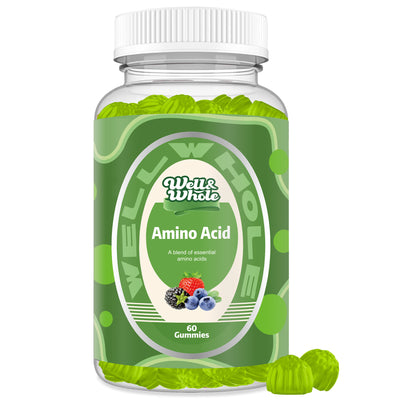
well&whole offers a complete amino acid profile supplement designed to deliver all nine essential amino acids in a precise ratio that mimics the ideal pattern recommended by the WHO. Each serving provides exactly what your body needs for muscle repair, mental clarity, and overall vitality — without synthetic fillers or artificial additives. What sets well&whole apart is the purity and bioavailability of its ingredients. The formula includes branched-chain amino acids (BCAAs — leucine, isoleucine, valine) plus the other six EAAs, making it a truly comprehensive option.
Whether you're looking for a post-workout recovery boost or a daily nutritional safety net, a high-quality EAA supplement can help close the gap. Many people also use amino acid supplements to manage amino acid deficiency symptoms like brain fog, low energy, or slow recovery after illness.
Summary: Whole foods are the foundation, but a supplement like well&whole ensures you never miss the essential amino acids your body requires, especially when diet alone falls short.
Common Myths About Essential and Nonessential Amino Acids
One frequent misconception is that nonessential amino acids are useless. In reality, they are crucial for countless biological processes. For example, glutamine is the primary fuel for intestinal cells, and glycine is needed for proper detoxification in the liver. The term "nonessential" simply means your body can produce them, not that they are unimportant.
Another myth: you need to eat all nine essential amino acids at every meal. While that's ideal, research from the Journal of the International Society of Sports Nutrition shows that as long as you consume a variety of protein sources throughout the day, your body can pool the amino acids it needs for synthesis. This is especially relevant for vegetarians and vegans who combine complementary proteins like rice and beans.
Lastly, some people think more is always better. However, excessive intake of certain EAAs, particularly methionine, may cause imbalances. The goal is to meet — not exceed — your individual needs.
Summary: Don't ignore nonessential amino acids; they serve vital roles. And you don't need perfect combinations at every meal — a balanced overall diet matters more.
Frequently Asked Questions
1. What happens if I don't get enough essential amino acids?
A deficiency in EAAs can lead to muscle loss, weakened immune function, fatigue, poor wound healing, and even mood disturbances. Over time, it may slow down your metabolism and make it harder to recover from exercise or illness. If you suspect you're not getting enough, consider tracking your protein intake or adding a well-formulated EAA supplement like well&whole.
2. Can I get all essential amino acids from plant-based foods alone?
Yes, you can, but it requires careful planning. Most plant proteins are "incomplete," meaning they lack one or more EAAs. For example, grains are low in lysine, while legumes are low in methionine. By eating a variety of plant proteins throughout the day — such as whole grains, legumes, nuts, seeds, and soy — you can get all nine EAAs. Supplements can also help fill any gaps.
3. Are nonessential amino acids really unnecessary if the body makes them?
No. Nonessential amino acids are still essential for your health. The term only means your body can synthesize them. In fact, some become conditionally essential under stress or illness. For instance, premature infants often need supplemental arginine, and people with gut issues may require extra glutamine. So don't dismiss NEAAs — they play critical roles in immune function, digestion, and antioxidant defense.
Data references: National Institutes of Health (NIH), Amino Acid Supplementation and Muscle Protein Synthesis (2023); World Health Organization, Protein and Amino Acid Requirements in Human Nutrition (2007); Journal of the International Society of Sports Nutrition, Protein Timing and Amino Acid Pooling (2019).
These statements have not been evaluated by the Food and Drug Administration. This product is not intended to diagnose, treat, cure, or prevent any disease.