Essential Amino Acids: Why Your Body Can't Make Them
Learn why essential amino acids are critical for health—your body can't produce them, so you must get them from diet or supplements like EAAs.

Of the 20 amino acids your body uses to build every protein—from muscle fibers to immune antibodies to digestive enzymes—nine stand apart. They are called "essential" not because they are more important than the others, but because your body simply cannot manufacture them. You must consume them through food or supplementation, and if you don't, the entire protein-building machinery grinds to a halt.
This article explains what essential amino acids are, why your body can't synthesize them, what happens when you fall short, and how to ensure you get enough—whether through diet, supplements, or both.
The 9 Essential Amino Acids
Let's start with the lineup. Your body requires these nine amino acids from external sources:
| Essential Amino Acid | Key Functions | Dietary Sources |
|----------------------|--------------|-----------------|
| Histidine | Histamine synthesis, immune function, gastric acid regulation | Meat, dairy, soy |
| Isoleucine | Energy production, hemoglobin synthesis, muscle metabolism | Poultry, eggs, fish |
| Leucine | Muscle protein synthesis (MPS), blood sugar regulation | Whey protein, dairy |
| Lysine | Collagen formation, calcium absorption, antiviral support | Red meat, legumes |
| Methionine | Methylation pathways, glutathione precursor, sulfur donor | Eggs, nuts, seeds |
| Phenylalanine | Dopamine, norepinephrine, and epinephrine precursor | Meat, dairy, oats |
| Threonine | Gut mucin production, immune antibodies, collagen | Turkey, cheese, lentils |
| Tryptophan | Serotonin and melatonin precursor, niacin conversion | Turkey, pumpkin seeds |
| Valine | Muscle tissue repair, nitrogen transport, energy | Dairy, grains, mushrooms |
Each one plays roles that go far beyond muscle. Histidine supports your immune system. Methionine feeds your body's methylation cycle and serves as a precursor to glutathione—the master antioxidant your liver relies on for detoxification. Tryptophan is the raw material your brain uses to make serotonin, which influences mood, sleep, and appetite.
Why Can't Your Body Make Them?
The answer lies in biochemistry. Your body synthesizes the 11 "non-essential" amino acids through enzymatic pathways that convert simpler compounds—like glucose intermediates and other amino acids—into the finished products. These pathways exist because, over evolutionary time, the necessary enzymes were retained or developed.
For the nine essential amino acids, humans (and many other mammals) lack one or more of the enzymes required to construct their carbon skeletons. For example:
- **Leucine and isoleucine**: Your body lacks the enzyme system to generate their branched carbon chains from pyruvate or acetate.
- **Lysine**: The mammalian pathway for lysine biosynthesis from aspartate was lost during evolution; plants and bacteria still have it.
- **Tryptophan**: Synthesizing tryptophan from chorismate requires a complex multi-step enzyme chain that mammals do not possess.
This is not a flaw—it is simply a metabolic trade-off. Organisms that consistently obtained these amino acids from food did not need to maintain the energetically costly enzyme systems to produce them, and over millennia, those pathways were lost.
A 2019 review in the *Annual Review of Nutrition* discussed how this evolutionary "nutritional dependence" shapes modern dietary requirements and explains why EAA deficiency has such rapid and wide-ranging effects.
What Happens When You Don't Get Enough?
EAA deficiency does not just mean "less muscle." Because amino acids are the building blocks of all proteins, a shortfall affects virtually every system:
Muscle Loss
When even one essential amino acid is missing, the body cannot complete protein synthesis. It breaks down existing muscle tissue to harvest the missing amino acid—a process called muscle catabolism. A 2017 study in *Frontiers in Physiology* demonstrated that removing just one EAA from the available pool significantly reduced muscle protein synthesis rates.
Immune Dysfunction
Antibodies are proteins. Without adequate EAAs, your immune system cannot produce sufficient immunoglobulins. Threonine, in particular, is critical for mucin production in the gut—a first-line defense against pathogens.
Mood and Cognitive Effects
Tryptophan deficiency reduces serotonin production. A 2018 study in the *Journal of Psychiatric Research* found that acute tryptophan depletion in healthy volunteers produced measurable increases in anxiety and irritability within hours.
Liver Stress
The liver is the central hub for amino acid metabolism. When EAA intake is chronically low, the liver compensates by increasing gluconeogenesis (converting amino acids from muscle into glucose) and managing nitrogen imbalance. Over time, this metabolic strain can contribute to liver stress. This connection is explored further in our article "Can Amino Acids Support Liver Health? The Surprising Science."
How Much Do You Need?
The Recommended Dietary Allowance (RDA) for each essential amino acid varies, but a commonly referenced baseline comes from the WHO/FAO/UNU expert consultation on protein and amino acid requirements (2007):
| EAA | RDA (mg/kg body weight/day) |
|-----|---------------------------|
| Histidine | 10 |
| Isoleucine | 20 |
| Leucine | 39 |
| Lysine | 30 |
| Methionine + Cysteine | 15 |
| Phenylalanine + Tyrosine | 25 |
| Threonine | 15 |
| Tryptophan | 4 |
| Valine | 26 |
These are minimums for basic health—not optimal amounts for athletes, older adults, or individuals under metabolic stress. Research published in the *Journal of the International Society of Sports Nutrition* (2017) suggests that active individuals may benefit from EAA intakes 2–3 times above the RDA, particularly leucine, which appears to have a threshold effect on muscle protein synthesis at approximately 2–3 grams per serving.
Food vs. Supplements: Closing the Gap
Complete Protein Foods
Animal-based foods—meat, poultry, fish, eggs, and dairy—contain all nine EAAs in proportions roughly matching human needs. These are called "complete" or "high-quality" proteins.
Plant-Based Challenges
Most plant proteins are "incomplete"—they lack one or more EAAs or contain them in suboptimal ratios. Legumes tend to be low in methionine. Grains tend to be low in lysine. Combining different plant sources can cover the gaps, but achieving optimal EAA ratios through plant foods alone requires careful planning.
A 2019 analysis in *Nutrients* found that even well-designed vegetarian diets frequently fell short on lysine and leucine compared to omnivorous diets with equivalent total protein intake.
Where Supplements Fit
EAA supplements fill gaps efficiently. They provide all nine essential amino acids in optimized ratios without requiring you to calculate food combinations or consume large quantities of protein. This is particularly valuable for:
- **Athletes** who need rapid amino acid availability around training
- **Older adults** whose muscle protein synthesis becomes less responsive to dietary protein (a phenomenon called "anabolic resistance")
- **Plant-based eaters** who may struggle to hit optimal EAA ratios
- **Anyone with increased metabolic demand** from illness, stress, or intensive training
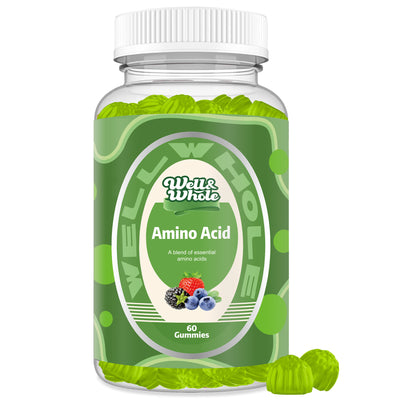
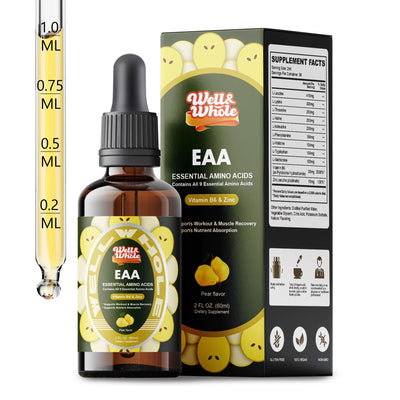
well&whole EAA Gummies and well&whole EAA Liquid Drops & Liver Support offer complete EAA profiles in convenient formats—gummies for on-the-go ease, and liquid drops with added liver support for those who want a dual-action approach.
EAA vs. BCAA: The Full Picture Matters
BCAAs (branched-chain amino acids—leucine, isoleucine, and valine) are popular in fitness circles, but they are only three of the nine essential amino acids. While leucine is the primary trigger for muscle protein synthesis, you still need the other six EAAs to actually build complete proteins.
A landmark 2017 study in *Nutrients* directly compared EAA and BCAA supplementation and found that EAAs produced significantly greater muscle protein synthesis than BCAAs alone. The researchers noted that BCAA-only supplementation eventually leads to increased muscle protein breakdown, because the body catabolizes existing tissue to source the missing EAAs.
The takeaway: if you want to support muscle protein synthesis, choose a complete EAA supplement over BCAAs.
FAQ
1. What does "essential" mean when we talk about amino acids?
"Essential" means your body cannot synthesize the amino acid from other compounds. You must obtain it from your diet or supplements. "Non-essential" amino acids can be produced internally, though they are still important.
2. Can I get all EAAs from a plant-based diet?
Yes, but it requires careful planning. You need to combine different plant protein sources (e.g., grains + legumes) to cover all nine EAAs in adequate amounts. Single plant sources typically lack one or more EAAs.
3. Why is leucine often highlighted in EAA discussions?
Leucine is the most potent activator of the mTOR pathway, which signals muscle cells to begin protein synthesis. Research suggests a threshold effect where approximately 2–3 grams of leucine per serving maximally stimulates MPS.
4. Are EAA supplements safe for daily use?
Yes, for most healthy adults. EAAs are simply the same amino acids found in food, delivered in concentrated form. Follow product label dosages and consult your healthcare provider if you have kidney disease or other metabolic conditions.
5. Do older adults need more EAAs?
Research suggests yes. Older adults experience "anabolic resistance"—their muscle protein synthesis response to dietary protein diminishes. Higher EAA intake, particularly leucine, may help overcome this resistance, as shown in a 2018 study in the *American Journal of Clinical Nutrition*.
6. What's the difference between EAA and protein powder?
Protein powder provides whole proteins that your body must digest into individual amino acids before absorbing them. EAA supplements provide free-form amino acids that are absorbed rapidly without digestion, making them faster-acting, especially around exercise.
7. Can EAAs help with weight management?
Indirectly. Adequate EAA intake supports muscle maintenance, which preserves metabolic rate during calorie restriction. A 2018 study in *Nutrients* found that EAA supplementation during a calorie deficit helped preserve lean mass better than calorie restriction alone.
8. Should I take EAAs before or after exercise?
Post-exercise (within 30–60 minutes) is the most evidence-supported window. EAAs are most effective when muscles are primed for protein synthesis after resistance training.
9. What happens if I miss one EAA?
Missing even one essential amino acid halts complete protein synthesis. The body will break down existing tissue to source the missing amino acid, leading to net muscle loss over time.
10. Are there side effects from EAA supplementation?
EAAs are generally well-tolerated at recommended doses. Very high doses may cause gastrointestinal discomfort. Individuals with kidney disease should consult their healthcare provider, as impaired kidney function affects amino acid metabolism.
Conclusion
Essential amino acids earned their name for a straightforward reason: without them, your body cannot build the proteins that sustain muscle, immunity, mood, metabolism, and virtually every other function. Because you cannot make them internally, obtaining adequate EAAs—through complete-protein foods or well-formulated supplements—is not optional; it is fundamental.
Whether you are an athlete chasing recovery, an older adult fighting anabolic resistance, or simply someone trying to optimize daily nutrition, ensuring sufficient EAA intake is one of the most impactful steps you can take.
well&whole EAA Gummies and EAA Liquid Drops & Liver Support deliver all nine essential amino acids in convenient, research-aligned formats—so you never have to wonder whether you are getting enough.
Related supplements
Should you decide to supplement, EAA Gummie 60 counts Essential Amino Acids Supplement Gummies for Men and Women and Essential Amino Acid (EAA) Liquid Drops & Liver Support Liquid Supplement are our formulation for this purpose. For a broader comparison, see the Amino Acids and Muscle Support collections.
These statements have not been evaluated by the Food and Drug Administration. This product is not intended to diagnose, treat, cure, or prevent any disease.