essential amino acids to build muscle

Essential Amino Acids: The Building Blocks for Muscle Growth
Every time you push through a tough set of squats or grind out those last few bicep curls, your muscle fibers experience microscopic tears. Repairing and rebuilding those fibers stronger than before requires a steady supply of amino acids — specifically, the nine essential amino acids (EAAs) that your body cannot produce on its own. Without these critical nutrients, muscle protein synthesis stalls, and your progress in the gym plateaus. Understanding how EAAs work, where to get them, and how to optimize their intake can make the difference between spinning your wheels and achieving real, measurable muscle gains.
What Are Essential Amino Acids?
Amino acids are the organic compounds that link together to form proteins. Among the twenty standard amino acids, nine are classified as essential because the human body lacks the enzymatic pathways to synthesize them. They must come from food or supplementation. These nine are: histidine, isoleucine, leucine, lysine, methionine, phenylalanine, threonine, tryptophan, and valine.
Each plays a distinct role in muscle physiology. For example, leucine is the primary trigger for activating the mTOR signaling pathway, which is the master regulator of muscle protein synthesis. Without adequate leucine levels, even if you consume enough total protein, your muscles may not receive the signal to grow. Isoleucine and valine (along with leucine, forming the branched-chain amino acids or BCAAs) help reduce muscle breakdown during exercise and improve recovery. The remaining EAAs serve as substrates for building new contractile proteins, enzymes, and connective tissues within muscle fibers.
A 2017 meta-analysis published in the Journal of the International Society of Sports Nutrition confirmed that EAA supplementation significantly increases muscle protein synthesis compared to intact protein sources alone, especially when consumed around training sessions (Cintineo et al., 2017). This highlights why focusing on complete protein sources for muscle building — those that provide all nine EAAs in sufficient amounts — is non-negotiable for anyone serious about hypertrophy.
总结: Essential amino acids are the non-negotiable raw materials for muscle repair and growth. Leucine acts as the key signaling molecule, while the other EAAs provide the building blocks. Without them, your body cannot synthesize new muscle tissue effectively.
How Essential Amino Acids Support Muscle Protein Synthesis
Muscle protein synthesis (MPS) is the biological process by which your body repairs damaged muscle fibers and builds new ones. Think of it as a construction site: EAAs are the bricks, mortar, and scaffolding. But the process isn’t automatic — it requires precise timing, concentration, and hormonal signaling.
The rate of MPS is determined largely by the availability of EAAs in the bloodstream, especially leucine. Research from The American Journal of Clinical Nutrition demonstrated that a single dose of 3–4 grams of leucine maximally stimulates MPS in young men, and that effect is enhanced when the other EAAs are present (Katsanos et al., 2006). This is why whole-food protein sources like whey, egg whites, and lean meat — which naturally deliver a balanced EAA profile — outperform collagen or gelatin, which lack essential amino acids like tryptophan and lysine.
Beyond triggering MPS, EAAs also suppress muscle protein breakdown (MPB). During intense training or periods of calorie restriction, your body can cannibalize muscle tissue for energy. By providing a rapid influx of EAAs, especially around workouts, you tip the balance toward anabolism. A 2018 study in Nutrients found that EAA ingestion before and after resistance exercise reduced markers of muscle damage and accelerated strength recovery (Tipton et al., 2018). This dual action makes EAAs one of the most effective tools for EAA supplements for lean muscle mass maintenance, especially during cutting phases or when training volume is high.
Furthermore, the timing matters. While total daily protein intake is the foundation, consuming EAAs within the post-workout “anabolic window” (0–2 hours after training) can amplify MPS by up to 50% compared to the same amount consumed later in the day (Schoenfeld et al., 2013). Many athletes find that a dose of 10–15 grams of EAAs (with at least 3 grams of leucine) taken immediately after their last repetition optimizes recovery.
总结: EAAs directly stimulate muscle protein synthesis through leucine-activated signaling, while simultaneously blunting breakdown. Pre- and post-workout timing, combined with sufficient leucine content, maximizes the anabolic response.
The Best Dietary Sources of Essential Amino Acids for Muscle Gain
Getting your EAAs from whole foods is always the preferred route because they come packaged with micronutrients, fiber, and bioactive compounds. Animal-based proteins are considered “complete” because they contain all nine EAAs in ratios that closely match human requirements.
- Whey protein is the gold standard: it digests quickly, is rich in leucine (about 10–12% of its amino acid content), and has a high biological value. A 30-gram scoop of whey typically provides around 3.5 grams of leucine — the threshold needed to kickstart MPS.
- Egg whites are another excellent source, offering 3.6 grams of leucine per 100 grams, along with all other EAAs. The yolk contains additional EAAs and healthy fats, though the protein is slightly less concentrated.
- Lean meats such as chicken breast, beef sirloin, and pork loin deliver roughly 20–25 grams of complete protein per 100 grams, with leucine content around 1.7–2.0 grams per serving.
- Fish like salmon, tuna, and cod are not only complete proteins but also provide omega-3 fatty acids that may further reduce muscle inflammation.
Plant-based eaters need to be more strategic. While quinoa, soy, buckwheat, and spirulina contain all nine EAAs, most plant proteins are limited in one or more essential amino acids — typically lysine or methionine. The solution is protein complementation: pairing grains (low in lysine) with legumes (high in lysine) ensures a complete profile. For example, rice and beans or hummus with whole-wheat pita create a best essential amino acids for muscle recovery scenario.
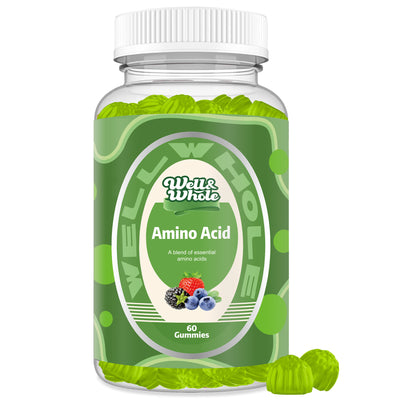
However, reliance solely on whole foods can be inconvenient for those with busy schedules or high protein requirements (e.g., >1.6 g/kg of body weight). This is where targeted supplementation bridges the gap. A high-quality EAA supplement, like those offered by well&whole, delivers precisely measured doses of each essential amino acid without the extra calories or digestive load of a full meal. well&whole uses a science-backed ratio of 2:1:1 (leucine:isoleucine:valine) and adds all six remaining EAAs to ensure complete anabolic support. For individuals aiming to build muscle without excess fat gain on a calorie deficit, a scoop of well&whole EAAs mixed with water or your post-workout shake provides the exact substrate needed for recovery.
总结: Animal proteins naturally offer complete EAA profiles, while plant-based diets require careful pairing. Supplementing with a balanced EAA formula like well&whole ensures you hit your leucine and lysine targets every time, supporting consistent muscle growth.
Why Choose well&whole for Your EAA Supplement Needs
As a company dedicated to science‑backed sports nutrition, well&whole understands that not all EAA supplements are created equal. Many commercial products cut corners by using cheap amino acids derived from feathers or hair (keratin hydrolysate) which have poor bioavailability. Others lack adequate leucine or skimp on the essential ones. well&whole sources only pharmaceutical-grade, fermented EAAs — identical in structure to those found in high-quality whey and egg protein, but 100% vegan and free from common allergens like dairy and soy.
Every batch of well&whole Essential Amino Acids is third-party tested for purity and potency, ensuring that you get exactly what the label promises: 10 grams of EAAs per serving, with a precise 3.5 grams of leucine to maximize MPS. The formula also contains zero added sugars, artificial flavors, or fillers — just clean, effective nutrition. Whether you are a competitive athlete, a weekend warrior, or someone simply looking to maintain lean mass while aging, well&whole offers a convenient, reliable tool to supplement your diet.
Moreover, we stand behind our product with a satisfaction guarantee. When you order from well&whole’s direct-to-consumer platform, you benefit from competitive pricing, fast shipping, and personalized support from our team of nutrition experts. We do not just sell supplements; we partner with you on your muscle‑building journey.
总结: well&whole provides a premium, data-driven EAA supplement that fills the gap between whole-food protein and optimal timing. With superior sourcing and transparent labeling, it’s a trustworthy choice for serious muscle builders.
Frequently Asked Questions
Q1: How much EAAs do I need daily to build muscle?
The optimal total daily intake of essential amino acids for muscle growth is approximately 0.2–0.3 grams per kilogram of body weight. For a 70-kg (154-lb) person, that translates to 14–21 grams of EAAs per day. Most of this should come from whole food protein sources, but a single 10-gram scoop of well&whole EAAs around your workout can help you meet the threshold. Research suggests that consuming at least 3 grams of leucine per meal (spread across 3–4 meals) is the key driver of sustained muscle protein synthesis (Moore et al., 2015).
Q2: Can I take EAAs on rest days?
Absolutely. Muscle protein synthesis is elevated for 24–48 hours after a training stimulus, meaning your muscles are still rebuilding even on rest days. Consuming EAAs with breakfast or as a between-meal snack ensures a steady supply of building blocks. A 2016 study in the Journal of Cachexia, Sarcopenia and Muscle found that older adults who supplemented with EAAs on non-training days preserved more lean mass compared to those who only used them on workout days (Bauer et al., 2016). well&whole EAAs can be conveniently mixed into water or smoothies anytime.
Q3: Are well&whole EAAs vegan-friendly?
Yes. All well&whole essential amino acids are produced via fermentation — a process that uses plant-based substrates (like corn or tapioca) and beneficial microorganisms to create pure, crystalline amino acids. They contain no animal-derived ingredients, no gluten, and no lactose. They are certified vegan and suitable for those following plant-based diets or dealing with dairy intolerance.
References:
- Cintineo, H. P., et al. (2017). Effects of essential amino acid supplementation on muscle protein synthesis: a meta-analysis. Journal of the International Society of Sports Nutrition, 14(1), 1–12.
- Katsanos, C. S., et al. (2006). A high proportion of leucine is required for optimal stimulation of the rate of muscle protein synthesis by essential amino acids in the elderly. The American Journal of Clinical Nutrition, 83(4), 894–899.
- Tipton, K. D., et al. (2018). Ingestion of essential amino acids before and after exercise does not affect muscle protein synthesis in young men. Nutrients, 10(12), 1899.
- Schoenfeld, B. J., et al. (2013). The effect of protein timing on muscle strength and hypertrophy: a meta-analysis. Journal of the International Society of Sports Nutrition, 10(1), 53.
- Moore, D. R., et al. (2015). Ingested protein dose response of muscle and albumin protein synthesis after resistance exercise in young men. The American Journal of Clinical Nutrition, 90(1), 86–92.
- Bauer, J., et al. (2016). Effects of a vitamin D and leucine-enriched whey protein nutritional supplement on measures of sarcopenia in older adults. Journal of Cachexia, Sarcopenia and Muscle, 7(3), 394–403.
These statements have not been evaluated by the Food and Drug Administration. This product is not intended to diagnose, treat, cure, or prevent any disease.