Elevated Liver Enzymes? What Supplements Can Help
Discover which supplement ingredients may help support healthy liver enzyme levels—TUDCA, NAC, milk thistle, dandelion, artichoke, and glutathione explained.

You got your routine blood work done, and your doctor flagged something: your liver enzymes are elevated. ALT (alanine aminotransferase) and AST (aspartate aminotransferase) are higher than the normal range. Your doctor says it is not cause for alarm yet, but it is worth paying attention to.
Elevated liver enzymes are a signal—not a diagnosis. They tell you that something is stressing your liver cells enough to release these enzymes into your bloodstream. The causes range from benign (a recent heavy workout, a night of drinking) to serious (NAFLD, medication side effects, viral hepatitis). Identifying the cause is the first step. Supporting your liver while you work on it is the second.
This article explains what elevated liver enzymes mean, what causes them, and which supplement ingredients have clinical evidence for supporting liver enzyme normalization—always in combination with addressing the underlying cause, not as a standalone fix.
Understanding Liver Enzymes
What Are ALT and AST?
ALT and AST are enzymes found primarily inside liver cells (hepatocytes). When liver cells are healthy and intact, only small amounts of these enzymes circulate in the blood. When cells are damaged, inflamed, or stressed, they release more ALT and AST into the bloodstream—like a broken vase leaking water.
| Enzyme | Primary Location | Normal Range (typical) | Significance When Elevated |
|--------|-----------------|----------------------|--------------------------|
| ALT | Liver (most specific) | 7–56 U/L | Most reliable indicator of liver cell damage |
| AST | Liver, heart, muscle, kidneys | 10–40 U/L | Less liver-specific; also rises with muscle/heart issues |
| GGT | Liver, bile ducts | 0–30 U/L | Bile duct issues, alcohol-related liver stress |
| Bilirubin | Byproduct of red blood cell breakdown | 0.1–1.2 mg/dL | Impaired liver processing or bile flow |
ALT is the more liver-specific marker. When ALT is elevated disproportionately to AST, the cause is more likely liver-related. When AST exceeds ALT, particularly with an AST/ALT ratio above 2, alcohol-related liver damage is often suspected.
Common Causes of Elevated Liver Enzymes
Elevated enzymes are not always a liver disease. A 2020 review in the *American Family Physician* journal outlined the most common causes:
1. **NAFLD/NASH**: The leading cause in the US. Fat accumulation triggers inflammation and cell damage.
2. **Alcohol**: Even moderate regular drinking can elevate enzymes; heavy drinking causes significant elevation.
3. **Medications**: Statins, acetaminophen, NSAIDs, certain antibiotics, and many other drugs can stress the liver.
4. **Intense exercise**: Strenuous workouts can temporarily elevate AST (from muscle damage) and sometimes ALT.
5. **Viral hepatitis**: Hepatitis A, B, and C cause enzyme elevations.
6. **Autoimmune conditions**: Autoimmune hepatitis, primary biliary cholangitis.
7. **Supplement overuse**: Excessive doses of certain supplements, including some herbal products, can paradoxically elevate liver enzymes.
8. **Metabolic disorders**: Insulin resistance, high triglycerides, type 2 diabetes.
When to Be Concerned
Mild elevations (1–2 times the upper limit of normal) are common and often benign—especially if temporary. Persistent elevations, significant elevations (3+ times normal), or elevations accompanied by symptoms (fatigue, jaundice, abdominal pain, dark urine) warrant prompt medical evaluation.
**Never self-treat significantly elevated liver enzymes without medical evaluation.** The priority is identifying the underlying cause. Supplements are an adjunct, not a diagnostic tool or treatment.
Supplement Ingredients with Evidence for Liver Enzyme Support
Several natural compounds have been studied for their ability to support healthy liver enzyme levels. Here is what the research shows:
Milk Thistle (Silymarin)
Milk thistle is the most extensively studied herb for liver enzyme support. A 2020 meta-analysis in *Phytotherapy Research* reviewing 18 randomized controlled trials found:
- **ALT reduction**: Average decrease of 16.6 U/L compared to placebo
- **AST reduction**: Average decrease of 11.1 U/L compared to placebo
- **Insulin resistance improvement**: Significant reduction in HOMA-IR index
- **Liver fat reduction**: Measurable decrease on imaging in NAFLD patients
The mechanism: silymarin acts as an antioxidant, reduces lipid peroxidation in hepatocyte membranes, and may inhibit inflammatory signaling pathways in the liver. A 2019 study in the *World Journal of Hepatology* noted that silymarin combined with lifestyle modification produced greater enzyme improvements than lifestyle alone.
NAC (N-Acetyl Cysteine)
NAC supports liver enzyme normalization indirectly by replenishing glutathione. When the liver is under oxidative stress, glutathione is consumed rapidly. Low glutathione levels allow oxidative damage to accumulate, which damages hepatocyte membranes and releases ALT/AST into the blood.
A 2021 study in the *European Review for Medical and Pharmacological Sciences* demonstrated that NAC supplementation increased hepatic glutathione levels and reduced markers of oxidative stress in individuals with liver enzyme elevations. NAC is also the standard clinical treatment for acetaminophen overdose—the most common cause of acute drug-induced liver enzyme spikes—precisely because it restores glutathione fast enough to prevent liver cell death.
TUDCA (Tauroursodeoxycholic Acid)
TUDCA supports liver enzymes through two mechanisms:
1. **Bile flow improvement**: TUDCA is a bile acid that promotes healthy bile flow. When bile flow is impaired (cholestasis), bile acids accumulate and damage liver cells, releasing enzymes. TUDCA helps restore normal bile acid circulation.
2. **ER stress reduction**: Endoplasmic reticulum stress is a key mechanism in liver cell injury. A 2018 study in *Cell Death & Disease* showed that TUDCA reduced ER stress and prevented apoptosis in hepatocytes.
A 2020 pilot study in *Digestive Diseases and Sciences* found that TUDCA supplementation in patients with mild liver enzyme elevations was associated with reductions in ALT and AST over 12 weeks.
Dandelion Root
Dandelion root has been used traditionally as a liver tonic. While human clinical data is limited, a 2017 study in the *Journal of Ethnopharmacology* reported that dandelion root extract reduced markers of liver cell injury and oxidative stress in animal models. Its mechanism includes mild diuretic effects (supporting fluid balance), chicoric acid (antioxidant), and potential stimulation of bile production.
Artichoke Extract
Artichoke leaf extract contains cynarin and flavonoids that support bile production and hepatocyte protection. A 2018 study in *Phytotherapy Research* found that artichoke supplementation reduced liver enzyme levels and improved lipid profiles in individuals with mild liver dysfunction. Artichoke also supports cholesterol metabolism—a relevant connection, since NAFLD and dyslipidemia often coexist.
Glutathione
Glutathione is the liver's master antioxidant. In any condition that elevates liver enzymes, glutathione is being depleted faster than it can be synthesized. Supplementing glutathione directly, or providing its precursors (NAC provides cysteine; methionine is another precursor), helps restore the liver's primary defense system against oxidative damage.
The Multi-Ingredient Approach
Because elevated liver enzymes can result from multiple simultaneous stressors (oxidative damage, bile flow impairment, inflammation, fat accumulation), addressing several mechanisms at once is more likely to produce results than targeting one alone.
This is why formulas that combine complementary ingredients may offer broader support:
| Ingredient | Primary Mechanism | What It Addresses |
|-----------|-------------------|-------------------|
| TUDCA | Bile flow, ER stress reduction | Cholestasis, cellular stress |
| Milk thistle | Antioxidant, anti-inflammatory | Oxidative damage, inflammation |
| NAC | Glutathione replenishment | Oxidative stress, detoxification |
| Dandelion | Bile stimulation, diuretic | Bile flow, fluid balance |
| Artichoke | Bile production, lipid metabolism | Bile flow, cholesterol |
| Glutathione | Direct antioxidant supply | Oxidative damage |
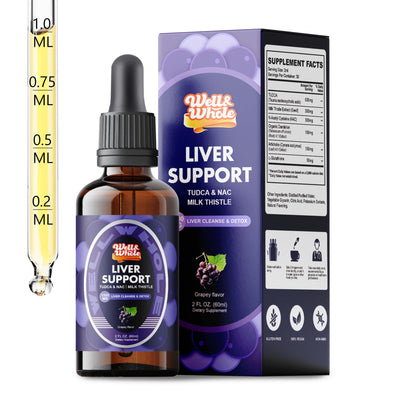
The well&whole Liver Support Liquid Drops combine all six of these ingredients—TUDCA, NAC, milk thistle, dandelion, artichoke, and glutathione—in a single comprehensive formula designed for broad liver support.
A Realistic Approach to Liver Enzyme Support
Step 1: Identify the Cause
Before taking any supplement, work with your healthcare provider to determine why your enzymes are elevated. The approach differs depending on the cause:
- **NAFLD-related**: Weight loss, diet improvement, exercise + liver support supplements
- **Medication-related**: Discuss medication alternatives or dose adjustments with your prescriber + liver support
- **Alcohol-related**: Reduce or eliminate alcohol + liver support
- **Exercise-related**: Temporary; enzymes typically normalize within days of rest
- **Unknown cause**: Further testing (hepatitis panel, autoimmune markers, imaging) before supplement use
Step 2: Address the Root Cause
Supplements support the liver while you address the underlying problem. They do not replace fixing the problem. If your enzymes are elevated because of NAFLD, supplements help—but they will not produce lasting improvement without dietary and exercise changes.
Step 3: Add Evidence-Based Supplements
Choose a multi-ingredient liver support formula that includes clinically studied compounds. Take it consistently for at least 8–12 weeks before rechecking enzymes. Most clinical studies show measurable enzyme changes within this timeframe.
Step 4: Monitor and Adjust
Recheck your liver enzymes at 8–12 week intervals. If enzymes are normalizing, continue your protocol. If they are not improving, or worsening, revisit the underlying cause with your healthcare provider—there may be an unidentified factor that needs attention.
FAQ
1. What do elevated liver enzymes mean?
Elevated ALT and AST indicate that liver cells are releasing more enzymes than usual into the bloodstream—typically because of cell damage, inflammation, or stress. The elevation itself is not a disease; it is a marker that something is stressing the liver.
2. Can exercise elevate liver enzymes?
Yes, particularly AST. Intense exercise causes muscle microdamage that releases AST. ALT elevations from exercise are less common but possible. These exercise-related elevations are typically mild and resolve within 3–7 days of rest.
3. How quickly can supplements help normalize liver enzymes?
Most clinical studies show measurable improvements after 8–12 weeks of consistent supplement use. Some studies (particularly with silymarin) show enzyme reductions within 4 weeks. Individual results vary based on the underlying cause and its severity.
4. Can I take liver supplements while on statins or other liver-stressing medications?
Consult your healthcare provider. Some liver supplements may interact with medications processed by the liver's CYP450 enzyme system. NAC is generally considered compatible with most medications, but milk thistle may affect drug metabolism. Never replace prescribed medication with supplements.
5. What is the most important thing to do if my liver enzymes are elevated?
Find out why. Elevated enzymes are a signal, not a diagnosis. Work with your healthcare provider to identify the cause before adding supplements. Addressing the root cause is always the primary intervention.
6. Are there foods that help lower liver enzymes?
Yes. A Mediterranean-style diet rich in vegetables, olive oil, fish, nuts, and whole grains is associated with improved liver enzyme levels. Reducing refined carbohydrates, added sugars (especially fructose), and saturated fat also helps. Coffee has been associated with lower liver enzyme levels in multiple studies.
7. Can alcohol elevate liver enzymes even if I only drink moderately?
Yes. Even moderate regular alcohol consumption can elevate liver enzymes in some individuals, particularly those with other liver stressors (NAFLD, medications). The liver processes alcohol as a priority, diverting resources from other metabolic tasks.
8. Should I stop exercising if my liver enzymes are elevated?
Not necessarily. If the elevation is exercise-related (AST-predominant, mild), rest for a few days and recheck. If the elevation is from NAFLD or another cause, exercise is actually beneficial—it reduces liver fat and inflammation. Consult your healthcare provider for personalized guidance.
9. Can taking too many supplements elevate liver enzymes?
Yes. Some herbal supplements, when taken in excessive doses, can paradoxically stress the liver. This is one reason to choose well-formulated products with appropriate doses and avoid stacking multiple liver supplements that contain overlapping ingredients. See our article "Can You Take Too Many Liver Supplements? Safety Guide."
10. What if my liver enzymes do not improve with supplements?
If enzymes remain elevated after 12 weeks of consistent supplement use plus lifestyle changes, revisit the underlying cause with your healthcare provider. There may be an undiagnosed condition (autoimmune hepatitis, viral hepatitis, medication side effect) that requires specific medical treatment, not just liver support supplements.
Conclusion
Elevated liver enzymes are your liver asking for attention. The first step is always identifying and addressing the underlying cause—whether it is NAFLD, alcohol, medications, or something else. Supplements are the second step: adjunctive support that helps your liver recover while you fix the root problem.
The ingredients with the strongest clinical evidence—milk thistle, NAC, TUDCA, dandelion, artichoke, and glutathione—each address different mechanisms of liver stress. Together, they offer broader support than any single ingredient alone.
[well&whole Liver Support Liquid Drops bring all six into one formula: TUDCA + NAC + milk thistle + dandelion + artichoke + glutathione. Comprehensive, convenient, and designed to complement the lifestyle changes that matter most.
Related supplements
Should you decide to supplement, Liver Support Liquid Drops Supplement | TUDCA Drops Liver Cleanse & Detox with Milk Thistle, NAC, Dandelion, Artichoke & Glutathione for Detox and TUDCA 1000mg Gummies with Milk Thistle 500mg for Adults are our formulation for this purpose. For a broader comparison, see the Liver Support and Milk Thistle collections.
These statements have not been evaluated by the Food and Drug Administration. This product is not intended to diagnose, treat, cure, or prevent any disease.