Echinacea for Immune Support: Beyond Cold Season
Explore the science of echinacea for immune support. Learn how alkylamides, polysaccharides, and cichoric acid work—and why echinacea benefits go beyond winter.

When most people think of echinacea, they think of cold and flu season. It's the herb that flies off pharmacy shelves the moment the first winter sniffle appears. But echinacea's story is far richer than its seasonal reputation suggests.
For centuries, Native American healers used echinacea for everything from snake bites to wound infections. Modern research has revealed a complex botanical with immune-modulating, anti-inflammatory, and antioxidant properties that extend well beyond the winter months. Whether you're looking to support year-round immune resilience or enhance your body's natural detoxification pathways, echinacea deserves a closer look.
In this article, we'll explore the science behind echinacea's immune-supporting properties, its active compounds, and how it contributes to the formula of well&whole Lymphatic Drainage Gummies.

The Botanical Profile of Echinacea
A North American Native
Echinacea is a genus of flowering plants in the Asteraceae (daisy) family, native to eastern and central North America. Of the nine recognized species, three are most commonly used in supplements:
- **Echinacea purpurea** (purple coneflower): The most widely studied and cultivated
- **Echinacea angustifolia** (narrow-leaved coneflower): Traditionally prized by Native American healers
- **Echinacea pallida** (pale purple coneflower): Less common but used in some European preparations
A Brief History
Native American tribes of the Great Plains region, including the Lakota, Cheyenne, and Pawnee, used echinacea as one of their most important medicinal plants. They applied it topically for wounds, burns, and insect bites, and used it internally for pain relief, infections, and as a general "cure-all."
In the late 1800s, echinacea was introduced to American medical practice by the Eclectic physicians—a group of doctors who combined botanical medicine with conventional approaches. By the early 20th century, echinacea was one of the most prescribed remedies in the United States before falling out of favor with the rise of antibiotics.
The Science: How Echinacea Supports Immune Function
Key Active Compounds
Echinacea's immune-supporting properties come from a diverse array of phytochemicals that work synergistically:
| Compound | Location | Primary Action |
|----------|----------|----------------|
| Alkylamides | Roots and aerial parts | Immune modulation; support white blood cell activity |
| Polysaccharides | Aerial parts | May stimulate macrophage phagocytosis |
| Cichoric acid | Aerial parts and roots | Antioxidant; supports immune cell function |
| Glycoproteins | Roots | Immune-stimulating potential |
| Flavonoids | Throughout plant | Antioxidant and anti-inflammatory |
Mechanism of Action
Research suggests echinacea works through several complementary mechanisms:
1. Macrophage Activation
Macrophages are the "Pac-Men" of the immune system—large white blood cells that engulf and digest cellular debris, pathogens, and foreign substances. Studies have shown that echinacea polysaccharides may enhance the phagocytic activity of macrophages, helping them work more efficiently (1).
2. Cytokine Modulation
Cytokines are signaling molecules that coordinate immune responses. Research published in *International Immunopharmacology* demonstrated that echinacea extracts can modulate cytokine production, supporting a balanced immune response rather than simply stimulating it indiscriminately (2).
3. Antioxidant Protection
The cichoric acid and flavonoids in echinacea provide antioxidant support, helping to neutralize free radicals that can damage cells and tissues. This is particularly relevant for immune health, as oxidative stress can impair immune cell function.
What the Clinical Studies Show
The clinical evidence for echinacea is extensive, though results vary depending on the species, plant part, extraction method, and dosage used:
- A meta-analysis in *The Lancet Infectious Diseases* reviewed 14 studies and concluded that echinacea may support the body's natural defenses during seasonal challenges (3)
- A randomized, double-blind, placebo-controlled trial published in *Evidence-Based Complementary and Alternative Medicine* found that echinacea supplementation was associated with a reduction in the duration and severity of seasonal respiratory episodes (4)
- Research in the *Journal of Clinical Pharmacy and Therapeutics* showed that a standardized echinacea preparation helped support immune parameters in healthy volunteers (5)
It's important to note that not all studies show positive results, and the quality of echinacea products on the market varies significantly. Standardization and quality sourcing matter.
Beyond Cold Season: Year-Round Benefits
Immune Resilience
Immune health isn't just about fighting off winter colds. Your immune system works 365 days a year, dealing with environmental stressors, dietary challenges, and internal maintenance. Echinacea's immune-modulating (not just immune-stimulating) properties may help support balanced immune function throughout the year.
Lymphatic Support
The lymphatic system and immune system are deeply interconnected. Lymph nodes are key sites where immune cells gather to survey for threats. By supporting immune cell activity, echinacea may indirectly support the overall efficiency of lymphatic function—which is why it's a key ingredient in well&whole Lymphatic Drainage Gummies.

Skin Health and Wound Support
Echinacea's traditional use for wound healing has some modern backing. A study in the *Journal of Ethnopharmacology* demonstrated that echinacea extracts showed antimicrobial and wound-healing properties, supporting its topical and internal traditional uses (6). While more clinical research is needed, the connection between immune function and skin health is well-established.
Respiratory Health
Echinacea is perhaps best known for respiratory support. Its anti-inflammatory properties may help soothe irritated airways, and its immune-supporting compounds may help the body mount an effective response to seasonal respiratory challenges.
Choosing a Quality Echinacea Supplement
What to Look For
Not all echinacea products are created equal. When choosing a supplement, consider:
- **Species**: Echinacea purpurea has the most clinical backing
- **Plant part**: Different parts contain different compound profiles; whole-plant or standardized extracts may offer broader benefits
- **Standardization**: Look for products standardized to key compounds like alkylamides or cichoric acid
- **Quality testing**: Third-party testing ensures purity and potency
- **Format**: Gummies, liquid extracts, and capsules each have their advantages
Echinacea in well&whole Lymphatic Drainage Gummies
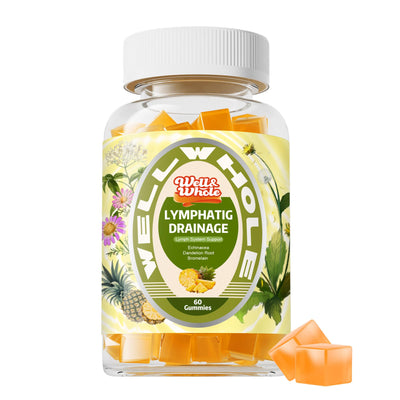
well&whole Lymphatic Drainage Gummies combine echinacea with dandelion and burdock for a comprehensive lymphatic and immune support formula. The gummy format makes daily supplementation convenient and enjoyable, eliminating the bitter taste often associated with herbal extracts.

How to Use Echinacea Effectively
Dosing Strategies
Two common approaches to echinacea supplementation are:
1. **Daily support**: Take the recommended dose daily for ongoing immune and lymphatic support
2. **Targeted use**: Take at the first sign of seasonal challenge, continuing for 7-10 days
Both approaches have their merits. For lymphatic support, daily use as part of a consistent wellness routine is generally recommended.
Cycling
Some herbalists recommend cycling echinacea—taking it for 6-8 weeks followed by a 1-2 week break—to prevent potential tolerance. While the scientific evidence for cycling is limited, it's a reasonable precaution based on traditional wisdom.
Precautions
- **Allergies**: Individuals with allergies to plants in the daisy family (ragweed, chrysanthemums, marigolds) may react to echinacea
- **Autoimmune conditions**: Because echinacea may stimulate immune activity, individuals with autoimmune disorders should consult their healthcare provider
- **Medications**: Echinacea may interact with certain medications, including immunosuppressants and some liver-metabolized drugs
- **Pregnancy/nursing**: Consult a healthcare provider before use
FAQ
Q1: Does echinacea really work for immune support?
Clinical research suggests echinacea may support immune function, particularly during seasonal challenges. Results vary depending on the product quality, species, and dosage. It's best viewed as a supportive herb rather than a cure.
Q2: Should I take echinacea every day or only when I feel sick?
Both approaches can work. For general immune and lymphatic support, daily use is common. For targeted seasonal support, some prefer to take it at the first sign of symptoms. Consult your healthcare provider for personalized advice.
Q3: Can echinacea prevent colds?
No supplement can guarantee prevention of colds. However, research suggests echinacea may support the body's natural defenses, potentially reducing the frequency and duration of seasonal respiratory episodes.
Q4: Is echinacea safe for long-term use?
Echinacea is generally considered safe for most adults when used as directed. Some herbalists recommend cycling (taking breaks) based on traditional practice. If you have an autoimmune condition, consult your healthcare provider.
Q5: Can I be allergic to echinacea?
Yes. Individuals allergic to plants in the daisy (Asteraceae) family—such as ragweed, marigolds, or chrysanthemums—may be more likely to react to echinacea. If you experience any allergic symptoms, discontinue use immediately.
Q6: How does echinacea support the lymphatic system?
Echinacea supports immune cell activity, and since lymph nodes are key sites of immune surveillance, supporting immune function may indirectly support lymphatic efficiency. In traditional herbalism, echinacea is classified as an alterative—a herb that supports natural detoxification.
Q7: What's the difference between Echinacea purpurea and other species?
Echinacea purpurea is the most widely researched species and is commonly used in modern supplements. Echinacea angustifolia was traditionally preferred by Native American healers. Different species have slightly different compound profiles, but purpurea has the strongest clinical evidence base.
Conclusion
Echinacea is far more than a winter-only herb. Its complex array of immune-modulating compounds—alkylamides, polysaccharides, cichoric acid, and flavonoids—work together to support balanced immune function, lymphatic efficiency, and overall wellness throughout the year.
Whether you're looking to support seasonal immune resilience, promote lymphatic flow, or simply maintain overall immune health, echinacea offers a scientifically grounded, traditionally validated option. And when combined with dandelion and burdock in well&whole Lymphatic Drainage Gummies, it becomes part of a comprehensive formula designed to support your body's natural detoxification and immune networks.
Related supplements
Putting it simply: if this is something you want to add to your routine, our Lymphatic Drainage Supplements Gummies with Echinacea Dandelion Burdock for Adults with Immune and Energy Support and Sulforaphane Broccoli Supplement Liquid Drops for Kids with Sulforaphane, Glucoraphanin, Bacopa Monnieri are a good place to start. The wider Immune Support collection is worth a look, and the Health Benefits range covers related formats.
Looking for a complete routine? See our Vitamin C.
These statements have not been evaluated by the Food and Drug Administration. This product is not intended to diagnose, treat, cure, or prevent any disease.