EAA vs BCAA: Why the Difference Matters

EAAs (essential amino acids) include all nine amino acids your body cannot produce on its own. BCAAs (branched-chain amino acids) are just three of those nine — leucine, isoleucine and valine. If you take BCAAs alone, you are missing six essential building blocks that muscle protein synthesis still needs to pull from somewhere else, usually your diet or existing tissue.
The body requires all nine essential amino acids simultaneously to build or repair protein efficiently. Supplying only three creates an incomplete signal, which limits the response compared with providing the full set.
What the nine essentials actually are
The nine essential amino acids are histidine, isoleucine, leucine, lysine, methionine, phenylalanine, threonine, tryptophan and valine. Three of these — leucine, isoleucine and valine — have branched molecular structures, hence the name BCAA. The other six are equally essential but lack the marketing shorthand of the three-letter acronym.
Why BCAAs became popular
BCAAs rose to prominence because leucine is the primary trigger of mTOR, the pathway that initiates muscle protein synthesis. Early research showed that leucine alone could flip this switch, and supplement brands ran with it. What later work clarified is that flipping the switch without supplying all the bricks produces a weaker, shorter-lived effect than giving the full set at once.
What happens when you take only BCAAs
Your body still needs the other six essentials. If they do not come from the supplement, it pulls them from free pools in the blood or, if those run low, from breaking down existing tissue elsewhere. In practice this means BCAA-only use can support acute signaling but does not provide the complete raw material package that EAAs deliver in one dose.
EAA advantages
- Complete profile. All nine essentials in one serving, no gaps.
- Better net protein balance. Studies comparing EAA blends to BCAA-only formulas show larger positive shifts in muscle protein synthesis when EAAs provide the full complement.
- Supports more than muscle. The non-BCAA essentials contribute to immune function, neurotransmitter production, collagen formation and enzyme activity throughout the body.
- Works fasted or fed. Because the blend is self-contained, it does not depend on co-ingested protein to fill the gaps.
When BCAAs might still make sense
If you already eat adequate protein at every meal and want a low-calorie intra-workout option, BCAAs are not harmful — they are simply incomplete relative to what an EAA formula offers. They also cost less per serving, which matters for people on tight budgets who prioritize leucine signaling above completeness.
Dosing reality
EAA studies typically use 6–12 grams of total amino acids per serving, with leucine making up roughly 2–3 grams of that. BCAA servings often sit at 5–7 grams of just the three branched-chain compounds. The practical difference is that an EAA serving delivers more total amino acid mass spread across all nine, while a BCAA serving concentrates on fewer grams of fewer compounds.
Gummies, liquids and powders
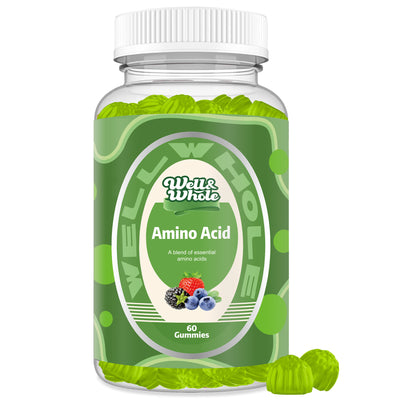
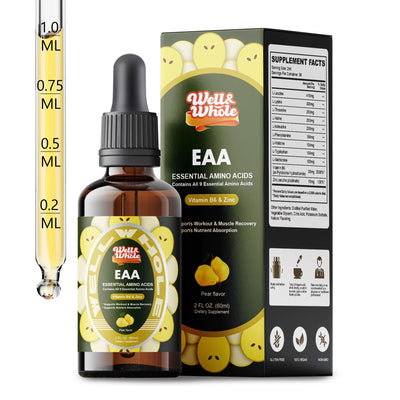
All three formats absorb well when taken between meals. Gummies add convenience and compliance, especially for people who dislike powder mixing. Liquids offer faster gastric emptying. Powders give the highest dose flexibility. The core question remains whether the formula contains all nine essentials or only three.
Key takeaways
- EAAs provide all nine essential amino acids; BCAAs provide only three.
- Muscle protein synthesis works best when all nine arrive together.
- BCAAs trigger the signal but leave six gaps the body must fill elsewhere.
- EAAs support muscle, immune function, mood and connective tissue more broadly.
- Choose BCAAs only if budget is the main constraint and your diet already covers the rest.
Frequently asked questions
Can I take BCAAs if I already eat enough protein?
You can, but the marginal benefit shrinks when dietary protein is high. BCAAs add the most value during fasted training or when meals are spaced far apart.
Do EAAs replace a post-workout protein shake?
They overlap in purpose but differ in scale. A full protein shake provides 20–30 grams of total protein; an EAA serving typically provides 6–12 grams of free-form amino acids. Both can be useful depending on timing and preference.
Are there side effects to taking EAAs?
At labeled doses they are generally well tolerated. Very high single doses may cause mild digestive upset in sensitive individuals. Stay within product guidelines.
Which form absorbs faster: gummy or liquid?
Liquid drops tend to enter the bloodstream slightly faster due to less chewing and breakdown time, but the difference is small for most users. Choose based on convenience and taste preference.
Related supplements
Putting it simply: if this is something you want to add to your routine, our EAA Gummie 60 counts Essential Amino Acids Supplement Gummies for Men and Women and Essential Amino Acid (EAA) Liquid Drops & Liver Support Liquid Supplement are a good place to start. The wider Amino Acids collection is worth a look, and the Muscle Support range covers related formats.
These statements have not been evaluated by the Food and Drug Administration. This product is not intended to diagnose, treat, cure, or prevent any disease. Talk to a healthcare professional before starting any new supplement, especially if you are pregnant, nursing, taking medication, or managing a health condition.