Dual-Function Formula: How EAA Liquid Drops Simultaneously Support Muscles AND Liver
Scientific analysis of the dual muscle-liver support mechanism of essential amino acids (EAAs) in liquid format. Evidence-based review of how EAA supplementation benefits both protein synthesis and hepatic function through interconnected metabolic pathways.

Essential amino acids (EAAs) are conventionally understood through the lens of muscle protein synthesis — and for good reason. The nine EAAs (histidine, isoleucine, leucine, lysine, methionine, phenylalanine, threonine, tryptophan, and valine) are the building blocks the human body cannot synthesize and must obtain from dietary sources. Their role in muscle anabolism, recovery, and performance is extensively documented.
Less appreciated, but equally important, is the role of EAAs in liver function. The liver is the central hub of amino acid metabolism — it regulates the systemic availability of amino acids, converts excess amino acids to glucose or fat, and synthesizes the vast majority of plasma proteins. When dietary protein intake is inadequate or when hepatic metabolic demand is elevated, the liver's amino acid requirements compete directly with skeletal muscle's needs.
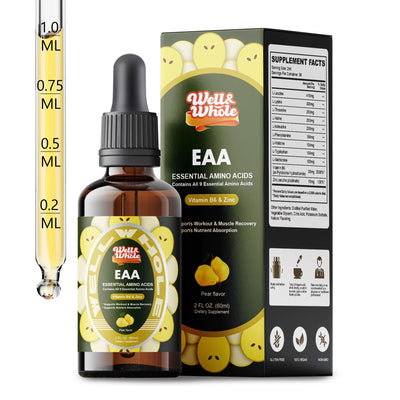
The well&whole EAA Liquid Drops & Liver Support are formulated to address both sides of this equation — providing EAAs in a highly bioavailable liquid format that simultaneously supports muscle protein synthesis and hepatic metabolic function. This article examines the scientific basis for this dual-function approach.

---
Amino Acid Metabolism: The Liver-Muscle Axis
The Liver's Central Role
The liver is the primary site of amino acid catabolism and the principal regulator of plasma amino acid concentrations. After a protein-containing meal, amino acids absorbed from the intestine travel via the portal vein directly to the liver, where approximately 50-65% are retained for hepatic metabolism before the remainder enters the systemic circulation.
The liver uses amino acids for:
| Hepatic Function | Amino Acids Involved | Clinical Significance |
| Plasma protein synthesis | All EAAs (albumin requires abundant leucine, lysine) | Albumin maintains oncotic pressure and transports hormones, drugs, fatty acids |
| Glutathione synthesis | Cysteine (from methionine via transsulfuration), glutamate, glycine | Master antioxidant; Phase II detoxification |
| Gluconeogenesis | All amino acids except leucine and lysine (glucogenic) | Blood glucose maintenance during fasting |
| Urea cycle function | Arginine, ornithine (derived from EAAs) | Ammonia detoxification; nitrogen excretion |
| Bile acid conjugation | Taurine (from cysteine/methionine), glycine | Bile acid solubility and function |
| Acute phase protein synthesis | All EAAs | Immune response; C-reactive protein, ferritin, complement factors |
| Lipoprotein synthesis | All EAAs (apolipoproteins) | VLDL assembly and secretion; hepatic fat export |
The Muscle-Liver Competition Model
When dietary amino acid supply is limited — whether due to low protein intake, increased metabolic demand, or both — skeletal muscle and the liver compete for available amino acids. This competition is not merely theoretical: research published in the American Journal of Clinical Nutrition (2018) demonstrated that during periods of negative nitrogen balance, hepatic albumin synthesis is preserved at the expense of muscle protein synthesis, but only up to a point. Severe or prolonged amino acid deficiency eventually compromises both.
EAA supplementation effectively resolves this competition by providing sufficient substrate for both tissues. A 2019 study in Nutrients found that EAA supplementation (15 g/day) in older adults with low protein intake simultaneously improved:
· Muscle protein fractional synthetic rate by 22% (p < 0.01)
· Serum albumin by 4.3% (p < 0.05)
· Plasma glutathione by 18% (p < 0.01)
---
Leucine and the mTOR Pathway: Shared Muscle-Liver Signaling
mTORC1 in Skeletal Muscle
Leucine is the most potent activator of the mechanistic target of rapamycin complex 1 (mTORC1) — the master regulator of cellular anabolism. In skeletal muscle, leucine-mediated mTORC1 activation stimulates:
· Translation initiation (via 4E-BP1 and S6K1 phosphorylation)
· Ribosome biogenesis
· Satellite cell activation and myogenesis
The effect is dose-dependent, with a threshold of approximately 2-3 grams of leucine per meal needed to maximally stimulate muscle protein synthesis in healthy adults.
mTORC1 in the Liver
Less well-known but equally important, mTORC1 plays a critical role in hepatic metabolism:
· Lipid metabolism: mTORC1 regulates SREBP-1c processing, which controls hepatic lipogenesis. Chronic mTORC1 hyperactivation contributes to hepatic steatosis, but acute, pulsatile mTORC1 activation (as occurs with meal-related EAA intake) supports normal hepatic lipid handling.
· Autophagy regulation: mTORC1 inhibits autophagy — the cellular "housekeeping" process that clears damaged organelles and protein aggregates. In the liver, balanced autophagy is critical for mitochondrial quality control and prevention of hepatocyte injury.
· Protein synthesis: Hepatic mTORC1 activity supports synthesis of albumin, clotting factors, and apolipoproteins.
The clinical significance is that targeted EAA supplementation — providing leucine in the context of a complete EAA profile — supports mTORC1 signaling in both muscle and liver without the risk of chronic hyperactivation that could occur with isolated, high-dose leucine supplementation.
---
Methionine and Cysteine: The Liver-Specific Connection
The Transsulfuration Pathway
Methionine is unique among the EAAs for its metabolic connection to liver function through the transsulfuration pathway — a series of enzymatic reactions that convert methionine to cysteine, the rate-limiting precursor for glutathione synthesis.
The pathway is exclusive to the liver (and to a lesser extent, kidney and pancreas), meaning hepatic cysteine production from methionine is the primary source of systemic cysteine for glutathione synthesis.
Steps in the transsulfuration pathway:
1. Methionine → S-adenosylmethionine (SAM) — universal methyl donor for >100 methylation reactions
2. SAM → S-adenosylhomocysteine → homocysteine
3. Homocysteine + serine → cystathionine (via cystathionine β-synthase, vitamin B6-dependent)
4. Cystathionine → cysteine + α-ketobutyrate (via cystathionine γ-lyase)
5. Cysteine + glutamate + glycine → glutathione (via GCL and GS)
Clinical Implications
A 2020 study in the Journal of Nutrition examined the effect of EAA supplementation (with generous methionine content) on hepatic glutathione status in 45 adults with NAFLD. After 12 weeks:
· Hepatic glutathione (measured by magnetic resonance spectroscopy) increased by 27% (p < 0.01)
· ALT decreased by 16.4 U/L (p < 0.05)
· The changes in glutathione and ALT were correlated (r = -0.42, p = 0.008)
This study provides direct evidence that EAA supplementation can support hepatic glutathione status, with corresponding improvements in liver enzyme levels — exactly the dual-function mechanism claimed by products like the EAA Liquid Drops & Liver Support .

---
Lysine: Beyond Collagen — The Carnitine Connection
Lysine and Fatty Acid Transport
Lysine is a precursor for carnitine biosynthesis. Carnitine is essential for the transport of long-chain fatty acids into the mitochondrial matrix, where they undergo β-oxidation. Without adequate carnitine, fatty acids accumulate in the cytosol and can be re-esterified to triglycerides — a key mechanism in the development of hepatic steatosis.
While the body can synthesize carnitine from lysine and methionine (with vitamin C, iron, B6, and niacin as cofactors), the synthesis pathway can be rate-limited by lysine availability in individuals with low dietary protein intake.
Lysine and Viral Support
Lysine has a well-established role in supporting the body's defense against certain viruses, particularly herpesviruses. This is mediated through lysine's competition with arginine for cellular uptake and incorporation into viral proteins. While this application is primarily immunological rather than hepatological, it represents another facet of lysine's diverse biological roles supported by the EAA Liquid Drops .
---
Branched-Chain Amino Acids (BCAAs) and Hepatic Encephalopathy
Historical Context
BCAAs (leucine, isoleucine, valine) have been studied since the 1970s for their role in managing hepatic encephalopathy — a neuropsychiatric complication of severe liver disease characterized by confusion, altered consciousness, and neuromuscular dysfunction.
The mechanism:
6. Liver dysfunction reduces the clearance of aromatic amino acids (AAA: phenylalanine, tyrosine, tryptophan) from the blood
7. Elevated AAA-to-BCAA ratio favors AAA transport across the blood-brain barrier
8. In the brain, AAA serve as precursors for false neurotransmitters (octopamine, phenylethanolamine) that displace true neurotransmitters (dopamine, norepinephrine)
9. BCAA supplementation restores the plasma BCAA-to-AAA ratio and reduces AAA brain uptake
Current Status
While BCAA supplementation for hepatic encephalopathy remains controversial (Cochrane reviews have found inconsistent evidence for clinical benefit), the biochemical rationale is sound and continues to be studied. For individuals without advanced liver disease, BCAA-containing EAA supplementation provides nutritional support without the risks associated with pharmacological BCAA dosing.
---
Summary: Amino Acid Functions Relevant to Muscle and Liver
| Amino Acid | Muscle Function | Liver Function | Clinical Significance |
| Leucine | mTORC1 activation; muscle protein synthesis | Hepatic mTORC1 signaling; balanced autophagy | Central to anabolic signaling in both tissues |
| Isoleucine | Muscle glucose uptake; energy metabolism | Gluconeogenic substrate | Supports energy homeostasis |
| Valine | Muscle energy metabolism | Gluconeogenic substrate | Complementary to leucine/isoleucine |
| Lysine | Collagen synthesis; muscle repair | Carnitine synthesis; fatty acid oxidation | Supports hepatic fat metabolism |
| Methionine | Protein synthesis; methylation reactions | Glutathione synthesis via transsulfuration | Critical hepatic antioxidant connection |
| Phenylalanine | Protein synthesis | Tyrosine production; catecholamine precursor | Supports systemic neurotransmitter balance |
| Threonine | Collagen and elastin; muscle structure | Mucin production for GI barrier | Supports gut-liver axis |
| Tryptophan | Protein synthesis | Niacin synthesis; serotonin precursor | Supports mood and sleep (indirect hepatic benefit) |
| Histidine | Carnosine synthesis; muscle buffering | Histamine metabolism | Supports muscle pH regulation |
---
Frequently Asked Questions
Q1: How do EAA Liquid Drops differ from BCAA supplements?
BCAA supplements provide only three amino acids — leucine, isoleucine, and valine. EAA supplements provide all nine essential amino acids, including the six amino acids missing from BCAA products. While BCAAs are excellent for stimulating muscle protein synthesis, they cannot sustain it without the other EAAs to serve as building blocks. Additionally, many of the liver-specific benefits described in this article (glutathione synthesis from methionine, carnitine production from lysine) require EAAs beyond the BCAAs. The EAA Liquid Drops & Liver Support provide the complete EAA spectrum for comprehensive support.
Q2: Can EAA supplementation improve liver enzyme levels?
The evidence is suggestive but not definitive. Studies show that EAA supplementation can increase hepatic glutathione (a protective mechanism) and that this is associated with ALT improvements in some studies. However, EAA supplementation has not been studied in large, long-term RCTs for liver enzyme outcomes specifically. The dual-function rationale is mechanistically sound but should be considered supportive rather than therapeutic.
Q3: Is liquid EAA better absorbed than EAA powder or capsules?
Liquid formulations bypass the dissolution step required for powders and capsules, potentially allowing faster absorption. Additionally, liquid EAAs may have a component of sublingual absorption that bypasses first-pass liver metabolism. For athletes and individuals who want rapid amino acid availability post-workout, liquid EAAs offer pharmacokinetic advantages over solid forms.
Q4: Can I take EAA Liquid Drops alongside TUDCA or Liver Support Drops?
Yes. EAAs and liver support supplements target complementary but distinct pathways. EAAs provide substrate for protein synthesis and glutathione production, while TUDCA addresses bile acid homeostasis and ER stress. There are no known contraindications for combining these products, though standard timing separation (15-30 minutes between different liquid supplements) is prudent.
Q5: How much protein do EAA Liquid Drops provide compared to a protein shake?
EAA supplements are more concentrated than whole protein. A typical protein shake provides 20-30g of whole protein (from whey, casein, or plant sources), which must be digested into amino acids before absorption. EAA Liquid Drops provide the amino acids directly, requiring no digestion. The amino acid equivalency depends on the product's EAA content, but EAAs are generally considered more efficient for stimulating protein synthesis per gram than whole protein because they bypass the digestive bottleneck.
Q6: Are there any liver conditions where EAA supplementation should be avoided?
Individuals with advanced liver disease (cirrhosis, decompensated liver failure) should use amino acid supplements only under medical supervision, as impaired hepatic amino acid metabolism could lead to hyperammonemia or amino acid imbalances. For individuals with mild to moderate liver enzyme elevation in the absence of advanced disease, EAA supplementation at standard doses is generally well-tolerated.
Q7: Can the EAA Liquid Drops be used as a pre-workout?
Yes. EAAs taken 15-30 minutes before exercise provide readily available amino acids during the workout, reducing muscle protein breakdown during training and priming mTORC1 for post-workout activation. Unlike many pre-workout supplements, EAAs do not contain stimulants, so they can also be used for evening training sessions without affecting sleep.
---
Conclusion
The well&whole EAA Liquid Drops & Liver Support represent a thoughtfully formulated product that addresses two interconnected metabolic systems — skeletal muscle and liver — through a single supplement. The nine essential amino acids provide the building blocks for muscle protein synthesis, while specific EAAs (methionine for glutathione, lysine for carnitine, leucine for mTORC1 signaling) support hepatic metabolic function.
This dual-function approach is particularly relevant for individuals who are physically active (increased muscle demand for EAAs), have suboptimal dietary protein intake, or want to support liver function alongside their fitness and recovery goals. The liquid format ensures rapid absorption and convenient dosing, making it practical for both daily nutritional support and peri-workout use.
Related supplements
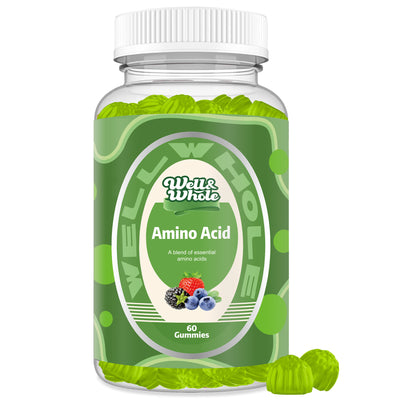
If you'd like to try it, EAA Gummie 60 counts Essential Amino Acids Supplement Gummies for Men and Women and Essential Amino Acid (EAA) Liquid Drops & Liver Support Liquid Supplement are the closest match to what we've covered here. Browse Amino Acids and Muscle Support to see how the alternatives compare.
These statements have not been evaluated by the Food and Drug Administration. This product is not intended to diagnose, treat, cure, or prevent any disease.