Does Lysine Help Herpes?

It usually starts with a subtle tingle on the lip or a feeling that’s hard to describe but impossible to ignore. For millions of people who carry the herpes simplex virus, that familiar sensation marks the beginning of yet another outbreak. Over time, many turn to a mix of prescription antivirals and home remedies, searching for something that not only shortens healing time but also reduces how often these episodes flare up. That search often leads to one recurring question: does lysine help herpes? The short answer is nuanced, but a growing body of experience and research points toward meaningful benefits—especially when you choose the right form and quality of lysine, such as the supplements offered by well&whole.
Understanding Herpes and the Role of Lysine
To appreciate why a simple amino acid might make a difference, it helps to understand what the herpes virus needs in order to replicate. Herpes simplex virus, whether it appears as cold sores (typically HSV-1) or genital lesions (often HSV-2), relies heavily on another amino acid called arginine to build its protein coat and multiply. In fact, many high-arginine foods—think chocolate, nuts, and seeds—are notorious for triggering outbreaks in susceptible individuals.
Lysine, on the other hand, is an essential amino acid that competes with arginine for absorption and utilization in the body. When you maintain a higher ratio of lysine to arginine, you can essentially starve the virus of the building blocks it craves. This competition doesn’t kill the virus outright but makes the cellular environment far less hospitable for it to launch a successful outbreak. Because the human body cannot produce lysine on its own, obtaining it through diet or supplementation becomes a critical part of any natural management strategy.
Summary: Lysine works by interfering with the herpes virus’s ability to use arginine, effectively reducing the conditions that allow outbreaks to start. It’s not a cure, but a supportive nutritional tool that many people integrate into a long-term approach to viral balance.
How Lysine Works Against the Herpes Virus
The mechanism goes beyond simple competition. When lysine levels are consistently high, the body’s cellular machinery is more likely to incorporate lysine rather than arginine during protein synthesis. For the herpes virus, this substitution disrupts the formation of complete, infectious viral particles. Imagine trying to build a brick wall while someone keeps swapping the bricks for blocks that don't quite fit—eventually, the structure becomes unstable. Similarly, the virus struggles to complete its replication cycle, which can translate to fewer visible lesions and a shorter duration of symptoms.
There’s also emerging evidence that lysine may exert a mild immune-modulating effect. By supporting tissue repair and collagen formation, lysine helps the skin and mucous membranes heal more rapidly once a lesion has formed. This dual action—reducing viral replication while aiding in tissue recovery—makes lysine particularly appealing for those who prefer to manage their condition without relying solely on pharmaceutical options.
Summary: The amino acid disrupts viral replication by altering the protein-building process, while also accelerating healing of damaged skin. This dual benefit is why many individuals searching for natural supplements for herpes relief keep coming back to lysine.
What the Research Says About Lysine Supplementation
The scientific record is a mixed but generally supportive picture. Several clinical studies have shown that daily lysine supplementation can reduce the frequency, severity, and healing time of recurrent herpes outbreaks. In one often-cited trial, participants taking 1,000 mg of lysine daily experienced significantly fewer lesions and faster recovery when outbreaks did occur. Other studies, however, have yielded less dramatic results, leading some reviewers to conclude that while lysine is promising, individual responses vary widely.
A key factor explaining these discrepancies lies in dosing consistency and form. Many studies that reported strong benefits used therapeutic doses—often 1 to 3 grams per day—divided throughout the day. Those using lower or sporadic doses typically showed less benefit. This matters because achieving a steady state of lysine in the bloodstream is what tilts the lysine-to-arginine balance in your favor. For people exploring lysine for cold sores management, the research suggests that patience and consistency are essential; lysine is not a one-time rescue pill but a daily foundational supplement.
Summary: Clinical data supports lysine’s potential to reduce outbreak frequency and duration, especially at consistent therapeutic doses. Results can vary, which is why quality and adherence to the right regimen are so important.
Incorporating Lysine into Your Daily Routine with well&whole
Given that not all lysine products are created equal, selecting a high-purity supplement makes a genuine difference. well&whole offers a carefully formulated lysine supplement designed to support immune balance and skin health without unnecessary fillers or artificial additives. The goal is to provide a clean, reliable source of L-lysine that integrates seamlessly into your daily wellness stack.
For those new to supplementation, starting with a daily dose of 500 to 1,000 mg is common and can be adjusted based on your body’s response and the advice of a healthcare professional. Many long-term users take their well&whole lysine with breakfast and dinner to maintain steady blood levels. It’s also wise to pair supplementation with mindful eating—reducing high-arginine foods during periods of stress or fatigue can amplify the protective effect. Travel, exam stress, or even a few sleepless nights often serve as outbreak triggers, and these are the moments when consistent lysine intake really shines.
Clients frequently tell us that making well&whole lysine a non-negotiable part of their morning routine transformed their relationship with the virus. Instead of living with anxiety about the next outbreak, they experience a sense of control that feels both empowering and discreet. After all, managing a chronic viral condition should fit into your life, not dominate it.
Summary: A quality supplement like well&whole lysine, taken consistently and ideally paired with dietary awareness, can help maintain the body’s natural defense against outbreak triggers. It’s a practical, everyday solution for those committed to sustainable herpes symptom control without prescription dependency.
Safety, Dosage, and Final Considerations
Lysine is generally well tolerated, with a strong safety profile when used within recommended limits. The most common side effects, when they do occur, are mild gastrointestinal symptoms such as nausea or abdominal cramps, usually at doses exceeding 10 grams per day—far above what most people take for maintenance. Still, anyone with underlying kidney or liver conditions should consult a physician before beginning any new supplement regimen, because amino acid metabolism can place additional demands on these organs.
For the majority of healthy adults, the best lysine dosage for herpes outbreaks falls between 1 and 3 grams daily, split into two or three doses. During an active outbreak, some practitioners suggest increasing the dose temporarily to 3 grams per day for a few days to help speed resolution. It’s a strategy worth discussing with a knowledgeable provider, especially if you’re also using prescription antivirals or topical treatments—lysine tends to complement rather than interfere with these approaches.
What makes lysine such a compelling option is not that it offers a cure, but that it provides a measure of agency. The herpes virus is persistent by nature, but with the right tools, you can significantly influence how often and how intensely it manifests. well&whole is committed to supporting that journey with supplements that meet rigorous purity standards, because we believe managing your health should be straightforward and transparent.
Summary: Lysine is safe for most people, with therapeutic doses ranging from 1 to 3 grams daily. It works best as part of a consistent, long-term wellness strategy, not a quick fix, and well&whole ensures you have a product you can trust for the long haul.
Frequently Asked Questions
How much lysine should I take daily to prevent herpes outbreaks?
Many people find that a maintenance dose of 1,000 mg per day is effective for prevention. If you notice early signs of an outbreak, you might increase this to 3,000 mg daily for a few days, always spread out across meals. However, individual needs vary, so it’s wise to start low and adjust under professional guidance.
Can I take lysine with other herpes medications?
Yes, lysine is generally considered safe to use alongside prescription antiviral drugs like acyclovir or valacyclovir. Because lysine works through a different mechanism—competing with arginine rather than directly inhibiting viral DNA—it does not typically interfere with these medications. Still, inform your healthcare provider about any supplements you’re taking.
Are there any side effects of long-term lysine use?
Long-term use of lysine at standard dosages (up to 3 grams per day) is well tolerated by most people. Rare side effects include stomach discomfort or diarrhea, usually only at very high intakes. As with any supplement, periodic evaluation with your doctor helps ensure continued safety, particularly if you have pre-existing kidney concerns.
Related supplements
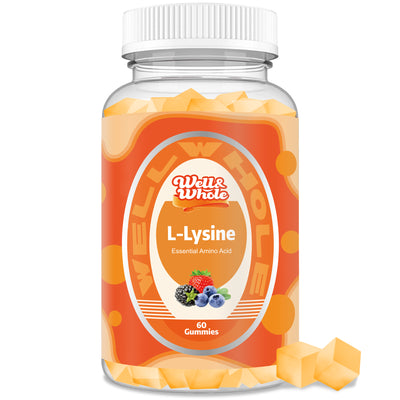
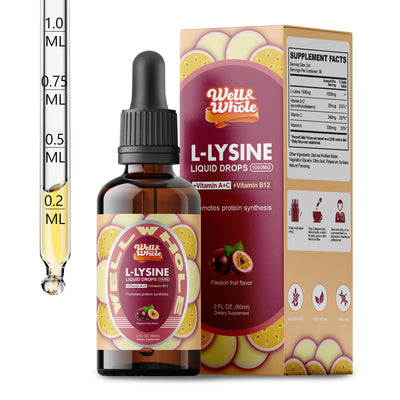
If you're ready to put this into practice, our L-Lysine 1000mg Essential Amino Acid Supplement Gummies for Kids and Adults and L-Lysine Supplement Liquid Drops 1000mg are formulated with this in mind. You can also compare the L-lysine and Amino Acids ranges to find the format that suits you.
These statements have not been evaluated by the Food and Drug Administration. This product is not intended to diagnose, treat, cure, or prevent any disease.