Do You Really Need a Multivitamin? What Science Actually Says

For most healthy adults eating a reasonably varied diet, a multivitamin is not the health insurance the label implies — large randomized trials, including the Physicians' Health Study II and the COSMOS program, have found no reduction in heart disease or overall mortality. But "useless" is the wrong verdict too: specific groups — older adults, pregnant women, people with restrictive diets — have documented gaps that a sensibly dosed multivitamin fills. The myth is not that multivitamins exist; it is that everyone needs one equally.
Key takeaways
- Cardiovascular and mortality benefits from multivitamins: consistently absent in large RCTs, including a 2022 USPSTF evidence review.
- Real signals exist for cancer (modest, in COSMOS) and cataracts (Physicians' Health Study II), alongside negative findings elsewhere.
- Clear beneficiaries: pregnant women (folic acid), adults over 50 (B12 absorption), vegans, and people on medically restricted diets.
- A multivitamin cannot replace vegetables and fruit — fiber, potassium, and phytochemicals do not come in a tablet.
What the big trials actually tested and found
Physicians' Health Study II followed nearly 15,000 male physicians for over a decade and found no cardiovascular benefit — no reduction in heart attacks, stroke, or mortality — but did report an 8% reduction in total cancer incidence and, notably, a reduction in cataracts, published in Ophthalmology in 2013. The COSMOS trial in over 21,000 participants echoed a modest cancer signal in secondary analyses and, interestingly, showed slowed cognitive aging in the COSMOS-Mind substudy published in Alzheimer's & Dementia in 2022 — a finding that needs replication before celebrations begin.
The systematic review behind the USPSTF's 2022 statement reached the blunter conclusion: insufficient evidence that multivitamins prevent cardiovascular disease or cancer in the general population, and no mortality benefit. Taken together, the pattern is not "worthless" but "narrower than advertised."
Who genuinely benefits
- Pregnant women and those planning pregnancy: folic acid 400 mcg daily before conception is one of the clearest win cases in all of nutrition, reducing neural tube defects. This is guideline-grade, not debatable.
- Adults over 50: up to a third absorb food-bound B12 poorly; a multi containing B12 quietly closes that gap.
- Vegans and strict vegetarians: B12, and often zinc, iron, and iodine depending on diet composition.
- People on prolonged restrictive diets — weight-loss programs, elimination diets, or medical exclusions — where an honest diet audit shows coverage gaps.
What a multivitamin cannot do
The failure mode of multivitamin thinking is substitution: taking the pill and treating the produce aisle as optional. Whole plants deliver fiber, potassium, and thousands of polyphenols in combinations no supplement replicates. Cohort studies consistently find that fruit and vegetable intake predicts longevity; multivitamin use does not, in the randomized data. The tablet is a patch for specific gaps, not a floor beneath an empty diet.
There is also the over-dose trap: a multi stacked on top of fortified foods and individual supplements can push certain nutrients — vitamin A, niacin, zinc — past sensible ceilings. More is not better; adequacy is the target.
How to choose one if you decide you need it
Three filters do most of the work:
- Doses near 100% of the Daily Value, not 500–5000%. Mega-dosing is marketing, not nutrition.
- Contains B12 in an absorbable form, iodine, zinc, and vitamin D, and either contains folic acid or is chosen deliberately depending on your life stage and pregnancy plans.
- Third-party certification (USP, NSF) — since supplements are not pre-market approved by the FDA, verification seals are the practical quality check.
A sensible multi costs pennies a day and should never feel like a second mortgage. If the bottle is expensive, it is selling you a story.
A five-minute audit before you buy anything
Before joining either camp — supplement or skeptic — spend five honest minutes auditing what you actually eat in a typical week. Three questions settle most decisions. First: how many servings of fruit and vegetables did yesterday really contain, counting the ones you ate rather than the ones you intended? Persistent answers below five favor a basic multi as gap insurance. Second: how much animal product do you eat? Vegans and near-vegans need B12 by any route — fortified foods or a supplement — no matter how good the rest of the diet is. Third: are you over 50, pregnant, or planning pregnancy? Each of those answers moves you into a documented-benefit group rather than the "probably unnecessary" pile. This quick self-audit matches how the trial data actually stratifies: multivitamins show their clearest value where documented nutrient gaps exist, and their clearest irrelevance where a varied diet already covers the bases.
Frequently asked questions
Do multivitamins cause harm in healthy people?
At standard doses, trials show no meaningful harm signal. Risk enters with mega-dose products or stacking multiple supplements that overlap on vitamin A, iron, and niacin.
Should I take a multivitamin with food?
Yes — fat-soluble vitamins A, D, E, and K absorb better alongside a meal containing some fat, and taking it with food also reduces the nausea some people experience on an empty stomach.
Is a "whole-food" multivitamin better than synthetic?
Marketing distinction more than a proven one: head-to-head absorption comparisons generally show similar bioavailability for most nutrients. Certification and dose logic matter more than the source story on the label.
Can a multivitamin replace individual vitamin D or B12 supplements?
Only if the amounts match your needs. A typical multi carries 400–800 IU of vitamin D and modest B12 — fine for maintenance, but someone with documented deficiency may still need targeted higher-dose supplementation as directed by their clinician.
Related supplements
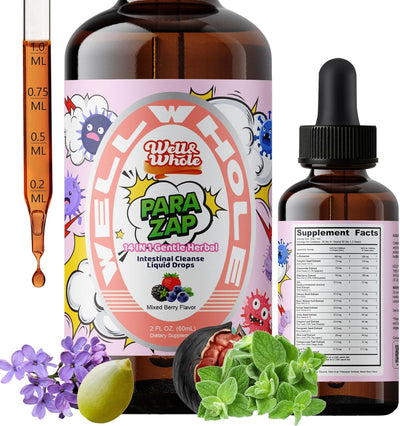
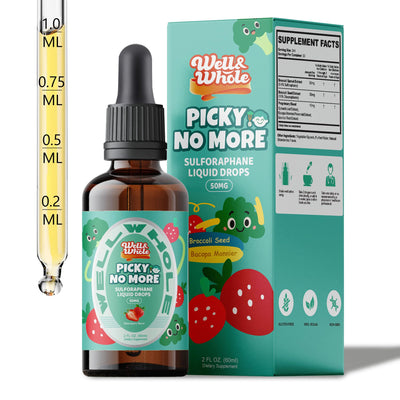
If you're ready to put this into practice, our Kids’ Black Walnut Digestive Support Drops, 14-in-1 Herbal Formula, Mixed Berry, Ages 1+, 2 fl oz and Sulforaphane Broccoli Supplement Liquid Drops for Kids with Sulforaphane, Glucoraphanin, Bacopa Monnieri are formulated with this in mind. You can also compare the Immune Support and Digestive Support ranges to find the format that suits you.
These statements have not been evaluated by the Food and Drug Administration. This product is not intended to diagnose, treat, cure, or prevent any disease. Talk to a healthcare professional before starting any new supplement, especially if you are pregnant, nursing, taking medication, or managing a health condition.