Do Kids Need Multivitamins? What Pediatric Guidance Says

Most healthy children do not need a multivitamin. Pediatric guidance in the United States focuses on two nutrients for specific ages and situations: vitamin D for breastfed infants and iron for babies starting solids, plus a short list of medical or dietary exceptions. A varied diet does the rest.
That answer surprises parents because the supplement aisle suggests otherwise. Gummies are colourful, chewable, and marketed with cartoons. The gap between what most children need and what is being sold to them is wide, and in one specific case the mismatch is genuinely risky.
What pediatric guidance actually targets
- Vitamin D for exclusively breastfed infants. Breast milk does not supply enough vitamin D, so the American Academy of Pediatrics recommends 400 international units daily starting soon after birth. Formula-fed infants usually get enough from formula.
- Iron from around four to six months. Full-term breastfed infants need an iron source once their own stores run low, which is why the recommendation is a supplement or iron-fortified cereal until iron-rich foods are established.
- Vitamin D continues through childhood. Many children do not drink enough fortified milk or spend enough time outdoors, so 400 to 600 international units daily is commonly advised.
- Vitamin K at birth. Given as an injection, and not something a parent manages at home.
Notice what is absent from that list: a general multivitamin for a healthy child eating a mixed diet.
The nutrients that genuinely go missing
When children do fall short, it is usually in a narrow set rather than across the board.
| Nutrient | Who is at risk | Why |
|---|---|---|
| Vitamin D | Breastfed infants, northern latitudes, children who spend most time indoors, limited milk intake | Sun exposure produces most vitamin D, and diet supplies little. Kidneys and young skin make it less efficiently. |
| Iron | Toddlers who drink a lot of cow's milk, vegan and vegetarian children, premature babies | Excess milk displaces iron-rich food and reduces absorption. Plant iron is far less bioavailable. |
| Calcium | Children who avoid dairy and do not eat fortified alternatives | Rare when diet is varied, but a real gap in dairy-free households without substitutes. |
| B12 | Strictly vegan children and infants of vegan mothers | B12 occurs naturally only in animal foods. This is not optional for a vegan child. |
| Zinc | Highly restrictive eaters, some malabsorption conditions | Low intake plus phytate-heavy diets reduce availability. |
When a pediatrician really does recommend a supplement
- Strict vegan or vegetarian diets. B12 is essential, and iron, zinc and omega-3 fatty acids usually need attention too.
- Chronic conditions affecting absorption. Coeliac disease, inflammatory bowel disease, cystic fibrosis and after some gastrointestinal surgery.
- Long-term medication. Some anticonvulsants and acid suppressants change nutrient requirements.
- Severe picky eating that has limited the diet for months. Not a week of refusing broccoli, but a genuinely narrow food list, sometimes with a feeding therapist involved.
- Growth faltering or a documented deficiency on a blood test. Here the supplement is a treatment with a target and a repeat test, not a general tonic.
- Prematurity or low birth weight. Iron and vitamin D needs are different from term babies.
The gummy problem, and it is not cosmetic
Most kids' gummies contain no iron at all, which quietly defeats the purpose for the children who most need it. Worse, chewable and gummy vitamins with iron are a leading cause of pediatric iron poisoning, because children treat them as sweets. Iron overdose is a genuine medical emergency in young children. If you buy a supplement containing iron, treat it like medication: child-resistant cap, out of reach, and count the tablets.
Two other label traps matter for children. "Natural" says nothing about dose, and a gummy's sugar and gelatin content says nothing about nutrition. And more than one gummy brand on the shelf recommends two or three pieces per day, which is easy to double up by accident when a second adult in the house also hands them out.
Key takeaways
- Healthy children eating a varied diet generally do not need a multivitamin.
- Vitamin D, usually 400 to 600 international units daily, is the most common targeted recommendation.
- Iron matters most in the first two years and for vegan children, and it is the nutrient most often missing from gummies.
- Vegan children need B12. It is not optional and it cannot be skipped by relying on plant foods.
- Iron-containing supplements should be stored like medicine. Pediatric iron overdose from chewables is a real and preventable harm.
- Any supplement for a child should follow a specific reason and, where possible, a blood test rather than a general feeling.
Comparing the formats
| Format | Best suited to | Limitations |
|---|---|---|
| Liquid drops | Infants and toddlers, precise dosing, easy to mix into food | Refrigeration needs and shorter shelf life once opened |
| Chewable tablet | Children about four and older who can chew properly | Often contains iron, so storage safety matters |
| Gummy | Children who refuse everything else and need vitamin D only | Usually no iron or calcium, plus sugar and a real overdose risk |
| Powder | Children who cannot swallow and dislike liquids | Requires measuring and mixing, and taste can be a barrier |
How to read a kid label in thirty seconds
Check the serving size and whether the label is per gummy or per two gummies. Compare each nutrient against the daily value for your child's age rather than an adult figure. Look for third-party testing, because supplements are regulated as food and not pre-approved for accuracy. Check for iron and note the amount. And check whether your child already takes a fortified cereal, milk alternative or protein powder, since those stack.

Frequently asked questions
Should a picky eater take a multivitamin?
Usually start with the diet rather than the bottle. If the narrow eating has lasted months, or growth has flattened, a pediatrician can check iron and vitamin D first. A targeted supplement is then based on a real gap instead of a general guess.
Can kids take adult multivitamins at a lower dose?
No. Adult formulations often carry iron, vitamin A and other fat-soluble nutrients at levels that are inappropriate for children, and halving a tablet does not fix the ratio. Use a product formulated for your child's age.
Do gummy vitamins contain iron?
Most do not, because iron tastes metallic and can make gummies spoil. That is exactly why children who need iron should not be given a multivitamin gummy as a substitute for a properly formulated product.
Is vitamin D alone enough for a child in winter?
Vitamin D is usually the only single nutrient worth supplementing across a healthy childhood, and it matters most in winter and at northern latitudes. Iron and B12 depend on diet and age, so those follow the specific guidance above.
Related supplements
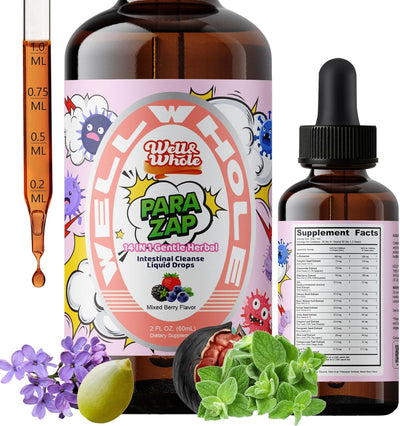
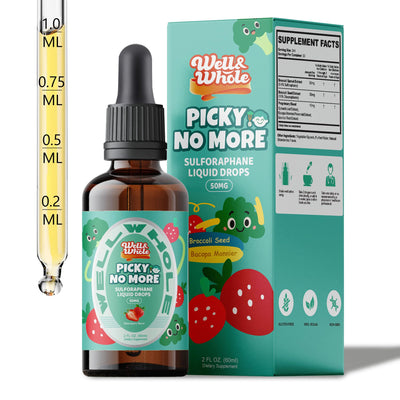
If you're ready to put this into practice, our Kids’ Black Walnut Digestive Support Drops, 14-in-1 Herbal Formula, Mixed Berry, Ages 1+, 2 fl oz and Sulforaphane Broccoli Supplement Liquid Drops for Kids with Sulforaphane, Glucoraphanin, Bacopa Monnieri are formulated with this in mind. You can also compare the Immune Support and Digestive Support ranges to find the format that suits you.
These statements have not been evaluated by the Food and Drug Administration. This product is not intended to diagnose, treat, cure, or prevent any disease. Talk to a healthcare professional before starting any new supplement, especially if you are pregnant, nursing, taking medication, or managing a health condition.