Do Beef Organ Supplements Really Work? Evidence Review
Do beef organ supplements actually work? We review the scientific evidence, studies, and real-world results behind desiccated organ supplements.

The supplement industry is full of bold claims, and beef organ supplements are no exception. Proponents call them "nature's multivitamin," while skeptics dismiss them as glorified meat powder. So where does the truth lie?
The concept of "like supports like"—the idea that consuming the organs of an animal supports the corresponding organs in your body—has roots in traditional diets across cultures. But does modern science support it?
In this article, we'll separate myth from fact by examining the actual research behind beef organ supplements. We'll look at what studies say about the nutrient content, bioavailability, and potential health benefits of desiccated organ supplements. No hype—just evidence.
Myth #1: "Beef Organ Supplements Are Just Protein Powder"
The reality: They contain unique nutrients not found in muscle meat
This is perhaps the most common misconception. Beef organ supplements are fundamentally different from standard protein powders, which are derived from muscle tissue. Organs like liver, kidney, and heart contain concentrated amounts of nutrients that muscle meat simply doesn't provide in meaningful quantities.
A 2017 analysis published in the *Journal of Food Composition and Analysis* compared the nutrient profiles of beef muscle meat and beef organs. The findings were striking:
- **Liver** contains 50-100 times more vitamin A than muscle meat
- **Kidney** is significantly richer in selenium and B vitamins
- **Heart** is the richest natural source of CoQ10 among beef tissues
- **All organs** contain substantially more folate, choline, and bioavailable iron than muscle meat
These nutrients aren't incidental—they play essential roles in energy metabolism, immune function, cardiovascular health, and more. When you take a beef organ supplement, you're not getting "just protein." You're getting a complex matrix of bioactive compounds.
Myth #2: "There's No Scientific Evidence for Organ Supplements"
The reality: The evidence exists—but it's nuanced
It's true that there are few large-scale clinical trials specifically testing desiccated organ *supplements*. However, there's a substantial body of research on the individual nutrients found in organs and their health effects.
**Vitamin B12 and Cognitive Function**: A 2016 study in *The American Journal of Clinical Nutrition* found that B12 supplementation improved cognitive markers in deficient older adults. Beef liver is one of the most concentrated natural sources of B12.
**Heme Iron and Energy**: Research published in *Blood* (2019) demonstrated that heme iron—the form found in animal tissues—is absorbed 2-3 times more efficiently than non-heme iron from plants. Organ meats are rich in heme iron.
**Choline and Liver Health**: A 2019 review in *Nutrients* highlighted choline's critical role in preventing fatty liver disease and supporting brain development. Beef liver contains more choline per gram than almost any other food.
**CoQ10 and Heart Health**: A meta-analysis in the *Journal of the American College of Cardiology* (2017) found that CoQ10 supplementation was associated with improved outcomes in heart failure patients. Beef heart is a natural source of CoQ10.
**DAO Enzyme and Histamine**: A 2018 study in *Scientific Reports* showed that diamine oxidase (DAO), concentrated in beef kidney, may help degrade dietary histamine in the digestive tract. This supports the use of kidney supplements for histamine-related concerns.
The evidence doesn't come from a single "organ supplement study." It comes from decades of research on the specific bioactive compounds that organs contain—and the science is solid.
Myth #3: "Cooking or Processing Destroys All the Nutrients"
The reality: Freeze-drying preserves the nutrient profile
This myth has a kernel of truth—high-heat cooking does degrade some nutrients, particularly heat-sensitive B vitamins and enzymes. But quality organ supplements use **freeze-drying** (lyophilization), a low-temperature dehydration process that preserves the nutritional integrity of raw organs.
A 2020 study in *Food Chemistry* compared freeze-dried and heat-dried beef liver and found that freeze-drying retained over 95% of B vitamins and nearly 100% of fat-soluble vitamins like vitamin A. Enzyme activity was also significantly better preserved compared to heat-dried samples.
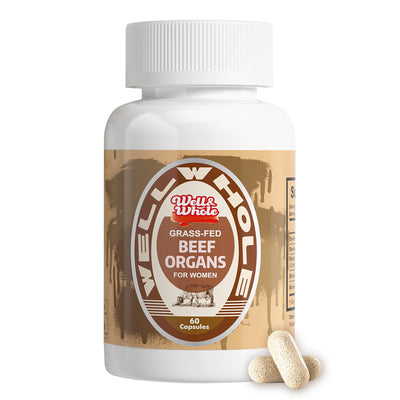
When choosing an organ supplement, the processing method matters. well&whole Grassfed Beef Organ Capsules use freeze-dried organs from grass-fed cattle, preserving the full spectrum of naturally occurring nutrients.
Myth #4: "You Can Get All These Nutrients from a Multivitamin"
The reality: Whole-food nutrients have superior bioavailability
Synthetic multivitamins contain isolated vitamins and minerals, often in forms that differ from those found in food. The bioavailability—the proportion your body actually absorbs and uses—can be significantly lower.
| Nutrient | Food Form (Organs) | Synthetic Form | Bioavailability Difference |
|---|---|---|---|
| Vitamin A | Retinol (preformed) | Beta-carotene (provitamin) | Retinol is directly usable; beta-carotene requires conversion (efficiency varies by genetics) |
| Iron | Heme iron | Ferrous sulfate | Heme iron absorbed 2-3x more efficiently |
| Folate | Methylfolate | Folic acid | Up to 40% of population has MTHFR variants reducing folic acid conversion |
| B12 | Methylcobalamin | Cyanocobalamin | Methylcobalamin is the active form; cyanocobalamin requires conversion |
A 2018 review in *Advances in Nutrition* concluded that nutrients consumed as part of whole foods provide benefits beyond their isolated forms, due to synergistic interactions between co-occurring compounds. This is sometimes called the "food matrix effect."
What the Research Doesn't Tell Us
To be transparent, there are limitations to the current evidence:
1. **Few supplement-specific trials**: Most research examines individual nutrients or whole-food organ consumption, not desiccated supplements specifically. The extrapolation is reasonable but not perfectly direct.
2. **The "like supports like" theory**: While the nutrient content of organs is well-documented, the specific claim that eating liver supports your liver (beyond its general nutrient contribution) lacks direct clinical evidence. The benefits are better explained by the dense nutrient profile than by any organ-specific targeting.
3. **Individual variability**: Responses depend on baseline nutrient status. Someone deficient in B12 or iron will notice more dramatic effects than someone with optimal levels.
4. **Sourcing matters**: The nutrient profile of organs varies based on the animal's diet and environment. Grass-fed, pasture-raised cattle produce more nutrient-dense organs than grain-fed animals.
What Real-World Users Report
While anecdotal, user experiences align with what the science would predict:
- **Increased energy** (consistent with B12 and iron content)
- **Improved skin** (consistent with vitamin A and collagen-supporting nutrients)
- **Better digestion and reduced histamine reactions** (consistent with DAO in kidney)
- **Enhanced exercise recovery** (consistent with CoQ10 in heart tissue)
How to Choose an Effective Organ Supplement
| Factor | What to Look For |
|---|---|
| Source | Grass-fed, pasture-raised cattle |
| Processing | Freeze-dried (not heat-processed) |
| Purity | No fillers, artificial additives, or synthetic vitamins |
| Organ variety | Multi-organ blends for broader nutrient coverage |
| Third-party testing | Verified for purity and contaminant-free |
well&whole Grassfed Beef Organ Capsules meet these criteria, offering a multi-organ blend from grass-fed cattle in a convenient capsule form.

FAQ
Q: How long does it take to feel results from beef organ supplements?
A: Most people report noticeable changes within 2-4 weeks, though individual results vary based on baseline nutrient status.
Q: Are beef organ supplements safe?
A: When sourced from grass-fed, pasture-raised cattle and taken as directed, they are generally safe. However, their high vitamin A content means you should not exceed recommended doses.
Q: Can I take organ supplements if I'm already taking a multivitamin?
A: It's best to avoid doubling up on certain nutrients, especially vitamin A and iron. Consult your healthcare provider to review your total intake.
Q: Do organ supplements contain heavy metals?
A: Quality supplements from reputable brands test for heavy metals and contaminants. Always choose products that are third-party tested.
Q: Are organ supplements better than eating organ meats?
A: Supplements offer convenience and consistency. If you regularly eat organ meats, supplements may be less necessary. For most people who don't eat organs regularly, supplements fill an important gap.
Q: Can vegetarians benefit from organ supplements?
A: Organ supplements are animal-derived and not suitable for vegetarians or vegans. Plant-based alternatives like nutritional yeast or algae-based B12 can provide some analogous nutrients.
Q: Do organ supplements work for athletes?
A: The B vitamins, iron, and CoQ10 in organ supplements support energy production and recovery, which may benefit athletes.
Q: Is "like supports like" scientifically proven?
A: The specific concept of organ-to-organ targeting is not directly proven. However, the dense nutrient content of organs is well-documented and explains their benefits through general nutritional mechanisms.
Conclusion
The evidence is clear: beef organ supplements are far more than just protein powder. They provide a concentrated source of bioavailable nutrients—including B12, heme iron, choline, CoQ10, and DAO—that are difficult to obtain in equivalent amounts from other foods or synthetic supplements.
While the "like supports like" theory lacks direct clinical proof, the nutritional science is solid. The key is choosing a high-quality, freeze-dried, grass-fed product and using it consistently.
If you're looking to experience the benefits for yourself, well&whole Grassfed Beef Organ Capsules offer a multi-organ blend designed to support total body wellness—backed by the nutritional science that makes organ supplements genuinely effective.
Related supplements
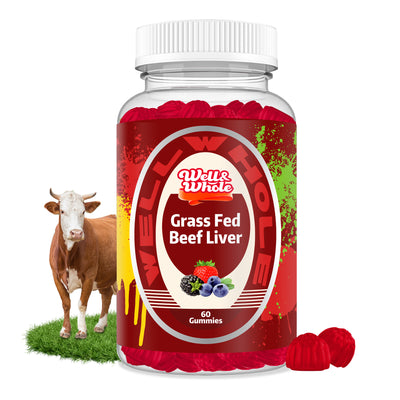
If you're ready to put this into practice, our Grass Fed Beef Liver Supplement Gummies with 60 Count for Full Wellness and Grassfed Beef Organ Supplement Capsules, Grass Fed & Pasture Raised, Total Body Wellness Support are formulated with this in mind. You can also compare the Vitamin A and Health Benefits ranges to find the format that suits you.
These statements have not been evaluated by the Food and Drug Administration. This product is not intended to diagnose, treat, cure, or prevent any disease.