Digestive Health Stack: Slippery Elm vs Black Walnut
Compare slippery elm vs black walnut for digestive support. Learn how mucilage-based soothing differs from antimicrobial gut cleansing and find your ideal match.

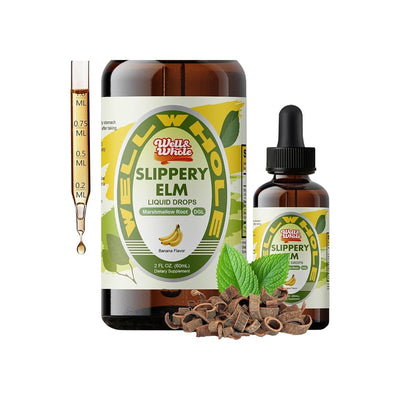
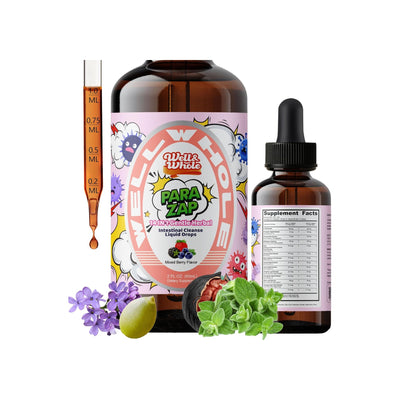
When building a digestive health supplement stack, two of the most respected botanicals are slippery elm and black walnut. Both have centuries of traditional use for gut support, both are available through well&whole—Slippery Elm Liquid Drops and Black Walnut Gut Cleanse for Kids—but they approach digestive health from fundamentally different angles.

Slippery elm is the "soother"—a mucilage-rich herb that coats and protects irritated tissue. Black walnut is the "cleanser"—a tannin-rich botanical traditionally used to address microbial imbalances and support gut environment reset. Understanding the difference between these approaches is key to choosing the right tool for your digestive concern.
This comparison article examines how each herb works, when each is most appropriate, and whether combining them in a digestive stack makes sense.
Mechanism Comparison: Soothing vs Cleansing
Slippery Elm: The Gut Soother
Slippery elm's approach to digestive health is physical and protective:
**Primary mechanism**: Mucilage coating
- When slippery elm bark is mixed with water, its mucilage (a complex polysaccharide) forms a viscous, gel-like substance
- This gel coats the throat, stomach, and intestinal lining, creating a physical barrier that protects irritated tissue from further contact with digestive acids, enzymes, and irritants
- The coating is purely physical—it doesn't chemically alter gut function but creates conditions for healing by reducing ongoing irritation
**Complementary actions**:
- Marshmallow root in [well&whole Slippery Elm Liquid Drops adds additional mucilage for enhanced coating

- DGL licorice supports the body's natural mucus production, strengthening the protective layer from within
- The combination creates a three-layer approach: external coating (slippery elm + marshmallow) + internal mucus stimulation (DGL)
**Think of it as**: Putting a protective bandage over irritated gut tissue so it can heal without ongoing irritation.
Black Walnut: The Gut Cleanser
Black walnut's approach is environmental and antimicrobial:
**Primary mechanism**: Antimicrobial and astringent action
- Black walnut hull contains juglone (a naphthoquinone with documented antimicrobial properties), tannins (astringent compounds), and flavonoids
- Juglone has been shown to have activity against various microorganisms, potentially helping rebalance gut microbial populations
- Tannins create an astringent (tightening) effect on gut tissue, which may help tone the intestinal lining
- The overall effect is a "reset" of the gut environment—addressing microbial imbalances that may be contributing to digestive dysfunction
**Think of it as**: Cleaning and disinfecting a wound so the environment is right for healing.
Detailed Comparison
| Factor | Slippery Elm | Black Walnut |
| Primary action | Mucilage coating/soothing | Antimicrobial/astringent |
| Approach type | Physical protection | Environmental rebalancing |
| Target tissue | Irritated gut lining | Gut microbial environment |
| Speed of onset | Rapid (mucilage acts quickly) | Moderate (microbial shifts take time) |
| Taste/texture | Neutral, gel-like (in drops) | Earthy, slightly bitter |
| Format | Liquid drops | Kids-formulated liquid |
| Best for | Irritation, sensitivity, lining support | Microbial imbalance, gut environment reset |
| Safety profile | Very gentle; Class 1 AHPA | Generally safe; antimicrobial caution |
| Duration of use | Can be used long-term | Often used in cycles |
| Age range | Adults (primary); children with guidance | Kids-formulated; adults can also use |
When to Choose Slippery Elm
Best Use Cases
Slippery elm is the right choice when your digestive concern centers on **irritation and sensitivity**:
- **Heartburn/acid reflux discomfort**: The mucilage coating can soothe the throat and esophageal lining
- **Sensitive stomach**: When eating triggers burning, discomfort, or nausea
- **Post-illness digestive recovery**: After a stomach bug or food poisoning, when the gut lining is raw
- **Food sensitivity flare-ups**: When certain foods cause immediate gut discomfort
- **IBS-related gut lining support**: For soothing irritated intestinal tissue (complementary, not a treatment)
- **Leaky gut support**: For protecting compromised intestinal lining from further irritation
The Logic
When the gut lining is irritated, continuing to expose it to digestive acids, enzymes, and food irritants prevents healing. Slippery elm's mucilage creates a protective layer that reduces ongoing exposure, giving the tissue a chance to recover. This approach is analogous to applying a burn cream to damaged skin—protection first, then healing.
When to Choose Black Walnut
Best Use Cases
Black walnut is the right choice when your digestive concern centers on **environmental imbalance**:
- **Post-travel gut reset**: Travel, especially international, can disrupt gut microbial balance through new foods, water, and environments
- **Suspected microbial imbalance**: When bloating, gas, or irregular bowel habits suggest gut flora may be out of balance
- **Seasonal gut tune-ups**: Periodic gut environment maintenance between more intensive protocols
- **Kids' gut support**: well&whole Black Walnut Gut Cleanse for Kids is specifically formulated for children's gut health

- **After antibiotic courses**: When gut microbial populations have been disrupted by medication
The Logic
When the gut environment is imbalanced—overgrown with undesirable microorganisms or lacking beneficial populations—soothing alone won't address the root cause. Black walnut's antimicrobial properties may help create a cleaner environment where beneficial flora can re-establish. This approach is analogous to weeding a garden before planting—clearing the space first, then allowing good plants to flourish.
Can You Combine Them? The Digestive Stack
The Sequential Approach
Many herbalists recommend using these herbs sequentially rather than simultaneously:
Phase 1 — Cleanse (Black Walnut)
- Use black walnut for 2-4 weeks to address microbial imbalances and create a cleaner gut environment
- This phase "clears the ground" by reducing problematic microbial populations
Phase 2 — Soothe + Restore (Slippery Elm)
- After the cleanse phase, transition to slippery elm for 4-8 weeks
- This phase "nourishes the soil" by coating and protecting the gut lining while it rebuilds
- The combination of marshmallow root and DGL licorice provides additional mucus-stimulating support
Phase 3 — Maintain
- Continue with slippery elm as needed for ongoing gut lining support
- Periodically (every few months) do a brief black walnut course for gut environment maintenance
Why Sequential Rather Than Simultaneous?
- **Mucilage may reduce antimicrobial delivery**: Slippery elm's mucilage coating could theoretically reduce the delivery of black walnut's antimicrobial compounds to gut tissue. Taking them at the same time may mean the mucilage barrier prevents juglone from reaching its target.
- **Different goals**: Cleansing and soothing are somewhat opposing actions. Cleansing involves reducing microbial populations (which can temporarily increase irritation), while soothing involves protecting from irritation. Doing both simultaneously can be counterproductive.
- **Better outcomes**: Sequential approaches allow each herb to do its job without interference.
If You Want to Combine Simultaneously
If you prefer to take both at the same time, separate them by at least 2-3 hours:
- Take black walnut first (morning), allowing its antimicrobial compounds to contact gut tissue
- Take slippery elm later (evening or before bed), allowing its mucilage to coat and protect the lining overnight
FAQ
Q1: Is slippery elm or black walnut better for gut health?
Neither is universally "better"—they address different aspects of gut health. Slippery elm soothes and protects irritated tissue; black walnut addresses microbial imbalances. Your choice depends on whether your primary concern is irritation or environmental imbalance.
Q2: Can I take slippery elm and black walnut together?
It's generally recommended to use them sequentially rather than simultaneously, as mucilage coating may reduce antimicrobial delivery. If combining, separate doses by at least 2-3 hours—black walnut first, slippery elm later.
Q3: Which one is gentler?
Slippery elm is gentler. Its mucilage mechanism is purely physical and protective, with no antimicrobial or pharmacological action. Black walnut's antimicrobial and astringent properties make it more "active" and potentially more irritating during initial use.
Q4: Is black walnut only for kids?
well&whole Black Walnut Gut Cleanse for Kids is formulated for children, but adults can also benefit from black walnut supplementation. Adults may need different dosing—consult the product label or your healthcare provider.

Q5: How long should I use each one?
Slippery elm can be used long-term (it's a Class 1 AHPA herb). Black walnut is often used in 2-4 week cycles for gut environment maintenance, with breaks between courses.
Q6: Which one is better after antibiotics?
Black walnut may be more relevant after antibiotics, as it addresses the microbial imbalance that antibiotics can cause. Follow with slippery elm to soothe any irritation from the microbial shifts.
Q7: Can slippery elm help with SIBO?
Slippery elm is not a treatment for SIBO (Small Intestinal Bacterial Overgrowth), which requires medical diagnosis and treatment. However, its soothing properties may provide complementary comfort support alongside prescribed protocols. Black walnut's antimicrobial properties may have theoretical relevance for microbial balance, but again, it's not a substitute for medical SIBO treatment.
Q8: What's the ideal digestive stack?
A common approach: (1) Black walnut for 2-4 weeks to reset the gut environment, (2) Slippery elm for 4-8 weeks to soothe and protect the lining, (3) Probiotic support throughout to rebuild beneficial flora, (4) Dietary optimization as the foundation.
Conclusion
Slippery elm and black walnut represent two essential approaches to digestive health—soothing and cleansing. Rather than competing, they complement each other as different tools for different gut concerns.
Choose well&whole Slippery Elm Liquid Drops when your gut needs soothing, coating, and protection from irritation. Choose well&whole Black Walnut Gut Cleanse for Kids when your gut environment needs a microbial reset.
For the most comprehensive approach, consider a sequential stack: cleanse first with black walnut, then soothe and protect with slippery elm. Together, they address both the environment and the lining—the two pillars of gut health.
Related supplements
Should you decide to supplement, Slippery Elm Liquid Drops, Marshmallow Root, Slippery Elm Bark Drops for Women, DGL Licorice Extract, Digestive Health, and Kids’ Black Walnut Digestive Support Drops, 14-in-1 Herbal Formula, Mixed Berry, Ages 1+, 2 fl oz are our formulation for this purpose. For a broader comparison, see the Digestive Support and Health Benefits collections.
These statements have not been evaluated by the Food and Drug Administration. This product is not intended to diagnose, treat, cure, or prevent any disease.