Digestive Enzymes vs Probiotics: What Each One Actually Does

Digestive enzymes and probiotics solve different problems, and the fastest way to tell them apart is timing and persistence: enzymes are chemical scissors that break food down on contact and stop working within hours, while probiotics are living microbes that either take up temporary residence or pass through, influencing your gut ecosystem over days to weeks. If a specific meal leaves you bloated, an enzyme is often the more targeted tool; if your digestion feels off-pattern for weeks, probiotics are the slower, ecosystem-level play.
Key takeaways
- Enzymes act mechanically, meal by meal; probiotics act biologically, over days to weeks.
- Lactase for dairy and alpha-galactosidase for beans have the clearest enzyme evidence.
- Certain probiotic strains have RCT support for IBS symptom relief (for example Bifidobacterium infantis 35624).
- Enzyme labels list activity units (USP, FCC) — weight in milligrams tells you nothing about strength.
What digestive enzymes actually do
Your pancreas and small intestine already produce the core enzyme team: amylase for starches, lipase for fats, proteases for proteins. Supplements add backup capacity or supply enzymes the human body cannot make at all. Two cases stand out with solid evidence:
- Lactase for lactose-intolerant adults: taken with the first bite of dairy, it directly hydrolyzes lactose. This is symptomatic management, not a cure, and dosing is per-meal.
- Alpha-galactosidase (the active ingredient in popular "bean enzyme" products) breaks the raffinose-family sugars in beans, crucifers, and whole grains that human enzymes cannot cut — the sugars fermenting in your colon are what produce gas and bloating.
Broad "full-spectrum" blends add lipase and protease variants, and while they are popular for general post-meal fullness, the trial base for those catch-all claims is thinner than the two cases above.
What probiotics actually do
Probiotics are living organisms — typically Lactobacillus and Bifidobacterium species or Saccharomyces boulardii — that interact with your existing gut microbiome. Most traveler's and antibiotic-associated contexts aside, the strongest evidence sits with functional gut symptoms: the strain Bifidobacterium infantis 35624 showed symptom improvement in irritable bowel syndrome in randomized trials (published in Gastroenterology, 2005–2011), and several multi-strain formulations have similar trials behind them. Effects are strain-specific and modest; "probiotics" as a category is too broad for a single verdict.
Two honest caveats: first, most supplemented strains do not permanently colonize — they work while present and stop when you stop. Second, a 2018 expert review in Cell (Suez, Zmora, Segal, Elinav) raised the possibility that in some people, probiotic re-colonization after antibiotics is actually delayed by supplementation — a reminder that the ecosystem is individual and stubborn.
Head-to-head: where each one wins
- A specific food reliably wrecks you → enzyme, matched to the food (lactase with dairy, alpha-galactosidase with beans).
- Weeks of irregularity, bloating without a clear food trigger → probiotic, strain-matched, taken consistently for at least four weeks before judging.
- During and after antibiotics → Saccharomyces boulardii or studied Lactobacillus rhamnosus GG protocols have preventive evidence for antibiotic-associated diarrhea.
- Both at once → perfectly reasonable; they do not conflict. A meal-time enzyme plus a daily probiotic is a common, sensible pairing.

Reading an enzyme label without getting fooled
Enzyme potency is measured in activity units, not milligrams. Look for USP units (pancreatic convention), FCC units such as ALU for lactase or HUT for proteases, and Fresenius units in some European products. A capsule claiming "500 mg digestive enzyme blend" without activity units is marketing weight, not measurable strength. This is the single most useful thing to know when comparing two enzyme products side by side.
Safety-wise, both categories are well tolerated. Enzymes can cause loose stools at high doses; probiotics are generally safe for healthy adults but warrant clinician input in immunocompromised people, central lines, or critical illness, where rare fungal translocation cases have been reported with probiotic use.
A simple two-week experiment to sort out what you need
If the enzyme-versus-probiotic decision feels abstract, run it as data rather than guesswork. For one week, keep a plain food log of everything that leaves you bloated, gassy, or overly full, and note whether discomfort arrives within one to three hours of a specific meal or builds over days. Next, test the enzyme hypothesis: take a matched enzyme (lactase with dairy, alpha-galactosidase with your problem meals) for five to seven days and score the same meals. If symptoms track tightly with specific foods and the enzyme helps, you have your answer. If the log shows no food pattern — just a low hum of irregularity and bloating across everything — skip ahead to a four-week strain-matched probiotic trial instead. Two weeks of honest observation beats months of alternating products on instinct, and it costs nothing but a notepad.
Frequently asked questions
Do digestive enzymes make your pancreas "lazy"?
No. There is no evidence that supplemental enzymes suppress your own enzyme production; they simply digest food in the lumen alongside your output. This myth circulates widely and is not supported by human physiology studies.
Should I take enzymes and probiotics at the same time of day?
Timing follows function: enzymes with the first bites of a meal, probiotics whenever you will remember daily — some products suggest taking them away from very hot food or drinks. Consistency matters more than clock time.
How do I know a probiotic is working?
Give a strain-matched product four weeks and track the specific symptom that prompted you — bloating scores, stool regularity, or comfort after meals. If nothing measurable changed by week four, that strain is not earning its place.
Are digestive enzyme supplements safe with medication?
Generally yes, but alpha-galactosidase can affect the absorption timing of some diabetes medications that slow gastric emptying, and anyone on anticoagulants should mention new supplements to their clinician as a blanket rule.
Related supplements
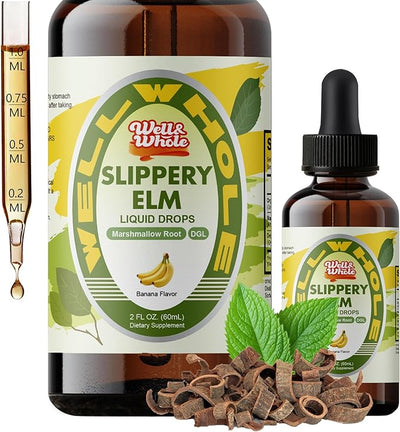
Where to begin? Our Slippery Elm Liquid Drops, Marshmallow Root, Slippery Elm Bark Drops for Women, DGL Licorice Extract, Digestive Health, and Kids’ Black Walnut Digestive Support Drops, 14-in-1 Herbal Formula, Mixed Berry, Ages 1+, 2 fl oz are a sensible place to start, and the Digestive Support collection lays out the other formats side by side with Health Benefits.
These statements have not been evaluated by the Food and Drug Administration. This product is not intended to diagnose, treat, cure, or prevent any disease. Talk to a healthcare professional before starting any new supplement, especially if you are pregnant, nursing, taking medication, or managing a health condition.