Dandelion Root: Liver + Lymphatic Double Action
Discover how dandelion root supports both liver and lymphatic health. Learn about its active compounds, diuretic effects, and detoxification benefits.

If you've ever treated dandelions as lawn pests, you're missing out on one of nature's most versatile medicinal plants. Taraxacum officinale—the common dandelion—has been used in traditional European, Chinese, and Native American herbalism for centuries to support liver function, promote healthy fluid balance, and aid the body's natural detoxification pathways.
What makes dandelion root particularly interesting is its ability to support two interconnected systems simultaneously: the liver and the lymphatic system. These two systems work together to filter, process, and eliminate metabolic waste, and dandelion root's unique phytochemistry makes it an ideal botanical for supporting this dual function.
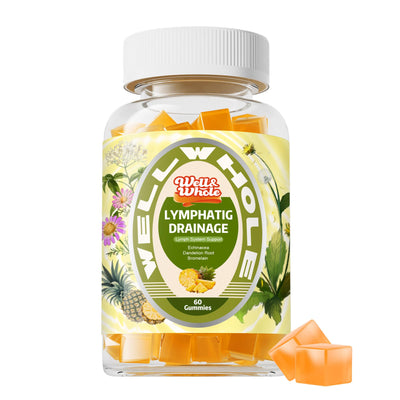
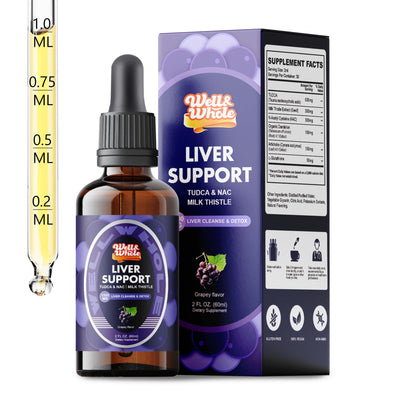
In this article, we'll explore the science behind dandelion root's liver and lymphatic benefits, its key active compounds, and how it contributes to both well&whole Lymphatic Drainage Gummies and well&whole Liver Support Drops).
The Dandelion: Nature's Multitasker
Botanical Profile
Dandelion (Taraxacum officinale) is a perennial herbaceous plant in the Asteraceae family. Though native to Eurasia, it has naturalized worldwide and grows in virtually every temperate climate. Every part of the plant is edible and medicinal:
- **Root**: Supports liver, gallbladder, and digestive health
- **Leaves**: Rich in potassium; support healthy fluid balance
- **Flowers**: Contain antioxidant compounds
- **Stem**: Traditional use for skin conditions
In traditional Chinese medicine, dandelion is known as pu gong ying and is classified as a herb that clears heat and supports liver and digestive function. In European herbalism, it has been a staple liver tonic since the 10th century.
A Nutritional Powerhouse
Beyond its medicinal compounds, dandelion is surprisingly nutritious:
| Nutrient | Content (per 100g raw leaves) |
|----------|-------------------------------|
| Vitamin A | ~14,000 IU (280% DV) |
| Vitamin C | 35 mg (58% DV) |
| Vitamin K | 778 mcg (651% DV) |
| Calcium | 187 mg (19% DV) |
| Iron | 3.1 mg (17% DV) |
| Potassium | 397 mg (11% DV) |
The root, while less nutrient-dense than the leaves, is rich in inulin (a prebiotic fiber), taraxasterol, and various polyphenols.
Dandelion Root and Liver Health
How the Liver Supports Detoxification
The liver is your body's primary detoxification organ. It performs over 500 functions, including:
- **Phase I detoxification**: Enzymes (cytochrome P450) modify toxins to make them easier to process
- **Phase II detoxification**: Modified toxins are conjugated (bound) to molecules that make them water-soluble for excretion
- **Bile production**: Bile carries processed toxins to the intestines for elimination
- **Protein synthesis**: The liver produces essential proteins including albumin and clotting factors
When liver function is compromised—by poor diet, alcohol, medications, or environmental toxins—the entire detoxification cascade can become less efficient.
Dandelion's Hepatoprotective Compounds
Research has identified several compounds in dandelion root that may support liver health:
Taraxasterol
This triterpenoid compound has demonstrated significant anti-inflammatory and hepatoprotective properties. A study published in the *Journal of Ethnopharmacology* found that taraxasterol helped protect liver cells from oxidative damage in an experimental model (1).
Inulin
Dandelion root contains up to 40% inulin by weight in autumn-harvested roots. Inulin is a prebiotic fiber that feeds beneficial gut bacteria, supporting the gut-liver axis—the bidirectional communication between the gut microbiome and liver function.
Polyphenols and Flavonoids
Dandelion root contains chlorogenic acid, luteolin, and other polyphenols with antioxidant properties. These compounds help neutralize free radicals generated during liver detoxification processes, protecting liver cells from oxidative stress.
Clinical Evidence
A study in the *Journal of Medicinal Food* demonstrated that dandelion root extract helped protect against liver injury induced by methotrexate (a medication that can cause liver damage as a side effect) in an animal model (2). The researchers attributed the protective effect to the extract's antioxidant properties.
Research published in *Food and Chemical Toxicology* showed that dandelion leaf extract exhibited significant hepatoprotective effects against acetaminophen-induced liver damage, comparable to silymarin (milk thistle extract) (3).
Dandelion Root and Lymphatic Health
The Liver-Lymphatic Connection
The liver and lymphatic system are deeply interconnected. The lymphatic system collects interstitial fluid, cellular debris, and waste products from tissues throughout the body and transports them to lymph nodes for filtering. Processed fluid then returns to the bloodstream, where the liver further metabolizes any remaining waste.
When liver function is efficient, the lymphatic system doesn't have to work as hard. Conversely, when the liver is overburdened, lymphatic flow may become sluggish as the system tries to compensate. Supporting both systems simultaneously—as dandelion root does—may offer synergistic benefits.
Dandelion as an Alterative
In traditional Western herbalism, dandelion is classified as an "alterative"—a category of herbs traditionally used to support the body's natural channels of elimination, including the lymphatic system, liver, kidneys, and skin. Alteratives were historically referred to as "blood purifiers," though modern understanding frames them as herbs that support the body's overall detoxification efficiency.
Diuretic Properties and Fluid Balance
One of dandelion's most well-documented properties is its gentle diuretic effect. A clinical study published in the *Journal of Alternative and Complementary Medicine* found that dandelion leaf extract produced a significant increase in urination frequency over a single day in healthy human subjects (4).
This diuretic action is relevant to lymphatic health because:
- The lymphatic and urinary systems both contribute to fluid balance
- By supporting healthy fluid elimination through the kidneys, dandelion may help reduce the overall fluid load that the lymphatic system must manage
- Unlike pharmaceutical diuretics, which can deplete potassium, dandelion is naturally rich in potassium, helping to maintain electrolyte balance
Anti-Inflammatory Support
Chronic inflammation can impair lymphatic flow. Dandelion root contains compounds that may help support a healthy inflammatory response:
- **Taraxasterol**: Demonstrated anti-inflammatory activity in multiple studies
- **Luteolin**: A flavonoid with well-documented anti-inflammatory properties
- **Chlorogenic acid**: May help modulate inflammatory pathways
By supporting healthy inflammatory responses, dandelion root may help maintain optimal conditions for lymphatic circulation.
Dandelion Root in well&whole Products
Lymphatic Drainage Gummies
In well&whole Lymphatic Drainage Gummies, dandelion works alongside echinacea and burdock to provide comprehensive lymphatic support. Dandelion's role in this formula is to:
- Support liver function and the liver-lymphatic connection
- Promote healthy fluid balance
- Provide antioxidant protection

Liver Support Drops
well&whole Liver Support Drops feature dandelion as a key ingredient for direct liver support. This liquid format allows for flexible dosing and rapid absorption, making it an excellent choice for those specifically targeting liver health.

How to Use Dandelion Root for Liver + Lymphatic Support
Combining Products
For comprehensive liver and lymphatic support, consider combining:
- **Lymphatic Drainage Gummies**: Daily lymphatic and immune support
- **Liver Support Drops**: Targeted liver function support
- **A liver-friendly diet**: Rich in cruciferous vegetables, leafy greens, and healthy fats
- **Regular movement**: Essential for both liver circulation and lymphatic flow
- **Hydration**: Critical for both liver detoxification and lymphatic fluid volume
Timing and Dosage
Follow product label instructions. In general:
- Take gummies with meals for better absorption
- Liquid drops can be taken directly or mixed with water
- Consistency is key—herbal supplements typically require 4-6 weeks of regular use
Precautions
- **Medication interactions**: Dandelion may interact with diuretics, lithium, and certain antibiotics. Consult your healthcare provider.
- **Gallbladder issues**: Dandelion may stimulate bile production; consult your doctor if you have gallstones or bile duct issues.
- **Allergies**: Those with daisy family allergies should use caution.
- **Blood sugar**: Dandelion may have mild blood-sugar-lowering effects; monitor if diabetic.
- **Pregnancy/nursing**: Consult your healthcare provider before use.
FAQ
Q1: Can dandelion root help with both liver and lymphatic health simultaneously?
Yes. Dandelion root supports liver function through its hepatoprotective compounds and supports lymphatic health through its diuretic and anti-inflammatory properties. Since the liver and lymphatic system are interconnected, supporting both may offer synergistic benefits.
Q2: Is dandelion root safe to take daily?
Dandelion root is generally considered safe for daily use by most adults when taken as directed. If you take medications or have underlying health conditions, consult your healthcare provider.
Q3: Will dandelion root make me urinate more?
Dandelion has documented diuretic properties, so you may notice increased urination. Unlike some pharmaceutical diuretics, dandelion is naturally rich in potassium, which helps maintain electrolyte balance.
Q4: Can I take dandelion root if I have gallstones?
Dandelion may stimulate bile production, which could potentially aggravate gallstones. Consult your healthcare provider before using dandelion if you have gallbladder issues.
Q5: How does dandelion root compare to milk thistle for liver support?
Both dandelion root and milk thistle (silymarin) have hepatoprotective properties, but they work through different mechanisms. Milk thistle is best known for its cell-protective effects, while dandelion also supports bile production and fluid balance. Some people use both for complementary liver support.
Q6: Can I get dandelion benefits from eating the plant?
Yes. Dandelion leaves can be added to salads, and roasted dandelion root is used as a coffee substitute. However, supplement forms provide standardized, concentrated doses that may be more practical for therapeutic use.
Q7: Should I choose gummies or liquid drops for dandelion?
Both formats can be effective. well&whole Lymphatic Drainage Gummies combine dandelion with other lymphatic-supporting herbs, while well&whole Liver Support Drops provide targeted liver support in a fast-absorbing liquid format.
Conclusion
Dandelion root stands out as a rare botanical that simultaneously supports the liver and the lymphatic system—two of the body's most important detoxification networks. Its combination of hepatoprotective compounds, gentle diuretic action, and anti-inflammatory properties makes it a versatile ally for anyone looking to support their body's natural cleansing pathways.
Whether you choose well&whole Lymphatic Drainage Gummies for comprehensive lymphatic support or well&whole Liver Support Drops for targeted liver function, dandelion root offers scientifically grounded, traditionally validated benefits.
Combine dandelion supplementation with a healthy diet, regular movement, and good hydration for the best results—and let this humble "weed" prove its worth as one of nature's most effective detox-supporting herbs.
Related supplements
If you'd like to try it, Liver Support Liquid Drops Supplement | TUDCA Drops Liver Cleanse & Detox with Milk Thistle, NAC, Dandelion, Artichoke & Glutathione for Detox and TUDCA 1000mg Gummies with Milk Thistle 500mg for Adults are the closest match to what we've covered here. Browse Liver Support and Milk Thistle to see how the alternatives compare.
These statements have not been evaluated by the Food and Drug Administration. This product is not intended to diagnose, treat, cure, or prevent any disease.