CoQ10: What the Evidence Says

Statins lower circulating CoQ10 levels as a side effect of the same mechanism that lowers cholesterol, and CoQ10 supplementation may reduce statin-related muscle symptoms in some users. The evidence is mixed across trials, with the most consistent benefit in people who already have mild muscle discomfort on statins. CoQ10 does not replace statin therapy and should not be used as a reason to discontinue a prescribed medication, but it is a reasonable adjunct for those who experience side effects.
The most important framing: statins are prescribed because they reduce cardiovascular events. CoQ10 is being discussed here as a tool to make that therapy more tolerable, not as a substitute for it.
What CoQ10 does in the body
Coenzyme Q10 (CoQ10) is a fat-soluble compound that lives in the inner mitochondrial membrane, where it shuttles electrons through the electron transport chain and helps generate ATP. It also exists in the reduced form, ubiquinol, which acts as a lipid-soluble antioxidant protecting cell membranes from oxidative damage. The body synthesizes CoQ10 endogenously, but synthesis peaks in young adulthood and declines steadily with age, with statin use accelerating that decline.
Why statins lower CoQ10
Both cholesterol and CoQ10 are produced through the mevalonate pathway, the same enzymatic sequence that statins block at the rate-limiting HMG-CoA reductase step. Lowering cholesterol production means lowering CoQ10 production as well. The result is a measurable drop in circulating CoQ10, often 25–50 percent in people starting statin therapy. Whether that drop is clinically meaningful is the question CoQ10 supplementation research has tried to answer.
What statin-related muscle symptoms actually look like
Statin-associated muscle symptoms (SAMS) include muscle aches, weakness, fatigue, and, in rarer cases, clinically significant myopathy. Survey data suggest 10–25 percent of statin users experience some muscle-related symptoms, though the rate is much lower in blinded trials — closer to 5 percent — which suggests a meaningful placebo contribution. For people who do experience SAMS, the practical options are dose reduction, switching to a different statin, or supplementing with CoQ10.
What the CoQ10 trials show
Meta-analyses of randomized controlled trials of CoQ10 in statin users report modest but consistent reductions in self-reported muscle pain compared with placebo. The strongest effects are seen in people with pre-existing mild symptoms, with the largest trial reporting roughly a 40 percent reduction in pain scores. Trials in people without SAMS have generally shown little benefit, which is the expected result: there is nothing for the supplement to fix if the symptom is not present. The bottom line is that CoQ10 is worth trying for people who experience statin-related muscle symptoms and want to stay on the therapy.
Dose, form, and timing
Trials that have shown benefit typically use 100–300 mg of CoQ10 per day, often split into two doses. Ubiquinol (the reduced form) is more bioavailable than ubiquinone, particularly in adults over 50 whose ability to convert ubiquinone to ubiquinol declines with age. CoQ10 is fat-soluble, so take it with a meal that contains fat to improve absorption. Allow 4–8 weeks of consistent use to judge whether the supplement is helping, since tissue-level CoQ10 restoration is not instantaneous.
What CoQ10 does not do
CoQ10 does not lower cholesterol, does not replace the cardiovascular protective effect of statins, and does not treat cardiovascular disease on its own. Marketing that positions CoQ10 as an "alternative" to statins for cardiovascular risk is misleading. The correct role of CoQ10 is as an adjunct to support tolerability of a therapy that has been proven to reduce heart attacks and strokes.
Who should be more cautious
People on warfarin should know that CoQ10 has a structural similarity to vitamin K and can reduce the anticoagulant effect of warfarin, requiring closer monitoring of INR. People on blood pressure medications may experience a small additive blood-pressure-lowering effect. Otherwise CoQ10 is generally well tolerated, with the most common side effect being mild digestive upset at high doses.
Why the framing matters
CoQ10 is one of the most well-studied supplements in the context of statin therapy, in part because the biochemistry of the interaction is unusually clean: statins lower CoQ10 through a well-understood pathway, and CoQ10 supplementation raises it back. The clinical question is whether the muscle symptoms that some people experience on statins are actually caused by that CoQ10 drop, and whether supplementation meaningfully reverses them. The honest answer from the trial literature is "sometimes, and most often in people who already had mild symptoms." That is not a universal win, but it is a real effect in a real subgroup, which is what makes CoQ10 worth considering for statin users who experience side effects rather than a blanket recommendation for everyone on a statin.
Key takeaways
- Statins lower CoQ10 levels as an unavoidable consequence of the same pathway.
- CoQ10 supplementation reduces statin-related muscle symptoms in some users, especially those with mild SAMS.
- Effective doses are 100–300 mg per day, with ubiquinol more bioavailable in older adults.
- CoQ10 supports tolerability of statins; it does not replace their cardiovascular benefit.
- Talk to a clinician before combining CoQ10 with warfarin or blood pressure medications.
Frequently asked questions
Should everyone on a statin take CoQ10?
Not necessarily. People who tolerate statins without muscle symptoms are unlikely to see additional benefit, and the cost may not be justified. People who experience SAMS or are starting a high-intensity statin are reasonable candidates to try CoQ10.
How long does CoQ10 take to work?
Tissue levels rise over 2–4 weeks of daily use. Symptomatic improvement, when it occurs, is usually reported within 4–8 weeks. If no improvement by 12 weeks, the supplement is unlikely to help.
Is ubiquinol better than ubiquinone?
For adults over 50 and people with absorption issues, yes. Ubiquinol is the active antioxidant form and is more directly usable without conversion, with several studies showing higher plasma levels at the same dose.
Can CoQ10 be taken at the same time as the statin?
Yes. CoQ10 does not interfere with the cholesterol-lowering effect of statins. Some people take both at the same evening meal since statins are typically taken in the evening and CoQ10 absorbs best with fat.
Related supplements
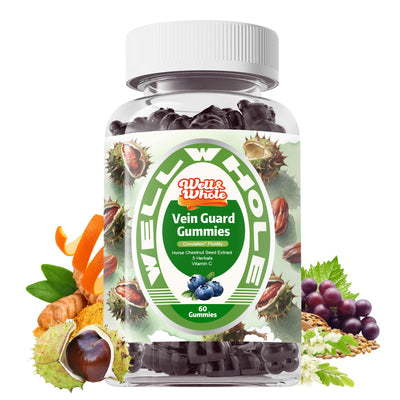
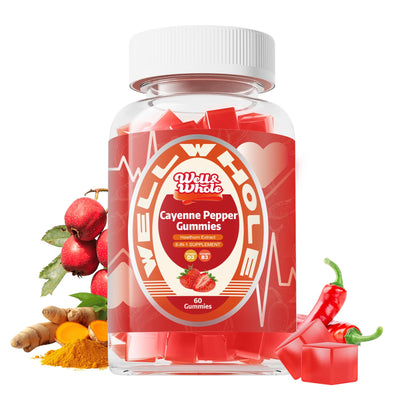
If you're ready to put this into practice, our Well&Whole Horse Chestnut Extract Gummies, Circulation Supplements for Legs and Cayenne Pepper Heart Health Gummies with Hawthorn & CoQ10 & Turmeric are formulated with this in mind. You can also compare the Heart Health and CoQ10 ranges to find the format that suits you.
These statements have not been evaluated by the Food and Drug Administration. This product is not intended to diagnose, treat, cure, or prevent any disease. Talk to a healthcare professional before starting any new supplement, especially if you are pregnant, nursing, taking medication, or managing a health condition.
These statements have not been evaluated by the Food and Drug Administration. This product is not intended to diagnose, treat, cure, or prevent any disease.