CoQ10 vs Ubiquinol: Which Form Actually Works

CoQ10 and ubiquinol are not two different molecules; they are two oxidation states of the same molecule, and the body converts ubiquinone (CoQ10) to ubiquinol (the reduced, antioxidant form) on demand. Most healthy adults under 40 convert efficiently, so plain CoQ10 is fine. From age 40 onward and especially for people on statins, conversion becomes less reliable, and ubiquinol becomes the more reliable form. The price gap is real but small in absolute terms for most doses.
What the oxidation states actually mean
CoQ10 exists in two interconvertible forms. Ubiquinone is the oxidized form, the form most clinical trials have used historically, and the form the body reduces as needed. Ubiquinol is the reduced form, the antioxidant-ready version, and the form that predominates in human blood after age 40 or so. The two molecules are identical except for two hydrogen atoms. Switching between them is part of normal cellular redox chemistry, and a healthy young body does it efficiently. The question is what happens when conversion efficiency drops — and that is where the practical difference between the two supplements lives.
How well each form is absorbed
Both forms are fat-soluble and absorb best with a meal that contains fat. Bioavailability studies generally show ubiquinol reaches higher plasma levels at the same milligram dose than ubiquinone, particularly in older adults and in people with conditions that impair fat absorption. For healthy adults under 40, the difference in plasma response is small enough that the cheaper ubiquinone form performs comparably. For adults over 40, for anyone on a statin, and for anyone with documented reduced CoQ10 status, ubiquinol produces a more reliable plasma response at the same dose.
What the evidence says about effectiveness
The clinical evidence base is mostly ubiquinone because ubiquinol was harder to stabilize as a supplement until the mid-2000s. Trials in heart failure, mitochondrial disorders, migraine prevention, and statin-induced muscle symptoms have used ubiquinone at doses from 100 to 600 mg per day with consistent results on symptoms, though effect sizes are usually modest. Trials using ubiquinol at the same nominal doses have produced comparable results, and a small number of head-to-head trials suggest ubiquinol produces a higher plasma CoQ10 level at the same dose but does not consistently produce a larger clinical effect in young healthy adults. The honest reading is that the evidence base supports both forms for the main uses; ubiquinol's edge is in absorption reliability, not in efficacy per se.
CoQ10 vs ubiquinol vs age
The strongest practical argument for ubiquinol is age. Conversion of ubiquinone to ubiquinol becomes less efficient starting around 40 and falls further with each decade. People in their 20s and 30s generally do not need ubiquinol because conversion is not the bottleneck; people in their 50s and beyond often see a more reliable response from ubiquinol, especially when the goal is to support CoQ10 status rather than to top off an already-adequate level. If budget is the main constraint, ubiquinone in a softgel taken with a fatty meal is a reasonable choice up to about age 45, and ubiquinol becomes the better value beyond that.
Statins change the calculation
Statins lower circulating CoQ10 by interfering with the mevalonate pathway, which is the same pathway that makes CoQ10. People on statins often have lower baseline CoQ10 and may notice more reliable symptom support from supplementation. Ubiquinol is the more practical choice for statin users because the conversion issue compounds with the lower starting point, and most statin-user trials have shown that the ubiquinol form restores plasma levels more predictably at a given dose. If you are on a statin and considering CoQ10, ubiquinol at 100 to 200 mg per day taken with a fatty meal is a reasonable starting point.
How to choose a dose and what to expect
For general support, 100 mg per day is the most common starting dose; for statin users, for people over 50, and for the cardiovascular and migraine indications, 200 to 300 mg per day is more typical. Take either form with the largest meal of the day, because fat absorption matters more than form. Allow at least four to eight weeks to assess the effect for most uses; plasma levels rise within days, but symptom-level changes tend to show up over weeks. If you do not see a clear benefit by eight weeks at a reasonable dose, the form or dose is probably not the right fit.
Key takeaways
- CoQ10 and ubiquinol are the same molecule in two oxidation states — the body converts one to the other as needed.
- Conversion efficiency drops with age, so ubiquinol is the more reliable form for adults over 40.
- Statins reduce CoQ10 status, making ubiquinol the practical choice for statin users.
- Both forms are well-studied; ubiquinol's edge is absorption reliability, not efficacy.
- Take either form with a fatty meal; allow 4–8 weeks to assess symptom response.
Frequently asked questions
Is ubiquinol worth the extra cost?
For adults under 40 with no specific need, plain CoQ10 taken with a fatty meal is fine and the savings is real. For adults over 40, statin users, or anyone with documented low CoQ10 status, ubiquinol is the more reliable form and the price premium is small relative to the dose in question.
Can I take CoQ10 with a statin?
Yes. Statins lower CoQ10 because they block the same pathway that makes it. Ubiquinol at 100 to 200 mg per day is a reasonable starting point for statin users; allow four to eight weeks to assess response.
When is the best time of day to take CoQ10?
With the largest meal of the day, because both forms are fat-soluble and absorb better with dietary fat. Morning or evening is less important than whether the meal contains fat.
How long until I feel a difference?
Plasma levels rise within days, but symptom-level changes for energy, statin-related muscle symptoms, or migraine frequency usually show up over four to eight weeks. If there is no clear change by eight weeks at a reasonable dose, the form or dose is probably not the right fit.
Related supplements
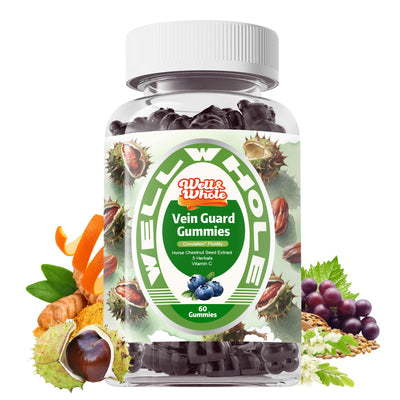
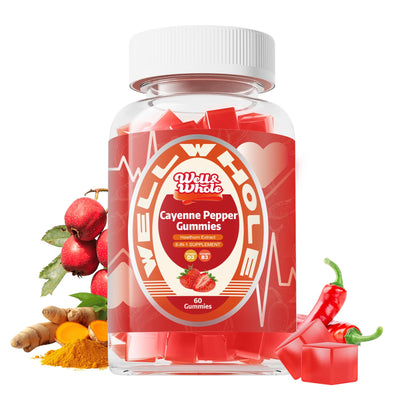
Where to begin? Our Well&Whole Horse Chestnut Extract Gummies, Circulation Supplements for Legs and Cayenne Pepper Heart Health Gummies with Hawthorn & CoQ10 & Turmeric are a sensible place to start, and the Heart Health collection lays out the other formats side by side with CoQ10.
These statements have not been evaluated by the Food and Drug Administration. This product is not intended to diagnose, treat, cure, or prevent any disease. Talk to a healthcare professional before starting any new supplement, especially if you are pregnant, nursing, taking medication, or managing a health condition.
These statements have not been evaluated by the Food and Drug Administration. This product is not intended to diagnose, treat, cure, or prevent any disease.