CoQ10, Ubiquinol, and Female Fertility

CoQ10 plays a central role in mitochondrial energy production, and that role is exactly why fertility researchers have paid attention to egg quality, especially after age 35. The available data suggest a modest but real benefit for women with diminished ovarian reserve or advanced maternal age, with the more reliable response coming from the ubiquinol form at 400 to 600 mg per day. This is a support strategy for egg quality, not a fertility treatment, and it works best when started three to six months before a conception attempt.
Why mitochondria matter for egg quality
Egg cells (oocytes) contain more mitochondria than almost any other cell type in the body — on the order of 100,000 mitochondria per cell — because the energy required for meiosis, fertilization, and early embryo division is enormous. CoQ10 sits at the heart of the mitochondrial electron transport chain, where it helps convert nutrients into ATP. As women age, both the number and the efficiency of oocyte mitochondria decline, and CoQ10 levels in follicular fluid fall with age. The hypothesis behind CoQ10 supplementation is that restoring CoQ10 in the follicular environment supports the energy supply that an embryo needs in its first few cell divisions.
What the clinical evidence actually shows
The most cited study is a 2018 trial in women aged 35 to 43 with declining ovarian reserve: 600 mg per day of CoQ10 for two months before an IVF cycle produced a higher fertilization rate, more high-quality embryos, and a trend toward higher clinical pregnancy rates than the control group. Earlier smaller studies in IVF populations suggested similar directions. The evidence is not large enough to call CoQ10 a treatment for infertility, but it is consistent enough that reproductive endocrinologists in the U.S. often recommend it as adjunctive support for women over 35 or with documented low ovarian reserve. The improvement, when it appears, is on the order of 10 to 20 percent in IVF outcome measures — real but not transformative.
Ubiquinol vs ubiquinone for this use
Ubiquinol is the more reliable form for this indication. The relevant population is almost always over 35, often over 38, and the conversion efficiency of ubiquinone to ubiquinol drops with age. Bioavailability studies consistently find higher plasma CoQ10 levels from ubiquinol at the same nominal dose, and the follicular fluid levels tend to track plasma levels. For a fertility context where the dose is high (400 to 600 mg per day) and the time window is short (a few months before an IVF cycle), the absorption reliability of ubiquinol is worth the price premium.
How long to take it before a cycle
Oocyte maturation takes about three to four months from the time antral follicles are recruited to ovulation, so a meaningful pre-treatment window is at least three months and ideally six. Many reproductive endocrinologists recommend starting CoQ10 as soon as a fertility workup is on the horizon, not only when an IVF cycle is already scheduled. For natural conception attempts, the same window applies — start three to six months before you want to begin trying if you are over 35 or have known reserve issues.
Dose, form, and what to look for on the label
The doses used in positive studies are 400 to 600 mg per day of ubiquinol. The most common starting point is 400 mg per day, escalated to 600 mg if tolerated and budget allows. Take it with a fatty meal — avocado, olive oil, or any meal containing meaningful fat — because absorption depends on it. Look for a softgel or capsule that lists ubiquinol on the label and a third-party testing mark (USP, NSF, or ConsumerLab) on the package. Avoid products that include CoQ10 plus a long list of fertility herbs in a single capsule; if you want a fertility herb blend, layer it deliberately, not by accident.
What CoQ10 does not do
CoQ10 does not improve egg quantity — that is determined by ovarian reserve, which is set at birth and declines on a clock that supplementation cannot reverse. It does not replace the structural work of a fertility evaluation, and it does not substitute for evidence-based fertility treatments when those are indicated. It is also not a substitute for the broader pre-conception basics: a prenatal with folate, adequate iron, controlled caffeine and alcohol, and a review of medications with a clinician. CoQ10 fits into a pre-conception plan as a support for egg quality, not as a stand-alone fertility intervention.
Key takeaways
- Egg cells depend on mitochondrial energy, and CoQ10 supports that energy supply.
- Trials show a modest, real benefit for women over 35 or with low ovarian reserve, mostly in IVF outcomes.
- Ubiquinol is the more reliable form because conversion declines with age.
- Start 3 to 6 months before a conception attempt or IVF cycle for the meaningful effect window.
- CoQ10 supports egg quality; it does not improve egg quantity or replace fertility evaluation.
Frequently asked questions
Should I take CoQ10 if I am under 35 and trying to conceive?
The evidence is strongest for women over 35 or with documented low ovarian reserve. For younger women without those markers, the marginal benefit is unclear. A prenatal with folate, adequate iron, and a basic lifestyle review will probably do more than CoQ10.
Is ubiquinol safe to take during pregnancy?
CoQ10 has been used in pregnancy in small studies and IVF protocols without clear safety signals, but it is not a routine prenatal recommendation and most clinicians discontinue it once pregnancy is confirmed unless there is a specific indication. Discuss any supplement plan with your reproductive or prenatal clinician.
Does CoQ10 help with male fertility too?
Yes, the male side has its own evidence base, mostly for sperm motility and count. The doses and form are similar. CoQ10 is one of the better-supported supplements for male fertility, particularly in men with documented low motility.
Can I take CoQ10 with a prenatal vitamin?
Yes. There is no known interaction between CoQ10 and standard prenatal nutrients. Take CoQ10 with a fatty meal and your prenatal at whatever time your clinician has recommended, usually with food as well.
Related supplements
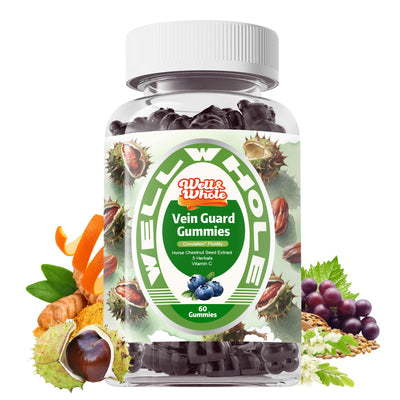
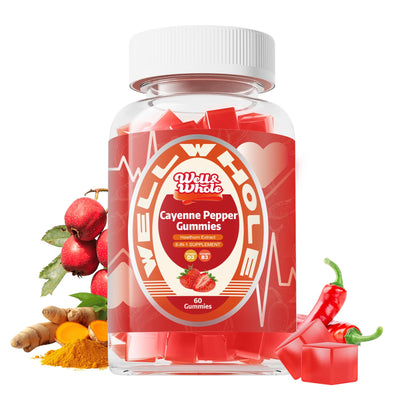
Should you decide to supplement, Well&Whole Horse Chestnut Extract Gummies, Circulation Supplements for Legs and Cayenne Pepper Heart Health Gummies with Hawthorn & CoQ10 & Turmeric are our formulation for this purpose. For a broader comparison, see the Heart Health and CoQ10 collections.
These statements have not been evaluated by the Food and Drug Administration. This product is not intended to diagnose, treat, cure, or prevent any disease. Talk to a healthcare professional before starting any new supplement, especially if you are pregnant, nursing, taking medication, or managing a health condition.
These statements have not been evaluated by the Food and Drug Administration. This product is not intended to diagnose, treat, cure, or prevent any disease.