CoQ10 Complete Guide: Benefits, Dosage, and Everything You Need to Know
Discover the complete guide to CoQ10 — from ubiquinol vs ubiquinone to optimal dosage. Learn how CoQ10 supports heart health, energy production, and mitochondrial function.

Coenzyme Q10 — better known as CoQ10 — is one of the most researched and widely used dietary supplements in the world. Found naturally in every cell of your body, this vitamin-like compound plays an indispensable role in energy production and antioxidant defense. As we age, our natural CoQ10 levels decline, and certain medications (notably cholesterol-lowering statins) further deplete our reserves. This has made CoQ10 supplementation increasingly popular among Americans looking to support their cardiovascular health, energy levels, and overall vitality.
In this comprehensive guide, we'll cover everything you need to know about CoQ10 — what it is, how it works in your body, the critical difference between ubiquinol and ubiquinone, who benefits most from supplementation, optimal dosing strategies, safety considerations, and what the latest research says about this remarkable nutrient.
Whether you're taking a statin, concerned about heart health, or simply want to maintain your energy as you age, this guide will help you make an informed decision about CoQ10 supplementation.
What Is CoQ10?
The Cellular Powerhouse
Coenzyme Q10 is a fat-soluble, vitamin-like compound found in virtually every cell of the human body. It is concentrated in the mitochondria — the "power plants" of your cells — where it plays an essential role in the electron transport chain, the biochemical process that produces adenosine triphosphate (ATP), your body's primary energy currency.
Without adequate CoQ10, your mitochondria cannot efficiently produce energy. Organs with the highest energy demands — the heart, liver, kidneys, and brain — naturally contain the highest concentrations of CoQ10.
Two Critical Functions
CoQ10 serves two primary functions in the body:
Energy Production: CoQ10 shuttles electrons between enzyme complexes in the mitochondrial membrane, enabling the production of ATP. This process — known as oxidative phosphorylation — generates approximately 95% of the body's cellular energy.
Antioxidant Protection: In its reduced form (ubiquinol), CoQ10 is one of the body's most important lipid-soluble antioxidants. It protects cell membranes, LDL cholesterol, and mitochondrial DNA from oxidative damage caused by free radicals.
Endogenous Production
The human body synthesizes CoQ10 through a complex 17-step process involving multiple vitamins and co-factors, including vitamin B6, vitamin B12, folate, vitamin C, and pantothenic acid. Production peaks in the early twenties and declines steadily thereafter — by age 65, CoQ10 levels may be half of what they were at age 25 (Kalén et al., 1989, *Lipids*).
Ubiquinol vs. Ubiquinone: Understanding the Difference
This is the single most common question about CoQ10 supplementation — and understanding the answer is crucial to choosing the right product.
The Two Forms
The Conversion Process
When you take ubiquinone (the standard form), your body must convert it to ubiquinol before it can be used. This conversion process becomes less efficient with age. Research published in the *Journal of Clinical Pharmacology* (2014) found that after age 40, the body's ability to reduce ubiquinone to ubiquinol declines significantly.
Which One Should You Choose?
For most healthy adults under 40, standard ubiquinone is sufficient — the body typically converts it efficiently. For individuals over 40, those taking statin medications, or anyone with mitochondrial dysfunction or absorption issues, ubiquinol may offer superior bioavailability and results.
A 2019 study in the *Journal of Dietary Supplements* compared absorption between the two forms and found that ubiquinol achieved approximately 30% higher peak plasma concentrations than ubiquinone when administered at equivalent doses.
Absorption Enhancement
Regardless of which form you choose, CoQ10 absorption can be significantly enhanced by:
· Taking it with a meal containing fat (as CoQ10 is fat-soluble)
· Choosing formulations that include lipid carriers or emulsifiers
· Selecting softgel capsules rather than tablets
CoQ10 Benefits: What the Research Shows
Heart Health Support
The heart is one of the most energy-demanding organs in the body, containing the highest concentration of CoQ10 of any tissue. Research consistently demonstrates CoQ10's importance for cardiovascular function:
· A landmark 2014 study (Q-SYMBIO) published in *JACC: Heart Failure* followed 420 patients with moderate to severe heart failure over two years. Those receiving 300 mg of CoQ10 daily experienced a 43% reduction in cardiovascular mortality compared to the placebo group.
· A meta-analysis of 13 clinical trials published in the *American Journal of Clinical Nutrition* (2018) found CoQ10 supplementation was associated with significant improvements in ejection fraction — the measurement of how much blood the heart pumps with each beat.
· Research in *Nutrition Journal* (2013) demonstrated that CoQ10 supplementation supported healthy blood pressure levels and improved endothelial function.
Statin-Induced CoQ10 Depletion
Statins work by inhibiting HMG-CoA reductase — the same enzyme pathway responsible for CoQ10 synthesis. This means that as statins lower cholesterol production, they simultaneously reduce the body's ability to produce CoQ10.
A 2016 meta-analysis in *Atherosclerosis* found statin therapy associated with a 20-40% reduction in circulating CoQ10 levels. Supplementing with CoQ10 can help replenish these depleted stores without interfering with the cholesterol-lowering effects of the medication.
Energy and Exercise Performance
Because CoQ10 is essential for mitochondrial energy production, supplementation may support physical performance:
· A 2017 randomized controlled trial in the *Journal of the International Society of Sports Nutrition* found that CoQ10 supplementation significantly reduced exercise-induced fatigue and supported faster recovery in physically active adults.
· Research published in *Nutrients* (2019) showed that CoQ10 supplementation improved mitochondrial function and reduced markers of oxidative stress during high-intensity exercise.
Migraine Prevention
The American Academy of Neurology now recognizes CoQ10 as possibly effective for migraine prevention:
· A randomized controlled trial published in *Neurology* (2005) found that 300 mg daily reduced migraine frequency by approximately 50% in nearly half the participants.
· The American Headache Society includes CoQ10 in its evidence-based guidelines for migraine prevention, citing its mitochondrial support effects.
Skin Health and Aging
CoQ10 applied topically or taken orally may support skin health by reducing oxidative damage from UV radiation and supporting collagen production. A 2017 study in *BioFactors* demonstrated that CoQ10 supplementation reduced wrinkle visibility and supported skin elasticity in middle-aged women.
Optimal CoQ10 Dosage
General Guidelines
Timing and Administration
CoQ10 is best taken with meals containing fat to enhance absorption. For doses above 200 mg, dividing into two daily doses can improve blood level maintenance and reduce any potential gastrointestinal sensitivity.
What to Look For in a Supplement
· **Form**: Softgel or lipid-based capsules offer superior absorption
· **Manufacturing standards**: Look for GMP certification and third-party testing
· **Transparency**: Products that specify the exact form (ubiquinone vs. ubiquinol) and include absorption-enhancing ingredients like black pepper extract or medium-chain triglycerides
· **Purity**: Avoid products with unnecessary fillers, artificial colors, or common allergens where possible
Who Benefits Most from CoQ10?
CoQ10 supplementation may be particularly valuable for:
1. **Statin users**: To counteract medication-induced CoQ10 depletion
2. **Adults over 50**: Natural production declines significantly with age
3. **Individuals with heart concerns**: The heart requires substantial CoQ10 for optimal function
4. **Those with mitochondrial conditions**: CoQ10 supports cellular energy production
5. **Chronic migraine sufferers**: Evidence supports its preventive use
6. **Athletes and active adults**: For energy production and recovery support
7. **Individuals using beta-blockers**: Some blood pressure medications may reduce CoQ10 levels
Safety and Drug Interactions
CoQ10 has an excellent safety profile. A review of safety data published in *Regulatory Toxicology and Pharmacology* (2018) found CoQ10 well-tolerated at doses up to 1,200 mg daily for up to 16 months, with no serious adverse events reported.
Potential Mild Side Effects
Side effects are uncommon and usually mild, including:
· Mild gastrointestinal discomfort
· Nausea (often reduced by taking with food)
· Insomnia (if taken too late in the day — CoQ10 can increase energy)
Drug Interactions to Note
Always consult a healthcare provider before beginning any new supplement, especially if taking prescription medications.
FAQ
Q1: What is the difference between CoQ10 and ubiquinol?
Ubiquinol is the active, reduced form of CoQ10 that your body can use directly. Ubiquinone is the oxidized form that must be converted to ubiquinol first. Ubiquinol typically offers better absorption, especially for people over 40.
Q2: Does CoQ10 interfere with statin medications?
No — CoQ10 does not interfere with statins' cholesterol-lowering effects. It addresses the unintended depletion of CoQ10 caused by statins, which is a separate mechanism from cholesterol reduction.
Q3: How long does it take for CoQ10 to work?
Many users report noticing effects within 2–4 weeks, though some benefits (such as blood pressure support) may take 8–12 weeks to become apparent in clinical measurements.
Q4: Can I take CoQ10 with other supplements?
Yes. CoQ10 pairs well with omega-3 fatty acids, magnesium, and B vitamins. Because it is fat-soluble, CoQ10 actually benefits from being taken alongside dietary fats or fish oil supplements.
Q5: Is CoQ10 safe during pregnancy?
There is insufficient safety data for pregnant or breastfeeding women. Consult your healthcare provider before use during pregnancy or lactation.
Q6: What foods contain CoQ10?
Food sources include organ meats (heart, liver), fatty fish (salmon, sardines, mackerel), beef, chicken, and vegetables like broccoli and spinach. However, dietary intake typically provides only 3–6 mg per day — far below therapeutic levels.
Q7: Can CoQ10 help with fatigue?
Yes. Because CoQ10 is essential for mitochondrial energy production, supplementation may support energy levels, particularly in individuals with depleted CoQ10 stores due to aging, statin use, or certain health conditions.
Q8: Should I take CoQ10 in the morning or at night?
Morning or midday is generally recommended. Some users report that taking CoQ10 too close to bedtime can interfere with sleep due to its energy-supporting properties.
Q9: Does CoQ10 need to be cycled?
No. CoQ10 is produced naturally by the body and can be taken consistently without cycling. Long-term studies have demonstrated excellent safety with continuous use.
Q10: What makes a high-quality CoQ10 supplement?
Look for softgel or lipid-based formulations, clear labeling of the form (ubiquinone or ubiquinol), third-party testing, and manufacturing in GMP-certified facilities. If you are over 40 or taking statins, consider ubiquinol for superior absorption.
Conclusion
CoQ10 stands as one of the most thoroughly researched and scientifically validated dietary supplements available today. From its essential role in cellular energy production to its cardioprotective effects and growing evidence for migraine prevention, CoQ10 addresses some of the most fundamental aspects of human health.
The decision between ubiquinone and ubiquinol comes down largely to age and individual absorption capacity. The key to success with any CoQ10 product is choosing a high-quality, well-formulated supplement and taking it consistently with meals containing dietary fat.
At well&whole, we recognize that heart health and energy production are foundational to overall wellness. Whether you're concerned about cardiovascular function, statin-related CoQ10 depletion, or simply want to support your cellular energy as you age, consider exploring our CoQ10 supplement options formulated for optimal absorption and bioavailability.
Related supplements
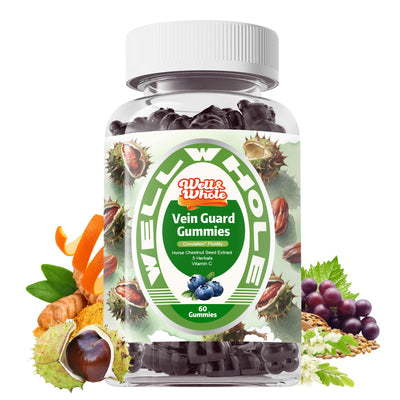
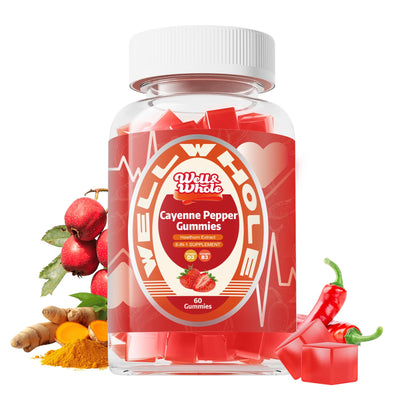
Should you decide to supplement, well&whole Horse Chestnut Extract Gummies, Circulation Supplements for Legs and Cayenne Pepper Heart Health Gummies with Hawthorn & CoQ10 & Turmeric are our formulation for this purpose. For a broader comparison, see the Heart Health and CoQ10 collections.
These statements have not been evaluated by the Food and Drug Administration. This product is not intended to diagnose, treat, cure, or prevent any disease.