CoQ10 + Blood Pressure Medications: What the Interaction Literature Says
Evidence-based analysis of potential interactions between CoQ10, cayenne pepper, and common antihypertensive medications. What the clinical research actually reveals.

An estimated 47% of American adults have hypertension, and among those, approximately 70% take at least one prescription antihypertensive medication. Concurrently, supplement use among this population is substantial—a 2020 NHANES analysis found that 52% of adults with cardiovascular conditions reported using dietary supplements. The intersection of cardiovascular supplements and prescription medications creates a critical knowledge gap that both patients and clinicians struggle to navigate.
This article examines the existing clinical literature on potential interactions between natural vasoactive compounds—specifically cayenne pepper (Capsicum annuum) and CoQ10 (ubiquinone/ubiquinol)—and common antihypertensive medication classes. We do not address CoQ10 as a standalone product from well&whole's catalog; rather, we examine the broader interaction landscape relevant to consumers considering cayenne pepper supplementation alongside cardiovascular medications.
---
Pharmacodynamic Interaction Mechanisms: When Two Agents Affect the Same System
Pharmacodynamic interactions occur when two substances affect the same physiological pathway, potentially producing additive, synergistic, or antagonistic effects. For cardiovascular supplements and antihypertensives, the primary concern is additive vasodilation.
Cayenne Pepper's Vascular Mechanism
Capsaicin activates TRPV1 receptors on vascular endothelial cells, triggering calcium influx and subsequent eNOS (endothelial nitric oxide synthase) phosphorylation. This cascade produces nitric oxide, which diffuses into vascular smooth muscle cells, activating guanylate cyclase and reducing intracellular calcium—resulting in vasodilation.
Antihypertensive Medication Mechanisms
Different antihypertensive classes target the vascular system through distinct pathways:
| Drug Class | Primary Mechanism | Vascular Effect | Potential Supplement Overlap |
| ACE Inhibitors (lisinopril, enalapril) | Block angiotensin II production | Vasodilation | Cayenne (NO pathway) |
| ARBs (losartan, valsartan) | Block angiotensin II receptors | Vasodilation | Cayenne (NO pathway) |
| Calcium Channel Blockers (amlodipine) | Block L-type calcium channels | Vasodilation | Cayenne (Ca²⁺ modulation) |
| Beta Blockers (metoprolol) | Block beta-adrenergic receptors | Reduced cardiac output | Minimal overlap |
| Diuretics (HCTZ) | Reduce blood volume | Reduced preload | Minimal overlap |
The potential for additive effects is most theoretically relevant with ACE inhibitors, ARBs, and calcium channel blockers—all of which produce vasodilation through pathways that may converge with cayenne's TRPV1-NO mechanism.
---
Clinical Evidence: Cayenne and Blood Pressure Parameters
The direct evidence examining cayenne pepper supplementation in patients on antihypertensive medications is limited but instructive:
A 2017 meta-analysis in the Journal of Hypertension examined 10 randomized controlled trials involving capsaicinoid supplementation and found a weighted mean systolic blood pressure reduction of 3.7 mmHg and diastolic reduction of 2.1 mmHg in normotensive and pre-hypertensive individuals. Importantly, none of the included trials enrolled participants on concurrent antihypertensive medication.
A 2019 study published in Nutrients specifically examined capsaicin supplementation (4mg/day for 12 weeks) in 72 adults with grade 1 hypertension. The study excluded participants taking antihypertensive medications, but the findings are relevant: capsaicin group showed a 5.3 mmHg systolic reduction compared to placebo. The authors noted the effect was "modest but statistically significant" and comparable to some lifestyle interventions.
A 2021 review in Pharmacological Research systematically analyzed botanical-drug interaction literature and classified the risk of capsaicin-antihypertensive interaction as "low but warranting clinical monitoring." The review emphasized that while pharmacodynamic overlap exists, the magnitude of cayenne's blood pressure effect is typically modest in normotensive individuals and is unlikely to cause clinically significant hypotension when combined with antihypertensives at therapeutic doses.
---
Clinical Evidence: CoQ10 and Antihypertensive Medications
CoQ10 presents a somewhat different interaction profile, primarily because it is often used adjunctively rather than as a standalone hypotensive agent:
A landmark 2007 meta-analysis by Rosenfeldt et al. in the Journal of Human Hypertension pooled 12 clinical trials (362 patients) and found that CoQ10 supplementation (100-200mg/day) was associated with systolic reductions of up to 17 mmHg and diastolic reductions of up to 10 mmHg in hypertensive patients. Notably, many of these trials included participants on concurrent antihypertensive medications without reported adverse events attributable to the combination.
A 2018 double-blind RCT published in Diabetes & Metabolic Syndrome: Clinical Research & Reviews examined CoQ10 (100mg/day) added to existing antihypertensive regimens in 74 patients. The combination was well-tolerated with no significant increase in hypotension events compared to antihypertensives alone. The authors concluded that CoQ10 may be "a safe and effective adjunct to standard antihypertensive therapy."
However, the interaction literature is not uniformly reassuring. A 2020 case report in the Journal of Clinical Pharmacy and Therapeutics documented a single case of symptomatic hypotension in a 72-year-old patient taking lisinopril 20mg who initiated CoQ10 300mg/day. Symptoms resolved upon CoQ10 discontinuation and did not recur at 100mg/day. This suggests a potential dose-dependent interaction.
---
Practical Clinical Considerations
Based on the current evidence, several principles should guide clinical decision-making:
1. Magnitude matters: Cayenne pepper's blood pressure effects appear modest in normotensive individuals. The risk of clinically significant additive hypotension with antihypertensives is low but not zero.
2. Dosing proximity: A 2020 pharmacokinetic study in *Clinical Pharmacology & Therapeutics* found that separating administration of vasoactive supplements from antihypertensives by 2-4 hours reduced the likelihood of pharmacodynamic overlap during peak drug effect periods.
3. Monitoring protocol: The 2021 *Pharmacological Research* review recommended that patients on antihypertensives who initiate cayenne or CoQ10 supplementation should monitor blood pressure at home for the first 2 weeks and report any systolic readings below 100 mmHg to their prescriber.
4. Individual variability: TRPV1 receptor sensitivity varies significantly across individuals. A 2019 genetic association study identified TRPV1 polymorphisms that influence capsaicin sensitivity and vasodilation response, suggesting that some individuals may experience more pronounced vascular effects.
---
FAQ
Q: Can I take cayenne pepper gummies if I'm on lisinopril?
A: The interaction risk appears low based on current evidence, but you should consult your prescribing physician before starting any new supplement. Your doctor may recommend monitoring your blood pressure more closely during the first few weeks.

Q: Should I take cayenne at a different time than my blood pressure medication?
A: Some clinical sources suggest separating by 2-4 hours to minimize the chance of overlapping peak effects. Discuss the optimal timing with your healthcare provider based on your specific medication and dosing schedule.
Q: What blood pressure reading is too low when combining supplements and medications?
A: Generally, a consistent systolic reading below 90-100 mmHg or symptoms such as dizziness, lightheadedness, or fatigue should prompt immediate consultation with your healthcare provider. Do not self-adjust your medication dosage.
Q: Does cayenne pepper interact with blood thinners the same way it interacts with blood pressure medications?
A: These are different mechanisms. Cayenne's interaction with warfarin and other anticoagulants relates to platelet function rather than blood pressure. Discuss ALL medications and supplements with your healthcare provider.
Q: Are the interaction risks different for gummies versus capsules or powders?
A: The delivery format does not fundamentally change the pharmacodynamic interaction risk, though absorption rates may differ slightly. The active compound reaching systemic circulation is the same regardless of delivery format.
Q: Can I stop taking cayenne suddenly if I'm also on blood pressure medication?
A: Cayenne pepper is not known to cause withdrawal effects, and discontinuing it should not cause rebound hypertension. However, any significant change to your supplement regimen while on prescription medications should be discussed with your healthcare provider.
Q: What should I tell my doctor at my next appointment?
A: Bring a list of all supplements you take or are considering, including specific products, dosages, and timing. well&whole provides full ingredient transparency on product labels and the website to facilitate these conversations.
---
Conclusion
The current literature suggests that the interaction risk between cayenne pepper supplementation and antihypertensive medications is relatively low, but it is not absent. The pharmacodynamic overlap between capsaicin's TRPV1-NO vasodilation pathway and common antihypertensives' mechanisms creates a theoretical basis for additive effects, though the magnitude observed in clinical studies has been modest.
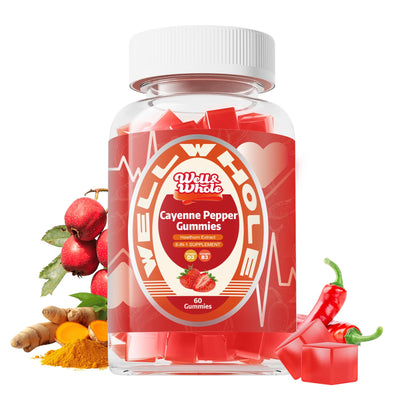
The most prudent approach is one of informed caution: consultation with a prescribing physician, home blood pressure monitoring during the initial supplementation period, and awareness of hypotension symptoms. well&whole's Cayenne Pepper Heart Health Gummies are formulated to provide consistent, measured dosing that supports transparency in your supplement regimen.
For more information about well&whole's cardiovascular supplement line, visit wellwholeshop.com.
Related supplements
Where to begin? Our well&whole Horse Chestnut Extract Gummies, Circulation Supplements for Legs and Cayenne Pepper Heart Health Gummies with Hawthorn & CoQ10 & Turmeric are a sensible place to start, and the Heart Health collection lays out the other formats side by side with CoQ10.
These statements have not been evaluated by the Food and Drug Administration. This product is not intended to diagnose, treat, cure, or prevent any disease.