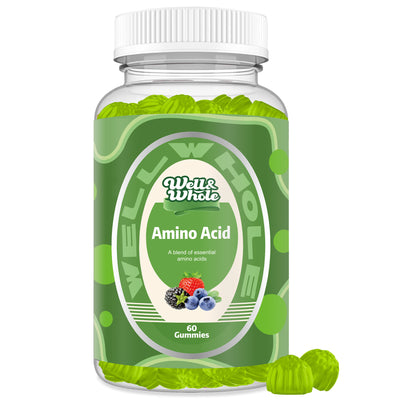
Collagen Supplements vs Protein: What the Evidence Shows

Collagen supplements and protein powder are not interchangeable, and the difference is biochemical, not marketing. Collagen delivers an amino-acid profile deliberately skewed toward glycine, proline, and hydroxyproline — the raw material your body uses to build connective tissue. Complete proteins like whey cover your broader daily protein needs but do not specialize in that job. For skin goals specifically, collagen peptides have the stronger direct evidence.
Key takeaways
- Collagen is an incomplete protein: it lacks tryptophan and is low in several essential amino acids, so it cannot replace whey or food protein overall.
- For skin elasticity and hydration, hydrolyzed collagen peptides at 2.5–10 g daily have the most consistent trial support.
- Whey and other complete proteins win for general daily protein targets and satiety.
- Visible skin changes from collagen, when they occur, take 8–12 weeks of daily use.
- You can take both — they solve different problems.
The amino-acid difference, briefly
Every protein source is a different string of amino acids. Whey, eggs, and soy are "complete": they supply all nine essential amino acids in proportions humans need. Collagen does not — it is notably low in tryptophan and underdelivers several others. What it overdelivers is glycine, proline, and hydroxyproline, three amino acids that are scarce in muscle meats and central to collagen synthesis in your own body.
That is the honest case for collagen: not "better protein," but a targeted amino-acid top-up that a steak or a whey shake does not provide in the same proportions.
What the evidence shows for skin
Randomized trials of hydrolyzed collagen peptides — typically 2.5–10 g daily over 8–12 weeks — have reported modest improvements in skin elasticity and skin hydration compared with placebo. Systematic reviews grade the evidence as promising but not overwhelming: studies are mostly small, often industry-funded, and outcome measures vary. What you can fairly say is that collagen peptides are the best-studied supplement for skin structure, and the direction of evidence is consistently positive though modest in size.
Where complete protein wins
If your goal is a daily protein target — for satiety, for supporting active lifestyles, or simply because meals fall short — whey or a blended protein powder is the better tool. It is complete, usually cheaper per gram of protein, and dosed in 20–30 g servings that actually move your daily total. Collagen's typical 5–10 g serving is not designed for that job and would be an expensive way to do it poorly.
| Collagen peptides | Whey / complete protein | |
|---|---|---|
| Amino profile | Glycine/proline-rich, incomplete | All 9 essential amino acids |
| Skin evidence | Direct trials, modest benefit | Indirect only |
| Typical dose | 2.5–10 g/day | 20–30 g/serving |
| Best job | Targeted connective-tissue support | Daily protein total |
Realistic expectations (and what is pure hype)
No powder erases wrinkles or replaces a decent diet. A reasonable expectation for collagen peptides, if it works for you, is subtly better skin hydration and elasticity over a few months — the kind of change a baseline photo shows and a mirror might not. Any product promising dramatic reversal is leaning on a marketing claim, not the trial data. Treat "clinical dose" claims seriously: under 2.5 g daily is below what trials tested.
What about plant proteins?
Pea, soy, and rice-based powders sit on the complete-protein side of this comparison too — soy is complete on its own, and blends of pea and rice together cover all nine essential amino acids. None of them, however, mimics collagen's glycine-proline profile, so the core distinction survives the switch. If dairy does not suit you, a plant blend replaces whey in this framework without changing the conclusion: complete proteins for totals, collagen peptides for the targeted job.
Cost and practicality
Price per serving favors whey by a wide margin in most stores — often several times more protein per dollar. That matters because the two products ask different commitments of you: whey is a daily, food-scale purchase where economics compound, while collagen is a smaller, targeted buy judged on whether 8–12 weeks of use moves anything you care about. Buying a giant tub of either before testing the smaller size is the same mistake in different packaging. Start small, measure honestly, then scale whichever earns the shelf space.
Who should probably skip collagen supplements
Vegetarians and vegans, for a straightforward reason: conventional collagen peptides are bovine- or marine-derived, and the few "vegan collagen builder" products on shelves are not collagen at all — they are blends of vitamin C and amino acids hoping to support your own production. That is a different, weaker proposition than the trialed products. Anyone with fish or egg allergies should read sourcing details carefully, since marine collagen hides in plain sight on some ingredient lists.

Frequently asked questions
Can I take collagen and whey protein together?
Yes, and many people do. They do not compete for uptake in any meaningful way; just count both toward your overall budget so you are not doubling calories unintentionally.
Is collagen a complete protein?
No. It lacks adequate tryptophan and is low in several essential amino acids, which is precisely why it complements rather than replaces complete proteins.
Which is better for skin — collagen or whey?
For skin structure specifically, hydrolyzed collagen peptides have direct randomized-trial support; whey does not. Keep whey for overall protein needs.
How much collagen should I take daily?
Trials showing skin benefits mostly used 2.5–10 g of hydrolyzed collagen peptides per day for at least 8 weeks. Stay in that range before judging results.
Related supplements
If you want to explore this area, the Skin Health and Health Benefits collections cover the relevant supplements and formats.
These statements have not been evaluated by the Food and Drug Administration. This product is not intended to diagnose, treat, cure, or prevent any disease. Talk to a healthcare professional before starting any new supplement, especially if you are pregnant, nursing, taking medication, or managing a health condition.
These statements have not been evaluated by the Food and Drug Administration. This product is not intended to diagnose, treat, cure, or prevent any disease.