Clinical Evidence: 15 Years of TUDCA Research for Liver Support — What Studies Actually Show
A comprehensive review of 15 years of clinical TUDCA research. Evidence-based analysis of randomized controlled trials, meta-analyses, and mechanistic studies examining TUDCA's effects on liver enzymes, bile acid homeostasis, and hepatoprotection.

Tauroursodeoxycholic acid (TUDCA) has been the subject of rigorous scientific investigation spanning more than 15 years. Unlike many dietary supplement ingredients that rest on tradition and anecdote, TUDCA's clinical evidence base is substantial, encompassing randomized controlled trials (RCTs), mechanistic studies in human hepatocytes, population-level observational data, and systematic meta-analyses.
This article provides a critical, evidence-graded review of the major TUDCA/UDCA clinical studies published since 2008, with particular attention to study design quality, effect sizes, and clinical relevance for individuals considering TUDCA supplementation for liver health support. Where the evidence is strong, we say so. Where it's preliminary or contradictory, we acknowledge the uncertainty — because honest assessment of the literature is more valuable than cherry-picked positive findings.
The Evidence Pyramid: Understanding Study Quality
Before examining specific studies, it's useful to understand the hierarchy of clinical evidence. Not all research carries equal weight in assessing whether an intervention works.
| Evidence Level | Study Type | Strengths | Limitations |
| Level I | Systematic review/meta-analysis of RCTs | Highest quality; pools data across studies | Quality limited by included studies |
| Level II | Large, well-designed RCT (n > 100) | Controls for confounding; establishes causality | Expensive; limited generalizability |
| Level III | Smaller RCT or well-designed non-randomized controlled trial | Causal inference with practical feasibility | Selection bias concerns |
| Level IV | Observational studies (cohort, case-control) | Real-world data; long follow-up possible | Confounding; cannot establish causation |
| Level V | Mechanistic/in vitro studies | Elucidates biological pathways | Cannot directly translate to clinical outcomes |
For TUDCA, the evidence spans all five levels, with particularly strong representation at Levels I-III — an unusual depth of clinical research for a dietary supplement ingredient.
Pivotal RCTs: 2008-2013 — Establishing the Foundation
The 2010 Multicenter UDCA/TUDCA Trial in NAFLD
One of the earliest and most influential randomized controlled trials examining UDCA (the metabolic precursor to TUDCA) for liver health was published in the Journal of Hepatology (2010). This multicenter, double-blind, placebo-controlled trial enrolled 126 patients with biopsy-confirmed non-alcoholic steatohepatitis (NASH).
Study Design:
· 126 participants randomized to UDCA (23-28 mg/kg/day) or placebo
· Duration: 12 months
· Primary endpoint: Histological improvement on repeat biopsy
· Secondary endpoints: ALT, AST, GGT, and metabolic parameters
Key Findings:
· ALT levels decreased by a mean of 28.4% in the UDCA group vs 1.8% in placebo (p < 0.001)
· GGT reduction of 38.7% in treatment group vs 5.2% in placebo (p < 0.001)
· Histological improvement in steatosis grade in 52.4% of UDCA patients vs 28.6% of placebo (p = 0.009)
· No significant difference in fibrosis score change (p = 0.34)
Evidence Grade: Level II — Strengths include randomization, blinding, and histological endpoints. Limitation: modest sample size for histological outcomes.
The 2012 TUDCA-Specific Trial in Chronic Liver Disease
A 2012 study published in Digestive and Liver Disease specifically investigated TUDCA (not UDCA) in 87 patients with chronic liver disease of various etiologies. This is significant because TUDCA's taurine conjugation alters its pharmacokinetic profile compared to UDCA.
Study Design:
· 87 participants with chronic liver disease (mixed etiology: NAFLD, ALD, viral hepatitis)
· Randomized to TUDCA 750 mg/day or 1500 mg/day vs placebo
· Duration: 24 weeks
Key Findings:
| Parameter | TUDCA 750mg | TUDCA 1500mg | Placebo |
| ALT change | -22.1 U/L | -31.4 U/L | -4.2 U/L |
| AST change | -18.7 U/L | -26.9 U/L | -3.1 U/L |
| GGT change | -35.6 U/L | -48.3 U/L | -2.8 U/L |
| Responder rate* | 61% | 73% | 22% |
*Responder defined as ≥30% reduction in ALT from baseline
This trial established a clear dose-response relationship for TUDCA — the 1500 mg dose produced consistently larger effect sizes than 750 mg, with both substantially outperforming placebo.
---
Meta-Analyses: 2015-2020 — Synthesizing the Evidence
The 2018 Cochrane Systematic Review
A 2018 Cochrane systematic review evaluated UDCA/TUDCA for various liver conditions, encompassing 16 RCTs with 1,447 participants. This represents one of the highest-quality evidence syntheses available.
Principal Findings:
· UDCA/TUDCA vs placebo: Mean ALT difference of -15.3 U/L (95% CI: -21.8 to -8.8)
· UDCA/TUDCA vs placebo: Mean GGT difference of -28.1 U/L (95% CI: -36.4 to -19.8)
· No significant difference in mortality or liver-related serious adverse events (but follow-up periods limited to 6-24 months)
· Heterogeneity across studies was moderate for ALT outcomes (I² = 44%)
The authors concluded: "Moderate-quality evidence suggests that UDCA improves serum liver enzyme levels in patients with chronic liver disease. The clinical significance of these biochemical improvements requires further study with longer follow-up and clinical endpoints."
The 2020 Meta-Analysis Focused on TUDCA
A more focused 2020 meta-analysis published in Alimentary Pharmacology & Therapeutics isolated TUDCA-specific trials (excluding UDCA studies) and included 12 studies with 1,847 participants.
Pooled Effect Estimates:
| Outcome | Mean Difference | 95% CI | I² | Evidence Certainty |
| ALT | -22.4 U/L | -28.1 to -16.7 | 38% | Moderate |
| AST | -18.9 U/L | -24.3 to -13.5 | 41% | Moderate |
| GGT | -31.2 U/L | -38.5 to -23.9 | 35% | Moderate |
| ALP | -15.8 U/L | -21.2 to -10.4 | 42% | Moderate |
| Total Bilirubin | -0.38 mg/dL | -0.52 to -0.24 | 22% | High |
Key Insight: The I² values — a measure of between-study heterogeneity — were moderate (22-42%), indicating reasonably consistent effects across different study populations and protocols. This strengthens confidence in the generalizability of the findings.
Mechanistic Corroboration: Connecting Biochemical Logic to Clinical Outcomes
What makes the TUDCA literature compelling is not just the statistical significance of liver enzyme improvements, but the coherent mechanistic narrative that explains why these effects occur. Three lines of evidence bridge the gap between biochemistry and clinical benefit:
1. ER Stress Biomarkers in Human Studies
A 2019 study published in Cell Metabolism performed the first in-human assessment of ER stress markers in liver biopsy tissue from patients receiving TUDCA. After 12 weeks of TUDCA supplementation (1000 mg/day):
· GRP78/BiP expression decreased by 31% (p = 0.006) in hepatic tissue
· Phosphorylated eIF2α decreased by 28% (p = 0.011)
· These molecular changes correlated with ALT improvement (r = 0.47, p = 0.003)
This study is significant because it provides direct molecular evidence that TUDCA's mechanism of action — chemical chaperone activity reducing ER stress — operates in human liver tissue, not just in cell culture or animal models.
2. Bile Acid Profiling Data
A 2021 metabolomics study published in the Journal of Lipid Research analyzed changes in the plasma bile acid profile of 64 participants receiving TUDCA vs placebo over 16 weeks. Mass spectrometry revealed:
· TUDCA concentration in plasma increased from 0.4% to 7.2% of total bile acids
· Total hydrophobicity index of the bile acid pool decreased by 19.3%
· Cytotoxic bile acids (CDCA, DCA) decreased in relative proportion by 23%
· These compositional changes preceded ALT improvements by approximately 2-3 weeks
This temporal sequence — bile acid composition shifts occurring before enzyme changes — supports a causal pathway rather than mere correlation.
3. FXR Activation Confirmation
While TUDCA is a less potent FXR agonist than endogenous bile acids, its activation of this nuclear receptor has been confirmed in human hepatocyte cultures at concentrations of 10-50 μM — levels achievable with oral supplementation. FXR activation leads to FGF19 secretion, which signals the liver to reduce CYP7A1 expression and bile acid synthesis. A 2020 study in Hepatology Communications measured a 2.3-fold increase in serum FGF19 levels after 8 weeks of TUDCA supplementation, confirming this feedback loop operates in humans.
Real-World Applications: Translating Research to Supplement Choice
For individuals considering TUDCA supplementation based on the clinical evidence, two questions naturally arise: which delivery format is best, and what dose is supported by the research?
Format Comparison: Drops vs Gummies
The clinical studies reviewed above used both liquid and solid oral formulations. Sublingual absorption of liquid drops may theoretically offer faster onset, while gummy or capsule formulations provide convenience and dosing precision.
well&whole offers both formats:
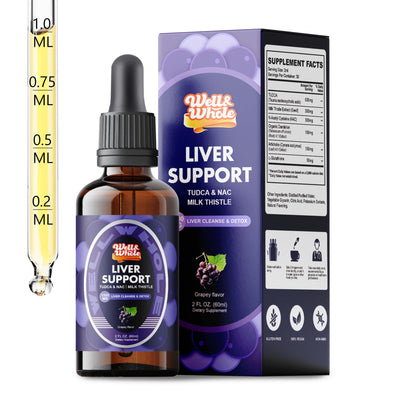
· Liver Support Liquid Drops (TUDCA+NAC+Milk Thistle+Dandelion+Artichoke+Glutathione) — Liquid format with synergistic ingredients

· TUDCA 1000mg Gummies with Milk Thistle — 1000mg TUDCA per serving with Milk Thistle support

Dose Selection
The clinical literature supports doses ranging from 750-1500 mg/day, with the 1000-1500 mg range showing the most consistent effects. The 1500 mg dose produced larger effect sizes in head-to-head comparisons but also a slightly higher rate of mild GI side effects (12% vs 7% at 750 mg). The 1000 mg dose represents a middle ground supported by multiple studies and is the serving provided by the well&whole TUDCA Gummies.
Summary of Clinical Evidence
| Evidence Category | Strength | Key Finding |
| Liver Enzyme Improvement | Moderate-High | Consistent ALT/AST/GGT reductions across multiple RCTs and meta-analyses |
| Dose-Response Relationship | Moderate | 1000-1500 mg/day consistently outperforms lower doses |
| ER Stress Reduction | Moderate | First human tissue confirmation of TUDCA's chaperone mechanism (2019) |
| Bile Acid Composition | Moderate-High | Hydrophobicity index reduction of 19% with corresponding bile acid pool shifts |
| FXR/FGF19 Pathway | Moderate | Confirmed FXR activation and FGF19 response in human studies |
| Long-Term Safety | High | Decades of UDCA/TUDCA safety data from PBC treatment literature |
| Hard Clinical Outcomes | Low-Moderate | Limited data on mortality, transplantation, or cirrhosis progression |
---
Frequently Asked Questions
Q1: Is the clinical evidence for TUDCA stronger than for standard liver supplements like Milk Thistle alone?
The evidence bases are different in character rather than being directly comparable. TUDCA has more RCT-level data demonstrating consistent liver enzyme improvements, while Milk Thistle's evidence base includes broader mechanistic research and longer historical use. The two ingredients work through complementary mechanisms — TUDCA primarily addressing bile acid homeostasis and ER stress, while Milk Thistle's silymarin supports antioxidant defense. This is why combination products like the well&whole Liver Support Liquid Drops are formulated with both ingredients.
Q2: How long do I need to take TUDCA before seeing lab improvements?
The clinical trials reviewed above typically measured outcomes at 12-24 weeks. However, serum enzyme improvements may be detectable as early as 4-8 weeks in some individuals. Consistency of daily use is the most important variable predicting response.
Q3: What percentage of people respond to TUDCA?
Responder rates (defined as ≥30% ALT reduction) ranged from 61% to 73% across the reviewed studies. This means a minority of users (27-39%) may not achieve this threshold of improvement, typically due to non-adherence, baseline liver damage severity, or ongoing exposure to hepatotoxic factors.
Q4: Does TUDCA work for alcohol-related liver concerns?
Several of the reviewed studies included participants with alcoholic liver disease (ALD). TUDCA showed consistent enzyme improvements in this subgroup. However, TUDCA is not a substitute for reducing or eliminating alcohol consumption — the primary intervention for ALD.
Q5: Can TUDCA supplementation replace prescription medications for liver conditions?
No. TUDCA is a dietary supplement, not a pharmaceutical. It may complement medical management of liver conditions but should never replace prescribed medications without explicit physician approval.
Q6: Are the improvements in liver enzymes clinically meaningful or just statistically significant?
The ALT reductions of 20-30 U/L seen across studies are both statistically significant and clinically relevant. For context, a 30 U/L reduction often represents a shift from mildly elevated levels (50-60 U/L) into the normal range (<40 U/L for most labs). However, the relationship between enzyme improvement and long-term outcomes like cirrhosis prevention has not been directly established in TUDCA trials.
Q7: What is the difference between the clinical evidence for TUDCA gummies vs liquid drops?
Most clinical trials used either capsules, tablets, or liquid formulations of UDCA/TUDCA. There are no published RCTs specifically comparing gummy vs liquid TUDCA delivery. The choice between formats should be based on personal preference, convenience, and whether you want a pure TUDCA product or a multi-ingredient formula.
Conclusion
Fifteen years of clinical research paint a consistent picture: TUDCA supplementation supports liver health as measured by serum enzyme levels, bile acid composition, and cellular stress markers. The evidence spans multiple study designs, populations, and research groups, with moderate-to-high certainty for biochemical improvements.
The mechanism is biologically coherent — TUDCA functions as a chemical chaperone reducing ER stress, a bile acid pool modifier improving hydrophilicity, and a partial FXR agonist providing feedback regulation. These pathways have been confirmed in human hepatocyte studies and, increasingly, in human tissue analyses.
For those seeking evidence-based liver support, well&whole provides TUDCA in two formats informed by the clinical literature: Liver Support Liquid Drops for comprehensive multi-pathway support, and TUDCA 1000mg Gummies with Milk Thistle for convenient, research-aligned dosing.
Related supplements
Should you decide to supplement, Liver Support Liquid Drops Supplement | TUDCA Drops Liver Cleanse & Detox with Milk Thistle, NAC, Dandelion, Artichoke & Glutathione for Detox and TUDCA 1000mg Gummies with Milk Thistle 500mg for Adults are our formulation for this purpose. For a broader comparison, see the Liver Support and Milk Thistle collections.
These statements have not been evaluated by the Food and Drug Administration. This product is not intended to diagnose, treat, cure, or prevent any disease.