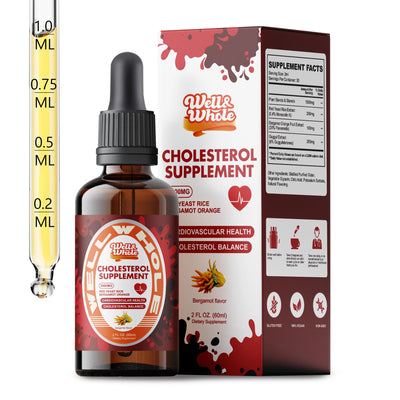
Cholesterol Support Drops: How the Two Ingredients Work Together
How do plant sterols and red yeast rice work together for cholesterol support? Discover the dual-action science behind this powerful combination.

When it comes to cholesterol supplements, most products take a single-ingredient approach—either plant sterols OR red yeast rice, but not both. well&whole Cholesterol Support Liquid Drops takes a different approach by combining both ingredients in one formula.

Why? Because cholesterol in your body comes from two sources: what your liver makes and what your intestines absorb. Targeting only one source leaves the other unaddressed. By combining two ingredients with complementary mechanisms, the formula provides more comprehensive support.
In this article, we'll examine exactly how these two ingredients work together at the physiological level—and why the combination is greater than the sum of its parts.
Ingredient 1: Plant Sterols — The Absorption Blocker
Where It Works: The Intestine
Plant sterols act in the small intestine, where cholesterol from both dietary and biliary sources is absorbed.
How It Works
1. **Structural mimicry**: Plant sterols look like cholesterol to your digestive system
2. **Micelle competition**: They displace cholesterol from micelles (the transport vehicles that carry cholesterol to intestinal cells)
3. **Reduced absorption**: Cholesterol left out of micelles is excreted rather than absorbed
4. **Compensatory response**: The liver increases LDL receptors to compensate for reduced cholesterol supply, pulling more LDL from the blood
A 2018 study in the *Journal of Lipid Research* confirmed that 2 grams of plant sterols daily reduces cholesterol absorption by 30-40%.
Effect on Cholesterol
- **LDL reduction**: 8-12%
- **Onset**: 2 weeks
- **Requires**: Presence in the gut during meals
Ingredient 2: Red Yeast Rice — The Production Modulator
Where It Works: The Liver
Red yeast rice acts in the liver, where most of your body's cholesterol is manufactured.
How It Works
1. **Monacolin K**: The active compound, identical to lovastatin
2. **HMG-CoA reductase inhibition**: Blocks the enzyme that controls cholesterol synthesis
3. **Reduced production**: The liver manufactures less cholesterol
4. **LDL receptor upregulation**: The liver pulls more LDL from the bloodstream to meet its needs
A 2017 meta-analysis in the *Journal of the American College of Cardiology* confirmed that red yeast rice reduces LDL by 15-25%.
Effect on Cholesterol
- **LDL reduction**: 15-25%
- **Onset**: 2-4 weeks
- **Requires**: Consistent daily dosing
How They Work Together: The Dual-Action Mechanism
The Cholesterol Supply Chain
To understand why combining these ingredients is so effective, consider how cholesterol flows through your body:
```
Liver Production ──→ Bloodstream ──→ Cells
↑ ↓
└──── Bile Secretion ←──←──←──←──── Recycled
↓
Intestinal Absorption
```
1. The **liver produces** cholesterol and releases it into the bloodstream
2. **Cells use** cholesterol for membranes, hormones, and other functions
3. **Excess cholesterol** is secreted by the liver into bile, which enters the intestine
4. **Some cholesterol** is reabsorbed from the intestine back into the bloodstream
5. The **cycle repeats**
Where Each Ingredient Intervenes
| Step in the Cycle | Intervention | Ingredient |
|---|---|---|
| Liver production | Inhibits HMG-CoA reductase | Red yeast rice |
| Bile secretion into intestine | No intervention | — |
| Intestinal absorption | Competes with cholesterol for uptake | Plant sterols |
| Reabsorption into bloodstream | Reduces reabsorption | Plant sterols |
| Bloodstream LDL clearance | Increases LDL receptor expression | Both (through different pathways) |
The Additive Effect
When both ingredients are working simultaneously:
1. **Less cholesterol is produced** (red yeast rice effect)
2. **Less cholesterol is absorbed** (plant sterol effect)
3. **More LDL is cleared from blood** (both ingredients trigger LDL receptor upregulation through different mechanisms)
This triple-action approach is more effective than targeting any single pathway.
Clinical Parallel
This combination is conceptually similar to the prescription drug combination of ezetimibe (an absorption inhibitor) + statins (production inhibitors). A 2019 study in the *Journal of Clinical Lipidology* showed that this dual approach produced 15-20% greater LDL reduction than either approach alone.
The plant sterols + red yeast rice combination follows the same scientific principle—using naturally occurring compounds.
Why the Liquid Format Enhances the Combination
Dispersion Advantage
In liquid form, both ingredients disperse more evenly throughout the digestive tract. This is particularly important for plant sterols, which need to be present throughout the intestine to effectively compete with cholesterol for absorption.
Dosing Flexibility
The liquid format allows you to split your dose between meals:
- **Morning meal**: Plant sterols block absorption of breakfast cholesterol
- **Evening meal**: Red yeast rice works overnight when the liver produces the most cholesterol
This timing strategy optimizes each ingredient's effectiveness.
No Compromised Absorption
Some combination supplements in capsule form may have absorption issues when multiple ingredients are compressed together. The liquid format keeps ingredients in solution, ready for absorption.
Timeline: How the Two Ingredients Unfold Over Time
| Timeframe | Plant Sterols | Red Yeast Rice | Combined Effect |
|---|---|---|---|
| Days 1-7 | Begin blocking absorption | Begin inhibiting production | Mild initial effect |
| Weeks 1-2 | Full absorption blocking active | Production inhibition building | LDL begins to decrease |
| Weeks 2-4 | Sustained absorption reduction | Full production inhibition | Noticeable LDL reduction |
| Weeks 4-6 | Ongoing | Ongoing | Near-maximum combined effect |
| Weeks 6-8 | Ongoing | Ongoing | Full dual-action benefit |
| Ongoing | Maintains | Maintains | Sustained cholesterol support |
Monitoring Results
To assess how well the combination is working for you:
1. **Baseline lipid panel**: Before starting, know your LDL, HDL, total cholesterol, and triglycerides
2. **6-8 week panel**: Re-check after the formula has reached full effect
3. **Compare**: Assess the change from baseline
4. **Adjust**: If results are insufficient, discuss dose adjustments or additional strategies with your healthcare provider
Comparison: Single vs. Dual-Action
| Approach | Targets | LDL Reduction | Comprehensiveness |
|---|---|---|---|
| Plant sterols only | Absorption | 8-12% | Moderate |
| Red yeast rice only | Production | 15-25% | Moderate |
| well&whole Dual-Action Drops | Both | Potentially 20-30%+ | High |
| Prescription statin | Production | 20-55% | Moderate (single pathway) |
| Prescription statin + ezetimibe | Both | 30-60% | High |
FAQ
Q: Why is a dual-action formula better than a single ingredient?
A: Because cholesterol in your body comes from two sources (liver production and intestinal absorption), targeting both provides more comprehensive support than addressing only one.
Q: Do the two ingredients interact with each other?
A: No. They work in different parts of the body (liver vs. intestine) through different mechanisms. There's no negative interaction—only complementary action.
Q: Can I take these drops if I already take a statin?
A: Red yeast rice contains monacolin K, which is a natural statin. Taking it with a prescription statin would effectively double your statin dose. Consult your healthcare provider before combining.
Q: Should I take the drops once or twice a day?
A: Follow the label instructions. Splitting the dose between two meals (morning and evening) may optimize the timing for both ingredients.
Q: How is this different from eating foods with plant sterols?
A: Fortified foods provide plant sterols but not red yeast rice. The drops provide therapeutic doses of both ingredients in one convenient product.
Q: Will I still need to watch my diet?
A: Yes. Supplements complement—not replace—a heart-healthy diet. The drops work best alongside a diet low in saturated fat and rich in fruits, vegetables, and soluble fiber.
Q: Can I stop taking the drops once my cholesterol improves?
A: If you stop, the effects will reverse within 2-3 weeks. Cholesterol management is typically an ongoing process requiring consistent effort.
Q: Are there any ingredients that shouldn't be combined with this formula?
A: Avoid combining with prescription statins (due to the monacolin K content) or other red yeast rice products. Consult your healthcare provider about your complete supplement and medication regimen.
Conclusion
The combination of plant sterols and red yeast rice in well&whole Cholesterol Support Liquid Drops is more than just two ingredients in one bottle—it's a scientifically rational dual-action formula that addresses both sides of the cholesterol equation.
Plant sterols block cholesterol absorption in the intestine. Red yeast rice modulates cholesterol production in the liver. Together, they provide more comprehensive support than either ingredient could achieve alone—all in a convenient liquid format that optimizes absorption and dosing flexibility.
If you've been frustrated by single-ingredient cholesterol supplements that only address half the problem, this dual-action formula offers a more complete approach to natural cholesterol support.
Related supplements
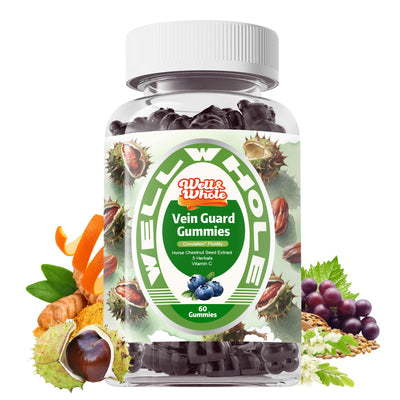
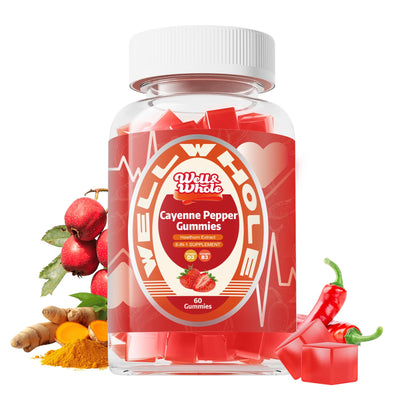
If you're ready to put this into practice, our well&whole Horse Chestnut Extract Gummies, Circulation Supplements for Legs and Cayenne Pepper Heart Health Gummies with Hawthorn & CoQ10 & Turmeric are formulated with this in mind. You can also compare the Heart Health and CoQ10 ranges to find the format that suits you.
These statements have not been evaluated by the Food and Drug Administration. This product is not intended to diagnose, treat, cure, or prevent any disease.