Cholesterol Management: Diet + Supplement Complete Plan
A complete cholesterol management plan combining evidence-based dietary strategies with targeted supplement support. Learn how plant sterols, red yeast rice, and lifestyle changes work together to support healthy cholesterol levels naturally.

Cholesterol. It's a word that sparks strong reactions—often fear, confusion, or both. Yet cholesterol itself isn't the villain it's sometimes made out to be. This waxy, fat-like substance is essential for life, playing critical roles in hormone production, vitamin D synthesis, and cell membrane structure.
The problem arises when cholesterol levels—particularly LDL ("bad") cholesterol—become elevated beyond healthy ranges. According to the CDC, nearly 94 million U.S. adults aged 20 or older have what's considered borderline high or high cholesterol (CDC, 2023).
The good news? Cholesterol is highly responsive to lifestyle interventions. In this comprehensive guide, we'll explore a complete cholesterol management plan that integrates:
- An evidence-based dietary approach
- Targeted nutritional supplements
- Sustainable lifestyle modifications
- Practical implementation strategies
Whether you're looking to maintain healthy cholesterol levels or support your body's natural cholesterol metabolism, this article provides a roadmap grounded in current scientific understanding.
Understanding Cholesterol: The Basics
Before diving into management strategies, let's clarify what cholesterol actually is and why balance matters.
The Two Main Types
**LDL (Low-Density Lipoprotein)**: Often called "bad" cholesterol. When oxidized and present in excess, LDL can contribute to plaque buildup in arteries.
**HDL (High-Density Lipoprotein)**: Often called "good" cholesterol. HDL helps transport cholesterol from the arteries back to the liver for processing and elimination.
Triglycerides: The Often-Overlooked Third Marker
Triglycerides are another type of fat in the blood. Elevated triglycerides, especially when combined with low HDL and high LDL, may influence cardiovascular risk.
What Affects Cholesterol Levels?
Multiple factors influence cholesterol levels:
- **Diet**: Saturated fat intake, trans fats, dietary cholesterol (though the latter has less impact than once thought)
- **Physical activity**: Exercise tends to raise HDL and lower triglycerides
- **Genetics**: Familial hypercholesterolemia and other genetic factors
- **Weight**: Excess body fat, particularly visceral fat, can negatively affect cholesterol profile
- **Age and sex**: Cholesterol patterns change with age and differ between men and women
- **Medications**: Some medications can affect cholesterol levels
The Dietary Foundation
No supplement can fully compensate for a poor diet. Let's examine the nutritional strategies with the strongest evidence.
The Portfolio Eating Plan
Researchers at the University of Toronto developed the "Portfolio Eating Plan," which combines several cholesterol-lowering foods. A 2011 study in *JAMA* found this approach could lower LDL by approximately 13% on average (Jenkins et al., 2011).
The portfolio includes:
#### 1. Plant Sterols and Stanols (2g per day)
Found naturally in small amounts in fruits, vegetables, nuts, seeds, and legumes. Also available in fortified foods and supplements.
**Food sources**:
- Fortified orange juice
- Certain brands of yogurt
- Nuts and seeds (though in smaller amounts)
#### 2. Soluble Fiber (10-25g per day)
Soluble fiber binds to cholesterol in the digestive tract, helping remove it from the body.
**Food sources**:
- Oats and oat bran
- Barley
- Beans and lentils
- Apples (especially the skin)
- Citrus fruits
- Psyllium husk
#### 3. Soy Protein
Some studies suggest replacing animal protein with soy protein may modestly improve cholesterol profiles.
**Food sources**:
- Tofu
- Tempeh
- Edamame
- Soy milk
#### 4. Tree Nuts (about 1.5 oz per day)
Nuts provide healthy fats, plant sterols, and fiber.
**Good choices**:
- Almonds
- Walnuts
- Pistachios
- Pecans
Foods to Emphasize
**Fatty Fish**: Rich in omega-3 fatty acids, which may help lower triglycerides. Aim for 2-3 servings per week (salmon, mackerel, sardines, trout).
**Olive Oil**: The cornerstone of the Mediterranean diet. Extra virgin olive oil provides antioxidants called polyphenols.
**Colorful Fruits and Vegetables**: The antioxidants and fiber in produce support overall cardiovascular health.
**Whole Grains**: Unlike refined grains, whole grains retain their fiber and nutrients.
Foods to Limit
**Trans Fats**: These artificially created fats are particularly harmful for cholesterol. They raise LDL and lower HDL. Many countries have banned or severely restricted trans fats, but check labels.
**Excessive Saturated Fat**: While the relationship between saturated fat and heart disease is more nuanced than previously thought, most guidelines still recommend limiting saturated fat to less than 10% of total calories.
**Added Sugars**: High sugar intake can raise triglycerides and lower HDL.
**Excessive Alcohol**: While moderate alcohol consumption (particularly red wine) has been associated with higher HDL, excessive intake raises triglycerides and carries other health risks.
Supplement Support: Targeted Nutritional Strategies
While diet forms the foundation, certain supplements have evidence supporting their role in cholesterol management.
Plant Sterols and Stanols
Plant sterols (also called phytosterols) are structurally similar to cholesterol. They compete with dietary and bile-derived cholesterol for absorption in the digestive tract.
**The Evidence**: Numerous studies have demonstrated that consuming 2-3 grams of plant sterols per day can lower LDL cholesterol by approximately 10% (Musa-Veloso et al., 2011, *British Journal of Nutrition*).
**Food vs. Supplement**: While plant sterols occur naturally in foods, achieving therapeutic amounts through diet alone is challenging. This is where supplements can help bridge the gap.
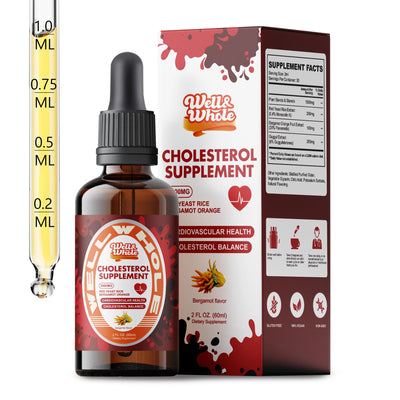
Cholesterol Support Liquid Drops from well&whole provide plant sterols in a convenient liquid format that can be easily incorporated into your daily routine.

Red Yeast Rice
Red yeast rice is produced by fermenting rice with *Monascus purpureus* yeast. It contains naturally occurring monacolins, including monacolin K, which is chemically identical to the active ingredient in the cholesterol-lowering drug lovastatin.
**The Evidence**: Multiple meta-analyses have found red yeast rice supplementation associated with reductions in total cholesterol, LDL cholesterol, and triglycerides (Wang et al., 2018, *Phytotherapy Research*).
**Important Safety Note**: Because red yeast rice contains naturally occurring statin-like compounds, it carries similar considerations and potential interactions. It should not be taken without medical supervision, particularly if you are already taking prescription statins.
Soluble Fiber Supplements
If you struggle to get enough soluble fiber from food, supplements can help:
- **Psyllium husk**: One of the most well-researched fiber supplements for cholesterol support
- **Beta-glucan**: Found in oats and barley; also available as a supplement
- **Guar gum**: Another soluble fiber option
Omega-3 Fatty Acids
While omega-3s are best known for lowering triglycerides rather than LDL, they remain an important part of a complete cholesterol management plan.
**EPA and DHA**: Found in fish oil and algae oil
**ALA**: Plant-based omega-3 found in flaxseeds, chia seeds, and walnuts
Lifestyle Factors Beyond Diet
Physical Activity
Exercise influences cholesterol in several ways:
- Raises HDL ("good") cholesterol
- Lowers triglycerides
- May modestly lower LDL
- Supports weight management
**Recommendations**:
- AHA recommends at least 150 minutes of moderate-intensity aerobic activity per week
- Include both aerobic exercise and resistance training
- Even small amounts of activity are beneficial—something is always better than nothing
Weight Management
Excess weight, particularly abdominal fat, is associated with:
- Lower HDL
- Higher LDL
- Higher triglycerides
Even modest weight loss (5-10% of body weight) can improve cholesterol profile.
Smoking Cessation
Smoking lowers HDL cholesterol and damages blood vessels. Quitting smoking can lead to improvements in HDL levels and overall cardiovascular health.
Stress Management
Chronic stress may indirectly affect cholesterol by influencing behaviors (poor food choices, reduced physical activity) and potentially through direct physiological mechanisms.
Sleep
Poor sleep quality and duration have been associated with unfavorable cholesterol profiles. Prioritizing 7-9 hours of quality sleep supports overall metabolic health.
Putting It All Together: A Step-by-Step Plan
Phase 1: Assessment (Week 0)
1. **Get a baseline lipid panel**: Total cholesterol, LDL, HDL, triglycerides
2. **Assess your diet**: Keep a food diary for 3-7 days
3. **Evaluate lifestyle factors**: Physical activity, sleep, stress, smoking status
4. **Consult your healthcare provider**: Especially important if you have existing health conditions or take medications
Phase 2: Dietary Changes (Weeks 1-4)
**Week 1**: Add one serving of oats or barley daily
**Week 2**: Incorporate fatty fish 2-3 times per week
**Week 3**: Add a daily serving of nuts (about 1.5 oz)
**Week 4**: Increase vegetable and fruit intake; reduce added sugars
Phase 3: Supplement Integration (Weeks 4-8)
After establishing dietary changes, consider adding:
1. **Plant sterols**: Cholesterol Support Liquid Drops provide a convenient source
2. **Soluble fiber**: If dietary intake remains inadequate
3. **Red yeast rice**: ONLY under medical supervision
Phase 4: Lifestyle Expansion (Weeks 8-12)
- Increase physical activity duration/intensity
- Implement stress management practices
- Optimize sleep habits
- Address smoking cessation if applicable
Phase 5: Reassessment (Week 12+)
Repeat lipid panel to assess progress. Continue successful strategies and adjust as needed in consultation with your healthcare provider.
Sample Day of Eating: Cholesterol-Friendly Menu
**Breakfast**:
- Oatmeal made with soy milk
- Topped with ground flaxseeds, walnuts, and berries
- Green tea
**Lunch**:
- Large salad with mixed greens, chickpeas, avocado
- Olive oil and lemon dressing
- Whole grain bread slice
**Snack**:
- Apple with almond butter
- Handful of pistachios
**Dinner**:
- Grilled salmon
- Quinoa pilaf with herbs
- Roasted Brussels sprouts
- Side of steamed broccoli
**Evening**:
- Small square of dark chocolate (70%+ cocoa)
Tracking Progress: What to Monitor
Lipid Panel Markers
Work with your healthcare provider to establish appropriate monitoring:
- Baseline and follow-up lipid panels
- Liver function tests (especially if using red yeast rice)
- CK (creatine kinase) if experiencing muscle symptoms
Subjective Markers
Keep a journal noting:
- Energy levels
- Digestive health (some cholesterol supplements can cause GI symptoms)
- Muscle aches (important if using red yeast rice)
- Overall sense of wellbeing
Non-Lipid Cardiovascular Markers
Depending on your situation, your doctor may also monitor:
- Blood pressure
- Inflammatory markers (hs-CRP)
- Blood sugar / HbA1c
- Body composition
Common Mistakes to Avoid
1. **Relying solely on supplements**: Supplements support, they don't replace, dietary and lifestyle changes
2. **Taking red yeast rice with prescription statins**: This can increase the risk of side effects; medical supervision is essential
3. **Ignoring triglycerides**: Focus shouldn't be solely on LDL; triglycerides matter too
4. **Expecting overnight results**: Cholesterol changes take time—typically 3-6 months to see the full effect of lifestyle changes
5. **Not rechecking levels**: Without follow-up testing, you won't know if your plan is working
Frequently Asked Questions
Q1: How quickly can diet and supplements lower cholesterol?
A: It typically takes 3-6 months of consistent changes to see meaningful shifts in cholesterol levels. Some people may notice changes sooner.
Q2: Can I stop taking my cholesterol medication if I change my diet?
A: Never discontinue prescribed medication without consulting your doctor. Some people are able to reduce medication dosage with lifestyle changes, but this must be medically supervised.
Q3: Are eggs bad for cholesterol?
A: Current research suggests dietary cholesterol (like that in eggs) has less impact on blood cholesterol than previously thought for most people. Eggs can be part of a heart-healthy diet when consumed in moderation.
Q4: Is red yeast rice as effective as prescription statins?
A: Red yeast rice contains naturally occurring compounds similar to statins, but the concentration can vary between products. It should be used under medical supervision and is not appropriate for everyone.
Q5: Do I need to avoid all fats to lower cholesterol?
A: No. Healthy fats (olive oil, avocados, nuts) are beneficial. Focus on eliminating trans fats and moderating saturated fat, not avoiding all fats.
Q6: Can stress raise cholesterol?
A: Chronic stress may indirectly affect cholesterol by influencing behaviors and potentially through physiological mechanisms. Effective stress management supports overall cardiovascular health.
Q7: Are plant sterols safe for everyone?
A: Plant sterols are generally well-tolerated, but those with a rare genetic condition called sitosterolemia should avoid them. As with any supplement, consult your healthcare provider.
Q8: How much soluble fiber do I need daily?
A: Aim for 10-25 grams of soluble fiber daily from food and/or supplements. Gradually increase intake to avoid digestive discomfort.
Q9: Can children have high cholesterol?
A: Yes. The AHA recommends cholesterol screening for all children ages 9-11 and again at 17-21. Family history plays a significant role in childhood cholesterol levels.
Q10: Is cholesterol management a lifelong commitment?
A: For most people, yes. Cholesterol levels can change over time, and maintaining healthy levels requires ongoing attention to diet, lifestyle, and (when appropriate) supplements or medications.
Conclusion
Managing cholesterol is not about a single magic bullet—it's about assembling a comprehensive plan that addresses diet, supplements, physical activity, stress, sleep, and other lifestyle factors. The most effective approach is one you can sustain long-term.
Start with foundational dietary changes: emphasize plant sterols, soluble fiber, omega-3s, and colorful produce while limiting trans fats, excessive saturated fat, and added sugars. Layer in targeted supplement support like plant sterols and (under medical guidance) red yeast rice. Finally, build a lifestyle that includes regular movement, stress management, quality sleep, and avoidance of smoking.
Remember that cholesterol management is highly individual. What works beautifully for one person may be less effective for another. Work with your healthcare provider to develop a personalized plan, and be patient—meaningful changes take time.
If you're looking for high-quality supplement support, consider Cholesterol Support Liquid Drops from well&whole, formulated with plant sterols and red yeast rice to support your cholesterol management journey.

Your heart health is worth the investment. Start where you are, use what you have, and do what you can. Small, consistent changes compound into meaningful results over time.
Related supplements
Putting it simply: if this is something you want to add to your routine, our Well&Whole Horse Chestnut Extract Gummies, Circulation Supplements for Legs and Cayenne Pepper Heart Health Gummies with Hawthorn & CoQ10 & Turmeric are a good place to start. The wider Heart Health collection is worth a look, and the CoQ10 range covers related formats.
These statements have not been evaluated by the Food and Drug Administration. This product is not intended to diagnose, treat, cure, or prevent any disease.