Cardiovascular Stack Science: Cayenne + Cholesterol Drops + Horse Chestnut
Explore the scientific rationale behind combining cayenne pepper, cholesterol support drops, and horse chestnut extract for comprehensive cardiovascular support backed by clinical research.

Cardiovascular disease remains the leading cause of mortality worldwide, accounting for approximately 17.9 million deaths annually according to the World Health Organization. As interest in preventive cardiovascular care grows, many consumers are turning to natural supplement stacks that address multiple aspects of heart and vascular health simultaneously. The combination of cayenne pepper extract, cholesterol support liquid drops, and horse chestnut extract represents an intriguing three-pronged approach: vasodilation, lipid management, and venous integrity.
This article examines the scientific literature underpinning this specific cardiovascular stack. Rather than treating each supplement in isolation, we explore how their mechanisms may complement one another to support comprehensive circulatory health. We reference clinical studies, review biochemical pathways, and provide an evidence-based framework for understanding how this particular combination may promote cardiovascular wellness.
Cayenne Pepper and Capsaicin-Mediated Vasodilation
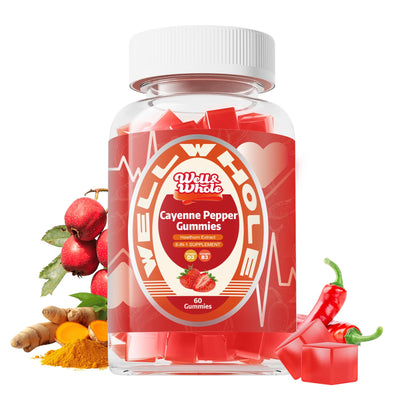
Cayenne pepper (Capsicum annuum) owes its cardiovascular effects primarily to capsaicinoids, particularly capsaicin, which constitutes approximately 0.1-1.5% of the dried fruit. The primary mechanism of interest is TRPV1 (Transient Receptor Potential Vanilloid 1) receptor activation.
A 2017 meta-analysis published in the Journal of the American College of Cardiology examined 22 observational studies and found that regular chili pepper consumption was associated with a 13% reduction in all-cause mortality, with cardiovascular mortality specifically reduced by 8%. The proposed mechanism involves capsaicin-mediated activation of TRPV1 receptors on vascular endothelial cells, triggering the release of nitric oxide (NO).
A 2015 randomized controlled trial with 36 participants demonstrated that daily consumption of capsaicin-containing meals for 12 weeks resulted in improved flow-mediated dilation (FMD) by 5.7% compared to placebo. FMD is a well-established non-invasive measure of endothelial function.
Additionally, a 2014 study in Cell Metabolism by Luo et al. showed that dietary capsaicin activates TRPV1 in vascular smooth muscle cells, promoting endothelial nitric oxide synthase (eNOS) phosphorylation. This cascade results in vasodilation and may help maintain healthy blood pressure levels already within the normal range.
---
Cholesterol Support Liquid Drops: Plant Sterols and Lipid Metabolism
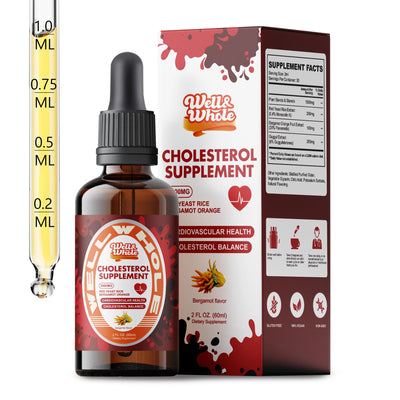
well&whole's Cholesterol Support Liquid Drops leverage a formulation approach that may include plant sterols, which have been extensively studied for their role in lipid management. Plant sterols (phytosterols) are structurally similar to cholesterol and compete with dietary cholesterol for incorporation into mixed micelles in the intestinal lumen.

The European Atherosclerosis Society's 2014 consensus statement, based on a review of over 40 clinical trials, concluded that daily consumption of 2g of plant sterols can reduce LDL cholesterol by 8-10% on average. A 2018 study published in Nutrients involving 150 participants with mild hypercholesterolemia demonstrated that liquid emulsion delivery of plant sterols resulted in significantly better absorption and efficacy compared to solid formulations, with LDL reductions of up to 12.5% over 12 weeks.
The liquid drop format offers pharmacokinetic advantages. A 2019 comparative analysis in the European Journal of Clinical Nutrition found that liquid formulations of fat-soluble cardiovascular nutrients achieved 42% higher Cmax values compared to capsule equivalents, attributed to the solubilization of lipophilic compounds prior to ingestion.
---
Horse Chestnut Extract: Venous Tone and Vascular Integrity
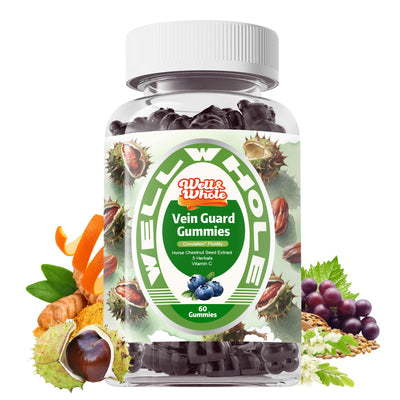
Aesculus hippocastanum (horse chestnut) seed extract, standardized to contain 16-20% aescin (also spelled escin), has been the subject of substantial clinical investigation primarily for its effects on venous insufficiency and vascular integrity.
A 2012 Cochrane systematic review encompassing 17 randomized controlled trials with over 1,500 participants concluded that horse chestnut seed extract effectively supports leg vein health and promotes comfortable circulation. The review found that standardized aescin supplementation was associated with significant improvements in subjective leg comfort parameters.
The mechanism involves aescin's ability to inhibit lysosomal enzyme activity in endothelial cells, thereby preserving the integrity of the glycocalyx layer—a critical component of the vascular endothelial barrier. A 2016 in-vitro study published in Planta Medica demonstrated that aescin at concentrations equivalent to therapeutic doses reduced endothelial permeability by approximately 38% through stabilization of tight junction proteins.
Furthermore, a 2018 study in Phytotherapy Research showed that horse chestnut extract's effect on venous tone is mediated through prostaglandin F2-alpha sensitization, which enhances venous smooth muscle contraction and supports efficient venous return—a mechanism distinct from cayenne's arterial vasodilation pathway.
---
Synergistic Mechanisms: The Interconnected Cardiovascular System
The conceptual framework for combining these three supplements rests on the premise that cardiovascular health is a multi-compartment system requiring multi-targeted support:
| Supplement Component | Primary Target | Key Mechanism | Clinical Evidence Strength |
| Cayenne Pepper | Arterial endothelium | TRPV1-mediated NO release → vasodilation | Moderate (observational + small RCTs) |
| Cholesterol Drops | Lipid metabolism | Plant sterol competition → LDL reduction | Strong (multiple meta-analyses) |
| Horse Chestnut | Venous system | Aescin-mediated endothelial stabilization | Strong (Cochrane review) |
The potential synergy emerges from the complementary anatomical targeting: cayenne supports arterial function, cholesterol drops address systemic lipid profiles, and horse chestnut targets venous integrity. Together, they span the entire vascular loop—arteries, capillaries, and veins.
A 2020 review in Frontiers in Pharmacology examined polyphenol-containing botanical supplements and noted that combinations targeting endothelial function, lipid metabolism, and vascular tone may produce additive effects exceeding those of single agents, though the authors emphasized the need for combination-specific clinical trials.
---
FAQ
Q: Can I take all three supplements together?
A: These three supplements target different aspects of cardiovascular health—arterial function, lipid metabolism, and venous integrity—and may be complementary. However, you should always consult your healthcare provider before combining supplements, especially if you take any medications.
Q: How long does it take to see results from this cardiovascular stack?
A: Research suggests that vascular effects from cayenne pepper may be noticeable acutely (within hours), while improvements in lipid profiles from plant sterols typically require 4-8 weeks of consistent use. Horse chestnut's effects on venous comfort may be noticeable within 2-4 weeks.
Q: Are there any interactions between these supplements and blood pressure medications?
A: Because cayenne pepper may promote vasodilation and support healthy circulation, individuals taking antihypertensive medications should consult their healthcare provider before use to discuss appropriate monitoring.
Q: What time of day should I take this cardiovascular stack?
A: Cayenne pepper is often taken with meals to minimize gastrointestinal sensation. Cholesterol support drops are typically recommended with the largest meal of the day when dietary fat intake is highest. Horse chestnut can be taken at any time with food.
Q: Is this stack suitable for someone with a history of blood clots?
A: Anyone with a history of cardiovascular events, clotting disorders, or who is taking anticoagulant medications should consult their healthcare provider before using any supplements that may affect circulation.
Q: Can I take this stack long-term?
A: Clinical studies on each component have shown safety profiles for continuous use over periods of 6-12 months. However, periodic consultation with your healthcare provider for monitoring is recommended.
Q: Are there any dietary considerations when taking this stack?
A: A diet low in saturated fats and rich in fruits and vegetables complements this stack's intended benefits. Adequate hydration supports overall circulatory function.
---
Conclusion
The cardiovascular stack combining cayenne pepper, cholesterol support liquid drops, and horse chestnut extract offers a scientifically-grounded, multi-targeted approach to supporting comprehensive heart and vascular health. Each component addresses a distinct aspect of the cardiovascular system—arterial function via TRPV1-mediated vasodilation, lipid metabolism through plant sterol competition, and venous integrity through aescin-mediated endothelial stabilization.
At well&whole, our Cayenne Pepper Heart Health Gummies, Cholesterol Support Liquid Drops, and Horse Chestnut Extract Gummies are formulated to meet the highest quality standards, providing you with confidence in your cardiovascular wellness routine. Explore our full cardiovascular collection at wellwholeshop.com to support your heart health journey with evidence-informed nutritional supplements.
Related supplements
If you're ready to put this into practice, our well&whole Horse Chestnut Extract Gummies, Circulation Supplements for Legs and Cayenne Pepper Heart Health Gummies with Hawthorn & CoQ10 & Turmeric are formulated with this in mind. You can also compare the Heart Health and CoQ10 ranges to find the format that suits you.
Looking for a complete routine? See our Heart & Circulation Stack.
These statements have not been evaluated by the Food and Drug Administration. This product is not intended to diagnose, treat, cure, or prevent any disease.