Capsaicin & TRPV1: How Cayenne Pepper Gummies Trigger Thermogenesis and Vasodilation
Scientific deep-dive into capsaicin's interaction with TRPV1 receptors, thermogenesis activation, and vasodilation pathways. How well&whole's cayenne pepper heart health gummies utilize these mechanisms.

Capsaicin—the pungent alkaloid responsible for chili pepper heat—operates through one of the most well-characterized receptor-ligand interactions in nutritional biochemistry: the transient receptor potential vanilloid 1 (TRPV1) channel. This interaction initiates cascading physiological responses including thermogenesis, vasodilation, and nociceptive modulation that underpin cayenne pepper's traditional and emerging health applications.
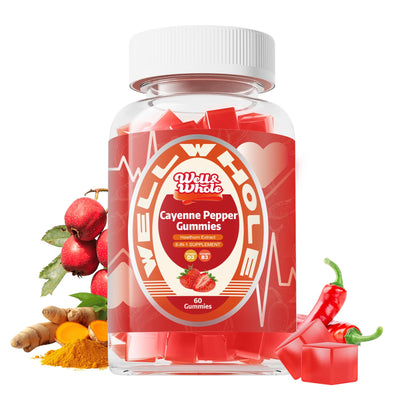
well&whole's Cayenne Pepper Heart Health Gummies (P02) combine capsaicin with hawthorn berry, CoQ10, and turmeric in a four-ingredient cardiovascular formula. Understanding capsaicin's mechanism at the TRPV1 receptor level provides the biochemical foundation for the product's thermogenic and circulatory support benefits.
well&whole Product Link:
· Cayenne Pepper Heart Health Gummies (Hawthorn & CoQ10 & Turmeric) – $19.99

TRPV1: The Capsaicin Receptor — Structure and Function
TRPV1 is a non-selective cation channel belonging to the TRP superfamily of ion channels. First cloned by Caterina et al. in 1997 (a discovery that earned the 2021 Nobel Prize in Physiology or Medicine for David Julius), TRPV1 is activated by:
· Heat: Temperatures above ~43°C (109°F)
· Protons: Low pH (acidic conditions, including inflammation-associated tissue acidosis)
· Capsaicin: The vanilloid moiety of capsaicin binds to an intracellular domain of TRPV1
· Endovanilloids: Endogenous ligands including anandamide and lipoxygenase products
The TRPV1 channel, when activated, opens to permit the influx of calcium (Ca²⁺) and sodium (Na⁺) ions into sensory neurons and other TRPV1-expressing cells. This cation influx depolarizes the cell membrane and triggers intracellular signaling cascades that mediate the physiological effects of capsaicin.
Receptor Distribution
TRPV1 expression is not limited to pain-sensing neurons. Cao et al. (2013) demonstrated TRPV1 expression on vascular smooth muscle cells, endothelial cells, and perivascular nerves—providing a direct anatomical substrate for capsaicin's cardiovascular effects:
| Tissue/Cell Type | TRPV1 Expression Level | Physiological Consequence of Activation |
| Dorsal root ganglia (DRG) neurons | Very high | Pain/heat sensation, neuropeptide release |
| Vascular smooth muscle | Moderate | Vasodilation via CGRP/NO pathways |
| Endothelial cells | Moderate | Nitric oxide synthesis, increased blood flow |
| Perivascular sensory nerves | High | CGRP release → vasodilation |
| Brown adipose tissue (BAT) | Moderate | Thermogenesis activation |
| Skeletal muscle | Low-moderate | Potential metabolic effects |
| Gastrointestinal epithelium | Moderate | Local blood flow modulation |
---
Thermogenesis: Capsaicin-Induced Heat Production
Thermogenesis—the metabolic production of heat—is one of capsaicin's most studied effects and is directly mediated by TRPV1 activation.
Primary Mechanism: BAT Activation
Brown adipose tissue (BAT) is the body's dedicated thermogenic organ, expressing uncoupling protein 1 (UCP1) in mitochondrial membranes. UCP1 dissipates the proton gradient across the inner mitochondrial membrane, generating heat instead of ATP. BAT activation is the single most important mechanism for capsaicin-induced thermogenesis.
Yoneshiro et al. (2013) demonstrated in a controlled trial published in the American Journal of Clinical Nutrition that 6 weeks of capsaicinoid supplementation (equivalent to approximately 9 mg capsaicin daily) increased BAT activity measured by fluorodeoxyglucose-positron emission tomography (FDG-PET), and daily energy expenditure increased by approximately 90 kcal compared to placebo. The thermogenic response was observed within 30-60 minutes of ingestion and persisted for approximately 2-3 hours.
A 2017 meta-analysis by Ludy et al. in the International Journal of Obesity aggregated 19 clinical studies on capsaicinoids and energy metabolism. The pooled analysis revealed:
· Mean increase in energy expenditure: ~50 kcal/day (range: 10-130 kcal)
· Mean increase in fat oxidation: ~3.5 g/day
· Effect size larger in individuals with baseline BMI > 25 kg/m²
· Dose-dependent response: effects observed at ≥2 mg capsaicin per dose
Secondary Mechanism: Calcium Cycling
TRPV1-mediated calcium influx in skeletal muscle may activate calcium-cycling thermogenesis. In vitro work by Luo et al. (2016) demonstrated that capsaicin increased sarco(endo)plasmic reticulum calcium ATPase (SERCA) activity in cultured myotubes, theoretically uncoupling ATP hydrolysis from calcium transport to produce heat. The in vivo significance of this mechanism in humans remains unquantified.
Comparison: Capsaicin vs. Other Thermogenic Compounds
| Compound | Mechanism | Thermogenic Effect | Duration | Clinical Evidence |
| Capsaicin | TRPV1 → BAT activation | ~50 kcal/day | 2-3 hours | Multiple RCTs |
| Caffeine | Adenosine antagonism, cAMP | ~30-50 kcal/day | 3-6 hours | Extensive |
| Green tea catechins (EGCG) | COMT inhibition → NE prolongation | ~40-80 kcal/day | 4-6 hours | Multiple RCTs |
| Synephrine (bitter orange) | β3-adrenergic agonism | ~30-40 kcal/day | 2-4 hours | Limited |
| Capsaicin + Caffeine (synergy) | Dual-pathway | 80-120 kcal/day | 3-5 hours | Mechanistic plausibility |
---
Vasodilation: TRPV1-Mediated Vascular Relaxation
Capsaicin's vasodilatory effects occur through two interconnected mechanisms:
Mechanism 1: CGRP-Mediated Vasodilation
Activation of TRPV1 on perivascular sensory nerve terminals triggers the release of calcitonin gene-related peptide (CGRP), one of the most potent endogenous vasodilators known. CGRP binds to receptors on vascular smooth muscle cells, activating adenylate cyclase, increasing intracellular cAMP, and inducing smooth muscle relaxation and vasodilation.
Brain et al. (1985) first characterized CGRP's vasodilatory potency, demonstrating that femtomolar concentrations produced measurable arteriolar dilation. Zygmunt et al. (1999) subsequently established the mechanistic link between TRPV1 activation, CGRP release, and vascular relaxation in human coronary arteries—a finding with direct relevance to cayenne pepper's traditional use for cardiovascular support.
Mechanism 2: Nitric Oxide (NO) Pathway
TRPV1 activation on endothelial cells stimulates endothelial nitric oxide synthase (eNOS) via calcium-calmodulin-dependent phosphorylation. The resulting nitric oxide diffuses to vascular smooth muscle, activating soluble guanylyl cyclase (sGC), increasing cGMP, and producing vasodilation.
Yang et al. (2010) demonstrated in a seminal study published in Cell Metabolism that chronic dietary capsaicin supplementation in mice:
· Upregulated eNOS phosphorylation in vascular endothelium by 28%
· Reduced blood pressure in hypertensive mice by approximately 15 mmHg
· Improved endothelium-dependent vasodilation (acetylcholine response) by 35%
· These effects were abolished in TRPV1 knockout mice, confirming receptor dependence
Regional Blood Flow Effects
Capsaicin's vasodilatory effects vary across vascular beds, with implications for cardiovascular health:
| Vascular Bed | Capsaicin Effect | Mechanism | Clinical Relevance |
| Coronary arteries | Vasodilation | CGRP + NO | Myocardial oxygen supply |
| Mesenteric (gut) arteries | Vasodilation | CGRP | Postprandial blood flow |
| Peripheral vasculature | Vasodilation | CGRP | Warmth sensation, flushing |
| Cerebral vasculature | Variable (timing dependent) | CGRP | Migraine research (biphasic) |
| Skeletal muscle vasculature | Vasodilation | CGRP + local factors | Exercise blood flow |
---
The Biphasic Response: Short-Term vs. Long-Term TRPV1 Effects
A critical concept in capsaicin pharmacology is the biphasic nature of TRPV1 responses:
Acute Phase (Minutes to Hours):
· TRPV1 activation → cation influx → neuronal depolarization → burning sensation, vasodilation, neuropeptide release
· This is the "heat" phase and the therapeutic window for thermogenesis and acute vasodilation
Desensitization Phase (Days to Weeks of Repeated Exposure):
· Chronic TRPV1 activation → intracellular calcium accumulation → calcium-dependent protease activation → reversible TRPV1 desensitization
· Desensitization reduces nociceptive signaling (why capsaicin cream relieves neuropathic pain) but may also attenuate thermogenic and vasodilatory responses
A 2015 study by Szolcsányi in Pharmacology & Therapeutics characterized this desensitization as a functional antagonism—sustained TRPV1 activation paradoxically reduces receptor responsiveness. This has implications for cayenne pepper supplementation: cycling (intermittent dosing) may theoretically preserve acute TRPV1 sensitivity, though no human trials have tested this hypothesis in the context of thermogenesis or cardiovascular effects.
Clinical Implications for Supplement Dosing
| Dosing Strategy | TRPV1 Effect | Expected Physiological Result |
| Acute single dose | Strong activation | Thermogenesis, vasodilation, warmth |
| Daily chronic dosing | Partial desensitization | Reduced acute effects, potential sustained metabolic adaptation |
| Intermittent dosing (e.g., 5 days on, 2 off) | Preserved acute sensitivity | Theoretical preservation of thermogenic response |
| Pre-exercise specific dosing | Acute TRPV1 activation timed to physical activity | Synergy between TRPV1 vasodilation and exercise hyperemia |
---
Synergy with Formula Co-Ingredients
well&whole's P02 formula combines capsaicin with three complementary ingredients that interact with capsaicin's TRPV1 mechanism:
Hawthorn Berry: Hawthorn flavonoids enhance endothelial NO production through a TRPV1-independent pathway (AMPK-eNOS activation), providing vasodilation that is additive to, not overlapping with, capsaicin's CGRP/NO effects.
Coenzyme Q10: CoQ10 supports mitochondrial function in cardiac and vascular smooth muscle, potentially amplifying the metabolic impact of TRPV1-mediated thermogenesis by ensuring efficient electron transport in BAT mitochondria.
Turmeric (Curcumin): Curcumin activates TRPV1 at the same binding domain as capsaicin but with lower potency. Yeon et al. (2010) demonstrated that sub-threshold doses of capsaicin + curcumin produced additive TRPV1 activation without additive pungency—a potential "TRPV1 synergy" that warrants further investigation.
Combined Pathway Effects
| Pathway | Capsaicin | Hawthorn | CoQ10 | Turmeric | Combined Effect |
| TRPV1 activation | Primary | None | None | Secondary (weak) | Dual TRPV1 engagement |
| eNOS/NO | Secondary | Primary | None | Secondary | Multi-pathway NO production |
| Thermogenesis (UCP1) | Primary | None | Mitochondrial support | Secondary | Enhanced BAT function |
| Antioxidant defense | None | Primary | Primary | Primary | Triple antioxidant coverage |
| Anti-inflammatory | TRPV1-mediated | Flavonoid | Membrane stabilization | COX/LOX/NF-κB | Multi-target anti-inflammatory |
---
Summary Table: Capsaicin-TRPV1 Cardiovascular Effects
| Effect | Mechanism | Evidence Level | Dose Dependency | Time Course |
| Thermogenesis (BAT) | TRPV1 → UCP1 activation | Strong (multiple RCTs) | ≥2 mg capsaicin/dose | 30 min onset, 2-3 hr duration |
| Vasodilation (CGRP) | TRPV1 on perivascular nerves | Strong (in vitro + in vivo) | Dose-dependent | Minutes post-absorption |
| Vasodilation (NO) | TRPV1 on endothelium → eNOS | Moderate (animal + indirect human) | Not well characterized | 30-60 min onset |
| Blood pressure modulation | Combined CGRP + NO + BAT activation | Moderate (animal studies, limited human data) | Chronic dosing | Days to weeks |
| Pain desensitization | TRPV1 desensitization (topical) | Strong (FDA-approved capsaicin patch) | Cumulative dosing | Days to weeks |
| Metabolic rate increase | BAT + calcium cycling | Moderate | ≥2 mg/dose | 2-3 hr per dose |
---
Frequently Asked Questions
Q1: How does the heat sensation from cayenne gummies relate to the actual health effect?
A: The burning sensation is a consequence of TRPV1 activation on oral sensory neurons—it's the same receptor that mediates vasodilation and thermogenesis, but the oral burning is a sensory side effect, not the therapeutic mechanism. The well&whole gummy format buffers the heat compared to raw cayenne powder, reducing oral irritation while still delivering capsaicin systemically after absorption.
Q2: Will I build tolerance to cayenne gummies over time?
A: TRPV1 receptor desensitization occurs with repeated capsaicin exposure. Some attenuation of the acute thermogenic and warming effects is possible over weeks to months of daily use. This desensitization is generally reversible with a short break (days to weeks). The cardiovascular effects (vasodilation) may be less subject to desensitization than the thermogenic effects, though this distinction hasn't been rigorously studied.
Q3: Is there an optimal time of day to take cayenne gummies for metabolic effects?
A: Morning or pre-exercise dosing aligns with the circadian rhythm of BAT thermogenesis (which is higher during active/waking hours) and capitalizes on the thermogenic window. Taking cayenne gummies within 6 hours of bedtime may interfere with sleep onset in sensitive individuals due to the mild metabolic stimulation.
Q4: How does capsaicin's mechanism differ from niacin-induced flushing?
A: Both produce warmth and flushing, but through completely different mechanisms. Capsaicin activates TRPV1 → CGRP/NO → vasodilation. Niacin activates the GPR109A receptor on Langerhans cells in the skin → prostaglandin D2 release → vasodilation. This is why antihistamines don't block capsaicin warmth but NSAIDs can reduce niacin flush (by blocking prostaglandin synthesis).
Q5: Can cayenne gummies help with cold extremities (Raynaud's phenomenon)?
A: The vasodilatory mechanism of capsaicin (CGRP-mediated) could theoretically improve peripheral blood flow to cold-sensitive extremities. Anecdotal reports are common, but no clinical trials have specifically tested cayenne supplementation for Raynaud's. The mechanism is plausible but unproven for this specific application.
Q6: What's the relationship between capsaicin dose and TRPV1 activation?
A: TRPV1 activation follows a sigmoidal dose-response curve—there's a threshold below which activation is minimal, a steep response region where small dose increases produce large effects, and a plateau where receptor saturation limits further activation. The EC50 (half-maximal effective concentration) for capsaicin at human TRPV1 is approximately 0.5-1 µM. The practical implication: extremely high doses don't produce proportionally larger effects and increase gastrointestinal side effects.
Q7: Does body temperature actually increase after taking cayenne gummies?
A: Core body temperature is tightly regulated and typically unchanged by nutritional capsaicin doses. What increases is thermogenesis (heat production), but compensatory mechanisms (increased skin blood flow via vasodilation, sweating) dissipate this heat, maintaining stable core temperature. You may feel warmer (due to skin vasodilation), but your core temperature doesn't measurably rise.
Q8: Are TRPV1 receptors involved in metabolism beyond thermogenesis?
A: Emerging research suggests TRPV1 may influence glucose metabolism, insulin sensitivity, and lipid metabolism through mechanisms beyond BAT thermogenesis. TRPV1 activation in pancreatic beta-cells may modulate insulin secretion (Akiba et al., 2004). TRPV1 in adipose tissue may affect adipokine secretion (Zhang et al., 2007). These effects are less studied than thermogenesis and require further investigation.
---
Conclusion: TRPV1 as a Cardiovascular and Metabolic Target
The TRPV1 receptor represents one of the most promising targets in nutritional biochemistry—a single receptor that, when activated by a food-derived compound (capsaicin), initiates cascades affecting thermogenesis, vascular tone, and metabolic rate. The well&whole Cayenne Pepper Heart Health Gummies (P02) leverage this mechanism within a broader cardiovascular formula, combining capsaicin-mediated TRPV1 activation with hawthorn's endothelial support, CoQ10's mitochondrial function, and turmeric's anti-inflammatory actions.
The clinical evidence for capsaicin's thermogenic and vasodilatory effects is robust, with well-designed RCTs confirming BAT activation, energy expenditure increases, and CGRP-mediated vascular relaxation. The remaining questions—dose optimization for sustained effect without desensitization, individual variability in TRPV1 sensitivity, and the additive contribution of the hawthorn/CoQ10/turmeric co-ingredients—represent productive areas for ongoing research.
Related supplements
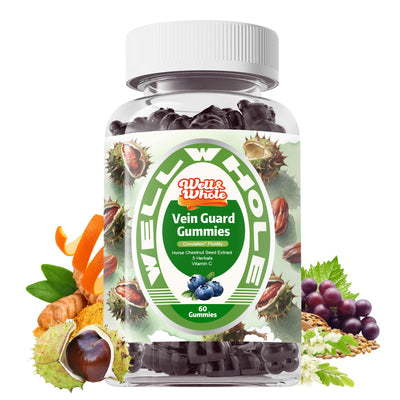
Where to begin? Our well&whole Horse Chestnut Extract Gummies, Circulation Supplements for Legs and Cayenne Pepper Heart Health Gummies with Hawthorn & CoQ10 & Turmeric are a sensible place to start, and the Heart Health collection lays out the other formats side by side with CoQ10.
These statements have not been evaluated by the Food and Drug Administration. This product is not intended to diagnose, treat, cure, or prevent any disease.