Can You Take Cholesterol Supplements with Statins?
Can you take cholesterol supplements like red yeast rice with statins? Learn about interactions, safety, and what to discuss with your doctor.

If you're taking a statin medication to manage your cholesterol, you may wonder whether natural cholesterol supplements can provide additional support—or whether combining the two is safe. It's a valid question, and the answer requires understanding how both statins and natural cholesterol-supporting ingredients work.
This guide examines the key interactions between cholesterol supplements and statin medications, with specific focus on red yeast rice, plant sterols, and other common ingredients. Our goal is to give you the information you need to have an informed conversation with your healthcare provider.
Understanding Statins: How They Work
The HMG-CoA Reductase Pathway
Statins (such as atorvastatin, simvastatin, rosuvastatin, and pravastatin) work by inhibiting an enzyme called HMG-CoA reductase. This enzyme is the rate-limiting step in cholesterol synthesis in the liver. By blocking it, statins reduce the liver's production of cholesterol, which in turn prompts the liver to remove more LDL cholesterol from the bloodstream.
CoQ10 Depletion
One well-known consequence of HMG-CoA reductase inhibition is the reduction of CoQ10 (ubiquinone) production. The same pathway that produces cholesterol also produces CoQ10, meaning that statins inadvertently reduce CoQ10 levels. A study in the *American Journal of Cardiology* found that statin therapy reduced plasma CoQ10 levels by up to 40%.
This depletion is one reason some statin users experience muscle aches and fatigue—CoQ10 is essential for mitochondrial energy production, particularly in muscle tissue.
Red Yeast Rice and Statins: A Critical Interaction
Why This Combination Is Problematic
Red yeast rice contains naturally occurring monacolin K, which is structurally identical to the active compound in lovastatin—a prescription statin. This means that taking red yeast rice alongside a statin medication is essentially doubling up on the same mechanism of action.
Risks of Combining Red Yeast Rice with Statins
- **Additive effect on HMG-CoA reductase**: Both the statin and monacolin K inhibit the same enzyme, potentially leading to excessive inhibition.
- **Increased muscle side effects**: The risk of myopathy (muscle pain and weakness) and, in rare cases, rhabdomyolysis (severe muscle breakdown) increases when two HMG-CoA reductase inhibitors are combined.
- **Liver enzyme elevation**: Both substances are metabolized by the liver, and combining them may increase the risk of liver enzyme abnormalities.
- **Unpredictable dosing**: Because supplement concentrations of monacolin K can vary, it is difficult to predict the total effective dose when combined with a statin.
The Bottom Line
**Do not take red yeast rice supplements if you are currently taking a statin medication.** This is the consensus of major medical organizations, including the American Heart Association and the National Lipid Association. If you are interested in red yeast rice as an alternative to statins, discuss this with your healthcare provider—they can help you weigh the options and make an appropriate transition if needed.
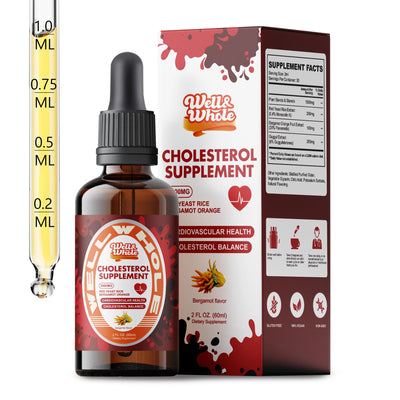
well&whole Cholesterol Support Liquid Drops contain red yeast rice and are intended for individuals not currently taking statin medications.
Plant Sterols and Statins: A Compatible Combination
How Plant Sterols Differ
Unlike red yeast rice, plant sterols work through an entirely different mechanism. Instead of inhibiting cholesterol synthesis in the liver, plant sterols block cholesterol absorption in the digestive tract. They structurally resemble cholesterol and compete with both dietary and biliary cholesterol for absorption into intestinal cells.
Research on Combining Plant Sterols with Statins
Because the mechanisms are different, combining plant sterols with statins may provide complementary benefits:
- **Statins reduce cholesterol production** in the liver
- **Plant sterols reduce cholesterol absorption** in the gut
A meta-analysis published in the *American Journal of Cardiology* reviewed 8 clinical trials and found that adding plant sterols to statin therapy provided an additional 7–10% reduction in LDL cholesterol beyond what statins achieved alone. This additive effect is sometimes called a "dual inhibition" approach.
Safety Considerations
Plant sterols are generally well-tolerated and have a strong safety profile. The FDA has acknowledged that consuming 1.3 grams or more per day of plant sterol esters may reduce the risk of coronary heart disease. Side effects are rare and typically limited to mild digestive changes.
However, there is one consideration: plant sterols may slightly reduce the absorption of fat-soluble vitamins (A, D, E, K). If you take plant sterol supplements long-term, ensure adequate intake of these vitamins, preferably at a different time of day.
Other Cholesterol-Supporting Ingredients and Statins
Omega-3 Fatty Acids
Omega-3 supplements (fish oil) are generally safe to take with statins. In fact, the REDUCE-IT trial demonstrated that combining a prescription omega-3 with statin therapy provided additional cardiovascular risk reduction. Omega-3s work through entirely different mechanisms than statins, primarily by supporting healthy triglyceride levels.
Niacin (Vitamin B3)
Niacin can support healthy cholesterol levels, but combining high-dose niacin with statins requires medical supervision. The AIM-HIGH study raised questions about the benefits of adding niacin to statin therapy, and niacin can cause flushing and may affect blood sugar.
Garlic
Garlic supplements have modest evidence for cholesterol support and are generally considered safe to combine with statins. A meta-analysis in the *Journal of Nutrition* found small but significant reductions in total cholesterol with garlic supplementation.
Berberine
Berberine, a compound found in several traditional herbs, works through a different mechanism than statins (activating AMPK). Some research suggests it may provide complementary cholesterol support, but more studies are needed. Consult your healthcare provider before combining berberine with statins.
Summary: What's Safe and What's Not
| Supplement | Safe with Statins? | Why |
|---|---|---|
| **Red Yeast Rice** | No | Contains monacolin K (same mechanism as statins) |
| **Plant Sterols** | Generally yes | Different mechanism (blocks absorption) |
| **Omega-3 (Fish Oil)** | Generally yes | Different mechanism (triglyceride support) |
| **CoQ10** | Yes, recommended | Replaces CoQ10 depleted by statins |
| **Garlic** | Likely yes | Different mechanism; modest evidence |
| **Niacin (high-dose)** | With caution | Requires medical supervision |
| **Berberine** | Consult provider | Limited interaction data |
What to Discuss with Your Healthcare Provider
If you take statins and are considering cholesterol supplements, prepare for a productive conversation with your doctor by having the following information ready:
1. **Your current medications**: Include all prescription and over-the-counter medications, not just your statin.
2. **Your current supplements**: List all vitamins, minerals, herbs, and other supplements you take.
3. **Your latest lipid panel**: Know your current total cholesterol, LDL, HDL, and triglyceride numbers.
4. **Your goals**: Are you looking for additional cholesterol reduction, or are you interested in replacing your statin?
5. **Any side effects you experience**: Particularly muscle aches, fatigue, or digestive issues.
Questions to Ask Your Doctor
- "Given my current medications, are there cholesterol supplements I should avoid?"
- "Would plant sterols provide additional benefit alongside my statin?"
- "Should I take CoQ10 to address statin-related depletion?"
- "Can you check my CoQ10 levels?"
- "What monitoring do you recommend if I add a supplement?"
The CoQ10 Connection: A Supplement That Pairs Well with Statins
While red yeast rice should not be combined with statins, CoQ10 is a different story. Because statins deplete natural CoQ10 levels, supplementing with CoQ10 is often recommended for statin users.
A meta-analysis published in the *Journal of the American Heart Association* reviewed 5 trials and found that CoQ10 supplementation alleviated statin-associated muscle symptoms in a significant proportion of patients. The researchers noted that CoQ10 was well-tolerated and had no negative interactions with statin therapy.
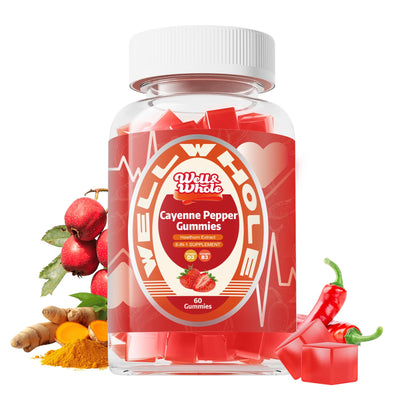
well&whole Cayenne Pepper Heart Health Gummies contain CoQ10 alongside cayenne, hawthorn, and turmeric—providing a multi-ingredient heart health formula that is generally compatible with statin therapy.
FAQ
Q: Can I replace my statin with red yeast rice?
A: Some people use red yeast rice as an alternative to statins, but this should only be done under medical supervision. Never stop taking a prescribed statin without consulting your healthcare provider.
Q: How much plant sterols should I take with my statin?
A: Research suggests 1.5–3 grams of plant sterols per day may provide additional cholesterol support. Discuss the right dose with your healthcare provider.
Q: Will CoQ10 interfere with my statin?
A: No. CoQ10 does not interfere with the cholesterol-lowering effects of statins. It simply replaces the CoQ10 that statins deplete, which may help with muscle-related side effects.
Q: How do I know if my red yeast rice supplement contains monacolin K?
A: All genuine red yeast rice supplements contain some level of monacolin K. If you're taking a statin, avoid red yeast rice products entirely unless specifically advised by your healthcare provider.
Q: Can I take cholesterol supplements while pregnant?
A: Cholesterol is essential for fetal development. Most cholesterol-lowering supplements, including red yeast rice and plant sterols, are not recommended during pregnancy. Consult your healthcare provider.
Q: Are there natural ways to lower cholesterol without supplements?
A: Yes. A heart-healthy diet (like the Mediterranean diet), regular exercise, maintaining a healthy weight, and avoiding trans fats can all support healthy cholesterol levels. Supplements complement these lifestyle measures.
Q: Should I tell my doctor about all supplements I take?
A: Absolutely. Your healthcare provider needs a complete picture of everything you take to provide safe, effective care. Supplements can interact with medications, and your doctor needs to know about them.
Q: Can I take fish oil with my statin?
A: In most cases, yes. Omega-3 fatty acids work through different mechanisms than statins and are generally safe to combine. In fact, some prescription omega-3 products are specifically designed to be used alongside statins.
Conclusion
The question of whether cholesterol supplements can be taken with statins does not have a simple yes-or-no answer. It depends entirely on which supplement and which mechanism of action is involved.
**Red yeast rice should never be combined with statins** due to the risk of additive effects and increased side effects. **Plant sterols, CoQ10, and omega-3 fatty acids** generally have different mechanisms and may provide complementary benefits—but always under your healthcare provider's guidance.
If you take statins and want additional cholesterol support, well&whole Cholesterol Support Liquid Drops are designed for individuals not currently on statin therapy. For those already taking statins, CoQ10 supplementation through well&whole Cayenne Pepper Heart Health Gummies may help address statin-related CoQ10 depletion.
The most important step you can take is to have an honest, informed conversation with your healthcare provider. Bring your questions, your supplement list, and your goals—together, you can build a cholesterol management strategy that's both safe and effective.
Related supplements
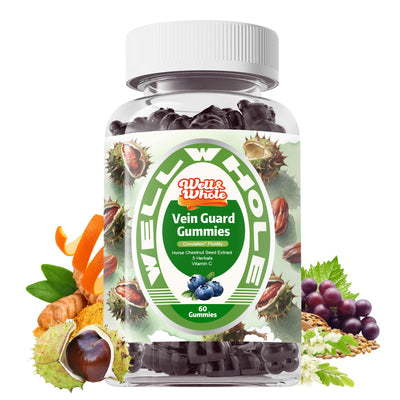
Putting it simply: if this is something you want to add to your routine, our Well&Whole Horse Chestnut Extract Gummies, Circulation Supplements for Legs and Cayenne Pepper Heart Health Gummies with Hawthorn & CoQ10 & Turmeric are a good place to start. The wider Heart Health collection is worth a look, and the CoQ10 range covers related formats.
These statements have not been evaluated by the Food and Drug Administration. This product is not intended to diagnose, treat, cure, or prevent any disease.