Can Amino Acids Support Liver Health? The Surprising Science
Discover the emerging research on how essential amino acids may support liver health—from glutathione production to hepatoprotection and beyond.

When most people think about amino acids, they think about muscles. But the organ that arguably needs amino acids the most is not your bicep—it is your liver. Your liver is the central processing hub for every amino acid you consume, converting them into proteins, enzymes, antioxidants, and energy substrates that keep your entire body running.
The relationship between amino acids and liver health goes deeper than simple metabolism. Emerging research suggests that specific amino acids may actively support liver function, protect hepatocytes (liver cells) from damage, and even help the liver regenerate after injury. This is not a fringe theory—it is backed by published clinical and laboratory data.
This article explores the science connecting amino acids to liver health, explains which amino acids matter most, and shows why combining EAAs with liver-supportive ingredients makes more sense than you might think.
Your Liver and Amino Acids: A Two-Way Relationship
The Liver as Amino Acid Central
Your liver is responsible for approximately 80–90% of the body's total amino acid metabolism. It performs three critical functions:
1. **Protein synthesis**: The liver produces most of your body's circulating proteins, including albumin, clotting factors, and complement proteins for immune function.
2. **Nitrogen management**: Through the urea cycle, the liver converts toxic ammonia (produced during amino acid breakdown) into urea, which is safely excreted by the kidneys.
3. **Glutathione production**: Your liver synthesizes glutathione—the body's master antioxidant—from three amino acids: cysteine, glycine, and glutamate. Without adequate amino acid supply, glutathione production falls, and oxidative stress rises.
A 2018 review in the *American Journal of Clinical Nutrition* emphasized that impaired liver function directly compromises amino acid processing, which in turn degrades the liver's own antioxidant defenses—a vicious cycle where liver damage leads to more liver damage.
Amino Acids as Liver Supporters
But the relationship is not one-directional. Research has identified specific amino acids that may actively protect the liver:
Key Amino Acids for Liver Health
Methionine and Cysteine (via NAC)
Methionine is the primary sulfur-containing essential amino acid. It serves as the precursor to cysteine, which in turn is the rate-limiting substrate for glutathione synthesis. Without enough methionine or cysteine, your liver cannot maintain adequate glutathione levels.
NAC (N-acetyl cysteine) is a stabilized form of cysteine that has been extensively studied for liver support. A 2021 study in the *European Review for Medical and Pharmacological Sciences* demonstrated that NAC supplementation increased hepatic glutathione levels and supported liver function in individuals with elevated oxidative stress. NAC is also used clinically as a first-line treatment for acetaminophen overdose, precisely because it replenishes glutathione rapidly enough to prevent liver failure.
BCAAs and Liver Disease
The connection between branched-chain amino acids (BCAAs) and liver health has been studied for decades, particularly in the context of cirrhosis and advanced liver disease. The rationale is physiological: when liver function is severely impaired, the liver cannot properly metabolize aromatic amino acids (AAA), leading to an imbalanced BCAA-to-AAA ratio. This imbalance contributes to hepatic encephalopathy—a serious neurological complication of liver failure.
A 2019 meta-analysis in *Hepatology* reviewing 16 clinical trials found that BCAA supplementation in patients with cirrhosis improved the BCAA/AAA ratio, reduced hepatic encephalopathy episodes, and supported nutritional status. While this research focuses on advanced disease rather than healthy liver support, it demonstrates that amino acid status directly influences liver outcomes.
| Amino Acid | Liver Role | Evidence Level |
|-----------|-----------|---------------|
| Methionine | Glutathione precursor, methylation support | Strong (clinical NAC data) |
| Cysteine (NAC) | Rate-limiting glutathione substrate | Strong (clinical, including emergency use) |
| Leucine | mTOR activation for hepatocyte regeneration | Moderate (animal studies, some clinical) |
| Glycine | Glutathione component, anti-inflammatory | Moderate (laboratory and animal data) |
| Taurine | Bile acid conjugation, membrane stabilization | Moderate (TUDCA research) |
| Glutamate | Glutathione component, ammonia detoxification | Moderate (mechanistic data) |
Taurine: The Bile Acid Connection
Taurine is a conditionally essential amino acid that plays a specific role in liver health through bile acid conjugation. Taurine-conjugated bile acids—including TUDCA (tauroursodeoxycholic acid)—are more water-soluble and less toxic to liver cells than unconjugated bile acids.
Research published in *Cell Death & Disease* (2018) showed that TUDCA reduced endoplasmic reticulum stress in hepatocytes, protecting them from apoptosis (cell death). This is one reason TUDCA has become a popular liver supplement ingredient. Learn more in our article "TUDCA FAQs: Your Top 15 Questions Answered."
Leucine and Liver Regeneration
Leucine's role in activating mTOR extends beyond muscle. In the liver, mTOR activation promotes hepatocyte proliferation—a critical step in liver regeneration after injury. A 2017 study in *Hepatology* demonstrated that leucine supplementation enhanced liver regeneration in animal models of partial hepatectomy, suggesting that adequate leucine availability may support the liver's remarkable capacity for self-repair.
The Problem with Amino Acid Imbalance
While specific amino acids can support liver health, imbalance can harm it. The liver requires amino acids in appropriate ratios:
- **Excessive methionine** without adequate B6 and B12 can increase homocysteine—a cardiovascular risk factor that also stresses the liver.
- **Very high protein intake** without adequate liver function leads to elevated ammonia, which the compromised liver cannot detoxify efficiently.
- **BCAA depletion** relative to aromatic amino acids (as seen in cirrhosis) worsens hepatic encephalopathy.
This is why supplementing with a balanced EAA profile—rather than mega-dosing individual amino acids—is a safer and more physiologically sound approach to supporting liver health through amino acid nutrition.
Why an EAA + Liver Support Formula Makes Sense
The connection between amino acids and liver function creates a logical rationale for combining them:
1. **EAAs provide the building blocks**: Your liver needs all nine essential amino acids to synthesize proteins, glutathione precursors, and regeneration signals.
2. **Liver-supportive compounds ensure efficient processing**: Ingredients like milk thistle, TUDCA, and dandelion help protect the liver cells that process those amino acids.
3. **Synergy**: Adequate amino acid supply supports glutathione production, while liver protectors reduce the oxidative stress that depletes glutathione—complementary mechanisms that reinforce each other.
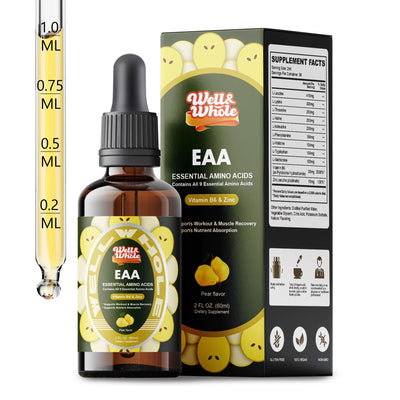
The well&whole EAA Liquid Drops & Liver Support formula embodies this principle, combining all nine essential amino acids with milk thistle and other hepatoprotective ingredients in a single product.
Practical Takeaways
If you are considering amino acid supplementation for liver health, here are evidence-informed guidelines:
- **Choose complete EAAs over isolated BCAAs**: While BCAAs have specific relevance in advanced liver disease, a full EAA profile provides broader support for liver protein synthesis and glutathione production.
- **Prioritize methionine adequacy**: Methionine (and its derivative cysteine/NAC) is the rate-limiting amino acid for glutathione—the liver's most important antioxidant.
- **Consider dual-action formulas**: Combining EAAs with established liver supporters (milk thistle, TUDCA, NAC) addresses both sides of the amino acid-liver relationship.
- **Do not mega-dose individual amino acids**: Balanced ratios are safer and more effective than high-dose single amino acid supplementation.
- **Consult your healthcare provider if you have liver disease**: Amino acid metabolism is altered in cirrhosis and other liver conditions. Professional guidance is essential.
FAQ
1. Which amino acids are most important for liver health?
Methionine (via its conversion to cysteine/NAC), glycine, and glutamate are the three amino acids needed for glutathione synthesis. Taurine supports bile acid function. Leucine may support hepatocyte regeneration. All EAAs contribute to liver protein synthesis.
2. Can EAAs help with fatty liver?
There is limited direct research on EAAs specifically for NAFLD. However, amino acids that support glutathione production (methionine/cysteine) and reduce oxidative stress are relevant to fatty liver pathology. For comprehensive NAFLD support, see our article "NAFLD (Fatty Liver) Natural Support: Evidence-Based Guide."
3. Is NAC an amino acid?
NAC (N-acetyl cysteine) is a derivative of the amino acid cysteine. It is not itself an essential amino acid, but it provides the cysteine substrate your liver needs to produce glutathione. NAC is included in some liver support formulas as a targeted glutathione booster.
4. Why are BCAAs used in liver disease treatment?
In cirrhosis, the liver cannot properly metabolize aromatic amino acids, leading to a low BCAA/AAA ratio that contributes to hepatic encephalopathy. BCAA supplementation corrects this ratio and has shown clinical benefit in cirrhotic patients. This does not mean BCAAs alone are optimal for healthy liver support.
5. Can taking too many amino acids stress the liver?
Very high protein or amino acid intake increases ammonia production, which the liver must convert to urea. In a healthy liver, this is manageable. In a compromised liver, excessive amino acid load may worsen metabolic stress. Balanced, moderate supplementation is the safest approach.
6. How does glutathione relate to amino acids?
Glutathione is synthesized from three amino acids: cysteine, glycine, and glutamate. Cysteine is the rate-limiting substrate—meaning glutathione production stalls when cysteine is insufficient. This is why NAC (a cysteine donor) is so widely used for liver support.
7. Should athletes take liver support alongside EAAs?
Athletes place high metabolic demands on their livers through increased protein turnover and oxidative stress from training. Combining EAAs with liver support may help maintain efficient amino acid processing and antioxidant defense. Learn more in "Liver Support for Bodybuilders: Protecting Your Liver on Supplements."
8. Is TUDCA an amino acid?
TUDCA is a bile acid conjugated with taurine (an amino acid). It is not classified as an essential amino acid itself, but its taurine component has amino acid origins. TUDCA's liver benefits come from its bile acid properties rather than amino acid function.
9. Can amino acids help the liver regenerate?
Research in animal models suggests that leucine (through mTOR activation) may enhance hepatocyte proliferation during liver regeneration. However, human clinical data on this specific mechanism is still limited.
10. What's the best way to get amino acids for liver support?
A balanced EAA supplement with adequate methionine and leucine, combined with dedicated liver-supportive ingredients like NAC, milk thistle, and TUDCA, provides the most comprehensive approach. The well&whole EAA Liquid Drops & Liver Support offers this combination in one formula.
Conclusion
Amino acids and liver health are deeply intertwined—not just because the liver processes amino acids, but because specific amino acids actively support the liver's protective and regenerative functions. Methionine feeds glutathione production. Leucine may promote hepatocyte regeneration. Taurine conjugates bile acids. The full EAA spectrum provides the substrate pool for liver protein synthesis.
Rather than viewing amino acids and liver support as separate categories, the science suggests they belong together. A complete EAA profile paired with proven liver-protective compounds addresses both the supply and the processing side of the equation—delivering amino acids while ensuring the organ that handles them stays healthy enough to do its job.
well&whole EAA Liquid Drops & Liver Support combines all nine essential amino acids with liver-supportive ingredients in one convenient formula—a dual-action approach rooted in the real physiology of how your muscles and liver work together.
Related supplements
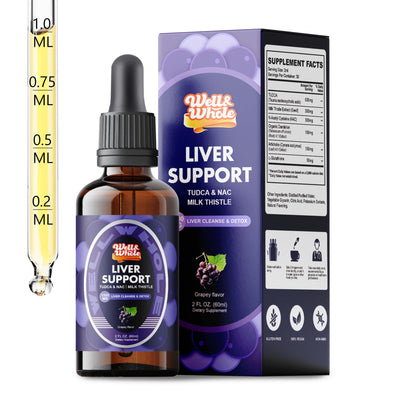
Should you decide to supplement, Liver Support Liquid Drops Supplement | TUDCA Drops Liver Cleanse & Detox with Milk Thistle, NAC, Dandelion, Artichoke & Glutathione for Detox and TUDCA 1000mg Gummies with Milk Thistle 500mg for Adults are our formulation for this purpose. For a broader comparison, see the Liver Support and Milk Thistle collections.
These statements have not been evaluated by the Food and Drug Administration. This product is not intended to diagnose, treat, cure, or prevent any disease.