Broccoli Sprouts vs Mature Broccoli: Where Sulforaphane Really Comes From

Broccoli sprouts contain roughly 10 to 100 times more glucoraphanin per gram than mature broccoli, and the myrosinase enzyme needed to convert that glucoraphanin into active sulforaphane only survives when the plant is chopped raw or cooked very lightly. This single difference in plant age and preparation explains why a small handful of sprouts can outperform an entire plate of steamed florets for Nrf2 activation.
If you want measurable sulforaphane, the bottleneck is almost never the broccoli you buy but how much of it is actually a three-day-old sprout and how little of its enzyme survived cooking.
How glucoraphanin and myrosinase split up inside the plant
Glucoraphanin lives in the vacuoles of plant cells, while myrosinase sits in separate compartments called myrosin grains. Until you cut, chew, or crush the plant, the two never meet. The moment you do, myrosinase cleaves glucoraphanin within seconds and the reaction generates sulforaphane. That is why the act of eating — not the act of cooking — is what unlocks the compound.
Why sprouts are so much more concentrated
A broccoli plant stores most of its sulfur-based defense compounds in the seed and the first days of new growth. As the plant matures, those compounds redistribute into larger tissues and become more dilute per gram. Published measurements put three-day-old broccoli sprouts at 100–250 mg of glucoraphanin per 30 g serving, while mature florets deliver only 1–5 mg per 30 g. The two are not the same food nutritionally, even though they are botanically the same species.
What survives cooking (and what does not)
Myrosinase is a heat-labile enzyme. Steam-blanching for as little as two minutes can reduce its activity by 50–80 percent. Boiling, microwaving on high, and stir-frying all destroy most of it. If you do cook broccoli, the strategies that preserve conversion are: chop first and wait five to ten minutes before applying heat, use a low-temperature method like sous-vide for a short time, or add a raw crucifer (a few cabbage or daikon shreds) after cooking to re-introduce myrosinase. None of these restore full conversion, but each meaningfully improves it.
Raw sprouts versus cooked mature broccoli: a head-to-head
- Active sulforaphane yield per serving: Roughly 30–50 mg from 30 g of fresh sprouts, versus 0.2–1.5 mg from 100 g of steamed florets.
- Fiber and bulk: Florets deliver substantially more fiber and satiety per calorie, which matters for overall diet but not for sulforaphane specifically.
- Microbial safety: Raw sprouts carry a small but real food-safety risk for pregnant people, young children, and immunocompromised individuals. Cooking mature broccoli eliminates that risk while still leaving some glucoraphanin intact.
- Convenience: Sprouts require a few days of rinsing and draining; mature broccoli can be eaten immediately from a refrigerated head.
What about frozen broccoli?
Commercial freezing involves a brief blanch that destroys most myrosinase, so frozen broccoli retains glucoraphanin but loses the enzyme needed to convert it. Conversion then depends on gut bacteria, which is far less efficient than plant-derived myrosinase. A small daily serving of raw sprouts or a sulforaphane-yield supplement that has been stabilized with myrosinase closes that gap.
A practical weekly plan
For most adults, two to four weekly servings of fresh broccoli sprouts (about 30–60 g each) is enough to match the sulforaphane yield used in published human trials. Pair that with regular servings of cooked cruciferous vegetables for fiber, vitamin K, vitamin C, and glucosinolates that work through different mechanisms. People who cannot reliably source fresh sprouts, or who cannot eat them raw, will get a more consistent result from a standardized sulforaphane-yield supplement than from cooked mature broccoli alone.
Choosing a sulforaphane-yield supplement
Not all sulforaphane supplements deliver what they claim. The label distinction that matters most is between glucoraphanin-only extracts and true sulforaphane-yielding extracts. The first relies on gut bacteria to convert the precursor, which is slow and inconsistent. The second preserves myrosinase activity or supplies stabilized sulforaphane directly, producing reliable plasma levels in head-to-head human testing. Look for a product that states the actual sulforaphane yield in milligrams per serving rather than the raw glucoraphanin content. Most successful trials use doses of 10–30 mg of sulforaphane per day, often split into two doses for steadier plasma levels. Independent third-party testing for potency is worth seeking out, because potency drift in liquid sulforaphane products is a real issue once a bottle is opened and stored at room temperature.
How sulforaphane interacts with the wider diet
Sulforaphane works through a different mechanism than classic dietary antioxidants like vitamin C, vitamin E, and carotenoids. Those compounds neutralize free radicals directly, while sulforaphane switches on the genes that produce the body's own protective enzymes. The two approaches are complementary, not redundant. A daily pattern that includes a sulforaphane-yield supplement or fresh raw sprouts, a serving of berries, leafy greens, and a reliable source of omega-3 fatty acids creates overlapping layers of cellular protection through distinct mechanisms. None of it replaces the basics — sleep, movement, blood-sugar control — but the stack makes biological sense rather than just marketing sense.
Key takeaways
- Broccoli sprouts contain 10–100x more glucoraphanin per gram than mature broccoli.
- Myrosinase is destroyed by heat, so cooking cuts conversion dramatically.
- Chop, wait, and then cook lightly — or eat the sprouts raw.
- Freezing preserves glucoraphanin but eliminates plant myrosinase.
- For a consistent sulforaphane dose, fresh sprouts or a standardized supplement beat cooked florets.
Frequently asked questions
Can I grow broccoli sprouts at home safely?
Yes, with basic food-safety steps: rinse seeds before sprouting, drain thoroughly twice daily, and discard any batch that smells sour or shows fuzzy growth. Commercial sprouting kits reduce handling risk and are inexpensive.
Are broccoli sprouts safe during pregnancy?
Raw sprouts carry a small Listeria and Salmonella risk, and pregnancy lowers the threshold for foodborne complications. The conservative option is to use a heat-stabilized sulforaphane supplement or cooked mature broccoli during pregnancy, and save fresh sprouts for after delivery.
Do frozen broccoli sprouts work?
Freezing preserves glucoraphanin content but destroys plant myrosinase, so conversion falls back on gut bacteria. The sulforaphane yield is lower than from fresh raw sprouts and inconsistent across individuals.
How many sprouts equal one sulforaphane supplement capsule?
It depends on the supplement, but a capsule standardized to 10 mg of sulforaphane yield roughly matches the active sulforaphane delivered by 30–50 g of fresh raw sprouts.
Related supplements
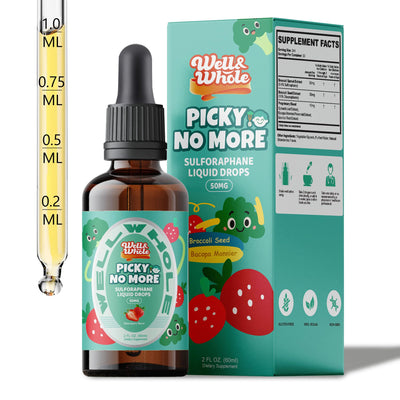
Putting it simply: if this is something you want to add to your routine, our Sulforaphane Broccoli Supplement Liquid Drops for Kids with Sulforaphane, Glucoraphanin, Bacopa Monnieri is a good place to start. The wider Antioxidant Support collection is worth a look, and the Health Benefits range covers related formats.
These statements have not been evaluated by the Food and Drug Administration. This product is not intended to diagnose, treat, cure, or prevent any disease. Talk to a healthcare professional before starting any new supplement, especially if you are pregnant, nursing, taking medication, or managing a health condition.
These statements have not been evaluated by the Food and Drug Administration. This product is not intended to diagnose, treat, cure, or prevent any disease.