Best Vitamin D Supplement Guide 2026 Expert Tested Picks
Discover the best vitamin D supplement picks of 2026 with expert reviews dosage tips absorption science and clean third party tested options

Last reviewed August 29, 2026. This is a criteria-based ranking, not a lab test — we did not run laboratory assays on any product described here.
Most "best vitamin D" pages make you hunt for the answer. This one is built the way people actually search: one numbered list, ten picks, ranked by what genuinely changes how well a vitamin D product works. If you read one line, read this: choose vitamin D3 (cholecalciferol) over D2, in a fat-based format, with third-party testing on the label.
Top 10 Vitamin D Supplements of 2026 — The List
- Best overall: D3 + K2 (MK-7) softgel, 2,000–5,000 IU
- Best higher-potency: D3 5,000 IU softgel in oil
- Best value: D3 2,000 IU large-count softgel (365 ct)
- Best vegan: lichen-derived D3
- Best liquid drops: D3 in MCT or olive oil
- Best spray: D3 oral spray
- Best gummy or chewable: sugar-aware D3
- Best for kids: children's D3 drops with age-based dosing
- Best bone-support stack: D3 + K2 + magnesium
- Best minimal-ingredient: D3 in olive oil, filler-free
How We Ranked These Picks
Most "best of" lists hide their method. Ours: we did not perform lab testing and do not claim to. Each entry is a profile — a set of specifications — scored on six criteria, in order of weight:
- Form (D3 vs D2). D3 is what your skin makes from sunlight. D2 is cheaper but generally less effective at supporting healthy vitamin D status. D2-only products fail outright.
- Fat-based delivery. Vitamin D is fat-soluble, so an oil base — olive, MCT, or coconut — supplies the fat absorption requires. Dry tablets rank lower.
- Dose fit (IU). 1,000–2,000 IU suits adult maintenance; 4,000–5,000 IU suits a deliberate higher-intake routine. Single-extreme products score lower.
- K2 pairing. K2 (as MK-7) works alongside D in directing calcium toward bone. A formula with K2 outranks an identical one without.
- Third-party testing. USP, NSF, ConsumerLab, or a stated COA. Pass/fail: no testing claim, no top ranking.
- Cost per serving and label honesty. Price per IU per day, not per bottle. Proprietary blends and vague "vitamin D complex" labels count against a product.
Picks 1–3 clear all six. Picks 4–10 clear the pass/fail bars and win their slot on one use case: diet, format, age, or budget.
The 10 Best Vitamin D Supplements of 2026
1. Best Overall: Vitamin D3 + K2 (MK-7) Softgel, 2,000–5,000 IU
What to look for: Cholecalciferol (D3) at 2,000–5,000 IU, plus 90–120 mcg vitamin K2 as MK-7, in organic coconut or olive oil, as a softgel.
Why it ranks here: It clears all six criteria at once: the preferred form, the fat absorption requires, and K2 for calcium routing. One softgel with your largest meal covers a maintenance dose.
Best for: Most healthy adults who want one honest daily product. If you take an anticoagulant such as warfarin, talk to your healthcare provider before adding K2.
2. Best Higher-Potency: Vitamin D3 5,000 IU Softgel in Oil
What to look for: A single-strength 5,000 IU cholecalciferol softgel in olive or MCT oil, third-party tested, labeled per softgel.
Why it ranks here: Some people need more than a maintenance dose, often after a blood test showed low vitamin D status and a clinician recommended it. This delivers it in one capsule rather than four; it ranks below #1 only because it omits K2.
Best for: Adults whose provider has recommended a higher intake, or who already take K2 separately.
Watch out for: 5,000 IU is above the 4,000 IU adult Tolerable Upper Intake Level. Treat it as a deliberate choice, not a default upgrade, and retest rather than guess.
3. Best Value: Vitamin D3 2,000 IU Large-Count Softgel (365 ct)
What to look for: 2,000 IU D3 per softgel, 300–365 count, USP or NSF verified, no artificial colors or preservatives.
Why it ranks here: Price per serving is the sixth criterion, and this profile wins it: a year's supply typically costs less per day than one coffee, with the same D3, oil base, and testing bar.
Best for: Anyone settled on a maintenance dose, and anyone buying for a household.
4. Best Vegan: Lichen-Derived Vitamin D3
What to look for: "Vegan vitamin D3 (lichen-derived)" on the label, explicitly no lanolin, a non-gelatin shell (tapioca or cellulose), third-party tested.
Why it ranks here: Most commercial D3 comes from lanolin, a sheep's-wool derivative. Lichen-derived D3 is the same cholecalciferol molecule made from lichen — the preferred form without animal input. It takes #4 because it costs more per IU.
Best for: Vegans, vegetarians, and anyone avoiding animal-derived ingredients.
5. Best Liquid Drops: Vitamin D3 in MCT or Olive Oil
What to look for: A stated IU per drop (commonly 1,000 IU), a single oil carrier — MCT or olive — and no added flavor or filler.
Why it ranks here: Drops are the most flexible format here: a fixed IU-per-drop label lets you change intake without changing products, which matters when your dose shifts after a blood test. It ranks below softgels only because dose accuracy relies on a consistent drop size.
Best for: Households spanning several doses, and anyone whose intake is being adjusted.
6. Best Spray: Vitamin D3 Oral Spray
What to look for: D3 only (never D2), a per-spray IU figure, a clean oil or emulsified base, third-party tested.
Why it ranks here: A spray solves the same problem as drops — no pills — and is faster to take. The trade-off is precision: per-spray dosing is less exact than a softgel, and some sprays add flavorings.
Best for: Frequent travelers, and anyone who forgets a pill bottle but not a spray on the counter.
7. Best Gummy or Chewable: Sugar-Aware Vitamin D3
What to look for: 1,000–2,000 IU D3 per serving, sweetened with monk fruit or allulose rather than corn syrup, pectin instead of gelatin for vegan, third-party tested.
Why it ranks here: Gummies are the format people keep taking, and adherence beats every other variable. The catch is real: added sugar, and weaker vitamin stability than an oil softgel. If a gummy is what makes you take vitamin D daily, that is a legitimate reason to choose it.
Best for: People who have abandoned capsules, and adults who want one supplement they will not skip.
8. Best for Kids: Children's Vitamin D3 Drops, Age-Based Dosing
What to look for: D3 only, a dropper marked in IU, no added sugar, and dosing stated by age. The Food and Nutrition Board baseline is 400 IU for infants 0–12 months and 600 IU for children 1–70 years.
Why it ranks here: Liquid drops are practical for children because the dose can be measured and adjusted as they grow. It takes #8 because pediatric dosing is not a place for self-direction: the right amount depends on age, weight, diet, and fortified milk or formula intake.
Best for: Parents of young children — with the dose confirmed by a pediatrician, not copied from a label.
9. Best Bone-Support Stack: Vitamin D3 + K2 + Magnesium
What to look for: D3 at 1,000–5,000 IU, K2 as MK-7, and a highly absorbable magnesium — bisglycinate or taurate — in one formula or as a paired routine.
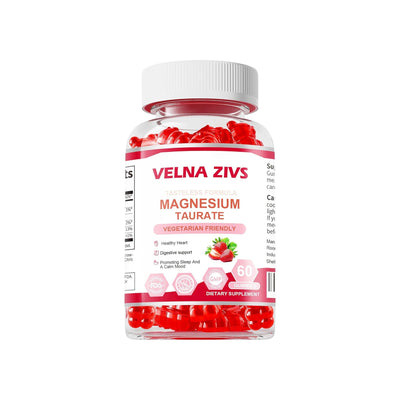
Why it ranks here: D, K2, and magnesium are metabolically linked, so one routine covers the whole pathway. Magnesium is involved in converting vitamin D into its active form, and K2 works alongside D in directing calcium toward bone. You can also build this from separate products — for example, our magnesium taurate gummies — which is often cheaper.
Best for: Adults building a bone- and muscle-focused routine, and anyone whose diet falls short on magnesium.
10. Best Minimal-Ingredient: Vitamin D3 in Olive Oil, Filler-Free
What to look for: Two or three ingredients total: cholecalciferol, olive oil, and the softgel shell. No artificial colors, hydrogenated oils, titanium dioxide, or "vitamin D complex."
Why it ranks here: It closes the list with the cleanest label here — worth paying for only when nothing else is compromised. A filler-free olive-oil softgel delivers what #1 does minus K2, and suits anyone who reacts to binders.
Best for: Sensitive stomachs, anyone auditing every ingredient, and shoppers who take K2 separately.
The Science of the "Sunshine Vitamin": Why Vitamin D Matters
Your body creates vitamin D when bare skin meets sunlight, but indoor jobs and winter weather leave millions of Americans falling short. Because it acts more like a hormone than a standard vitamin, low vitamin D status can influence everything from skeletal strength to daily energy — and without enough of it, your body cannot properly use the calcium in your diet.
Essential Functions
- Bone Density & Calcium Absorption: Without adequate vitamin D, your body cannot absorb calcium effectively. It pulls calcium from your gut and delivers it to your skeleton, supporting long-term bone density.
- Normal Immune Function: Vitamin D helps modulate your immune system, contributing to normal immune function year-round.
- Mood & Cellular Health: Receptors for vitamin D exist throughout the brain. It plays a role in normal mood regulation and cellular health.
Vitamin D3 vs D2: Choosing the Right Form
You will mainly run into two forms: Vitamin D2 (ergocalciferol) and Vitamin D3 (cholecalciferol). D2 is plant-derived and cheaper. D3 is the form your body makes from sunlight, and it is generally better absorbed — which is why every pick in our top 10 uses D3.
| Feature | Vitamin D3 (Cholecalciferol) | Vitamin D2 (Ergocalciferol) |
|---|---|---|
| Source | Sunlight, lanolin, or lichen | Plants, fungi, and fortified foods |
| Bioavailability | High | Lower; breaks down more quickly |
| Potency | Sustains vitamin levels over time | Declines more rapidly |
| Preference | Biologically preferred form | Less efficient at supporting vitamin D status |
The takeaway: Always check the ingredient label. Make sure your supplement uses Vitamin D3 (cholecalciferol) rather than D2.
Delivery Formats: How Form Changes Absorption
Because vitamin D is a fat-soluble vitamin, format changes absorption. These are the same four formats that produced the slots in our ranking:
- Softgels: Convenient, usually packed with a healthy oil to aid absorption. Most consistent.
- Liquid vitamin d drops: Excellent for custom dosing and maximum purity.
- Sprays: Fast-absorbing and ideal for people who dislike pills, though per-spray dosing is less precise.
- Gummies: Easy to take, but watch added sugars and lower vitamin stability.
Formula Synergy: Vitamin K2 and Magnesium
Vitamin D does not work alone. Vitamin K2 helps direct calcium toward bone rather than soft tissue, which is why it appears in our top pick. Magnesium is involved in converting vitamin D into its active form, so low magnesium may limit how well your body uses the D you take. Pair it with a highly absorbable option such as magnesium taurate gummies.
Maximizing Results: 3 Common Mistakes
Buying the best vitamin d supplement is only half the battle — take it wrong and your body will not absorb it efficiently.
Mistake #1: Taking It on an Empty Stomach
Vitamin D is a fat-soluble vitamin and needs dietary fat to be absorbed. Water on an empty stomach works against that.
- The fix: Take it with your largest meal, or pair it with avocado, eggs, nuts, or olive oil.
- The exception: Liquid vitamin d drops in an MCT or olive-oil carrier are more forgiving, but taking it with food is still the better habit.
Mistake #2: Guessing Your Dosage
People notice signs often linked to low vitamin D status — fatigue, aches, getting sick often — and start guessing at a dose. Dosing without knowing your blood level is inefficient and, at high amounts, unsafe.
- The fix: Get a 25-hydroxyvitamin D blood test, then set a safe daily dosage (IU) with your healthcare provider. Symptoms on their own are not a diagnosis.
Mistake #3: Neglecting Magnesium
Magnesium is involved in converting vitamin D into its active, usable form — easy to overlook.
- The fix: Pair it with magnesium-rich foods or a dedicated magnesium supplement. Micronutrient balance matters as much as choosing a third-party tested supplement.
Safety and Safe Daily Dosage (IU)
Vitamin D is a fat-soluble vitamin, so your body stores the excess rather than flushing it out. Here are the official guardrails.
Daily Recommended Allowances (RDA) by Age Group
The Food and Nutrition Board sets the daily baseline required to maintain bone density and calcium absorption.
| Age Group | Recommended Daily Allowance (RDA) | Tolerable Upper Intake Level (UL) |
|---|---|---|
| Infants (0–12 months) | 400 IU (10 mcg) | 1,000 – 1,500 IU |
| Children & Adults (1–70 years) | 600 IU (15 mcg) | 4,000 IU |
| Seniors (71+ years) | 800 IU (20 mcg) | 4,000 IU |
| Pregnant & Lactating Women | 600 IU (15 mcg) | 4,000 IU |
Understanding the Upper Limit
The Tolerable Upper Intake Level (UL) for adults is 4,000 IU per day. Consistently exceeding it without medical supervision can lead to hypercalcemia, in which too much calcium builds up in the blood. Higher short-term doses are sometimes clinician-recommended; self-prescribing large doses for months carries real risk.
Signs of Overconsumption
Excess cholecalciferol over several months can overwhelm your system. Watch for:
- Frequent nausea, vomiting, and poor appetite
- Unusual fatigue, muscle weakness, or confusion
- Excessive thirst and frequent urination
- Kidney pain or the development of kidney stones
Stick to a verified safe daily dosage (IU) and test your blood levels regularly. If you take prescription medication or have a health condition, talk to your healthcare provider first.
Frequently Asked Questions About Vitamin D Supplements
How long does it take for Vitamin D supplements to correct a deficiency?
For most people, about six to twelve weeks of consistent supplementation moves low levels back toward an optimal range. The timeline depends on your starting level, body weight, and product. Your provider can confirm progress with a follow-up blood test.
Can I get enough Vitamin D from food alone?
It is genuinely difficult. Very few foods naturally contain high amounts of this fat-soluble vitamin. Salmon, egg yolks, and fortified milk offer small amounts, but optimal levels from food alone would require unrealistic quantities daily.
Should I take Vitamin D in the morning or at night?
Morning or afternoon with your largest meal is the better choice, because dietary fat supports absorption. Some research suggests taking it late at night may interfere with natural melatonin production.
What are the primary Vitamin D deficiency symptoms I should look out for?
Low vitamin D status is easy to miss, and the signs are non-specific: persistent fatigue, catching every cold that goes around, bone and muscle aches, low mood. None confirm low vitamin D on their own — only a 25-hydroxyvitamin D blood test can.
Related supplements
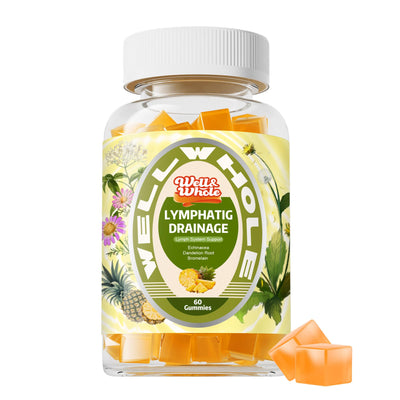
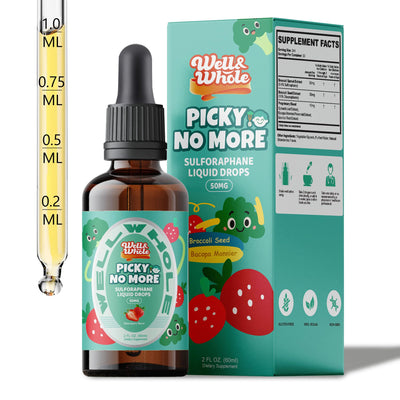
Where to begin? Our Lymphatic Drainage Supplements Gummies with Echinacea Dandelion Burdock for Adults with Immune and Energy Support and Sulforaphane Broccoli Supplement Liquid Drops for Kids with Sulforaphane, Glucoraphanin, Bacopa Monnieri are a sensible place to start, and the Immune Support collection lays out the other formats side by side with Health Benefits.
These statements have not been evaluated by the FDA. These products are not intended to diagnose, treat, cure, or prevent any disease.
These statements have not been evaluated by the Food and Drug Administration. This product is not intended to diagnose, treat, cure, or prevent any disease.