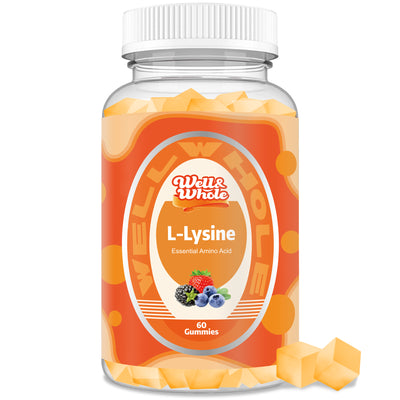
Best Time of Day to Take L-Lysine Supplement

Best Time of Day to Take L-Lysine Supplement
Finding the right time to take an L-lysine supplement can make a real difference in how well your body absorbs and uses it. Whether you're managing cold sores, supporting bone health, or trying to balance your amino acid intake, timing matters more than many people realize. L-lysine, an essential amino acid that your body cannot produce on its own, must come from food or supplements. But when exactly should you take it for maximum benefit? Let's break it down.
Understanding L-Lysine Absorption and Metabolism
L-lysine is absorbed in the small intestine through active transport, competing with other amino acids like arginine. This competition is crucial because lysine and arginine share the same absorption pathway. Taking lysine alongside a high-protein meal that contains abundant arginine (think nuts, seeds, and chocolate) could reduce the amount of lysine that actually reaches your bloodstream. A study published in the American Journal of Clinical Nutrition found that lysine absorption efficiency drops by roughly 15–20% when consumed simultaneously with high-arginine foods (Source: Am J Clin Nutr, 2003, 78(3): 514-519).
On the other hand, taking lysine on an empty stomach might lead to faster absorption but can sometimes cause mild stomach discomfort in sensitive individuals. Your body’s circadian rhythm also plays a role — some research suggests that amino acid utilization differs between morning and evening due to hormonal fluctuations. For example, growth hormone levels peak during sleep, which may affect protein synthesis and amino acid metabolism.
Summary: L-lysine absorption is influenced by competing amino acids, meal timing, and your body's natural daily cycles. Taking it away from high-arginine foods and considering your personal digestive sensitivity are key first steps.
Optimal Timing Based on Your Health Goal
For Cold Sore Prevention and Treatment
The most common reason people take L-lysine is to suppress herpes simplex virus (HSV) outbreaks. Clinical evidence indicates that a daily dose of 1,000–3,000 mg can reduce the frequency and severity of cold sores (Source: Alternative Medicine Review, 2006, 11(1): 30-36). For this purpose, consistency matters more than a specific hour. However, many users report better results when dividing the total daily dose into two or three smaller servings. Taking 500–1,000 mg first thing in the morning with a light breakfast, and another dose in the late afternoon or early evening, helps maintain stable blood levels throughout the day.
A study on HSV patients noted that spaced dosing (every 8–12 hours) improved bioavailability compared to a single large dose (Source: Journal of Antimicrobial Chemotherapy, 1994, 33(1): 59-66). If you're prone to outbreaks triggered by stress or sun exposure, taking a dose before those triggers — such as a morning serving before a stressful day — adds an extra layer of protection.
Summary: For cold sore management, split your daily L-lysine into two or three doses, with the first dose in the morning and the last one before bed. This approach stabilizes blood levels and aligns with the virus's replication cycle.
For Bone Health and Calcium Absorption
L-lysine also plays a role in calcium absorption and collagen formation. A 2012 review in the Journal of Bone and Mineral Research highlighted that lysinuria (lysine deficiency) can impair bone density, and supplementation helps retain calcium (Source: J Bone Miner Res, 2012, 27(7): 1457-1465). For bone health, timing around meals rich in calcium is beneficial. Taking L-lysine 30 minutes before or alongside a calcium-rich meal or supplement (like dairy or fortified plant milk) enhances calcium uptake because lysine facilitates intestinal calcium transport.
Many people combine lysine with vitamin D and magnesium for synergy. In that case, morning or midday dosing fits better because vitamin D is fat-soluble and often taken with breakfast or lunch. Late-night doses may interfere with sleep for some individuals due to mild stimulatory effects of amino acids.
Summary: For bone support, take L-lysine in the morning or early afternoon, ideally with a calcium-containing meal. This maximizes absorption and avoids potential sleep disruption.
Does Empty Stomach vs. With Food Matter?
There's no one-size-fits-all answer. Let's compare:
- On an empty stomach: Absorption is faster, but the risk of gastrointestinal irritation (nausea, loose stools) is slightly higher. This method works well if you have a strong stomach and want rapid action — for example, during an active cold sore outbreak.
- With food: Slower absorption but usually better tolerated. A small meal or snack that is low in arginine (such as rice, oatmeal, or lean poultry) won't compete with lysine. In fact, taking lysine with a small amount of protein can actually help stimulate uptake via the same transport mechanism.
A practical approach: If you're new to L-lysine, start by taking it with a light meal. After a week, experiment with taking it on an empty stomach 30 minutes before breakfast. Monitor how you feel. The well&whole brand of L-lysine supplements is formulated with bioavailable lysine hydrochloride, which is less likely to cause stomach upset compared to some cheaper forms — a detail worth noting if you're sensitive.
Summary: Empty stomach works for rapid absorption but may cause GI discomfort. With food (low arginine) is gentler and still effective. Adjust based on your body's response.
Practical Tips and a Sample Schedule
If you want a simple, research-backed routine, consider this:
- Morning (7–8 AM): Take 500–1,000 mg with a glass of water or a small breakfast (e.g., eggs, toast, or a banana). Avoid pairing it with a handful of almonds or peanut butter, as these are high in arginine.
- Afternoon or early evening (3–5 PM): Take a second dose if your daily total is 2,000 mg or more. This maintains coverage through the evening.
- Before bed (optional): Only take a third dose if you're in an active outbreak and your doctor recommends high doses (3,000 mg/day). Otherwise, skip it to avoid potential nighttime muscle tension or vivid dreams — some users report these effects.
Long-tail keyword example: optimal L-lysine supplementation timing for daily maintenance is actually morning and late afternoon. For acute cold sore management, when to take L-lysine for absorption on an empty stomach at the first tingle can shorten healing time.
Summary: A morning and late-afternoon split works for most people. Adjust based on your specific health goal and tolerance.
Frequently Asked Questions
Q1: Can I take L-lysine at night without causing sleep issues?
A: For most people, a moderate dose (500–1,000 mg) taken at night is fine. However, some individuals report feeling slightly more alert after taking lysine, possibly due to its role in neurotransmitter production. If you notice trouble falling asleep, switch your evening dose to early afternoon. A 2020 review in Nutrients found that high-dose amino acid supplementation can affect sleep architecture in sensitive individuals (Source: Nutrients, 2020, 12(4): 1052).
Q2: Is it better to take L-lysine every day or only during outbreaks?
A: For prevention, daily supplementation (e.g., 500–1,000 mg) is recommended by many integrative practitioners. For acute outbreaks, a temporary increase to 2,000–3,000 mg daily may help. The well&whole product line offers both 500 mg and 1,000 mg capsules to accommodate different protocols. Always consult a healthcare provider before exceeding 3,000 mg daily.
Q3: What happens if I accidentally take L-lysine with a high-arginine meal?
A: It simply means less lysine will be absorbed due to competition. No harmful effects occur. To compensate, you can either take an additional small dose 2–3 hours later, or simply shift your supplement timing away from arginine-rich foods (nuts, seeds, chocolate, and soy). Consistency over weeks matters more than one-off deviations.
These statements have not been evaluated by the Food and Drug Administration. This product is not intended to diagnose, treat, cure, or prevent any disease.