Best Supplements for Women Over 50

For most women over 50, the short list is short: vitamin D (with calcium if the diet is light on dairy), magnesium, omega-3s, creatine, and possibly B12. What qualifies them is not a "women's" label — it is that the post-50 years change bone turnover, muscle maintenance, sleep depth and B12 absorption in ways these nutrients directly support.
Bottom line: after menopause the physiology shifts, and the supplement case shifts with it — bone, muscle and sleep come first; everything else is situational.
What changes in a woman's body after 50
The menopause transition drops estrogen sharply, and estrogen was quietly doing maintenance work: it supported bone density, helped muscle respond to training, and influenced sleep and temperature regulation. Afterward, women lose bone mineral faster, gain fat more easily around the middle, and often notice sleep becomes lighter and more fragile.
Meanwhile, stomach acid tends to decline with age — which matters for B12, since food-bound B12 needs acid to be released. These four shifts are the evidence-based map for deciding what deserves a place on the shelf.
Vitamin D and calcium: the bone pairing
With estrogen's protection gone, bone density becomes the priority, and vitamin D sits at the center of the plan because it controls how much dietary calcium is actually absorbed. Many women in their 50s and 60s test below optimal vitamin D status, especially at higher latitudes or with darker skin tones. Food first — dairy, fortified alternatives, oily fish — then a supplement if a blood test or low intake says so.
Magnesium: sleep, muscles and more
Magnesium intake tends to fall short in older adults, and it participates in hundreds of processes including muscle relaxation and sleep regulation. For women whose sleep turned lighter through the menopause transition, a chelated form such as magnesium bisglycinate in the evening is a common, generally well-tolerated option. It is support, not a sedative — the effect is modest but the deficiency risk is real.
Creatine and protein: the muscle case
Women often under-supplement in exactly one place: muscle. Sarcopenia — age-related muscle loss — accelerates through the 50s, and creatine has unusually good trial support in postmenopausal women when paired with resistance training, improving strength gains and supporting cognitive performance in some studies. It is inexpensive, and the "bulky" fear is a myth at standard doses. Protein targets matter just as much: roughly 1.0–1.2 grams per kilogram of body weight daily is a reasonable aim for women in this decade.
Omega-3s and B12: the situational pair
Omega-3 intake supports cardiovascular and cognitive health, and fatty fish twice a week covers it; a fish oil or algae oil supplement earns its place when fish is a rarity in the household. B12 becomes situational through the absorption route: for women on metformin or long-term acid reducers, or after gastric surgery, a standard B12 supplement is often sensible regardless of diet quality.
What a hormonal shift does not need
The shelf is full of products marketed at "women's wellness" with little behind them: proprietary blends, collagen promises beyond modest skin evidence, megadose multivitamins duplicating what a fortified diet covers. Female physiology after 50 does not need more capsules — it needs the right few, plus resistance training, protein and sleep, which remain the foundation any supplement sits on.
How to actually start the short list
Starting all five at once makes it impossible to know what is doing what. A workable sequence: put resistance training and protein targets in place first — they carry more of the outcome than anything in a bottle — then add vitamin D with a meal, magnesium in the evening, and whatever remains based on diet gaps or a blood test rather than on how persuasive the marketing was.
Review the shelf twice a year. Supplements that entered for a reason that no longer applies — a prenatal formula kept years past its purpose, a megadose multivitamin duplicating a fortified diet — are the quietest way a cabinet fills with clutter that does nothing.
Key takeaways
- Post-50 priorities follow the physiology: bone density, muscle maintenance, sleep depth and B12 absorption.
- Vitamin D controls calcium absorption — pair them, and let a blood test calibrate the dose.
- Magnesium bisglycinate is a well-tolerated evening option for lighter menopausal sleep.
- Creatine plus resistance training has strong trial support in women over 50 — and does not cause bulkiness.
- B12 is situational: metformin, acid reducers and surgery change the math more than diet does.

Frequently asked questions
What supplements should a woman take at 50?
The evidence-first list: vitamin D (paired with calcium if dairy intake is low), magnesium if intake is short or sleep is light, creatine alongside resistance training, omega-3s if fatty fish is rare in the diet, and B12 if you take metformin or acid reducers. Everything beyond that should follow a blood test or a specific gap.
Is creatine safe for women over 50?
Trials in postmenopausal women report good tolerability at standard doses of 3–5 grams daily, with benefits showing up mainly when it is paired with resistance training. It does not cause bulkiness at these doses; that concern reflects a misunderstanding of how creatine works.
Do women need more calcium after menopause?
Recommended targets step up — commonly around 1,200 milligrams daily from food plus supplements — because bone loss accelerates once estrogen declines. Food sources count first; supplements should fill the gap and be split into doses under 600 milligrams for better absorption.
Which supplements help with menopause sleep?
Magnesium has the most reasonable case as a gentle, well-tolerated support, and some women add apigenin or low-dose melatonin for sleep timing. No supplement matches the effect of stable sleep timing, a cool room and consistent wind-down habits — treat capsules as the last layer, not the first.
Related supplements
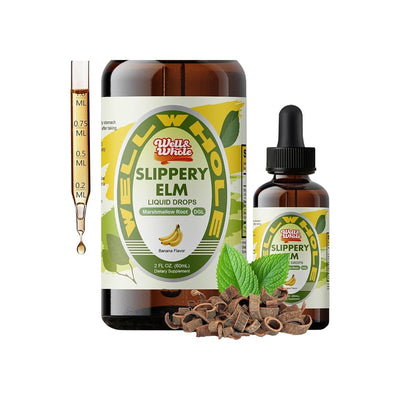
If you're ready to put this into practice, our Slippery Elm Liquid Drops, Marshmallow Root, Slippery Elm Bark Drops for Women, DGL Licorice Extract, Digestive Health, is formulated with this in mind. You can also compare the Health Benefits and Digestive Support ranges to find the format that suits you.
These statements have not been evaluated by the Food and Drug Administration. This product is not intended to diagnose, treat, cure, or prevent any disease. Talk to a healthcare professional before starting any new supplement, especially if you are pregnant, nursing, taking medication, or managing a health condition.
These statements have not been evaluated by the Food and Drug Administration. This product is not intended to diagnose, treat, cure, or prevent any disease.