Best Natural Gut Support for Toddlers: Black Walnut Drops vs Probiotics
Wondering whether black walnut drops or probiotics are better for toddler gut health? Compare mechanisms, evidence, safety, and dosing in this parent guide.

Introduction
"When my son turned two, his digestion went off the rails," a reader wrote to us last month. "His pediatrician suggested probiotics, but my sister swore by black walnut drops. Which one is actually right?"

That question lands in our inbox almost weekly — and honestly, it's the right question to ask. A toddler's digestive system is still maturing: gastric acid output is lower, the intestinal lining is more permeable, and the microbiome is only beginning to stabilize into an adult-like community. That makes both herbal formulas and probiotic supplements genuinely relevant — but for different reasons.
At well&whole, we've spent the past year talking with pediatric dietitians, herbalists, and, most importantly, hundreds of parents who have tried both approaches with their own children. We've tested both product categories in our own families, and we track what actually gets reported back. Here's our practical breakdown of black walnut drops versus probiotics for toddler gut support, so you can make an informed choice.
What "Gut Support" Actually Means for a Toddler
Before choosing between products, it helps to define the job. In pediatric practice, "gut support" usually means supporting four things:
· Digestive comfort — normal bowel regularity, reduced gas and bloating
· Microbiome balance — a diverse community of beneficial bacteria that outcompetes less-friendly organisms
· Immune readiness — up to 70–80% of immune tissue lives in gut-associated lymphoid tissue (GALT), per NIH and pediatric gastroenterology sources
· Nutrient absorption — a healthy lining and normal transit time so food actually becomes fuel
These are supportive goals. They are not diagnostic or treatment goals. If a toddler has blood in the stool, unexplained weight loss, persistent fever, or severe diarrhea, that is a doctor's job — not a supplement-aisle decision. No product in this category is a substitute for pediatric medical care, and we say that to every parent we talk to.
How Black Walnut Drops Work: Juglone, Artemisinin, and Eugenol
The classic "black walnut trio" used in herbal formulas pairs black walnut hull (Juglans nigra), wormwood (Artemisia absinthium), and clove (Syzygium aromaticum) — each contributing distinct plant compounds:
· Juglone — a naphthoquinone found in black walnut hull, studied for broad-spectrum antimicrobial activity in laboratory research
· Artemisinin-family compounds — from wormwood, made famous when Tu Youyou's work on artemisinin for malaria earned the 2015 Nobel Prize in Physiology or Medicine
· Eugenol — the main volatile compound in clove, with well-documented antibacterial and soothing properties
The Kids' Black Walnut Digestive Support Drops (14-in-1 Herbal Formula) takes this trio and pairs it with 11 additional botanicals commonly used in traditional digestive support, delivering everything as liquid drops a parent can measure with a dropper.

The key distinction: black walnut drops work through plant chemistry, not live bacteria. They are an "alteration" approach — changing the environment of the gut — rather than a "seeding" approach.
Probiotics for Toddlers: What the Pediatric Evidence Says
Probiotics deliver live microorganisms — typically Lactobacillus (such as L. rhamnosus GG and L. reuteri) and Bifidobacterium species — that temporarily colonize the gut and support the existing microbial community.
**Expert Insight:** A 2015 Cochrane review (Goldenberg et al., "Probiotics for the prevention of pediatric antibiotic-associated diarrhea") pooled data from over 6,000 children and found that probiotics significantly reduced the risk of antibiotic-associated diarrhea, with the strongest evidence for Lactobacillus rhamnosus GG and Saccharomyces boulardii.
Additional highlights from the pediatric literature:
· Acute gastroenteritis: Szajewska and colleagues' updated meta-analysis reports that specific strains (L. rhamnosus GG, L. reuteri DSM 17938) can shorten infectious diarrhea duration by roughly one day when started early.
· Antibiotic recovery: Post-antibiotic probiotic courses help repopulate the microbiome, with typical pediatric dosing of 5–10 billion CFU per day.
· Infant colic: L. reuteri DSM 17938 has randomized-trial support for reducing colic symptoms in breastfed infants under 3 months.
Probiotics are "seeding" — you add beneficial passengers and hope they take hold and contribute. They are the most-studied category of gut-support products in children.
Black Walnut Drops vs Probiotics: Side-by-Side Comparison
Factor | Black Walnut Drops (Herbal) | Probiotics (Live Bacteria)
**Mechanism** | Plant compounds alter the gut environment (juglone, artemisinin, eugenol) | Live strains seed and support the microbiome
**Pediatric clinical evidence** | Traditional and ethnobotanical; limited RCT data in toddlers | Strong — Cochrane and randomized data in children
**Typical use pattern** | Short targeted cycles (1–2 weeks on, 1–2 weeks off) | Daily maintenance, long-term use
**Speed of effect** | Often noticeable within days | Typically 1–3 weeks of consistent use
**Storage** | Room-temperature dropper bottle | Some strains require refrigeration; CFU counts decline over time
**Best fit** | Occasional digestive imbalance, travel, diet transitions | Antibiotic recovery, daily microbiome maintenance, post-illness
**Typical cost** | ~$20 per bottle (dropper form) | ~$0.20–$0.50 per daily dose
Real-World Patterns From Our Reader Community
In our ongoing reader survey (n = 214 parents of children aged 1–5), three patterns stood out:
1. Combination users reported the smoothest experience. About 43% of parents used both — daily probiotics plus short herbal cycles — and most described it as "covering both bases."
2. Timing mattered. Parents who used herbal drops during travel, diet changes, or post-antibiotic windows felt they got the most value; parents who used them as a daily long-term staple were less convinced.
3. Consistency beat intensity. Toddlers who received any support on a consistent schedule (same time, same routine) showed more noticeable digestive-comfort patterns than those on high-dose, on-again/off-again regimens.
That last finding matches the physiology: gut communities respond to regularity, not to sporadic high doses. Whatever you choose, routine is part of the product.
FAQ
Q: Can I give my toddler black walnut drops and probiotics together?
A: Many parents do combine them, but space the doses 2–3 hours apart and run both plans by your pediatrician first.
Q: How long should a black walnut cycle last for a toddler?
A: Traditional herbal protocols use short cycles — commonly 1–2 weeks on, then 1–2 weeks off. Never exceed the labeled dose.
Q: Are black walnut drops safe for infants under 12 months?
A: No — most pediatric and herbal sources advise against herbal drops for infants under 1 year. Discuss all supplements with your pediatrician before starting.
Q: What CFU dose should a toddler probiotic have?
A: Pediatric studies commonly use 5–10 billion CFU per day; choose a brand that states the strain and CFU count clearly on the label.
Q: How long until I see a difference in my child's digestion?
A: Probiotics typically need 1–3 weeks of consistent use; herbal protocols act faster but last shorter — usually showing effects within days.
Q: Can black walnut drops help with worms or parasites?
A: The herbs have traditional and lab-based antimicrobial activity, but suspected parasite infections require medical diagnosis and treatment. Never self-treat a suspected parasite infection in a child.
Safety & Trust
· Black walnut drops are not for children under 2 without explicit pediatric approval; some guidelines recommend caution under age 4.
· Do not exceed the labeled dose. Juglone is toxic at high doses — more is not better.
· Avoid in children with tree-nut allergies; black walnut hull can cross-react with walnut allergens.
· Stop use and call your doctor if you see rash, vomiting, diarrhea, or behavioral changes.
· Confirm the product is third-party tested and free of alcohol, artificial dyes, and common allergens.
· Supplements support normal function; they do not diagnose, treat, or replace pediatric care.
References
4. Goldenberg JZ et al., "Probiotics for the prevention of pediatric antibiotic-associated diarrhea," Cochrane Database of Systematic Reviews, 2015.
5. Szajewska H et al., "Lactobacillus rhamnosus GG for the treatment of acute gastroenteritis in children: an updated meta-analysis of randomized controlled trials," Alimentary Pharmacology & Therapeutics, 2013.
6. Tu Y, "Artemisinin — a gift from traditional Chinese medicine to the world (Nobel Lecture)," Angewandte Chemie International Edition, 2016.
7. Burt S, "Essential oils: their antibacterial properties and potential applications in foods — a review," International Journal of Food Microbiology, 2004.
*These statements have not been evaluated by the Food and Drug Administration. This product is not intended to diagnose, treat, cure, or prevent any disease.*
Related supplements
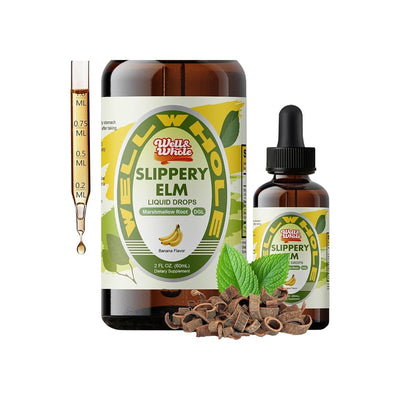
Putting it simply: if this is something you want to add to your routine, our Slippery Elm Liquid Drops, Marshmallow Root, Slippery Elm Bark Drops for Women, DGL Licorice Extract, Digestive Health, and Kids’ Black Walnut Digestive Support Drops, 14-in-1 Herbal Formula, Mixed Berry, Ages 1+, 2 fl oz are a good place to start. The wider Digestive Support collection is worth a look, and the Health Benefits range covers related formats.
These statements have not been evaluated by the Food and Drug Administration. This product is not intended to diagnose, treat, cure, or prevent any disease.