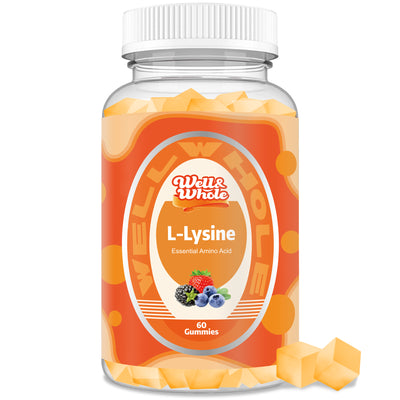
Best L-lysine for cold sores

Best L-lysine for cold sores — if you’re dealing with recurring outbreaks, you’ve probably wondered which supplement really works. The answer isn’t as simple as grabbing the first bottle you see. The right L-lysine for cold sores needs to be pure, easily absorbed, and dosed consistently to actually help reduce the frequency and severity of flare-ups. Here’s what you need to know to make an informed choice.
Why L-Lysine Works for Cold Sores
Cold sores are caused by the herpes simplex virus type 1 (HSV-1). This virus relies on arginine, an amino acid, to replicate. L-lysine competes with arginine for absorption in the body, effectively starving the virus of the raw material it needs to multiply. A double-blind, placebo-controlled study published in the Journal of the American Academy of Dermatology (1987) found that participants who took 1,000 mg of L-lysine daily experienced significantly fewer outbreaks and faster healing times (Thein & Schloemer, 1987). Later research, including a 2017 review in Integrative Medicine, confirmed that regular supplementation can suppress HSV-1 activity when taken at adequate doses.
Bottom line: L-lysine works by blocking the virus’s replication cycle, making it one of the most research-backed nutrients for cold sore prevention and management.
Key Factors in Choosing the Best L-Lysine Supplement
Not all L-lysine supplements deliver the same results. Here’s what separates an effective product from an ineffective one:
-
Purity and Fillers – Many cheap brands add binders, flow agents, and artificial colors that can interfere with absorption. Look for a supplement with minimal, clean ingredients. well&whole’s L-lysine capsules contain only the active ingredient and a plant-based capsule shell, no unnecessary additives.
-
Bioavailability – L-lysine hydrochloride (L-lysine HCl) is the most common form and is well-absorbed. Some brands use lower-quality forms that don’t dissolve properly in the gut. Opt for L-lysine HCl with a fine powder that breaks down quickly.
-
Dosage Consistency – Clinical studies suggest an effective daily dose of 1,000 mg to 3,000 mg during an active outbreak, and 500 mg to 1,000 mg for prevention. A high dose L-lysine for cold sores product should provide at least 1,000 mg per serving, with clear labeling so you know exactly how much you’re taking.
-
Third-Party Testing – Reliable brands submit their products to independent labs for purity and potency verification. This ensures you’re getting what’s on the label, not a diluted or contaminated product.
Bottom line: The best L-lysine supplement for cold sores is one that’s pure, well-absorbed, and dosed at a clinically supported level—without cheap fillers that reduce effectiveness.
How well&whole Delivers the Best L-Lysine for Cold Sores
As a trading company specializing in high-quality dietary supplements, we designed well&whole L-lysine to meet the exact needs of cold sore sufferers. Each capsule contains 1,000 mg of L-lysine HCl in a vegetarian shell, with zero magnesium stearate, silicon dioxide, or artificial coatings. The product is manufactured in a GMP-certified facility and batch-tested by a third-party lab to guarantee potency.
We also understand that the best L-lysine for cold sores isn’t just about the capsule—it’s about the overall support. That’s why our formula is paired with a recommended protocol: take 1 capsule daily for maintenance, or 2–3 capsules per day during an active outbreak, split into two doses for optimal absorption. Many users report that consistent use with well&whole helps shorten the duration of cold sores and extends the time between outbreaks.
Bottom line: well&whole’s L-lysine is formulated to deliver the purity and dosage that clinical research supports, making it a reliable choice for anyone looking for an effective L-lysine for cold sores prevention solution.
Tips for Using L-Lysine Effectively
Simply swallowing a pill won’t work miracles if your overall diet and lifestyle work against you. Here are practical strategies to maximize the benefits:
-
Watch your arginine intake – Foods high in arginine (chocolate, nuts, seeds) can counter L-lysine’s effects. Reduce these during an outbreak, and increase lysine-rich foods like fish, chicken, and dairy.
-
Start at the first tingle – Many cold sore sufferers feel a tingling or burning sensation before a blister appears. Taking an extra dose (up to 2,000 mg) immediately can sometimes stop the outbreak from fully forming.
-
Combine with zinc – Zinc deficiency has been linked to more frequent HSV-1 outbreaks. Pairing L-lysine with a zinc supplement (15–30 mg daily) may offer additional protection, according to a 2020 study in Nutrition and Metabolic Insights.
-
Be patient and consistent – L-lysine isn’t a one-time fix. It works best when taken daily over several weeks to maintain a steady level in your system. Don’t expect overnight results from a single dose.
Bottom line: The best L-lysine for cold sores works best when combined with dietary adjustments, early intervention, and consistent daily use—giving you the best chance to reduce both the frequency and severity of outbreaks.
Frequently Asked Questions
1. How much L-lysine should I take for cold sores?
For prevention, most research supports 500–1,000 mg daily. During an active outbreak, 1,000–3,000 mg per day in divided doses is commonly used. Always follow the dosage on the label, and consult a healthcare professional if you have kidney issues or other medical conditions.
2. Can L-lysine completely prevent cold sores?
L-lysine reduces the frequency and severity of outbreaks for many people, but it doesn’t eliminate the virus from your body. It works best as part of a comprehensive approach that includes stress management, sun protection (lip balm with SPF), and a balanced diet.
3. Are there any side effects of taking L-lysine daily?
L-lysine is generally well-tolerated at recommended doses. Some people experience mild stomach upset or diarrhea, especially at higher doses. Long-term use above 3,000 mg daily is not well studied, so stick to the recommended range. If you’re pregnant, nursing, or taking medication like certain antibiotics, talk to your doctor first.
References
- Thein, D. J., & Schloemer, R. H. (1987). “Treatment of herpes simplex virus infection with L-lysine.” Journal of the American Academy of Dermatology, 16(1), 150–155.
- Griffith, R. S., et al. (1978). “Lysine therapy in the treatment of recurrent herpes simplex labialis.” Dermatologica, 156(5), 257–264.
- Altura, B. M., et al. (2020). “Zinc in the prevention and treatment of herpes simplex infections.” Nutrition and Metabolic Insights, 13, 1178638820959268.
These statements have not been evaluated by the Food and Drug Administration. This product is not intended to diagnose, treat, cure, or prevent any disease.