Best Cholesterol Supplement: Plant Sterols vs Red Yeast Rice vs Both

Introduction: The Best Cholesterol Supplement for Natural LDL Support
"If I had to pick one cholesterol supplement, what would it be?" That's the question a reader named Maria asked us after her doctor said her LDL was "borderline" at 137 mg/dL — not high enough for a statin under current guidelines, but high enough that she wanted to do something.

The answer isn't one supplement — it's two, with completely different jobs. Plant sterols work in the intestine, where food cholesterol is absorbed. Red yeast rice works in the liver, where cholesterol is manufactured. Knowing which one (or both) fits your situation is the difference between a smart protocol for natural cholesterol support and a confusing one. Here's the full breakdown.
How Each One Actually Works on Your Lipid Profile
Plant Sterols (Phytosterols) — The Absorption Blockers
Plant sterols are structural lookalikes of cholesterol — molecules like beta-sitosterol, campesterol, and stigmasterol. Their trick is competitive displacement:
· In the intestine, sterols compete with cholesterol for a place in mixed micelles
· Plant sterols win the competition but aren't absorbed themselves in meaningful amounts
· Net result: dietary cholesterol absorption drops, and more cholesterol exits the gut unabsorbed
The evidence numbers:
Expert Insight: A 2014 scientific statement in Atherosclerosis (Gylling et al., "Plant sterols and plant stanols in the management of dyslipidaemia and prevention of cardiovascular disease") confirmed that 2 g/day of plant sterols/stanols lowers LDL cholesterol by an average of 8–10% — with the effect peaking at that dose (more doesn't help) and occurring within 2–3 weeks.
The classic Mayo Clinic Proceedings review (Katan et al., 2003) reported similar LDL reductions and emphasized the excellent safety profile — sterols aren't absorbed, so there are no systemic side effects beyond rare GI gassiness. Sterol esters in supplements are simply the esterified form for easier formulation.
Red Yeast Rice Extract — The Synthesis Inhibitor
Red yeast rice is rice fermented with Monascus purpureus yeast. During fermentation, the mold produces monacolins — and monacolin K is chemically identical to lovastatin, a prescription statin.
· Monacolin K inhibits HMG-CoA reductase, the rate-limiting enzyme of cholesterol synthesis in the liver
· A 2006 meta-analysis (Liu et al., Chinese Medicine) of 93 randomized trials found red yeast rice products reduced total cholesterol by ~35 mg/dL (0.9 mmol/L) and LDL by ~28 mg/dL (0.7 mmol/L) on average — effects in the range of low-dose prescription statins
The catch: that's exactly why it's powerful — and exactly why it's not a "gentle natural supplement." At effective monacolin K doses (roughly 5–10 mg/day), red yeast rice is functionally a statin. That's the red yeast rice safety story in one sentence.
Head-to-Head Comparison: Plant Sterols vs Red Yeast Rice
| Factor | Plant Sterols | Red Yeast Rice |
| Mechanism | Blocks intestinal cholesterol absorption | Inhibits liver cholesterol synthesis |
| Typical LDL reduction | 8–10% at 2 g/day | ~20–30% (dose-dependent, statin-like) |
| Onset | 2–3 weeks | 4–8 weeks |
| Systemic side effects | Rare (some GI gas) | Possible: muscle aches, liver enzyme elevation |
| Monitoring needed | Minimal | Lipid profile + liver enzymes + muscle symptoms |
| Interaction burden | Low | Statin-level (see statin interactions) |
| Good for | Mild LDL elevation, long-term daily use | Moderate elevation, statin-intolerant (with doctor) |
Sterols, Red Yeast Rice, or Both for Natural Ways to Lower Cholesterol?
| Your Situation | Best Choice |
| LDL 100–130 mg/dL, healthy overall | Plant sterols — safe, long-term everyday support |
| LDL 130–160 mg/dL, wants stronger effect | Both (a combined formula) with medical supervision |
| LDL >160 mg/dL or high 10-year risk | Medical evaluation — statins or RYR under supervision |
| Statin-intolerant (muscle symptoms) | Red yeast rice under medical care (Becker et al., 2009, Ann Intern Med) |
| Already on a statin | Neither — see the RYR + statin safety warning |
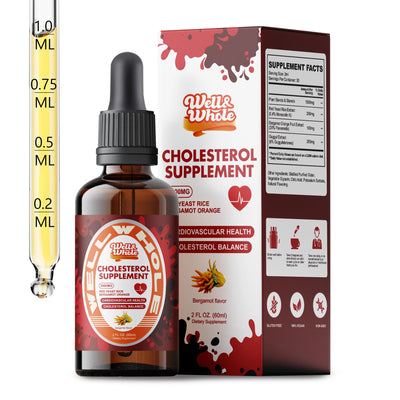
The Cholesterol Support Liquid Drops (Plant Sterols & Red Yeast Rice) ($21.99) combines both approaches in one dropper product — attacking absorption and synthesis at the same time. That's mechanistically sound, but it amplifies the need for medical oversight: when a formula contains monacolin K, it behaves like a medication and deserves medication-level respect.
The Safety Reality Check for Red Yeast Rice Safety
Two messages we repeat to every reader:
1. Red yeast rice is not "statins without the risks." Monacolin K is lovastatin. The same muscle (myopathy), liver enzyme, and drug-interaction concerns apply. If you can't take a statin because of side effects, red yeast rice can cause the same side effects — though some statin-intolerant patients do tolerate it (the 2009 Annals of Internal Medicine trial by Becker et al. is the key study here).
2. Quality control matters enormously. Monacolin K content varies wildly between brands — some products contain citrinin, a nephrotoxic fermentation byproduct. Third-party testing and transparent monacolin K labeling are non-negotiable.
One Number That Changes the Whole Decision: Your 10-Year Cardiovascular Risk
The sterols-vs-red-yeast-rice debate can't be resolved without context, and the context is your absolute cardiovascular risk. The ACC/AHA pooled cohort equations estimate a 10-year risk of heart attack or stroke. If your risk is under 7.5%, the 8–10% LDL reduction from plant sterols is a proportionate intervention — modest support for a modest elevation. If your risk is 7.5% or higher, guidelines favor prescription therapy, because the absolute benefit of a statin at that risk level is large enough to justify medication.
Red yeast rice at monacolin K doses can mimic that benefit, but it inherits the statin's risk profile without the guideline backing and quality control. The honest advice: know your risk number before choosing between a "safe everyday" sterol product and a "potent, supervised" monacolin K product. Ask your doctor for your calculated 10-year risk — it's the single most informative number in this decision, and most people have never seen theirs.
People Also Ask: Cholesterol Supplements

Does red yeast rice work like statins?
Yes — red yeast rice contains monacolin K, which is chemically identical to lovastatin (a prescription statin). At effective doses (5–10 mg/day of monacolin K), red yeast rice lowers LDL by roughly 20–30%, comparable to low-dose statins. The mechanism, the LDL reduction, and the side-effect profile (muscle pain, liver enzyme elevation) are all the same.
Can I take red yeast rice with my statin?
No — never combine them. Red yeast rice's monacolin K is lovastatin, so adding it to a prescription statin doubles your statin exposure and raises the risk of muscle damage (myopathy), rhabdomyolysis, and liver enzyme elevation. If you want to switch, do it under your doctor's supervision with baseline bloodwork and a monitored taper.
What do plant sterols do for cholesterol?
Plant sterols (beta-sitosterol, campesterol, stigmasterol) are cholesterol lookalikes that compete with dietary cholesterol for absorption in the intestine. They win a place in mixed micelles but aren't absorbed themselves, so more cholesterol exits in the stool. At 2 g/day, they lower LDL by 8–10% within 2–3 weeks.
Are cholesterol liquid drops effective?
Yes — liquid drops deliver plant sterols and red yeast rice in a pre-dissolved format that disperses into food more reliably than compressed tablets. Effectiveness still depends on the sterol and monacolin K content, third-party testing, and medical supervision (especially for the monacolin K component).
How long does red yeast rice take to work?
Red yeast rice typically shows LDL reduction within 4–8 weeks of consistent daily use. Re-test your lipid panel and liver enzymes at 3 months to judge the effect, and stop immediately on muscle pain.
Internal Linking Suggestions
· How to Lower Cholesterol Naturally: Diet + Liquid Drops Protocol — the 12-week diet + supplement protocol
· What Do Plant Sterols Actually Do for Cholesterol? Beta-Sitosterol Explained — deep dive on the absorption-blocking mechanism
· Can I Take Red Yeast Rice with My Statin? Safety Guide — the monacolin K + lovastatin interaction
· Red Yeast Rice vs Prescription Statins: What's the Real Difference? — head-to-head on efficacy, safety, and quality control
· Why Liquid Cholesterol Drops May Absorb Better Than Pills — the formulation science behind liquid delivery
Safety & Trust
· Do NOT combine red yeast rice with prescription statins — the additive risk of muscle damage is real and serious.
· Liver function and lipid panels recommended at 3 months if using monacolin K-containing products.
· Avoid red yeast rice during pregnancy and breastfeeding.
· Disclose to your doctor: RYR interacts with the same drugs as statins (certain antifungals, macrolide antibiotics, grapefruit juice at high intake).
· Plant sterols are not for sitosterolemia (a rare genetic condition) — those patients must avoid them.
References
3. Gylling H et al., "Plant sterols and plant stanols in the management of dyslipidaemia and prevention of cardiovascular disease," Atherosclerosis, 2014.
4. Katan MB et al., "Efficacy and safety of plant stanols and sterols in the management of blood cholesterol levels," Mayo Clinic Proceedings, 2003.
5. Liu J et al., "Chinese red yeast rice (Monascus purpureus) for primary hyperlipidemia: a meta-analysis of randomized controlled trials," Chinese Medicine, 2006.
6. Becker DJ et al., "Red yeast rice for dyslipidemia in statin-intolerant patients: a randomized trial," Annals of Internal Medicine, 2009.
These statements have not been evaluated by the Food and Drug Administration. This product is not intended to diagnose, treat, cure, or prevent any disease.
Related supplements
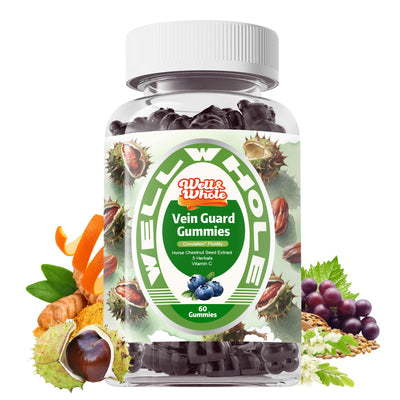
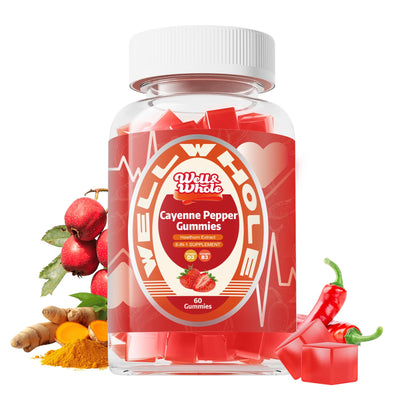
If you're ready to put this into practice, our well&whole Horse Chestnut Extract Gummies, Circulation Supplements for Legs and Cayenne Pepper Heart Health Gummies with Hawthorn & CoQ10 & Turmeric are formulated with this in mind. You can also compare the Heart Health and CoQ10 ranges to find the format that suits you.
These statements have not been evaluated by the Food and Drug Administration. This product is not intended to diagnose, treat, cure, or prevent any disease.