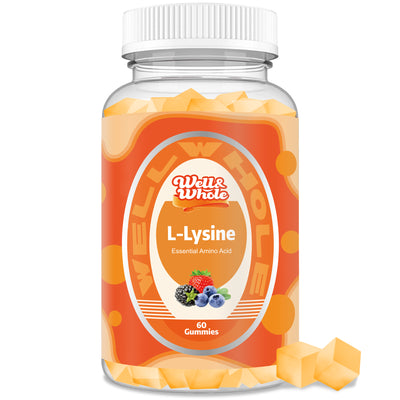
Benefits of Lysine Supplement: A Complete Guide for Your Health

You’ve probably heard about amino acids before, but lysine often flies under the radar. That’s a shame, because L-lysine is one of those essential nutrients your body can’t produce on its own. You have to get it from food or supplements. And when you’re not getting enough, a good lysine supplement can make a noticeable difference. Let’s walk through the key benefits, how it works, and why well&whole’s lysine supplement might be worth adding to your daily routine.
Key Takeaways
- L-lysine is an essential amino acid the body cannot produce, so it must come from food or supplements.
- It is commonly associated with skin and immune-system support routines, especially around cold-sore season.
- Follow the labeled serving; space from other amino acids if advised, and check interactions with a healthcare professional.
How Lysine Supports Your Immune System
Your immune system relies on a steady supply of amino acids to build antibodies and keep infection-fighting cells active. Lysine plays a direct role here. Studies have shown that lysine can help inhibit the replication of certain viruses, especially the herpes simplex virus that causes cold sores. A randomized clinical trial published in The Journal of Nutrition found that participants taking a daily lysine supplement experienced fewer outbreaks and faster healing times compared to a placebo group (Flodin 1997, J Nutr. 127(5): 873S-879S). The mechanism? Lysine competes with arginine, another amino acid that viruses need to multiply. By tipping the balance in favor of lysine, your immune system gets a stronger foothold.
Beyond viral defense, lysine also supports the production of white blood cells. When you’re stressed or run down, your body may burn through lysine faster. That’s when a supplement like well&whole Lysine can step in to help maintain a resilient immune response.
The Role of Lysine in Collagen Production and Skin Health
If you care about your skin’s elasticity and wound healing, lysine is your friend. Collagen, the structural protein that keeps skin firm and joints supple, requires both lysine and proline to form stable cross-links. Without enough lysine, collagen synthesis slows down, leading to thinner skin and slower recovery from injuries.
A 2015 review in Dermatology and Therapy highlighted that adequate lysine intake is critical for collagen formation and tissue repair (Siddharth et al., 2015, Dermatol Ther. 28(3): 161-166). This is why many dermatologists recommend lysine supplements for patients recovering from surgery or dealing with chronic wounds. For everyday skin health, well&whole Lysine provides a clean, bioavailable form of L-lysine that your body can use immediately. Pair it with vitamin C for even better collagen production.
Lysine and Calcium Absorption: A Bone Health Connection
Most people think of calcium and vitamin D when it comes to strong bones, but lysine deserves a seat at the table too. Research indicates that lysine helps the body absorb calcium more efficiently by interacting with calcium transport proteins in the intestine. A study in Biological Trace Element Research (Civitelli 2001, Biol Trace Elem Res. 81(1): 11-20) observed that lysine supplementation increased intestinal calcium uptake in postmenopausal women. This could reduce the risk of bone loss over time.
Additionally, lysine may help reduce the amount of calcium lost through urine. That means more calcium stays where it’s needed—in your bones and teeth. If you’re already taking a calcium supplement, adding a lysine supplement could maximize its effectiveness. well&whole’s formulation is designed to be gentle on the stomach while supporting this synergistic effect.
Managing Stress and Anxiety with Lysine
This benefit often surprises people, but lysine has a documented role in mood regulation. Studies, including one published in Amino Acids (Smriga et al., 2007, Amino Acids. 32(1): 133-137), have shown that lysine can reduce stress-induced anxiety and lower cortisol levels. The mechanism involves lysine acting as a precursor to neurotransmitters that calm the nervous system.
In a double-blind trial with participants in a high-stress environment, those who received lysine supplements reported significantly less anxiety and lower levels of the stress hormone cortisol compared to the placebo group. For anyone dealing with daily pressure, a lysine supplement like well&whole Lysine can be a simple, non‑drowsy way to support mental balance. Combine it with a healthy diet and good sleep habits for best results.
Frequently Asked Questions
1. What is the best time to take lysine supplements?
Lysine is best taken on an empty stomach, usually first thing in the morning or between meals. This improves absorption. However, if you have a sensitive stomach, taking it with a light snack is fine. For cold sore prevention, a consistent daily dose is more important than timing.
2. Can lysine help with cold sores?
Yes. Multiple studies confirm that lysine supplements can reduce the frequency and severity of herpes simplex outbreaks. The typical dosage for prevention is 500–1000 mg per day, and up to 3000 mg daily during active outbreaks. Always consult your healthcare provider before increasing dosage.
3. Are there any side effects of lysine supplements?
Lysine is generally safe at recommended doses. Very high intakes (above 3 grams per day) may cause mild digestive issues like diarrhea or stomach cramps. People with kidney or liver conditions should talk to their doctor first. well&whole Lysine is third‑party tested for purity and uses only L‑lysine hydrochloride, which is well tolerated by most adults.
What L-lysine does in the body
Lysine is one of the nine essential amino acids used to build proteins. It contributes to normal protein synthesis and is found naturally in meat, fish, dairy, and legumes.
Many people explore lysine during periods when they want extra immune and skin-support routines, such as around seasonal stress.
How L-lysine is commonly taken
It is available as capsules, gummies, and powders. A typical approach is a consistent daily serving, though some people adjust timing around specific needs.
Because it is an amino acid, taking it with food is common, but the best routine is the one you will follow consistently.
Who might be interested
Adults focused on skin and immune support, and those with diets low in complete proteins, often consider lysine.
Vegetarians and vegans may pay extra attention, since plant proteins can be lower in lysine.
How to choose a quality lysine supplement
Check the elemental L-lysine amount per serving and look for third-party testing. Gummies offer convenience; capsules offer precision.
If you take calcium or other minerals, discuss timing with a healthcare professional.
What L-lysine is commonly used for
L-lysine is an essential amino acid used to build proteins and is a frequent choice for skin and immune-support routines.
As with any amino acid, follow the labeled serving and consult a professional if you take other supplements or medications.
This article is for general wellness education and is not intended to diagnose, treat, cure, or prevent any condition. Individual needs vary—always review product labels and consult a qualified healthcare professional before starting any new supplement.
Related supplements
Explore the full well&whole supplement collection to find formats and combinations that fit your routine.
These statements have not been evaluated by the Food and Drug Administration. This product is not intended to diagnose, treat, cure, or prevent any disease.