Beets and Blood Pressure: What the Evidence Shows

In randomized trials, beetroot juice supplying about 400 mg of dietary nitrate lowered systolic blood pressure by roughly 4–8 mmHg, with the effect peaking two to three hours after drinking. Whole beets contain less nitrate per serving than concentrated juice, so expect smaller and gentler changes. The honest summary: beets can meaningfully support healthy blood pressure and circulation as part of an overall pattern — they are not a treatment for hypertension, and they do not replace medication or medical care.
Key takeaways
- Beets are among the richest nitrate sources in the diet; nitrate converts to nitrite and then nitric oxide, a vasodilator.
- Trials of ~400 mg nitrate (about 250 ml beetroot juice) show roughly 4–8 mmHg systolic support, strongest 2–3 hours after intake.
- Whole cooked beets deliver less nitrate per serving but still contribute, especially when eaten regularly.
- Avoid boiling beets to mush — nitrate leaches into water; roasting or steaming preserves more.
- People on nitrate-type heart medications or with low blood pressure should talk to a clinician first.
How dietary nitrate works
The pathway runs nitrate → nitrite → nitric oxide. Roughly 60–80% of the nitrate you eat is excreted, but some is concentrated by the salivary glands and converted to nitrite by bacteria on the tongue; stomach acid then turns nitrite into nitric oxide, which relaxes the smooth muscle in blood vessel walls. Vessels dilate, arterial stiffness eases slightly, and blood pressure drops a few points. This is also why antibacterial mouthwash — which wipes out those tongue bacteria — has been shown in small studies to blunt the blood-pressure effect of nitrate-rich vegetables. The mechanism depends on an ordinary, healthy oral microbiome.
What the trials actually show
The best-known work comes from groups at Barts and the University of Exeter. In controlled trials, about 250 ml of beetroot juice (~400 mg nitrate) reduced systolic pressure by approximately 4–8 mmHg within hours, and daily intake over 15 days sustained the effect. Meta-analyses of beetroot and nitrate trials broadly agree on modest, real, but variable effects — larger in men and in people with higher starting pressures. A useful benchmark: 4–5 mmHg systolic is roughly what the DASH eating pattern delivers over months. Beets are one tool inside that pattern, not a replacement for it.
Whole beets vs juice vs powder
Concentrated beetroot juice shots are the most reliable way to hit a 300–400 mg nitrate dose. Whole beets vary by soil, season and variety but a standard serving still counts; arugula, spinach, celery and lettuce are also strong nitrate sources. Beet powders and gummies sit lower on the dose curve — convenient, but check whether the label states nitrate content at all. Preparation matters too: prolonged boiling pulls nitrate into the cooking water, while roasting, steaming or grating raw beets into salads keeps more on the plate.
Who should be careful
Anyone using nitrate-containing heart medication (such as nitroglycerin) or PDE5 inhibitors should check with a clinician before adding concentrated nitrate sources, because the pathways compound. People with chronically low blood pressure may feel light-headed after large nitrate doses. Beets are also high in oxalates, relevant for anyone with a history of oxalate kidney stones. And if your urine or stool turns pink afterwards — beeturia — it is harmless and affects roughly one person in seven.
A practical two-week self-trial
If you want to test the effect on yourself, keep it simple. Measure your blood pressure at the same two times daily for a week to establish a baseline, then add a consistent nitrate source — a beet juice shot or a generous serving of roasted beets with lunch — for the next two weeks while changing nothing else. Average each week separately. A real effect shows up as a small, consistent shift between the weekly averages, not one dramatic reading; anything larger than that deserves a conversation with your clinician about what else is going on.
Where beets fit in a heart-friendly pattern
The strongest cardiovascular evidence never attaches to a single food. Beets earn their place alongside leafy greens, legumes, olive oil and regular walking — a dietary pattern that supports circulation, healthy cholesterol and blood pressure together. If you enjoy beets, eating them several times a week is a small, sustainable habit with a plausible mechanism and modest trial support behind it. That is the right-sized expectation.

Frequently asked questions
How many beets a day for the nitrate effect seen in studies?
Studies used about 400 mg of nitrate — roughly 250 ml of concentrated beetroot juice, or a large serving of whole beets. Exact content varies widely by growing conditions, so whole-beet eaters should think in weekly patterns rather than precise daily doses.
Is beetroot juice better than eating whole beets?
Concentrated juice delivers a more reliable, higher nitrate dose per serving. Whole beets contribute less per serving but add fiber and fit more naturally into meals — both support the same pathway.
How long does the blood pressure effect last?
Acute effects peak around 2–3 hours and fade over roughly 6–10 hours. Regular daily intake appears necessary to sustain the modest longer-term reductions seen in multi-week trials.
Can beets replace blood pressure medication?
No. Even at their best, dietary nitrates deliver support measured in single-digit mmHg. Never adjust prescribed medication without your prescriber — but do tell them about your diet, since it is part of the picture they manage.
Related supplements
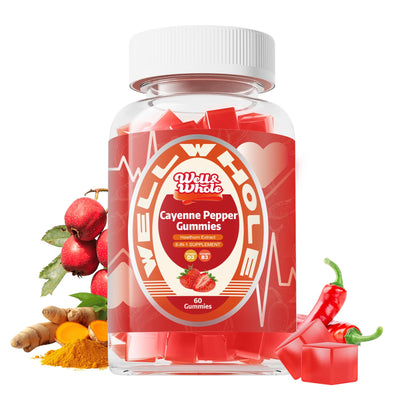
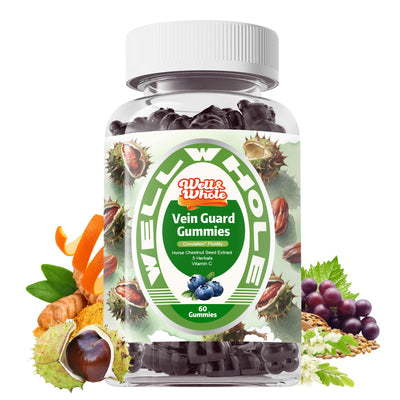
Should you decide to supplement, Well&Whole Horse Chestnut Extract Gummies, Circulation Supplements for Legs and Cayenne Pepper Heart Health Gummies with Hawthorn & CoQ10 & Turmeric are our formulation for this purpose. For a broader comparison, see the Heart Health and CoQ10 collections.
These statements have not been evaluated by the Food and Drug Administration. This product is not intended to diagnose, treat, cure, or prevent any disease. Talk to a healthcare professional before starting any new supplement, especially if you are pregnant, nursing, taking medication, or managing a health condition.