Beef Organs vs Synthetic Vitamins: Is Natural Better?
Are beef organ supplements better than synthetic multivitamins? We compare bioavailability, nutrient forms, and science to help you decide.

Walk into any pharmacy and you'll find walls of synthetic multivitamins—tablets and capsules packed with lab-created vitamins and minerals. They're convenient, inexpensive, and ubiquitous. But a growing number of health-conscious consumers are turning to a different approach: whole-food supplements derived from beef organs.
The question is: does "natural" really mean "better"? Or are synthetic vitamins just as effective at a fraction of the cost?
In this article, we'll compare beef organ supplements with synthetic multivitamins across multiple dimensions: bioavailability, nutrient forms, co-factors, safety, and real-world effectiveness. The science reveals some surprising differences that every supplement user should understand.
The Fundamental Difference
Synthetic Vitamins: Isolated Compounds
Synthetic multivitamins are manufactured in laboratories. Each vitamin and mineral is produced separately, often in chemical forms that differ from those found in nature. For example:
- Vitamin A is often provided as **beta-carotene** (a provitamin that requires conversion) or synthetic retinyl palmitate
- Vitamin B12 is usually **cyanocobalamin** (a synthetic form with a cyanide molecule attached)
- Folate is typically **folic acid** (a synthetic oxidized form)
- Iron is commonly **ferrous sulfate** (an inorganic salt)
These isolated compounds are combined into a tablet or capsule, often with fillers, binders, and coatings.
Beef Organs: Whole-Food Nutrient Complexes
Beef organ supplements contain nutrients as they exist in nature—embedded in a complex matrix of proteins, fats, enzymes, co-factors, and trace minerals. The vitamins are in their active, natural forms:
- Vitamin A as **retinol** (preformed, directly usable)
- Vitamin B12 as **methylcobalamin** (the active coenzyme form)
- Folate as **methylfolate** (the active form)
- Iron as **heme iron** (bound to hemoglobin, highly bioavailable)
This distinction matters more than you might think.
Bioavailability: The Absorption Advantage
Bioavailability refers to the proportion of a nutrient that your body actually absorbs and can use. This is where the natural vs. synthetic debate gets interesting.
Vitamin A: Retinol vs. Beta-Carotene
A 2018 review in the *American Journal of Clinical Nutrition* noted that preformed vitamin A (retinol) from animal sources is directly usable by the body. Beta-carotene from plant sources or synthetic supplements must be converted to retinol—a process with variable efficiency.
Research published in the *Journal of Nutrition* (2017) found that up to 45% of people carry genetic variants that reduce their ability to convert beta-carotene to retinol. For these individuals, synthetic beta-carotene provides far less usable vitamin A than the retinol found in beef liver.
Iron: Heme vs. Non-Heme
This is perhaps the most dramatic difference. A 2019 study in *Blood* demonstrated that heme iron (from animal tissues) is absorbed at 15-35% efficiency, compared to just 2-20% for non-heme iron (from plants or ferrous sulfate supplements).
| Iron Source | Absorption Rate | Form |
|---|---|---|
| Heme iron (beef organs) | 15-35% | Bound to hemoglobin |
| Ferrous sulfate (synthetic) | 2-20% | Inorganic salt |
| Plant iron (spinach, etc.) | 2-10% | Non-heme |
Additionally, heme iron absorption is less affected by dietary factors (like phytates and tannins) that inhibit non-heme iron uptake.
Folate: Methylfolate vs. Folic Acid
Up to 40% of the population carries MTHFR gene variants that impair the conversion of synthetic folic acid to its active form, methylfolate. A 2016 study in the *Journal of the American Medical Association* found that individuals with MTHFR variants had lower folate status when taking folic acid compared to methylfolate.
Beef liver provides folate in its natural, active form—no conversion required.
B12: Methylcobalamin vs. Cyanocobalamin
Most synthetic supplements use cyanocobalamin because it's cheaper and more stable. However, the body must convert cyanocobalamin to methylcobalamin (the active coenzyme form) before it can be used in cellular processes. Beef organs provide B12 predominantly in its active forms.
The Food Matrix Effect
Beyond individual nutrient bioavailability, there's a broader concept: the **food matrix effect**. This refers to the synergistic interactions between nutrients and other food components that enhance absorption and utilization.
A 2018 review in *Advances in Nutrition* concluded that "nutrients delivered in a whole-food matrix provide health benefits beyond those of isolated nutrients, due to synergistic interactions among co-occurring compounds."
What does this mean in practice?
- **Co-factors**: Beef organs contain the natural co-factors needed for vitamin utilization. For example, vitamin A absorption is enhanced by the natural fats in liver tissue.
- **Enzymes**: Raw or freeze-dried organs retain natural enzymes that may aid digestion and nutrient release.
- **Trace minerals**: Organs contain trace elements not found in standard multivitamins but essential for optimal function.
- **Protein-bound nutrients**: Many vitamins in organs are bound to proteins, which may facilitate more gradual, sustained release compared to isolated synthetic forms.
Nutrient Breadth: What You're Actually Getting
| Nutrient | Synthetic Multivitamin | Beef Organ Supplement |
|---|---|---|
| Vitamin A | Beta-carotene or retinyl palmitate | Retinol (natural) |
| B12 | Cyanocobalamin | Methylcobalamin (active) |
| Folate | Folic acid | Methylfolate (active) |
| Iron | Ferrous sulfate | Heme iron (highly bioavailable) |
| Choline | Often missing or low | Abundant (liver is richest source) |
| CoQ10 | Rarely included | Naturally present (heart tissue) |
| DAO | Never included | Present (kidney tissue) |
| Taurine | Rarely included | Naturally present (heart tissue) |
| Trace minerals | Limited | Full natural spectrum |
When Synthetic Vitamins Might Be Preferable
To be fair, synthetic vitamins have their place:
- **Cost**: Synthetic multivitamins are generally less expensive
- **Dosing precision**: Lab-created vitamins allow for exact dosing of specific nutrients
- **Allergies**: Some people are allergic to beef or animal proteins
- **Vegan/vegetarian**: Synthetic vitamins can be made without animal products
- **Targeted deficiency**: If you need a specific nutrient in high doses (like iron for severe deficiency), a synthetic single-nutrient supplement may be more appropriate
The Limitations of Organ Supplements
Organ supplements aren't perfect either:
- **Vitamin A risk**: Because liver is so high in retinol, exceeding recommended doses can lead to vitamin A toxicity. Synthetic multivitamins typically use beta-carotene, which the body converts only as needed.
- **Availability**: Not all nutrients are present in optimal amounts in organs. For example, vitamin D and vitamin K2 are present but in variable amounts depending on the animal's diet.
- **Dietary restrictions**: Organ supplements are not suitable for vegetarians, vegans, or those with beef allergies.
Making the Choice: Practical Recommendations
| Your Situation | Recommendation |
|---|---|
| General wellness, prefer natural | Beef organ supplement |
| Specific deficiency (e.g., severe iron deficiency) | Synthetic single-nutrient + dietary changes |
| Budget-limited | Quality synthetic multivitamin |
| Vegan/vegetarian | Plant-based supplements (algae B12, etc.) |
| Want broad-spectrum, bioavailable nutrition | Beef organ multi-blend (P09) |
| Concerned about absorption issues (MTHFR, etc.) | Beef organs (active nutrient forms) |
FAQ
Q: Are natural vitamins always better than synthetic?
A: Not always, but for certain nutrients (iron, folate, B12, vitamin A), the natural forms in beef organs are significantly more bioavailable than synthetic versions.
Q: Can I replace my multivitamin with a beef organ supplement?
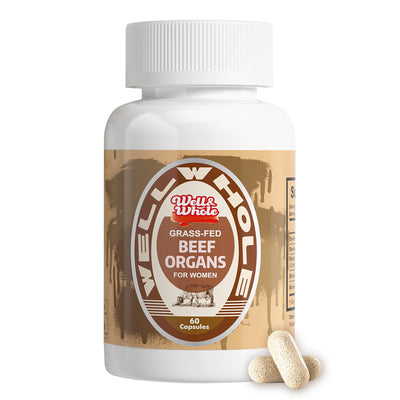
A: For many people, yes. A multi-organ supplement like well&whole Grassfed Beef Organ Capsules provides a broad range of nutrients in highly bioavailable forms. However, consult your healthcare provider before making changes.

Q: Do beef organ supplements contain vitamin D?
A: Small amounts are present, but vitamin D content varies based on the animal's sun exposure. If you need significant vitamin D, a separate supplement may be needed.
Q: Why are synthetic vitamins cheaper?
A: Lab production is less expensive than raising grass-fed cattle, processing organs, and freeze-drying. The cost difference reflects the quality of sourcing and processing.
Q: Can I take both a multivitamin and an organ supplement?
A: It's possible, but be cautious about doubling up on certain nutrients, especially vitamin A and iron. Consult your healthcare provider to review total intake.
Q: What about the MTHFR gene mutation?
A: If you have MTHFR variants, the active folate (methylfolate) in beef organs may be significantly more effective than synthetic folic acid.
Q: Are there any nutrients that organ supplements lack?
A: Organ supplements don't typically provide significant vitamin C, vitamin D, or calcium. A balanced diet should cover these.
Conclusion
The science is clear: for several key nutrients, the natural forms found in beef organs are significantly more bioavailable and effective than their synthetic counterparts. The active forms of folate, B12, and vitamin A, combined with the highly absorbable heme iron and the food matrix effect, give organ supplements a genuine advantage over synthetic multivitamins.
That doesn't mean synthetic vitamins are useless—they have their place for targeted deficiencies, dietary restrictions, and budget constraints. But for broad-spectrum, highly bioavailable nutrition, beef organ supplements are in a class of their own.
If you're ready to make the switch from synthetic to whole-food nutrition, well&whole Grassfed Beef Organ Capsules offer a multi-organ blend that delivers nature's most bioavailable nutrients in a convenient, affordable format.
Related supplements
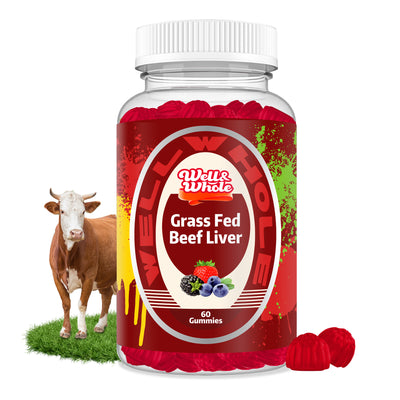
Putting it simply: if this is something you want to add to your routine, our Grass Fed Beef Liver Supplement Gummies with 60 Count for Full Wellness and Grassfed Beef Organ Supplement Capsules, Grass Fed & Pasture Raised, Total Body Wellness Support are a good place to start. The wider Vitamin A collection is worth a look, and the Health Benefits range covers related formats.
These statements have not been evaluated by the Food and Drug Administration. This product is not intended to diagnose, treat, cure, or prevent any disease.