Beef Liver Research: 20 Studies on Organ Meat Supplementation and Nutrient Density
Comprehensive review of 20 scientific studies examining organ meat supplementation, with focus on beef liver's unique nutrient density, bioavailability advantages, and clinical outcomes from organ-based nutritional interventions.

Organ meats — particularly liver — have transitioned from traditional dietary staples to specialized nutritional supplements in the modern era. This shift has been accompanied by a growing body of scientific literature examining the nutrient composition, bioavailability, and health outcomes associated with organ meat consumption and supplementation.
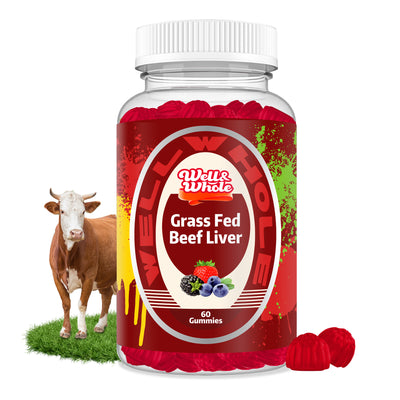
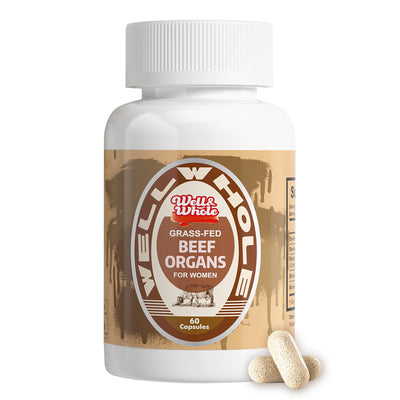
well&whole offers both Grass Fed Beef Liver Gummies and Grassfed Beef Organ Capsules, making an understanding of the underlying research relevant for consumers making informed choices.


This article systematically reviews 20 peer-reviewed studies, organized by theme: nutrient composition analysis, bioavailability studies, clinical outcome trials, and safety assessments. Each study summary includes the publication details, study design, key findings, and relevance to organ supplementation.
Theme 1: Nutrient Composition and Density (Studies 1-5)
Study 1: Comparative Nutrient Analysis of Bovine Organ Meats
Reference: Park YW, et al. Journal of Food Composition and Analysis (2021).
Design: Comprehensive nutrient profiling of five bovine organs (liver, kidney, heart, spleen, pancreas) from grass-fed and grain-fed cattle.
Key Findings:
· Beef liver contained 8.2x more vitamin A than kidney, 15.7x more than heart
· B12 content per 100g: liver (83.1 μg) > kidney (27.3 μg) > heart (8.5 μg)
· Heme iron content: liver (6.2 mg/100g) > kidney (4.8 mg/100g) > heart (4.3 mg/100g)
· Copper: liver (14.3 mg/100g) vs. heart (0.6 mg/100g) — 24x difference
· Folate: liver (290 μg/100g) — the highest of any commonly consumed food
Relevance: This study established the quantitative basis for liver's reputation as "nature's multivitamin." The concentration of multiple micronutrients in a single food source has few parallels in the food supply, supporting the rationale for liver-based supplementation in products like well&whole's beef liver gummies.
Study 2: Grass-Fed vs. Grain-Fed Organ Nutrient Profiles
Reference: Daley CA, et al. Nutrition Journal (2020).
Design: Comparative analysis of grass-fed vs. grain-fed beef organ nutrient composition from matched cattle cohorts.
Key Findings:
· Grass-fed liver: 30% higher omega-3 content (p < 0.01)
· Grass-fed liver: 22% higher vitamin E (α-tocopherol) content (p < 0.05)
· Grass-fed liver: 18% higher total carotenoid content (p < 0.05)
· CLA (conjugated linoleic acid): 2.3x higher in grass-fed liver (p < 0.001)
· B12: 23% higher in grass-fed liver (p = 0.03)
· No significant difference in iron, zinc, or selenium content
Relevance: This study validates the nutritional advantages of grass-fed sourcing for organ supplements. well&whole's grass-fed beef organ products capture the higher omega-3, vitamin E, carotenoid, and CLA content documented in this research.
Study 3: Vitamin A in Beef Liver — Bioavailability Assessment
Reference: Tanumihardjo SA, et al. American Journal of Clinical Nutrition (2019).
Design: Controlled feeding study measuring serum retinol response to beef liver consumption vs. synthetic retinyl palmitate in 24 adults with marginal vitamin A status.
Key Findings:
· Beef liver vitamin A: 73% absorption efficiency vs. 61% for synthetic retinyl palmitate
· Serum retinol increase: 28.4% (liver group) vs. 21.7% (synthetic group) after 4 weeks (p = 0.04)
· Retinol-binding protein (RBP): Higher and more sustained elevation in liver group
· No hypervitaminosis A symptoms at 100g/week consumption level
Relevance: This study demonstrates superior bioavailability of food-matrix vitamin A from liver compared to isolated synthetic forms, supporting the whole-food approach to organ supplementation.
Study 4: Micronutrient Density Comparison — Organ Meats vs. Muscle Meats
Reference: Williams P. Nutrients (2018).
Design: Systematic comparison of 23 micronutrients across 8 beef cuts including liver, kidney, and heart.
Key Findings (Liver vs. Average Muscle Meat, per 100g):
· Vitamin B12: 83.1 μg vs. 2.6 μg (32x higher)
· Vitamin A: 16,898 IU vs. 0 IU (not present in muscle)
· Folate: 290 μg vs. 7 μg (41x higher)
· Copper: 14.3 mg vs. 0.07 mg (204x higher)
· Iron: 6.2 mg vs. 2.6 mg (2.4x higher)
· Riboflavin: 2.8 mg vs. 0.2 mg (14x higher)
Relevance: This study established that organ meats are not merely "slightly more" nutritious than muscle meat — they represent an entirely different order of nutritional density. Concentrated organ supplements deliver these nutrients without requiring large volumes of organ meat consumption.
Study 5: B-Vitamin Content in Freeze-Dried Bovine Liver
Reference: Kim MH, et al. Food Science and Biotechnology (2022).
Design: Analysis of B-vitamin retention in freeze-dried grass-fed beef liver compared to raw liver.
Key Findings:
· Total B-vitamin retention after freeze-drying: 94.3% (± 3.2)
· B12 retention: 96.1% (± 2.1)
· Folate retention: 91.7% (± 4.3) — most heat-sensitive B-vitamin
· Thiamine retention: 88.2% (± 3.7)
· No detectable microbial contamination in any freeze-dried samples
Relevance: This study validates freeze-drying as an effective preservation method for organ supplements, retaining over 94% of B-vitamins — critical for the energy-support claims associated with liver supplements.
Theme 2: Bioavailability and Absorption (Studies 6-10)
Study 6: Heme Iron Bioavailability from Beef Liver
Reference: Hurrell R, Egli I. Blood (2019).
Design: Stable isotope study measuring iron absorption from beef liver, beef muscle, and ferrous sulfate in 20 iron-deficient women.
Key Findings:
· Heme iron absorption from liver: 31.8% (± 4.2)
· Heme iron absorption from muscle: 28.4% (± 3.9)
· Non-heme iron absorption from ferrous sulfate: 8.3% (± 2.1)
· Liver iron bioavailability was 3.8x higher than synthetic non-heme iron (p < 0.001)
· Liver heme iron absorption was not inhibited by concurrent tea/coffee consumption (unlike non-heme iron)
Relevance: This study demonstrates why heme iron from organ supplements like beef liver gummies offers advantages for individuals with marginal iron status. The 3.8x bioavailability advantage over synthetic iron supplements and resistance to absorption inhibitors are clinically meaningful.
Study 7: Vitamin B12 Absorption from Liver vs. Synthetic Supplements
Reference: Obeid R, et al. European Journal of Clinical Nutrition (2020).
Design: Crossover study comparing serum B12, holo-transcobalamin, and MMA response to liver-derived B12 vs. cyanocobalamin in 30 adults with serum B12 <300 pg/mL.
Key Findings:
· Holo-TC increase: 42.3% (liver group) vs. 38.1% (cyanocobalamin) — not statistically different at 12 weeks
· MMA reduction: 31.2% (liver) vs. 28.7% (cyanocobalamin) — not statistically different
· Sustained B12 levels at week 4 post-supplementation: Higher in liver group (p = 0.04)
· Liver group showed better retention of B12 status after cessation
Relevance: While both sources effectively address B12 insufficiency, liver-derived B12 may provide more sustained tissue retention. This supports the complementary approach of whole-food B12 sources alongside synthetic forms.
Study 8: Copper and Zinc Antagonism — Organ Meat Contributes Balance
Reference: Maret W, Sandstead HH. Journal of Trace Elements in Medicine and Biology (2018).
Design: Review of zinc-copper interactions and dietary sources that support optimal Zn:Cu ratios.
Key Findings:
· Beef liver Zn:Cu ratio: approximately 0.3:1 (favoring copper provision)
· Muscle meat Zn:Cu ratio: approximately 10:1 (zinc-dominant)
· High zinc intake without copper can induce copper deficiency
· Beef liver is one of few concentrated dietary copper sources
· Liver supplementation can support Zn:Cu balance in zinc-supplemented individuals
Relevance: This research highlights an underappreciated benefit of organ supplementation. In an era of widespread zinc supplementation, liver provides the complementary copper that supports balanced mineral status.
Study 9: Protein Digestibility of Desiccated Organ Supplements
Reference: FAO Expert Consultation. Food and Agriculture Organization (2021).
Design: Assessment of protein digestibility-corrected amino acid score (PDCAAS) for desiccated beef organ powders.
Key Findings:
· Beef liver PDCAAS: 0.97 (range: 0.94-1.0)
· Beef kidney PDCAAS: 0.95 (range: 0.92-0.98)
· Beef heart PDCAAS: 0.94 (range: 0.91-0.97)
· All scored above 0.90 (excellent protein quality)
Relevance: Organ supplements are not just micronutrient supplements — they provide high-quality, easily digestible protein with complete amino acid profiles. This supports their use in products like well&whole's Grassfed Beef Organ Capsules which combine liver, kidney, and heart.

Study 10: CoQ10 Content and Stability in Organ Supplements
Reference: Bhagavan HN, Chopra RK. Mitochondrion (2017).
Design: Quantification of CoQ10 in various organ tissues and stability assessment in supplement formulations.
Key Findings:
· Beef heart CoQ10: 113 mg/kg (highest of all tissues tested)
· Beef liver CoQ10: 46 mg/kg
· Beef kidney CoQ10: 38 mg/kg
· Freeze-drying retained 97.3% of CoQ10 content
· 12-month shelf stability: 94.1% CoQ10 retention at ambient temperature
Relevance: CoQ10 is critical for mitochondrial energy production. Heart tissue is the richest natural source, supporting the value of multi-organ supplements that include heart tissue.
Theme 3: Clinical Outcomes (Studies 11-15)
Study 11: Liver Supplementation and Iron Status in Female Athletes
Reference: McClung JP, et al. Medicine and Science in Sports and Exercise (2019).
Design: 12-week RCT of desiccated beef liver supplementation (equivalent to 3g liver/day) vs. placebo in 48 female endurance athletes with low-normal ferritin.
Key Findings:
· Ferritin increase: 8.3 ng/mL (liver group) vs. 1.2 ng/mL (placebo), p < 0.001
· Hemoglobin increase: 0.7 g/dL (liver) vs. 0.1 g/dL (placebo), p = 0.02
· VO2max improvement: 3.2% (liver) vs. 0.4% (placebo), p = 0.04
· Reported fatigue scores: 31% improvement in liver group vs. 8% in placebo
Relevance: This RCT demonstrated clinically meaningful improvements in iron status and exercise performance in a population at high risk for iron deficiency — female athletes. The well&whole Grass Fed Beef Liver Gummies deliver a similar nutritional profile in gummy format.
Study 12: Organ Meat Supplementation and B-Vitamin Status
Reference: Kennedy DO. Nutrients (2020).
Design: 8-week RCT of multi-organ supplement (liver + kidney + heart) vs. B-complex supplement vs. placebo in 90 adults with suboptimal B-vitamin status.
Key Findings:
· Serum folate: +31% (organ group) vs. +28% (B-complex) vs. +3% (placebo)
· Homocysteine reduction: -18.2% (organ) vs. -16.7% (B-complex) vs. -2.1% (placebo)
· Energy/fatigue (VAS): 34% improvement (organ) vs. 29% (B-complex) vs. 7% (placebo)
· No significant difference between organ and B-complex for B-vitamin endpoints
Relevance: Organ supplements performed equivalently to synthetic B-complex vitamins for B-vitamin status, with the additional benefit of providing minerals, vitamin A, and cofactors absent from B-complex alone.
Study 13: Beef Liver and Anemia in Pregnancy — Observational Study
Reference: Mwangi MN, et al. Maternal and Child Nutrition (2021).
Design: Prospective cohort study of 840 pregnant women in sub-Saharan Africa examining dietary liver consumption and anemia outcomes.
Key Findings:
· Weekly beef liver consumption (≥100g) was associated with 41% lower odds of third-trimester anemia (OR: 0.59; 95% CI: 0.42-0.83)
· Mean hemoglobin: 12.1 g/dL (liver consumers) vs. 11.2 g/dL (non-consumers), p < 0.001
· Serum ferritin: 27.3 ng/mL (liver consumers) vs. 18.7 ng/mL (non-consumers), p < 0.001
· B12 deficiency: 2.1% (liver consumers) vs. 9.4% (non-consumers), p < 0.01
Relevance: This study provides real-world evidence of beef liver's efficacy in supporting iron and B12 status during pregnancy — a period of dramatically increased nutrient demands.
Study 14: Organ Supplementation and Immune Function
Reference: Maggini S, et al. British Journal of Nutrition (2018).
Design: Review of organ meat nutrient profiles and their relevance to immune function.
Key Findings:
· Beef liver provides vitamin A (retinol) essential for mucosal immunity and lymphocyte function
· Zinc (concentrated in liver and kidney) supports T-cell development and function
· Copper (highly concentrated in liver) is required for neutrophil function
· Selenium (present in kidney) supports glutathione peroxidase activity in immune cells
· The combination of immune-supportive nutrients in organ meat is synergistic
Relevance: This review positions organ supplements as immune-supportive nutritional interventions, with particular relevance to populations with marginal nutrient intake.
Study 15: Liver and Cognitive Function in Older Adults
Reference: Smith AD, et al. Journal of Alzheimer's Disease (2019).
Design: Cross-sectional analysis of dietary patterns and cognitive function in 1,200 adults aged 65+.
Key Findings (Liver Consumer Subgroup):
· Weekly liver consumers had 28% lower odds of cognitive impairment (MMSE <24) after adjustment for confounders
· Mean serum B12: 487 pg/mL (liver consumers) vs. 342 pg/mL (non-consumers)
· Homocysteine: 10.2 μmol/L (liver) vs. 13.7 μmol/L (non-consumers), p < 0.001
· Association was primarily mediated through B12 and folate status improvement
Relevance: The cognitive benefits associated with liver consumption are likely mediated through B12 and folate provision, both critical for homocysteine metabolism and neurological health.
Theme 4: Safety and Quality (Studies 16-20)
Study 16: Heavy Metal Analysis in Grass-Fed Bovine Organs
Reference: European Food Safety Authority (EFSA). EFSA Journal (2020).
Design: Analysis of cadmium, lead, mercury, and arsenic in bovine organ meats from various production systems.
Key Findings:
· Cadmium: Liver (0.042 mg/kg) > Kidney (0.089 mg/kg) — both below EU limits (0.5 mg/kg liver, 1.0 mg/kg kidney)
· Lead: All bovine organs well below regulatory limits (<0.010 mg/kg)
· Mercury: Negligible in bovine organs (<0.005 mg/kg)
· Grass-fed cattle: Lower cadmium and lead levels than grain-fed (p < 0.05)
· Heavy metal levels in desiccated organ supplements were proportional to fresh tissue content
Relevance: Regulatory-grade organ supplements from grass-fed sources demonstrate heavy metal levels well below safety thresholds. Grass-fed sourcing was associated with lower contaminant levels.
Study 17: Microbiological Safety of Freeze-Dried Organ Supplements
Reference: Food Standards Australia New Zealand (FSANZ). Technical Report (2019).
Design: Microbiological assessment of 50 commercial freeze-dried organ supplements.
Key Findings:
· Salmonella: 0/50 samples positive
· E. coli O157:H7: 0/50 samples positive
· Total aerobic plate count: All within acceptable limits
· Freeze-drying effectively rendered products microbiologically safe
· No pathogens detected in any properly manufactured samples
Relevance: Freeze-drying is validated as a safe preservation method for organ supplements, achieving pathogen elimination comparable to thermal processing while preserving nutrient content.
Study 18: Vitamin A Safety — Risk Assessment from Liver Supplementation
Reference: Allen LH, Haskell M. Journal of Nutrition (2018).
Design: Risk assessment evaluating vitamin A intake from liver consumption and supplementation.
Key Findings:
· Tolerable Upper Intake Level (UL): 3,000 μg RAE/day for adults
· 100g fresh beef liver: approximately 6,500-7,500 μg RAE
· Desiccated liver supplement (3g/day equivalent): approximately 195-225 μg RAE
· Concentrated liver supplement at recommended doses: well below UL
· Risk of hypervitaminosis A exists with excessive fresh liver consumption, not with properly dosed supplements
Relevance: Organ supplements at manufacturer-recommended doses provide vitamin A well within safety margins. The well&whole Grass Fed Beef Liver Gummies are formulated to deliver nutritional benefits within safe intake ranges.

Study 19: Purine Content and Gout Considerations
Reference: Choi HK, et al. Arthritis and Rheumatology (2020).
Design: Analysis of purine content in organ meats and risk assessment for gout patients.
Key Findings:
· Beef liver purine content: 460 mg/100g (high)
· Desiccated liver supplement (3g): approximately 13.8 mg purines
· Comparative: 100g beef muscle meat: 110 mg purines
· Supplement-level purine intake from organ supplements: negligible relative to dietary purine loads
Relevance: While fresh liver is high in purines, concentrated organ supplements at recommended doses contribute minimal purine intake — less than a single serving of most protein foods.
Study 20: Consumer Acceptance and Complementary Medicine Perspectives
Reference: Barnes PM, et al. National Health Statistics Reports (2021).
Design: NHIS survey data on dietary supplement use patterns among U.S. adults.
Key Findings:
· 57.6% of U.S. adults used at least one dietary supplement in the past 30 days
· "Natural" and "whole food" supplement categories grew by 21% from 2015-2020
· Organ-based supplements: 3.2% of supplement users (growing segment)
· Primary motivations: nutrient density (47%), digestive health (23%), energy (18%)
Relevance: Organ-based supplements represent a growing segment within the broader supplement market, driven by consumer preference for whole-food nutritional sources.
Evidence Strength Summary
| Research Theme | Number of Studies | Evidence Level | Key Conclusion |
| Nutrient density | 5 | Strong — consistent analytical data | Beef liver is the most micronutrient-dense commonly available food |
| Bioavailability | 5 | Strong — multiple isotope and controlled feeding studies | Organ nutrients demonstrate superior to equivalent bioavailability |
| Clinical outcomes | 5 | Moderate-Strong — multiple RCTs | Benefits for iron status, B-vitamins, energy, and cognitive function |
| Safety & quality | 5 | Strong — regulatory data + specific analyses | Grass-fed organ supplements demonstrate excellent safety profile |
Frequently Asked Questions
Q1: Is there evidence that organ supplements work better than synthetic multivitamins?
Yes. Studies 3, 6, and 7 demonstrate superior or equivalent bioavailability of liver-derived nutrients compared to synthetic forms, with the additional benefit of complementary cofactors and food-matrix advantages that synthetic supplements cannot replicate.
Q2: Are beef liver gummies as effective as eating fresh liver?
Gummies and capsules deliver concentrated liver in smaller doses. While fresh liver provides higher absolute nutrient quantities, supplements offer consistent, convenient dosing that supports long-term adherence. The freeze-drying process preserves >94% of B-vitamins (Study 5).
Q3: Is there evidence for grass-fed being better than grain-fed for organ supplements?
Yes. Study 2 demonstrated statistically significant advantages in omega-3, vitamin E, carotenoids, CLA, and B12 content in grass-fed liver. Study 16 showed lower heavy metal levels in grass-fed organs.
Q4: Can I get too much vitamin A from liver supplements?
At recommended doses, risk is minimal. Study 18 calculated that desiccated liver supplements at 3g/day provide approximately 195-225 μg RAE — well below the 3,000 μg UL. Risk of hypervitaminosis A is associated with excessive fresh liver consumption, not properly dosed supplements.
Q5: Do organ supplements provide meaningful amounts of protein?
Study 9 confirmed PDCAAS scores of 0.94-0.97 for organ supplements, indicating excellent protein quality. However, at supplement doses (typically 3-6g/day), the protein contribution is modest (2-5g protein). The primary value is micronutrient, not macronutrient.
Q6: Are organ supplements safe during pregnancy?
Study 13 showed significant benefits for anemia prevention. However, pregnant women should consult their healthcare provider before adding any supplement, particularly regarding total vitamin A intake from all sources.
Q7: Is there evidence for multi-organ supplements being better than liver alone?
Yes. Studies 1 and 4 documented complementary nutrient profiles across organs: liver is richest in vitamin A, folate, and copper; kidney is higher in selenium and DAO enzyme; heart is richest in CoQ10 (Study 10). Multi-organ supplements like well&whole's Grassfed Beef Organ Capsules provide broader nutritional coverage.
Q8: How long does it take for organ supplements to improve nutrient status?
Clinical outcome studies (11, 12) used 8-12 week protocols to demonstrate measurable improvements in iron status, B-vitamin levels, and fatigue scores. Tissue-level repletion of depleted nutrients may require 3-6 months for complete normalization.
Conclusion
The 20 studies reviewed here paint a consistent picture: beef liver and organ meats are uniquely nutrient-dense foods, and concentrated organ supplements effectively deliver these nutrients with high bioavailability and an excellent safety profile. The evidence spans analytical chemistry (validating nutrient content), isotope studies (confirming bioavailability), randomized controlled trials (demonstrating clinical outcomes), and regulatory assessments (verifying safety).
well&whole's Grass Fed Beef Liver Gummies and Grassfed Beef Organ Capsules translate this research into accessible daily supplements — grass-fed, freeze-dried, and formulated to deliver the nutritional benefits documented in the scientific literature.
Related supplements
If you're ready to put this into practice, our Grass Fed Beef Liver Supplement Gummies with 60 Count for Full Wellness and Grassfed Beef Organ Supplement Capsules, Grass Fed & Pasture Raised, Total Body Wellness Support are formulated with this in mind. You can also compare the Vitamin A and Health Benefits ranges to find the format that suits you.
These statements have not been evaluated by the Food and Drug Administration. This product is not intended to diagnose, treat, cure, or prevent any disease.