Beef Liver for Energy and Anemia: Traditional Wisdom Confirmed
Beef liver has been used traditionally for energy and anemia for centuries. Learn how modern science confirms its benefits for iron deficiency, fatigue, and vitality.

Long before iron supplements came in plastic bottles, traditional healers and grandmothers across cultures recommended beef liver for people suffering from fatigue, weakness, and "tired blood." This wasn't folklore—it was empirical observation backed by nutrient realities. Beef liver is exceptionally rich in three nutrients directly involved in energy metabolism and red blood cell formation: iron, vitamin B12, and copper.
Modern science has now confirmed what traditional wisdom long understood: beef liver's unique nutrient package makes it one of the most effective foods for supporting healthy energy levels and addressing the underlying nutritional causes of anemia-related fatigue.
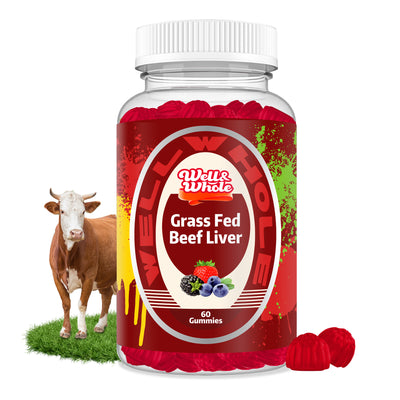
In this article, we'll examine how beef liver supports energy and blood health, the science behind its anti-anemia properties, and how well&whole's Grass Fed Beef Liver Gummies ($22.99) make this traditional superfood accessible for modern lifestyles.
Understanding Anemia: More Than Just Low Iron
Anemia is commonly equated with iron deficiency, but the picture is more nuanced. Clinically, anemia is a condition where the blood has a reduced capacity to carry oxygen. While iron deficiency is the most common cause, other nutritional deficiencies can produce similar results.
Types of Nutrition-Related Anemia
| **Type** | **Primary Deficiency** | **Key Nutrient Source** |
|----------|----------------------|------------------------|
| Iron-deficiency anemia | Iron | Beef liver (heme iron) |
| Megaloblastic anemia | Vitamin B12 | Beef liver (B12) |
| Megaloblastic anemia | Folate (B9) | Beef liver (folate) |
| Copper-responsive anemia | Copper | Beef liver (copper) |
Here's what makes beef liver remarkable: a single food provides all the key nutrients involved in the three most common types of nutritional anemia. Iron, B12, folate, and copper are all present in significant quantities—each in its most bioavailable form.
Global Significance
The World Health Organization estimates that anemia affects approximately 1.62 billion people globally—about 24.8% of the world's population (WHO, 2015). Iron deficiency is the leading cause. But a significant proportion of anemia cases involve multiple nutrient deficiencies simultaneously (Kassebaum et al., 2014, *Blood*).
This is why single-nutrient approaches (iron-only supplements) sometimes fail to fully resolve anemia. If the anemia has a copper or B12 component, iron alone won't address the root cause.
Nutrient Spotlight: Heme Iron
Iron is the mineral most associated with energy, and for good reason. It's the central atom in hemoglobin, the protein in red blood cells that binds and transports oxygen. Without adequate iron, your body cannot produce sufficient functional hemoglobin.
Heme vs Non-Heme Iron
Beef liver provides iron as heme iron—the form found in hemoglobin and myoglobin. This is fundamentally different from the non-heme iron in plants:
| **Property** | **Heme Iron (Beef Liver)** | **Non-Heme Iron (Plants)** |
|-------------|---------------------------|---------------------------|
| Absorption rate | 15-35% | 2-20% |
| Dietary inhibitors | Few (calcium can interfere) | Many (phytates, oxalates, tannins, calcium) |
| Absorption mechanism | Heme transporter (HCP1) | Divalent metal transporter (DMT1) |
| Impacted by stomach acid | No | Yes |
The higher absorption rate of heme iron means you need to consume significantly less to achieve the same effect. A 2010 review in the *American Journal of Clinical Nutrition* estimated that heme iron contributes disproportionately to total absorbed iron despite comprising only 10-15% of dietary iron intake in omnivorous diets (Hurrell & Egli, 2010).
Iron Content in Beef Liver
According to USDA FoodData Central, 100 grams of beef liver provides approximately 6.2 mg of iron. At a 25% absorption rate (typical for heme iron), this translates to approximately 1.55 mg of absorbed iron per serving—which is nutritionally meaningful given that the RDA for iron ranges from 8 mg for adult men to 18 mg for menstruating women.
Nutrient Spotlight: Vitamin B12 and Folate
Iron deficiency isn't the only cause of fatigue-inducing anemia. Megaloblastic anemia, characterized by abnormally large red blood cells, stems from B12 or folate deficiency.
B12 in Beef Liver
As discussed in our detailed B12 article, beef liver provides approximately 70.7 mcg of B12 per 100g—nearly 3,000% of the daily value. B12 is essential for the DNA synthesis necessary for normal red blood cell production in bone marrow.
When B12 is insufficient, red blood cell precursors cannot divide properly. The result is macrocytic (large) red blood cells that are fewer in number and impaired in their oxygen-carrying capacity. The clinical result is fatigue, weakness, pallor, and in severe cases, neurological symptoms.
Folate in Beef Liver
Beef liver provides approximately 290 mcg of folate per 100g (73% DV). Folate works alongside B12 in DNA synthesis, and deficiency produces a similar megaloblastic anemia picture. Beef liver provides both nutrients together in a single food source.
Nutrient Spotlight: Copper — The Overlooked Mineral
Copper deficiency is underrecognized as a contributor to anemia, but the science is clear. The copper-containing enzyme ceruloplasmin is essential for mobilizing iron from storage sites and incorporating it into hemoglobin.
The connection works like this:
- You can have adequate iron stores in ferritin (the storage protein)
- But without enough copper to produce ceruloplasmin
- The iron cannot be released from storage and incorporated into hemoglobin
- The result: functional iron deficiency despite normal iron stores
This explains why some people don't respond to iron-only supplementation—they need copper to unlock their iron stores. Beef liver provides both iron and copper (14.3 mg per 100g—1,590% of DV) in the same food.
A 2015 review in *Metallomics* described copper as "an essential cofactor for enzymes involved in iron mobilization" and noted that copper deficiency can produce anemia indistinguishable from iron deficiency (Collins et al., 2015).
Traditional Wisdom: Liver for Vitality
The use of liver for energy and vitality isn't a modern invention. This practice appears across diverse traditional cultures:
Across Cultures
- **Ancient Greece**: Physician Galen prescribed liver for eye health and vitality
- **Traditional Chinese Medicine**: Liver was considered a blood-nourishing food, especially for women
- **Native American traditions**: Buffalo liver was prized as a strength-giving food
- **European folk medicine**: Raw liver juice was used to treat fatigue conditions (the "liver extract" for pernicious anemia that won the 1934 Nobel Prize was inspired by this practice)
- **African pastoralist traditions**: Maasai warriors consumed liver ritually for strength
The Nobel Prize Connection
It's worth noting that the first effective treatment for pernicious anemia (a B12-related anemia that was previously fatal) was raw liver. In 1926, Minot and Murphy demonstrated that feeding patients large quantities of liver could reverse pernicious anemia—work that earned them the 1934 Nobel Prize in Medicine. The "anti-pernicious anemia factor" they discovered? Vitamin B12.
This Nobel-winning discovery essentially confirmed what traditional medicine had been practicing for centuries.
The Multi-Nutrient Advantage
Modern medicine tends to treat nutritional deficiencies as isolated problems requiring single-nutrient solutions. But nutritional anemias in real-world populations often involve multiple concurrent deficiencies.
Why Single-Nutrient Approaches Sometimes Fail
Consider iron supplementation alone:
- It misses B12 and folate deficiency if present
- It doesn't address copper status necessary for iron utilization
- Non-heme iron supplements cause gastrointestinal side effects that reduce compliance
- High-dose iron can interfere with zinc absorption
Beef liver provides a multi-nutrient approach: iron + B12 + folate + copper, all within the same food matrix, delivered in their most bioavailable forms. This is arguably the approach that the human body evolved to expect.
A 2018 study in *Nutrients* examining nutrient synergy noted that "co-supplementation of multiple nutrients in their natural ratios may produce superior outcomes compared to isolated supplementation" (van der Beek et al., 2018).
Clinical Evidence and Studies
Study: Liver Extract and Anemia
The classic 1926 Minot and Murphy study published in the *Journal of the American Medical Association* demonstrated that feeding patients 200-400g of liver daily produced rapid improvement in red blood cell counts in pernicious anemia patients.
Study: Heme Iron vs Iron Salts
A meta-analysis in the *European Journal of Clinical Nutrition* (2015) examined 27 studies comparing heme iron to iron salts for iron deficiency. The analysis found that heme iron was associated with fewer gastrointestinal side effects and produced comparable or superior increases in hemoglobin levels (Amiri et al., 2015).
Study: Beef Liver for Iron Status
Research published in *Nutrition Research* (2005) examining food-based approaches to improving iron status found that incorporating beef liver into the diet produced significant improvements in serum ferritin levels in women with low iron stores (Kapil et al., 2005).
Beef Liver Gummies for Modern Energy Support
The nutritional science supporting beef liver for energy is robust. But there's a practical problem: most people today—especially those already dealing with fatigue—don't want to cook and eat beef liver regularly. This is where freeze-dried beef liver supplements come in.
well&whole's Grass Fed Beef Liver Gummies ($22.99) provide:
- Grass-fed beef liver in a convenient gummy format
- Freeze-dried processing that preserves heat-sensitive nutrients
- Heme iron, B12, folate, and copper in their natural ratios
- A pleasant taste that encourages consistent daily use
- No cooking, preparation, or food waste
For individuals concerned about energy levels and iron status—including menstruating women, athletes, those recovering from illness, and anyone experiencing fatigue—beef liver gummies offer a practical solution backed by both traditional wisdom and modern nutritional science.
Who May Benefit Most
| **Population** | **Why Beef Liver May Help** |
|---------------|---------------------------|
| Menstruating women | Monthly iron losses increase requirements |
| Athletes | Increased red blood cell turnover and iron demands |
| Pregnant/postpartum women | Dramatically increased iron, folate, and B12 needs |
| Older adults | Reduced absorption of B12 and iron from food |
| Vegetarians transitioning to omnivorous diet | Rebuilding iron and B12 stores |
| Those with fatigue | Multiple nutrient deficiencies may underlie fatigue |
| Individuals with GI conditions | Reduced nutrient absorption capacity |
FAQ
Q: Can beef liver help with anemia?
A: Beef liver provides the key nutrients involved in the three most common types of nutritional anemia: heme iron, vitamin B12, folate, and copper. By providing all of these in bioavailable forms, beef liver may support healthy red blood cell production and oxygen-carrying capacity.
Q: How does beef liver support energy?
A: Beef liver supports energy through multiple mechanisms: B12 enables energy production from fats and proteins, heme iron supports oxygen transport to tissues, and the B-vitamin complex supports overall cellular metabolism. Unlike stimulants, beef liver supports foundational energy pathways.
Q: Why is heme iron better than plant iron for anemia?
A: Heme iron is absorbed at 15-35% compared to 2-20% for non-heme iron. It's also less affected by dietary inhibitors like phytates and tannins, making it a more reliable source of absorbable iron.
Q: How much beef liver should I consume for energy support?
A: Beef liver is nutrient-dense, and a small amount goes a long way. Quality supplements like well&whole Beef Liver Gummies are formulated with specific serving sizes for daily use. Consult the product label for recommended intake.
Q: Does traditional medicine support liver for anemia?
A: Yes—across ancient Greek, Chinese, European, and indigenous healing traditions, liver was prescribed for fatigue and weakness. The 1934 Nobel Prize in Medicine was awarded for demonstrating that liver could reverse pernicious anemia, confirming centuries of traditional use.
Q: Is beef liver only useful for anemia, or does it help with general fatigue too?
A: The nutrients in beef liver support fundamental energy metabolism pathways. Even without frank anemia, suboptimal iron or B12 status can contribute to fatigue. Beef liver supports these metabolic foundations.
Q: Can I combine beef liver with iron supplements?
A: If you have a diagnosed iron deficiency, follow your healthcare provider's guidance. Beef liver gummies from well&whole are formulated as dietary supplements, and combining them with high-dose therapeutic iron should be done under medical supervision.
Q: How quickly can beef liver gummies support energy levels?
A: Improvement in energy depends on the underlying cause. For B12 deficiency, improvements may be noted within weeks. For iron deficiency, rebuilding iron stores takes longer. Consistent daily use is key.
Q: Are there any side effects from eating too much liver?
A: Liver is very nutrient-dense and should be consumed in moderation. Quality supplements are formulated in appropriate serving sizes. The main concern with excessive liver consumption is vitamin A intake—follow serving size recommendations.
Conclusion
The traditional wisdom of using beef liver for energy and anemia has stood the test of time—and modern nutritional science has confirmed exactly why it works. By providing heme iron, vitamin B12, folate, and copper in their most bioavailable forms, beef liver addresses the nutritional foundations of healthy energy metabolism and red blood cell production in a way that single-nutrient supplements often cannot match.
well&whole's Grass Fed Beef Liver Gummies offer this traditional superfood in a format that fits modern life. Whether you're dealing with low energy, concerned about iron status, or simply looking for nutritional support for vitality and wellness, explore these gummies at wellwholeshop.com.
Related supplements
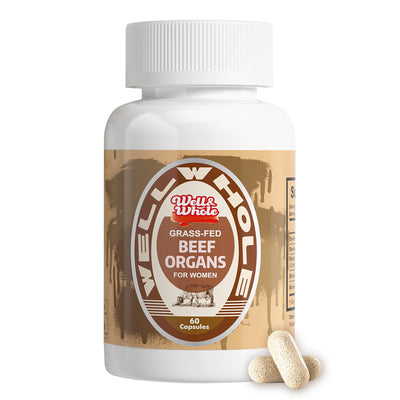
If you're ready to put this into practice, our Grass Fed Beef Liver Supplement Gummies with 60 Count for Full Wellness and Grassfed Beef Organ Supplement Capsules, Grass Fed & Pasture Raised, Total Body Wellness Support are formulated with this in mind. You can also compare the Vitamin A and Health Benefits ranges to find the format that suits you.
Looking for a complete routine? See our Iron.
These statements have not been evaluated by the Food and Drug Administration. This product is not intended to diagnose, treat, cure, or prevent any disease.