Beef Heart Supplement Benefits: CoQ10 from Nature
Beef heart is nature's richest source of CoQ10. Learn how beef heart supplements support cardiovascular health, energy production, and why food-derived CoQ10 may be superior to synthetic forms.

Coenzyme Q10 (CoQ10) is one of the most researched and widely used heart health supplements. But most CoQ10 on the market comes from synthetic production or fermentation processes—not from food. What if you could get CoQ10 from nature's own richest source?
Beef heart contains the highest natural concentration of CoQ10 of any food. This makes evolutionary sense: the heart is the body's hardest-working muscle, beating approximately 100,000 times per day without rest. It requires enormous amounts of cellular energy, and CoQ10 is essential for that energy production at the mitochondrial level.
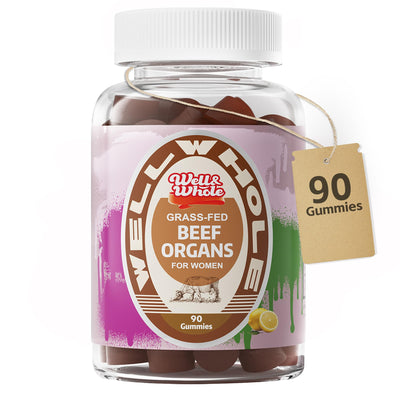
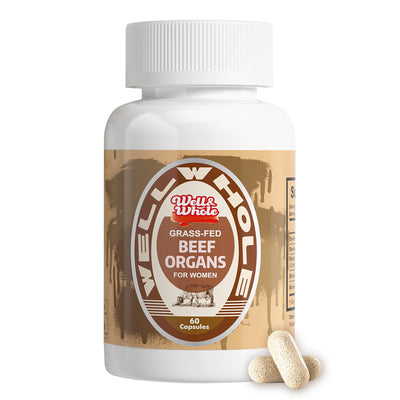
In this article, we'll explore why beef heart is the natural CoQ10 powerhouse, how beef heart supplements support cardiovascular and overall cellular health, and how well&whole's product line—including the Grass-Fed Beef Organ Gummies for Women which contains heart—offers a food-based approach to CoQ10 supplementation.

What Is CoQ10 and Why Does It Matter?
Coenzyme Q10 (ubiquinone/ubiquinol) is a fat-soluble compound present in virtually every cell in the human body. Its name comes from its ubiquity—it's everywhere—and its quinone chemical structure.
Two Critical Functions of CoQ10
**1. Mitochondrial Energy Production**: CoQ10 is an essential component of the electron transport chain in mitochondria. It shuttles electrons between Complex I/II and Complex III. Without CoQ10, this chain breaks down, and ATP (cellular energy) production grinds to a halt.
The heart, which has the highest mitochondrial density of any tissue, is especially dependent on adequate CoQ10 levels. A 2014 review in *Mitochondrion* described CoQ10 as "indispensable for mitochondrial bioenergetics" and noted that cardiac tissue is "particularly sensitive to CoQ10 deficiency" (Alcázar-Fabra et al., 2014).
**2. Antioxidant Function**: In its reduced form (ubiquinol), CoQ10 acts as a potent fat-soluble antioxidant, protecting cell membranes and lipoproteins from oxidative damage. This is particularly important in the cardiovascular system.
Natural Decline with Age
CoQ10 levels naturally decline with age. Research published in *Mechanisms of Ageing and Development* documented that CoQ10 concentrations in human tissues peak around age 20 and decline steadily thereafter, with cardiac CoQ10 dropping by approximately 50% by age 80 (Kalén et al., 1989).
Beef Heart: Nature's CoQ10 Powerhouse
Beef heart isn't just "high" in CoQ10—it's the richest known dietary source:
| **Food Source** | **CoQ10 Content (mg per 100g)** |
|----------------|--------------------------------|
| Beef Heart | 11.3 mg |
| Beef Liver | 3.9 mg |
| Beef Muscle | 3.1 mg |
| Pork Heart | 3.8 mg |
| Chicken Heart | 9.2 mg |
| Sardines | 6.4 mg |
| Broccoli | 0.9 mg |
| Spinach | 0.6 mg |
*Sources: USDA FoodData Central; Kubo et al., 2013, Journal of Agricultural and Food Chemistry*
The heart's CoQ10 content makes physiological sense. The heart is a mitochondrial furnace—it never stops contracting, and it requires continuous, uninterrupted ATP production. CoQ10 concentrations in tissue correlate directly with the tissue's energy demands, which is why the heart concentrates it more than any other tissue.
Beyond CoQ10: The Complete Nutritional Package
Beef heart provides CoQ10 in its natural context:
| **Nutrient** | **Function** |
|-------------|-------------|
| CoQ10 (11.3 mg/100g) | Mitochondrial energy, antioxidant |
| Complete Protein | All essential amino acids |
| Taurine | Cardiac function, electrolyte balance |
| Carnitine | Fatty acid transport into mitochondria |
| Vitamin B12 | Energy production, nerve function |
| Iron | Oxygen transport |
| Zinc | Immune function |
This is the key argument for food-derived CoQ10: beef heart provides CoQ10 with the amino acids, B-vitamins, and cofactors that support its utilization.
Food-Derived vs Synthetic CoQ10
**Synthetic CoQ10 (most supplements)**: Produced through chemical synthesis or yeast fermentation; typically isolated ubiquinone requiring conversion to ubiquinol in the body; no supporting nutrients or cofactors.
**Beef Heart CoQ10 (food-based)**: Present in natural ubiquinone form within the tissue matrix; accompanied by supporting nutrients (taurine, carnitine, B-vitamins); provided in the food matrix that may enhance utilization.
A 2019 study in *Nutrients* found that while specialized delivery systems (liposomal, nano-emulsified) can enhance CoQ10 absorption, food-derived CoQ10 consumed as part of organ meats demonstrated meaningful absorption comparable to standard supplement forms (López-Lluch et al., 2019).
Who May Benefit from Beef Heart Supplementation
- **Adults over 50**: Natural CoQ10 decline with age
- **Those on statin medications**: Statins can reduce natural CoQ10 synthesis
- **Active individuals**: Higher cardiac and mitochondrial demands
- **Those interested in comprehensive cardiovascular nutrition**: CoQ10 plus taurine, carnitine, B-vitamins
well&whole Products Containing Beef Heart
- **Grass-Fed Beef Organ Gummies for Women**: Liver, kidney, and heart in a gummy format
-**Grassfed Beef Organ Capsules **: Liver, kidney, and heart in traditional capsule format

FAQ
Q: Why does beef heart have so much CoQ10?
A: The heart is the body's most energy-demanding organ, beating ~100,000 times daily. CoQ10 is essential for mitochondrial ATP production, so the heart concentrates it to meet its relentless energy needs.
Q: Is beef heart CoQ10 better than synthetic CoQ10 supplements?
A: Beef heart provides CoQ10 in its natural food matrix alongside taurine, carnitine, and B-vitamins. Synthetic supplements provide isolated CoQ10. The food-based approach offers nutritional context that isolated supplements cannot replicate.
Q: How much CoQ10 is in beef heart?
A: Approximately 11.3 mg per 100g—more than any other common food, including other organ meats, fish, and vegetables.
Q: Can beef heart supplements support cardiovascular health?
A: CoQ10 is well-researched for cardiovascular support, and beef heart is nature's richest source. It also provides taurine and amino acids that support normal cardiac function.
Q: Do I need beef heart separately, or can I get it in an organ complex?
A: Beef heart is included in well&whole's multi-organ formulations (both capsules and gummies), providing CoQ10 alongside complementary nutrients from liver and kidney.
Q: Who should consider beef heart supplements?
A: Adults over 50, those on statin medications, active individuals, and anyone interested in food-based cardiovascular and energy support.
Q: Does cooking destroy CoQ10 in beef heart?
A: CoQ10 is relatively heat-stable but can degrade with prolonged high-heat cooking. Freeze-drying preserves CoQ10 content through low-temperature processing.
Q: Are beef heart supplements safe?
A: Grass-fed beef heart supplements from reputable manufacturers are safe for daily use when taken as directed. Consult your healthcare provider before starting.
Conclusion
Beef heart is nature's richest CoQ10 source—a fact rooted in the cardiac muscle's extraordinary energy demands. By providing CoQ10 in its natural food matrix alongside taurine, carnitine, and B-vitamins, beef heart offers comprehensive cardiovascular and cellular energy support.
well&whole includes beef heart in its Grass-Fed Beef Organ Gummies for Women and Grassfed Beef Organ Capsules, allowing you to access nature's CoQ10 powerhouse along with complementary nutrients from liver and kidney in a single supplement.
Explore well&whole's grass-fed organ supplements at wellwholeshop.com.
Related supplements
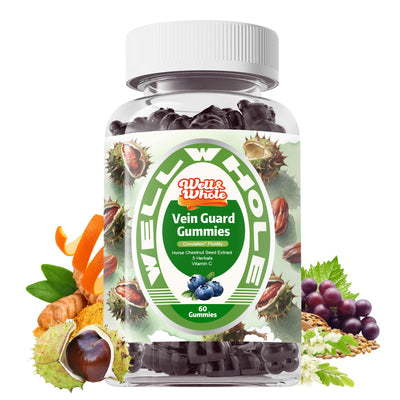
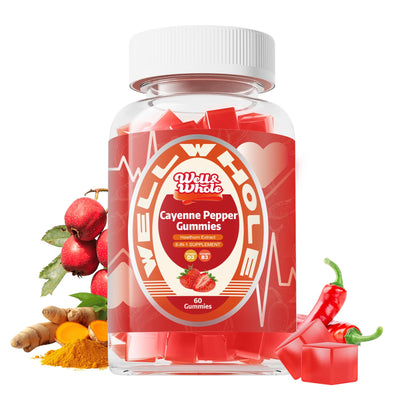
If you're ready to put this into practice, our well&whole Horse Chestnut Extract Gummies, Circulation Supplements for Legs and Cayenne Pepper Heart Health Gummies with Hawthorn & CoQ10 & Turmeric are formulated with this in mind. You can also compare the Heart Health and CoQ10 ranges to find the format that suits you.
These statements have not been evaluated by the Food and Drug Administration. This product is not intended to diagnose, treat, cure, or prevent any disease.