B12 in Beef Liver: The Energy Connection Explained
Discover why beef liver is the world's richest natural source of vitamin B12. Learn how B12 supports energy metabolism, nerve function, and why the form in beef liver is superior.

If you've ever experienced that mid-afternoon energy slump that coffee can't fix, you may be dealing with something deeper than just a busy schedule. Vitamin B12 is essential for cellular energy production—and beef liver happens to be the single richest natural dietary source of this critical nutrient on the planet.
Beef liver contains over 70 mcg of vitamin B12 per 100-gram serving—nearly 3,000% of the daily value. But what makes beef liver's B12 especially valuable isn't just the quantity; it's the quality. Beef liver provides B12 in its active coenzyme forms that your body uses directly for energy, nerve health, and DNA synthesis.
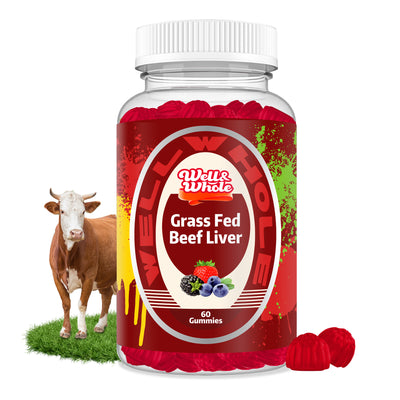
In this article, we'll explore the connection between B12 and energy, why beef liver is the gold standard B12 source, and how well&whole's Grass Fed Beef Liver Gummies deliver this nutrient in a convenient daily format.

What Is Vitamin B12 and Why Does It Matter?
Vitamin B12 (cobalamin) is a water-soluble vitamin that serves as a cofactor for two enzymes essential to human health:
1. Methionine Synthase
This enzyme converts homocysteine to methionine, a reaction critical for:
- DNA synthesis and repair
- Methylation reactions (gene regulation, detoxification)
- Neural function and myelin maintenance
2. Methylmalonyl-CoA Mutase
This enzyme converts methylmalonyl-CoA to succinyl-CoA, a step essential for:
- Energy production from fats and proteins
- Breakdown of certain amino acids and odd-chain fatty acids
Without B12, neither of these enzymes can function. The result is impaired energy metabolism, disrupted DNA synthesis (which particularly affects rapidly dividing cells like red blood cell precursors), and elevated homocysteine—a compound associated with cardiovascular and neurological concerns.
A 2017 review in *Mayo Clinic Proceedings* described B12 as "essential for hematologic and neurologic function" and noted that deficiency can manifest across multiple body systems (Langan & Goodbred, 2017).
Beef Liver: The Undisputed B12 Champion
Beef liver's B12 content isn't just high—it's in a class of its own. Here's how it compares to other B12-rich foods:
| **Food Source** | **B12 per 100g** | **% Daily Value** | **Form of B12** |
|-----------------|------------------|---------------------|-----------------|
| Beef Liver | 70.7 mcg | 2,945% | Methylcobalamin, Adenosylcobalamin |
| Clams | 98.9 mcg | 4,120% | Mixed cobalamins |
| Beef Kidney | 27.5 mcg | 1,145% | Active coenzyme forms |
| Sardines | 8.9 mcg | 370% | Mixed cobalamins |
| Beef (muscle meat) | 2.7-6.2 mcg | 110-260% | Mixed cobalamins |
| Salmon | 3.2 mcg | 135% | Mixed cobalamins |
| Eggs | 1.1 mcg | 45% | Mixed cobalamins |
| Dairy (milk) | 0.5 mcg | 20% | Mixed cobalamins |
*Sources: USDA FoodData Central, 2019; Watanabe et al., 2013, *Nutrients*
While some seafoods (like clams) contain even more B12 by weight, beef liver has a crucial advantage: it provides B12 in the active coenzyme forms—methylcobalamin and adenosylcobalamin—that your body uses directly.
Active B12 Forms in Beef Liver
This is where the science gets important. Vitamin B12 exists in several chemical forms, and they are not all equal:
Methylcobalamin
- The form your body uses for the methionine synthase enzyme
- Supports methylation, DNA synthesis, and neurological function
- Found naturally in beef liver in significant quantities
Adenosylcobalamin
- The form your body uses for the methylmalonyl-CoA mutase enzyme
- Essential for energy production from fats and proteins
- Stored primarily in the liver (which is why beef liver is rich in it)
Cyanocobalamin (Synthetic Form)
- The cheapest, most common form in supplements and fortified foods
- Contains a cyanide molecule (in non-toxic trace amounts)
- Requires conversion by your body to methylcobalamin or adenosylcobalamin
Hydroxocobalamin
- An intermediate form
- Used primarily in B12 injections
- Converts to active forms in the body
The key difference: beef liver provides the end-product forms your body uses directly. Synthetic cyanocobalamin requires multi-step enzymatic conversion that may be impaired in some individuals, particularly those with MTHFR gene variants or compromised methylation capacity.
A 2018 study in *The Journal of Nutrition* found that natural food-derived B12 forms demonstrated better tissue retention in animal models compared to synthetic cyanocobalamin (Matte et al., 2018).
The B12-Energy Connection
The relationship between B12 and energy is not a myth—but it's often misunderstood. Here's how B12 actually supports energy production:
Mitochondrial Energy Production
B12, as adenosylcobalamin, is required by the enzyme methylmalonyl-CoA mutase in the mitochondria. This enzyme processes certain fats and amino acids to produce succinyl-CoA, which enters the Krebs cycle (citric acid cycle) to generate ATP—your cells' energy currency.
Without adequate B12, this pathway is disrupted. Fats and amino acids cannot be efficiently converted to energy.
Red Blood Cell Formation
B12 is essential for DNA synthesis during red blood cell production in bone marrow. When B12 is insufficient, red blood cells may develop abnormally large (megaloblastic anemia), with impaired oxygen-carrying capacity. The result? Fatigue, weakness, and reduced exercise tolerance.
A clinical review published in *Blood* (2019) noted that megaloblastic anemia from B12 deficiency presents with fatigue, pallor, and reduced energy—symptoms that typically resolve with adequate B12 repletion (Green, 2019).
B12 Does NOT Directly Stimulate Energy
An important clarification: B12 is not a stimulant. It won't give you an immediate energy boost like caffeine. Rather, B12 supports the underlying metabolic machinery that generates energy. If you're B12-deficient, restoring adequate levels allows your body's energy production systems to function normally. If your B12 levels are already adequate, additional B12 typically won't produce a noticeable energy effect.
Who Is at Risk for B12 Deficiency?
High-Risk Groups
| **Population** | **Risk Factor** | **Why** |
|---------------|-----------------|---------|
| Vegetarians/Vegans | Dietary absence | B12 is found almost exclusively in animal products |
| Adults over 50 | Absorption impairment | Reduced stomach acid impairs B12 release from food |
| PPI/H2 blocker users | Absorption impairment | Reduced stomach acid |
| Metformin users | Absorption impairment | Drug-induced B12 malabsorption |
| GI surgery patients | Absorption impairment | Loss of intrinsic factor or absorption sites |
| Pernicious anemia patients | Autoimmune | Autoantibodies against intrinsic factor |
| Those with MTHFR variants | Conversion impairment | May not efficiently convert synthetic B12 |
Why Beef Liver Gummies May Help
For those with absorption challenges, beef liver provides B12 in forms that may be more accessible. The coenzyme forms (methylcobalamin and adenosylcobalamin) bypass the conversion steps required for synthetic cyanocobalamin. Additionally, the freeze-dried format used in quality supplements like well&whole's Grass Fed Beef Liver Gummies preserves these active forms through low-temperature processing.
FAQ
Q: How much B12 is in beef liver compared to other foods?
A: Beef liver contains approximately 70.7 mcg of B12 per 100g—about 2,945% of the daily value. While a few shellfish species contain more B12 by weight, beef liver provides it in active coenzyme forms that your body uses directly.
Q: What forms of B12 are found in beef liver?
A: Beef liver contains methylcobalamin and adenosylcobalamin—the active coenzyme forms your body uses for methylation, DNA synthesis, and energy metabolism. These are the same forms your body converts synthetic B12 into.
Q: Will beef liver give me energy?
A: Beef liver provides the B12 cofactors your body needs for normal energy metabolism. If your energy levels are low due to B12 insufficiency, restoring adequate B12 may support normal energy production. B12 is not a stimulant and won't produce a caffeine-like energy boost.
Q: Why is beef liver's B12 better than synthetic B12 supplements?
A: Synthetic B12 (cyanocobalamin) requires multi-step conversion to active forms. Beef liver provides the finished active coenzyme forms—methylcobalamin and adenosylcobalamin—that bypass this conversion requirement.
Q: Can I get enough B12 without animal products?
A: B12 is found almost exclusively in animal products. While some plant foods may contain B12 analogs, these do not function as true vitamin B12 in the human body. Vegetarians and vegans typically require B12 supplementation.
Q: How does freeze-drying affect B12 in beef liver?
A: B12 is relatively stable during freeze-drying because it's a low-temperature process that doesn't subject the nutrient to the high heat that causes degradation. Studies show good retention of B-vitamins in freeze-dried organ tissues.
Q: What are the signs of B12 deficiency?
A: Common signs include fatigue, weakness, brain fog, tingling or numbness in extremities, balance problems, mood changes, and tongue inflammation. Blood testing is the definitive way to assess B12 status.
Q: How long does it take to improve B12 levels?
A: This depends on the severity of deficiency and the form of B12 consumed. With consistent intake from bioavailable sources like beef liver, improvements in blood markers may be seen within weeks, though neurological symptoms may take longer to resolve.
Conclusion
Beef liver is arguably nature's most complete B12 source—providing this essential nutrient in staggering quantities and in the active forms your body uses directly for energy metabolism, neurological function, and DNA synthesis. For those seeking a natural, food-based B12 source without relying on synthetic supplements, beef liver is unmatched.
well&whole's Grass Fed Beef Liver Gummies deliver the B12-rich nutrition of grass-fed beef liver in a convenient, great-tasting format. If supporting your body's natural energy production and overall vitality is important to you, explore these gummies at wellwholeshop.com.
Related supplements
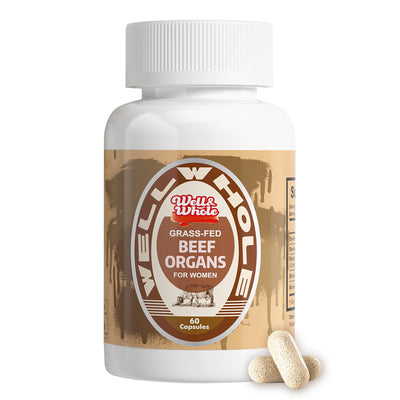
Should you decide to supplement, Grass Fed Beef Liver Supplement Gummies with 60 Count for Full Wellness and Grassfed Beef Organ Supplement Capsules, Grass Fed & Pasture Raised, Total Body Wellness Support are our formulation for this purpose. For a broader comparison, see the Vitamin A and Health Benefits collections.
These statements have not been evaluated by the Food and Drug Administration. This product is not intended to diagnose, treat, cure, or prevent any disease.