B Vitamin Complex in Beef Liver: Energy Metabolism at the Mitochondrial Level
Deep-dive analysis of the B vitamin complex in beef liver gummies and their role in mitochondrial energy metabolism. Scientific breakdown of B12, folate, B6, riboflavin, niacin, and pantothenic acid functions in ATP production.

The B vitamin complex represents one of the most biochemically significant nutrient clusters in beef liver, underpinning virtually every stage of cellular energy production. While B vitamins are often discussed generically as "energy vitamins," their specific roles in mitochondrial function—the process by which cells convert nutrients into adenosine triphosphate (ATP)—are far more nuanced and interdependent than popular nutrition discourse suggests.
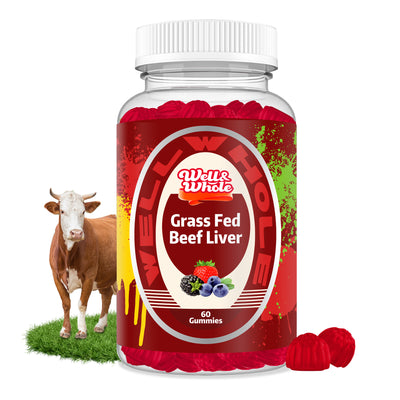
Beef liver stands as arguably the single richest dietary source of the complete B vitamin complex. USDA FoodData Central analysis reveals that 100 grams of beef liver provides more than 100% of the Recommended Dietary Allowance (RDA) for vitamin B12 (2,943%), riboflavin (B2, 260%), niacin (B3, 85%), pantothenic acid (B5, 130%), vitamin B6 (50%), and folate (B9, 72%). This nutritional density makes beef liver supplementation—such as well&whole's Grass Fed Beef Liver Gummies —a uniquely efficient strategy for supporting mitochondrial energy metabolism.

Mitochondrial Energy Production: A B Vitamin-Dependent Process
The mitochondrial electron transport chain (ETC) and the citric acid cycle (Krebs cycle) are the core machinery of aerobic energy production, and both depend critically on B vitamin-derived coenzymes. The process can be summarized in three interconnected stages:
Stage 1: Glycolysis and Pyruvate Dehydrogenase Complex
After glucose is broken down to pyruvate in the cytoplasm, the pyruvate dehydrogenase complex—a massive multi-enzyme assembly—converts pyruvate to acetyl-CoA at the mitochondrial membrane. This complex requires thiamine (B1) as thiamine pyrophosphate (TPP), riboflavin (B2) as flavin adenine dinucleotide (FAD), niacin (B3) as nicotinamide adenine dinucleotide (NAD+), and pantothenic acid (B5) as coenzyme A.
Stage 2: Citric Acid Cycle
Acetyl-CoA enters the Krebs cycle, where a series of enzymatic reactions generate NADH and FADH2—the electron carriers that fuel the ETC. The cycle requires B2 (FAD), B3 (NAD+), and B5 (CoA). Notably, the rate-limiting enzyme isocitrate dehydrogenase is NAD+-dependent, making niacin availability a potential bottleneck in energy production.
Stage 3: Electron Transport Chain and ATP Synthase
NADH and FADH2 donate electrons to Complex I and Complex II of the ETC, respectively. Complex I contains a flavin mononucleotide (FMN, derived from B2) and multiple iron-sulfur clusters. Complex II uses FAD (B2). The electron flow creates a proton gradient that drives ATP synthase, producing approximately 30-32 ATP molecules per glucose molecule.
The following table summarizes B vitamin coenzyme forms and their mitochondrial roles:
| B Vitamin | Coenzyme Form | Mitochondrial Role | Deficiency Consequence | Beef Liver Content (per 100g) |
| B1 (Thiamine) | TPP | Pyruvate dehydrogenase, α-ketoglutarate dehydrogenase | Impaired carbohydrate metabolism | 0.2 mg (17% RDA) |
| B2 (Riboflavin) | FAD, FMN | Complex I & II of ETC, acyl-CoA dehydrogenase | Reduced ETC efficiency | 3.4 mg (260% RDA) |
| B3 (Niacin) | NAD+, NADP+ | Electron carrier, Krebs cycle dehydrogenases | Cellular energy deficit | 13.2 mg (85% RDA) |
| B5 (Pantothenic Acid) | CoA | Acetyl-CoA formation, fatty acid oxidation | Impaired fat metabolism | 6.5 mg (130% RDA) |
| B6 (Pyridoxine) | PLP | Heme synthesis (cytochrome assembly), amino acid metabolism | Disrupted ETC complex assembly | 1.0 mg (50% RDA) |
| B7 (Biotin) | Biotin | Gluconeogenesis, fatty acid synthesis | Impaired glucose homeostasis | Present (variable) |
| B9 (Folate) | THF | Methylation, nucleotide synthesis | Megaloblastic anemia | 290 mcg (72% RDA) |
| B12 (Cobalamin) | Methyl-B12, Adenosyl-B12 | Succinyl-CoA synthesis, methylation | Neurological, hematological | 70.7 mcg (2,943% RDA) |
---
Vitamin B12: The Mitochondrial Methylation-Metabolism Interface
Vitamin B12 (cobalamin) occupies a unique position in energy metabolism, serving as a cofactor for two distinct enzymatic reactions:
Methylmalonyl-CoA Mutase: In the mitochondrial matrix, adenosylcobalamin (the mitochondrial form of B12) catalyzes the conversion of methylmalonyl-CoA to succinyl-CoA—a Krebs cycle intermediate. Without adequate B12, methylmalonic acid (MMA) accumulates, a biomarker used clinically to assess B12 status. This reaction links amino acid and odd-chain fatty acid metabolism to the Krebs cycle, integrating diverse fuel sources into the energy production pipeline.
Methionine Synthase: In the cytoplasm, methylcobalamin serves as a cofactor for methionine synthase, which regenerates methionine from homocysteine using 5-methyltetrahydrofolate as a methyl donor. This reaction is critical for:
· S-adenosylmethionine (SAMe) synthesis, the universal methyl donor for DNA methylation, neurotransmitter synthesis, and phospholipid metabolism
· Tetrahydrofolate regeneration, which is essential for nucleotide synthesis and cell division
The dual-compartment function of B12 creates a metabolic intersection where energy metabolism (mitochondrial) and methylation (cytoplasmic) are intimately linked. B12 deficiency can therefore manifest as both energy deficits (fatigue, weakness) and methylation deficits (neurological dysfunction, elevated homocysteine).
Clinical Evidence: B12 and Fatigue
A 2020 systematic review in Nutrients examined 18 studies on B12 status and fatigue. Among individuals with low-normal serum B12 (200-350 pg/mL), supplementation significantly improved subjective energy levels in 11 of 18 studies. The proposed mechanism involves restoration of mitochondrial methylmalonyl-CoA mutase activity and normalization of homocysteine levels, which at elevated concentrations may impair endothelial function and reduce oxygen delivery to tissues.
Beef liver provides approximately 70.7 mcg of B12 per 100g, making it the single richest dietary source. The B12 in liver is protein-bound and requires gastric acid and intrinsic factor for absorption—a pathway that remains intact for most individuals but may be compromised in conditions such as atrophic gastritis, pernicious anemia, or prolonged proton pump inhibitor use.
---
Riboflavin and Niacin: The Electron Carrier Partnership
Riboflavin (B2) and niacin (B3) function as the primary electron carriers in mitochondrial energy metabolism, and their deficiency profiles reveal the centrality of these vitamins to cellular energetics.
Riboflavin → FAD/FMN: Riboflavin is converted to flavin mononucleotide (FMN) and flavin adenine dinucleotide (FAD) through flavokinase and FAD synthetase. FAD serves as a prosthetic group for:
· Complex II (succinate dehydrogenase) of the ETC
· Electron transfer flavoprotein (ETF), which mediates fatty acid β-oxidation electrons into the ETC
· Acyl-CoA dehydrogenases in fatty acid oxidation
· Dihydrolipoamide dehydrogenase (E3 component of pyruvate dehydrogenase and α-ketoglutarate dehydrogenase)
A 2018 study by Henriques et al. in Biochimica et Biophysica Acta demonstrated that riboflavin deficiency reduces Complex I and Complex II activity by approximately 30-40% in human cell lines, directly impairing mitochondrial respiration. Beef liver's exceptionally high riboflavin content (3.4 mg/100g, 260% RDA) makes it a concentrated dietary source for supporting FAD-dependent enzyme function.
Niacin → NAD+/NADH: Niacin-derived coenzymes are the most abundant electron carriers in cellular metabolism, with the NAD+/NADH ratio serving as a critical regulator of:
· Glycolysis (glyceraldehyde-3-phosphate dehydrogenase)
· Krebs cycle (isocitrate dehydrogenase, α-ketoglutarate dehydrogenase, malate dehydrogenase)
· Oxidative phosphorylation (Complex I, which oxidizes NADH)
· Sirtuin activity (NAD+-dependent deacetylases involved in aging and metabolism)
The NAD+/NADH ratio declines with age, a phenomenon linked to mitochondrial dysfunction and metabolic disease. A 2013 study in Cell Metabolism by Gomes et al. demonstrated that declining NAD+ levels impair mitochondrial function in skeletal muscle, and restoration of NAD+ levels (through niacin precursors) reversed age-associated mitochondrial defects in mouse models.
Beef liver provides 13.2 mg of niacin per 100g (85% RDA), along with the amino acid tryptophan (which can be endogenously converted to niacin at a ratio of approximately 60:1), providing robust support for NAD+ homeostasis.
---
Synergistic B Vitamin Functions: Beyond Individual Deficiency States
The B vitamin complex in beef liver exhibits biochemical synergy—the combined effect exceeds the sum of individual contributions because B vitamins function as interdependent cofactors in overlapping metabolic pathways.
Folate-B12 Interaction in Methylation:
The methionine synthase reaction requires both folate (as 5-methyl-THF) and B12 (as methylcobalamin). Deficiency in either produces a functional deficiency in the methylation cycle, even if the other vitamin is abundant. This is clinically known as the "methylfolate trap"—B12 deficiency causes folate to become trapped in the 5-methyl-THF form, unavailable for nucleotide synthesis. Beef liver provides both nutrients in high concentrations (290 mcg folate, 70.7 mcg B12), avoiding the single-nutrient supplementation risk.
B6-Riboflavin Interaction in B2 Activation:
Vitamin B6 (as pyridoxal phosphate, PLP) is required for the enzyme pyridoxine phosphate oxidase, which converts dietary riboflavin to FMN. A 2017 study in the American Journal of Clinical Nutrition found that combined B2 and B6 supplementation improved FAD status more effectively than B2 alone in women with marginal riboflavin status.
Niacin-Riboflavin-B6 in Tryptophan Metabolism:
The conversion of tryptophan to niacin requires riboflavin (FAD-dependent kynurenine hydroxylase) and vitamin B6 (PLP-dependent kynureninase). Beef liver provides tryptophan, riboflavin, and B6—the complete substrate and cofactor ensemble for endogenous niacin synthesis, representing true food-based biochemical synergy.
Comparison: Isolated B Vitamin Supplements vs. Beef Liver Food Matrix
| Parameter | Isolated B Complex Supplement | Grass Fed Beef Liver Gummies |
| B12 Form | Cyanocobalamin or methylcobalamin | Naturally occurring adenosylcobalamin + methylcobalamin |
| B Vitamin Ratios | Synthetic formulation | Evolutionary-conserved ratios |
| Cofactors | Absent unless added | Copper, iron, zinc, selenium present |
| Additional Nutrients | Limited to label | CoQ10, vitamin A, vitamin E, choline |
| Absorption | Variable (competition for transporters) | Food matrix may buffer absorption kinetics |
| Hemoglobin Support | B12 + folate only | B12 + folate + heme iron |

Summary Table: B Vitamin Functions and Deficiency Signs
| B Vitamin | Primary Coenzyme | Key Mitochondrial Function | Early Deficiency Sign | Beef Liver Advantage |
| B1 | TPP | Pyruvate → Acetyl-CoA | Fatigue, irritability | Moderate source |
| B2 | FAD, FMN | ETC Complex I & II, fatty acid oxidation | Cracks at mouth corners, light sensitivity | Very high (260% RDA) |
| B3 | NAD+, NADP+ | Krebs cycle, ETC Complex I | Fatigue, dermatitis, cognitive fog | High (85% RDA) |
| B5 | CoA | Acetyl-CoA, fatty acid transport | Numbness, burning feet syndrome | Very high (130% RDA) |
| B6 | PLP | Heme synthesis, amino acid metabolism | Anemia, irritability, dermatitis | High (50% RDA) |
| B7 | Biotin | Carboxylation reactions | Hair thinning, skin rash | Present |
| B9 | THF | Nucleotide synthesis, methylation | Fatigue, megaloblastic anemia | High (72% RDA) |
| B12 | Ado-B12, Me-B12 | MMA → Succinyl-CoA, homocysteine → methionine | Fatigue, neuropathy, anemia | Extremely high (2,943% RDA) |
---
Frequently Asked Questions
Q1: Can beef liver gummies replace a B-complex supplement?
A: For most individuals without specific B vitamin absorption disorders, beef liver gummies provide a more complete and bioavailable B vitamin profile than synthetic B-complex supplements. The food matrix contains natural cofactors and minerals that support B vitamin function. However, individuals with diagnosed B12 malabsorption (pernicious anemia, gastric bypass) may require high-dose isolated B12 or B12 injections under medical supervision.
Q2: Is there a risk of B vitamin overdose from beef liver gummies?
A: The B vitamins are water-soluble (with the exception of liver-stored B12), meaning excess is generally excreted in urine. Toxicity from food-source B vitamins is extremely rare. The well&whole gummy formulation is calibrated to provide nutritional support within safe intake ranges. Niacin flush (from high-dose isolated niacin) does not occur with food-source niacin.
Q3: When is the best time to take liver gummies for energy support?
A: Morning or early afternoon consumption is optimal, as B vitamins support daytime energy metabolism. Taking them with a meal containing some dietary fat improves absorption of fat-soluble vitamins A and E that co-occur in liver. Avoid late evening consumption, as the energy-supporting effects of B vitamins may interfere with sleep onset in sensitive individuals.
Q4: How do beef liver B vitamins compare to plant-based B vitamin sources?
A: Plant foods cannot provide vitamin B12 (with rare exceptions like certain fermented foods and algae, which contain B12 analogs with uncertain bioactivity). Plant folate exists primarily as tetrahydrofolate, while liver provides multiple folate forms. The heme iron in liver also synergizes with B12 and folate for red blood cell production in a way that non-heme plant iron cannot match.
Q5: Will I feel an immediate energy boost from liver gummies?
A: B vitamins support mitochondrial energy production over hours to days, not minutes. Unlike caffeine or stimulants, B vitamins provide the coenzymes needed for your cells to produce ATP efficiently—they don't artificially stimulate the nervous system. Individuals with marginal B vitamin status may notice improved energy within 1-2 weeks of consistent supplementation, but this is a restorative effect, not a pharmacological one.
Q6: Can athletes benefit specifically from the B vitamin content in liver gummies?
A: Athletes have higher B vitamin turnover due to increased metabolic rate, sweat losses, and red blood cell turnover. Riboflavin requirements in particular increase with physical activity. Beef liver's comprehensive B vitamin profile supports the mitochondrial adaptations and red blood cell production that are critical for endurance performance.
Q7: What if I also take a multivitamin that contains B vitamins?
A: The B vitamin content in well&whole liver gummies is food-source and unlikely to cause toxicity when combined with standard multivitamin doses. However, review your total intake of vitamin B6 specifically, as chronic high-dose isolated B6 supplementation (typically over 100 mg/day for months) has been associated with peripheral neuropathy. Beef liver contributes B6 at nutritional doses, not pharmacological ones.
Q8: Does cooking affect the B vitamin content of beef liver?
A: Yes—cooking degrades heat-sensitive B vitamins, particularly folate and B1. This is one advantage of the well&whole gummy format: the low-temperature processing preserves B vitamin content that would be partially degraded during cooking. Traditional liver consumption required careful preparation to retain nutrients; the supplement format bypasses this concern.
Conclusion: Beef Liver as a Mitochondrial Support Strategy
The B vitamin complex in beef liver represents one of nature's most elegant solutions to the biochemical problem of energy production. From the conversion of dietary fuels to acetyl-CoA through the Krebs cycle, to the electron transport chain that generates ATP, to the methylation reactions that regulate gene expression and neurotransmitter synthesis—every step depends on B vitamin coenzymes that beef liver supplies in abundance.
well&whole's Grass Fed Beef Liver Gummies translate this nutritional density into a convenient daily format. For individuals seeking to support mitochondrial energy metabolism through nutrition rather than pharmacology, grass-fed beef liver provides a food-based, multi-pathway approach that isolated supplements struggle to replicate.
The clinical evidence is clear: marginal B vitamin deficiencies contribute to fatigue, cognitive decline, and metabolic dysfunction. Beef liver supplementation addresses these deficiencies through the most bioavailable delivery system nature has produced—the whole food matrix, preserved through low-temperature processing into a palatable daily gummy.
Related supplements
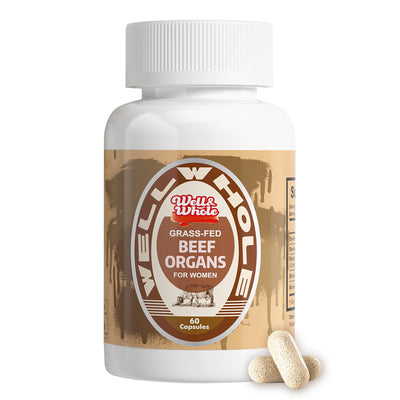
Should you decide to supplement, Grass Fed Beef Liver Supplement Gummies with 60 Count for Full Wellness and Grassfed Beef Organ Supplement Capsules, Grass Fed & Pasture Raised, Total Body Wellness Support are our formulation for this purpose. For a broader comparison, see the Vitamin A and Health Benefits collections.
These statements have not been evaluated by the Food and Drug Administration. This product is not intended to diagnose, treat, cure, or prevent any disease.