Artichoke Extract and Liver Health: The Mediterranean Secret
Discover how artichoke extract (cynarin) supports liver bile production, cholesterol metabolism, and hepatoprotection—backed by Mediterranean science.

Artichokes have been a Mediterranean dietary staple for centuries—valued not just as food but as medicine. In ancient Greece and Rome, artichoke leaves were prescribed for digestive and liver complaints. Modern science has identified the compound behind these traditional uses: **cynarin**, a polyphenol concentrated in artichoke leaves and roots that stimulates bile production and supports liver function.
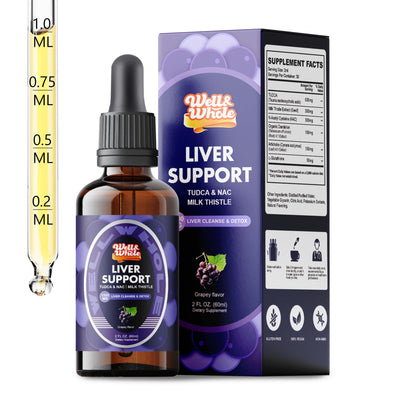
This article examines the science behind artichoke extract for liver health, focusing on cynarin's mechanisms, clinical evidence, and role in well&whole's Liver Support Liquid Drops.
What Is Cynarin?
Cynarin is a caffeoylquinic acid—a type of polyphenol found primarily in artichoke leaves (Cynara scolymus). It's named after the plant itself (Cynara) and is the compound most responsible for artichoke's liver-supporting properties.
Beyond cynarin, artichoke extract contains several complementary compounds:
| **Compound** | **Type** | **Primary Action** |
|---|---|---|
| Cynarin | Caffeoylquinic acid | Bile stimulation, cholesterol regulation |
| Luteolin | Flavone | Antioxidant, anti-inflammatory |
| Apigenin | Flavone | Anti-inflammatory, cellular protection |
| Chlorogenic acid | Phenolic acid | Antioxidant, glucose metabolism |
| Sesquiterpene lactones | Terpenoid | Anti-inflammatory |
The combination of cynarin with these flavonoids and phenolic acids creates multi-pathway liver support from a single botanical source.
How Artichoke Extract Supports the Liver
1. Stimulating Bile Production and Secretion
Cynarin's most well-documented liver action is choleretic—it increases bile production. Artichoke extract also acts as a cholagogue, promoting bile release from the gallbladder.
Enhanced bile flow is critical for liver health because:
- **Toxin elimination**: The liver processes toxins and excretes many through bile into the digestive tract
- **Fat digestion**: Bile emulsifies dietary fats, enabling absorption of fat-soluble vitamins (A, D, E, K)
- **Cholesterol disposal**: Excess cholesterol is eliminated through bile—more bile flow means more cholesterol removal
- **Digestive comfort**: Adequate bile prevents the bloating and discomfort associated with sluggish digestion
A 2018 study in *Phytotherapy Research* confirmed artichoke leaf extract's choleretic activity, documenting increased bile volume and flow in clinical observations.
2. Cholesterol Metabolism Support
Cynarin influences cholesterol through two mechanisms:
- **Enhanced bile-mediated excretion**: More bile production means more cholesterol is converted to bile acids and eliminated
- **HMG-CoA reductase modulation**: Research suggests cynarin may modestly influence the enzyme responsible for cholesterol synthesis in the liver (Speroni et al., 2003, *Journal of Ethnopharmacology*)
This dual approach—increasing elimination and potentially reducing synthesis—makes artichoke extract uniquely positioned for liver-cholesterol synergy.
3. Antioxidant and Hepatoprotective Effects
Artichoke extract's flavonoids (luteolin, apigenin) and phenolic acids provide direct antioxidant protection for liver cells:
- **Free radical scavenging**: Luteolin and apigenin neutralize reactive oxygen species before they damage hepatocyte membranes
- **Glutathione sparing**: Direct antioxidant activity reduces demand on glutathione reserves
- **Anti-inflammatory modulation**: Flavonoids suppress inflammatory signaling pathways including NF-κB
A study by Mehmetcik et al. (2008) in *Food and Chemical Toxicology* demonstrated that artichoke leaf extract significantly reduced oxidative liver damage in experimental models, attributing the effect to its flavonoid content.
4. Support for Liver Cell Regeneration
Some research suggests artichoke extract may support hepatocyte (liver cell) regeneration. The mechanism involves cynarin's ability to enhance protein synthesis in liver cells, potentially aiding the organ's natural repair processes. While this area needs more research, it aligns with artichoke's traditional reputation as a liver-restorative botanical.
Clinical Evidence for Liver Conditions
NAFLD (Fatty Liver)
The most relevant clinical application for artichoke extract is NAFLD support. A 2018 study in *Phytotherapy Research* by Rondanelli et al. found that artichoke leaf extract supplementation was associated with:
- Significant improvement in liver enzyme levels (ALT, AST)
- Improved lipid profiles (total cholesterol, triglycerides)
- Reduced inflammatory markers
These findings are particularly relevant given NAFLD's prevalence—approximately 25% of Americans have some degree of fatty liver.
Dyspepsia and Digestive Comfort
Multiple studies have confirmed artichoke extract's benefits for digestive comfort, which is intimately connected to liver-gallbladder function:
- A 2003 study in *Alternative Medicine Review* reported that artichoke extract significantly improved dyspeptic symptoms (bloating, nausea, abdominal pain) in clinical trials
- The mechanism: enhanced bile flow improves fat digestion, reducing the digestive discomfort associated with sluggish gallbladder function
Artichoke in well&whole's Liver Support Liquid Drops
Artichoke extract is one of six ingredients in well&whole's Liver Support Liquid Drops . Its role complements the other five compounds:

| **Ingredient** | **Primary Role** | **Artichoke's Synergy** |
|---|---|---|
| TUDCA | Bile flow maintenance | Artichoke stimulates bile *production*; TUDCA maintains its *flow* |
| NAC | Glutathione production | Artichoke's antioxidants *spare* glutathione, reducing demand |
| Milk thistle | Antioxidant, membrane protection | Artichoke adds *cholesterol/bile metabolism* that milk thistle doesn't address |
| Dandelion | Bile stimulation, diuretic | Both stimulate bile—but via different compounds (cynarin vs. taraxasterol), creating redundant coverage |
| Glutathione | Direct antioxidant | Artichoke's flavonoids provide *additional* antioxidant layers |
Artichoke fills a unique niche: **bile production + cholesterol metabolism**—functions that complement but don't duplicate other formula ingredients.
FAQ
Q1: What part of the artichoke is used for liver support?
The leaves—not the edible heart that you eat as food. Artichoke leaf extract contains the highest concentration of cynarin and other liver-supporting polyphenols. The globe artichoke consumed as food contains some beneficial compounds but at lower concentrations.
Q2: Does eating artichokes provide the same benefits as the supplement?
Eating artichokes provides some cynarin and antioxidants, but at much lower concentrations than a standardized extract. Supplemental artichoke leaf extract delivers concentrated, consistent dosing.
Q3: What is cynarin's main liver benefit?
Cynarin's primary action is stimulating bile production (choleretic effect). More bile means better toxin elimination, improved fat digestion, and enhanced cholesterol excretion.
Q4: Can artichoke extract help with high cholesterol?
Research suggests cynarin supports cholesterol metabolism through enhanced bile-mediated elimination and potential modulation of cholesterol synthesis enzymes. A 2003 study in *Journal of Ethnopharmacology* documented these effects.
Q5: Is artichoke extract safe?
Artichoke extract has a strong safety profile. Rare side effects include mild gastrointestinal discomfort. People allergic to Asteraceae family plants (dandelion, chamomile, marigolds) should exercise caution.
Q6: How does artichoke compare to milk thistle for liver support?
They serve different functions. Milk thistle provides direct antioxidant defense (silymarin) and cell membrane stabilization. Artichoke provides bile stimulation and cholesterol metabolism support. Both work best in combination.
Q7: Can artichoke extract help with fatty liver?
A 2018 study in *Phytotherapy Research* found that artichoke leaf extract was associated with improved liver enzymes and lipid profiles in NAFLD subjects. This supports its inclusion in comprehensive liver support formulas.
Q8: Why is artichoke extract in liquid drops rather than capsules?
Liquid delivery may support better dissolution of artichoke's polyphenols and faster absorption. It also allows flexible dosing and enables combining multiple ingredients in a single product.
Q9: Does artichoke extract interact with medications?
Artichoke may interact with cholesterol-lowering medications (statins) and anticholinergic drugs due to its choleretic activity. Consult your healthcare provider if you take these medications.
Q10: What's the Mediterranean connection?
Artichokes have been a Mediterranean dietary and medicinal staple for centuries. The traditional use for liver and digestive complaints—now validated by modern cynarin research—explains why Mediterranean populations historically had lower rates of certain liver and digestive conditions.
Conclusion
Artichoke extract and its star compound cynarin bring a distinct contribution to liver support: bile stimulation, cholesterol metabolism, and antioxidant protection grounded in Mediterranean tradition and modern research. In well&whole's Liver Support Liquid Drops, artichoke works alongside TUDCA, NAC, milk thistle, dandelion, and glutathione—filling the bile-cholesterol niche that makes this six-ingredient formula truly comprehensive.
The Mediterranean secret isn't just tradition—it's science. And in combination with five other synergistic ingredients, artichoke extract delivers more than it ever could alone.
Related supplements
Should you decide to supplement, Liver Support Liquid Drops Supplement | TUDCA Drops Liver Cleanse & Detox with Milk Thistle, NAC, Dandelion, Artichoke & Glutathione for Detox and TUDCA 1000mg Gummies with Milk Thistle 500mg for Adults are our formulation for this purpose. For a broader comparison, see the Liver Support and Milk Thistle collections.
These statements have not been evaluated by the Food and Drug Administration. This product is not intended to diagnose, treat, cure, or prevent any disease.