Antioxidant Supplements That Actually Work: Evidence-Based Picks
Not all antioxidant supplements are created equal. Discover which antioxidant supplements have real clinical evidence behind them and which ones you should skip.

Walk down any supplement aisle and you will encounter dozens of products claiming to be "powerful antioxidants." It is one of the most overused terms in the supplement industry — and one of the most misunderstood. The popular conception of antioxidants as "molecules that fight free radicals" is not wrong, but it misses the critical distinction between antioxidants you eat and antioxidants your body actually uses.
Your body's antioxidant defense system is not a passive sponge that soaks up free radicals. It is a highly regulated, enzyme-driven network centered around endogenous antioxidants — molecules your body produces internally — supplemented by dietary and supplemental sources. The question is not "does this supplement have antioxidant activity in a test tube?" but "does this supplement meaningfully impact antioxidant status in the human body?"
This list separates the evidence-backed antioxidant supplements from the marketing noise, so you can focus your supplement budget on what actually works.
How to Evaluate Antioxidant Supplements
Before reviewing individual supplements, three principles for evaluating antioxidant claims:
1. **Bioavailability matters**: An antioxidant that never reaches target tissues has no physiological effect, regardless of test-tube potency.
2. **Endogenous vs. exogenous**: The most powerful antioxidants in your body are the ones you produce — glutathione, superoxide dismutase, catalase. Supporting endogenous antioxidant production is often more impactful than consuming external antioxidants.
3. **Network effects**: Antioxidants work as a system, not in isolation. Glutathione regenerates vitamin C, which regenerates vitamin E. An effective strategy supports the network, not just one molecule.
The Evidence-Based Winners
1. Glutathione (Liposomal)
Why It Won: Glutathione is not just an antioxidant — it is the central hub of your body's entire antioxidant network.
The Evidence:
· Every cell produces glutathione for self-defense against oxidative stress
· The GSH:GSSG (reduced:oxidized) ratio is a clinical biomarker of oxidative stress
· Glutathione directly recycles vitamins C and E back to their active forms
Supplementation Reality:
Traditional oral glutathione is poorly absorbed. Liposomal glutathione addresses this — a 2014 study in the *European Journal of Clinical Nutrition* found liposomal glutathione raised whole blood levels by 30–35% over 4 weeks, whereas standard glutathione showed negligible impact.
Who Benefits Most:
· Adults over 50 (glutathione production declines ~1% per year after age 30)
· Those with chronic illness or inflammation
· Individuals with toxin or medication exposure
Verdict: Effective when delivered through the right format (liposomal). Traditional oral glutathione is a waste of money.
2. N-Acetyl Cysteine (NAC)
Why It Won: NAC is not an antioxidant itself — it is even more valuable. It provides the rate-limiting building block (cysteine) that allows your body to produce its own glutathione.
The Evidence:
· NAC repletes glutathione in every tissue studied — liver, lungs, brain, immune cells
· It is so effective that it is the FDA-approved hospital treatment for acetaminophen overdose
· Multiple clinical trials demonstrate NAC's efficacy for respiratory conditions, liver protection, and psychiatric applications
Supplementation Reality:
Excellent oral bioavailability at standard doses (600–1,200 mg/day). NAC is stable, well-absorbed, and consistently delivers its intended effect: raising glutathione.
Who Benefits Most:
· Respiratory conditions (COPD, chronic bronchitis)
· Regular alcohol consumers
· Those on multiple medications
· Individuals with mental health concerns (under professional guidance at higher doses)
Verdict: NAC is arguably the single most valuable antioxidant supplement strategy because it addresses the root issue — supporting the body's production capacity rather than just delivering pre-formed antioxidants.
3. Coenzyme Q10 (Ubiquinol)
Why It Won: CoQ10 is not just an antioxidant — it is essential for mitochondrial energy production. This dual role makes it uniquely valuable.
The Evidence:
· CoQ10 is the primary lipid-soluble antioxidant in cellular and mitochondrial membranes
· The landmark Q-SYMBIO study demonstrated a 43% reduction in cardiovascular mortality with CoQ10 supplementation in heart failure patients
· Multiple RCTs support CoQ10 for statin-induced depletion, migraine prevention, and blood pressure support
Supplementation Reality:
The ubiquinol form offers superior absorption compared to ubiquinone, particularly in older adults. Take with a fat-containing meal for optimal absorption.
Who Benefits Most:
· Statin users (medication-induced depletion)
· Adults over 40 (declining endogenous production)
· Those with heart concerns
· Chronic migraine sufferers
Verdict: Strong evidence for specific clinical applications. Less compelling as a general "antioxidant supplement" — target use to well-documented indications.
4. Alpha-Lipoic Acid (ALA)
Why It Won: ALA is unique among antioxidants — it is both water- and fat-soluble, enabling it to protect all cellular compartments. It also enhances glutathione synthesis.
The Evidence:
· Effective for supporting nerve health in diabetic neuropathy
· Enhances insulin sensitivity
· Recycles other antioxidants including glutathione, vitamin C, and vitamin E
Supplementation Reality:
ALA is well-absorbed at standard doses (300–600 mg). R-ALA is the natural, more bioactive isomer; racemic ALA (R/S mixture) is more common and less expensive.
Who Benefits Most:
· Individuals with metabolic concerns (blood sugar, insulin resistance)
· Those seeking complementary glutathione support
· Nerve health concerns
Verdict: Modest evidence for general antioxidant use, stronger evidence for specific metabolic and neurological applications.
5. Vitamin C
Why It Won: It is the classic antioxidant for a reason. Vitamin C is water-soluble, reaches virtually all body tissues, and is essential for collagen synthesis, immune function, and neurotransmitter production.
The Evidence:
· Vitamin C is the primary water-soluble antioxidant in human blood plasma
· It directly donates electrons to neutralize free radicals
· It regenerates vitamin E (tocopherol) from its oxidized form
Supplementation Reality:
Vitamin C is well-absorbed up to about 200 mg per single dose — beyond that, absorption drops and excess is excreted. For sustained blood levels, moderate, divided dosing is superior to megadosing. Liposomal vitamin C offers enhanced bioavailability for those needing higher intracellular levels.
Who Benefits Most:
· Virtually everyone — it is a fundamental nutrient
· Smokers (have lower vitamin C levels)
· Those with limited fruit and vegetable intake
· Periods of increased physical or immune stress
Verdict: Effective and well-supported by evidence when dosing is appropriate (200–500 mg, 2–3 times daily). Megadosing is wasteful.
6. Curcumin (Turmeric Extract)
Why It Won: Curcumin is one of the most researched natural compounds, with documented effects on inflammation and oxidative stress through NF-κB inhibition and direct radical scavenging.
The Evidence:
· Extensive preclinical and clinical evidence for anti-inflammatory activity
· Supports antioxidant enzyme expression through Nrf2 pathway activation
· Clinical benefits demonstrated for joint health, metabolic health, and cognitive function
Supplementation Reality:
Standard curcumin has poor bioavailability. Enhanced formulations — especially those containing piperine (Bioperine), liposomal curcumin, or phospholipid complexes (Meriva) — are essential for achieving therapeutic blood levels.
Who Benefits Most:
· Joint and inflammatory concerns
· Metabolic health support
· Cognitive function support
Verdict: Worthwhile but only when using enhanced-bioavailability formulations. Standard curcumin powder is poorly absorbed and unlikely to deliver benefits.
Honorable Mentions
Resveratrol
Laboratory research on resveratrol is compelling — it is one of the most studied natural compounds in academic research. However, translation to human benefit has been less consistent. Poor bioavailability and relatively short studies limit conclusions. Trans-resveratrol formulations with absorption enhancers show more promise than standard grape-skin extracts.
Vitamin E (as Mixed Tocopherols)
The evidence for vitamin E has evolved. Alpha-tocopherol alone (the most common supplement form) showed disappointing results in large prevention trials. Mixed tocopherols (alpha, beta, gamma, delta) and tocotrienols more closely reflect food-based vitamin E and may offer broader antioxidant protection, though human outcome data remains limited.
Green Tea Extract (EGCG)
EGCG is a potent antioxidant in laboratory studies, but high-dose green tea extract supplementation has been associated with rare cases of liver injury. Moderate consumption of green tea as a beverage (2–4 cups daily) provides antioxidant polyphenols with an established safety record and is the recommended approach.
What to Skip
FAQ
Q1: Can I get enough antioxidants from food?
For most healthy people, a diet rich in colorful fruits and vegetables provides sufficient dietary antioxidants. Supplementation becomes relevant when there are specific risk factors (aging, medication use, chronic conditions, toxin exposure) that increase demand beyond what diet can supply.
Q2: Is it possible to take too many antioxidants?
Yes. Excessive antioxidant supplementation can theoretically blunt beneficial hormetic stress responses (the mechanism by which exercise improves health through mild oxidative stress). A reasonable approach targets therapeutic doses for specific needs rather than indiscriminately megadosing multiple antioxidants.
Q3: Why isn't resveratrol ranked higher?
Resveratrol has been extensively studied in laboratory models with impressive results, but human trials have been inconsistent. Bioavailability is poor, and the effective doses seen in animal studies are difficult to achieve through supplementation. It is not without potential, but the evidence for tangible human benefit lags behind the laboratory data.
Q4: Which is the single most important antioxidant supplement?
If forced to choose one, NAC is arguably the most versatile and well-supported option because it addresses glutathione — the body's central antioxidant — rather than providing a peripheral antioxidant that may or may not reach target tissues in meaningful concentrations.
Q5: Do antioxidant supplements prevent cancer?
Large-scale prevention trials of single antioxidants (vitamin E, beta-carotene, selenium) have not demonstrated cancer prevention benefits and, in some cases (beta-carotene in smokers), showed increased risk. Antioxidant supplements should not be used with the expectation of preventing cancer. A healthy diet, regular exercise, and avoidance of carcinogens remain the evidence-based prevention strategies.
Q6: Should I take antioxidants before or after exercise?
Taking high-dose antioxidants immediately before exercise may blunt some of the beneficial adaptive responses to training. For general health, spacing antioxidant supplements several hours away from exercise is a reasonable approach.
Conclusion
The antioxidant supplement category contains some of the most effective and most overhyped products in the supplement industry. The winners are not necessarily the compounds with the highest laboratory ORAC scores or the most exotic sourcing stories — they are the compounds with demonstrated bioavailability, mechanisms that align with human physiology, and clinical trials showing tangible benefit.
NAC, liposomal glutathione, CoQ10, alpha-lipoic acid, vitamin C, and bioavailable curcumin all occupy this sweet spot of mechanism, evidence, and real-world usability. The products best left on the shelf include standard oral glutathione, supraphysiologic doses of single-form vitamin E, and proprietary "superfruit" blends with unknown composition.
At well&whole, we emphasize the supplements your body can actually use — because an antioxidant that never reaches your cells is just an expensive placebo. Explore our Antioxidant Collection for formulations built around bioavailability, not marketing claims.
Related supplements
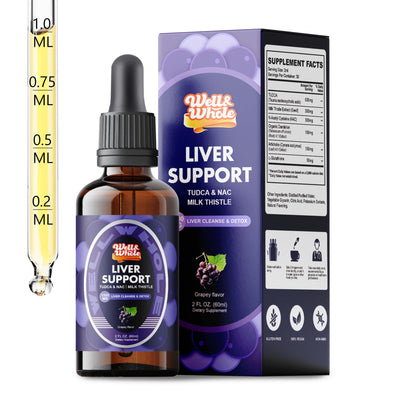
Where to begin? Our Liver Support Liquid Drops Supplement | TUDCA Drops Liver Cleanse & Detox with Milk Thistle, NAC, Dandelion, Artichoke & Glutathione for Detox and TUDCA 1000mg Gummies with Milk Thistle 500mg for Adults are a sensible place to start, and the Liver Support collection lays out the other formats side by side with Milk Thistle.
These statements have not been evaluated by the Food and Drug Administration. This product is not intended to diagnose, treat, cure, or prevent any disease.