Aescin Mechanism: How Horse Chestnut Extract Strengthens Vein Walls and Reduces Swelling
Scientific deep-dive into aescin's molecular mechanism for venous health. How horse chestnut extract strengthens vein walls, reduces capillary permeability, and supports circulation through multiple biochemical pathways.

Aescin—the principal bioactive saponin in horse chestnut (Aesculus hippocastanum) seed extract—operates through a multi-target pharmacological mechanism that addresses venous insufficiency at its core pathophysiological features: increased capillary permeability, reduced venous tone, and valve incompetence. Unlike many botanical supplements with modestly characterized mechanisms, aescin's molecular pharmacology is well-documented, providing a scientific foundation for its established clinical use in chronic venous insufficiency (CVI).
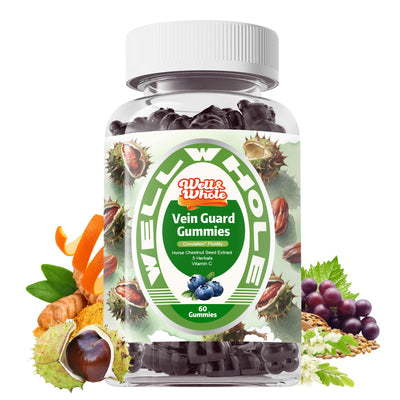
well&whole's Horse Chestnut Extract Gummies deliver standardized aescin in a convenient format for circulation support. This article examines the biochemical mechanisms by which aescin strengthens vein walls, reduces capillary filtration, and supports lower-extremity circulatory health.

---
Pharmacognosy: Aescin Structure and Standardization
Horse chestnut seed extract is standardized to contain 16-21% triterpene saponins collectively referred to as aescin. Aescin is not a single compound but a mixture of closely related saponins:
β-Aescin: The major bioactive component, consisting of protoaescigenin and barringtogenol C aglycones esterified with acetic acid, angelic acid, and tiglic acid at specific positions, with glucuronic acid and glucose sugar moieties.
α-Aescin: The less active form, differing in the esterification pattern of the aglycone. Good manufacturing processes minimize α-aescin content by controlling extraction conditions (pH, temperature) to favor the more stable and bioactive β-aescin.
The critical structural feature for aescin's venous activity is the amphiphilic character of the molecule—a hydrophobic triterpene core with hydrophilic sugar residues—enabling aescin to interact with lipid membranes and proteins at the endothelial cell surface.
---
Primary Mechanism 1: Reduction of Capillary Permeability
The dominant mechanism of aescin's anti-edema effect is the reduction of pathologically increased capillary permeability—the "leakiness" of small blood vessels that allows fluid to escape into surrounding tissues, causing swelling (edema).
Molecular Target: Endothelial Cell-Cell Junctions
Capillary permeability is regulated by the integrity of endothelial cell junctions—protein complexes that seal adjacent endothelial cells. In chronic venous insufficiency, elevated venous pressure and inflammatory mediators disrupt these junctions, creating gaps through which fluid and small proteins leak.
Aescin restores junction integrity through a "sealing" effect on the capillary endothelium:
Reduction of Hypoxia-Induced Permeability:
Venous hypertension reduces capillary blood flow, creating local tissue hypoxia. Hypoxia destabilizes endothelial junctions through HIF-1α-mediated pathways. Arnould et al. (1996) demonstrated in the European Journal of Pharmacology that aescin (1 μg/mL) reduced hypoxia-induced endothelial permeability by approximately 40% in human umbilical vein endothelial cell (HUVEC) monolayers, an effect associated with preservation of VE-cadherin junctional protein expression.
Calcium-Dependent Mechanism:
Aescin modulates intracellular calcium ([Ca²⁺]i) in endothelial cells. A 2000 study by Sirtori in Pharmacological Research demonstrated that aescin reduces agonist-induced [Ca²⁺]i elevation in endothelial cells, which in turn reduces calcium-dependent myosin light chain kinase (MLCK) activation. MLCK phosphorylates myosin light chains, causing endothelial cell contraction and junctional gap formation. By attenuating this pathway, aescin prevents the endothelial contraction that creates permeability gaps.
Clinical Translation
Reduced capillary permeability means less fluid extravasation from capillaries into the interstitial space—the fundamental mechanism underlying aescin's anti-edema effect. In clinical terms: less ankle swelling, reduced leg volume, and decreased sensation of heaviness and tension in affected limbs.
---
Primary Mechanism 2: Enhancement of Venous Tone (Venotonic Effect)
Aescin increases venous smooth muscle tone through mechanisms that improve venous contractility and reduce venous distensibility:
Prostaglandin F2α (PGF2α) Sensitization:
Aescin enhances the sensitivity of venous smooth muscle to endogenous vasoconstrictor prostaglandins, particularly PGF2α. Longiave et al. (1978) demonstrated that aescin pre-treatment of isolated human saphenous vein segments increased the contractile response to PGF2α by 2-3 fold, an effect blocked by prostaglandin synthesis inhibitors.
Norepinephrine Potentiation:
Aescin may also potentiate the venoconstrictor effects of norepinephrine released from sympathetic nerve terminals in the vein wall. This mechanism is less well-characterized than the PGF2α effect but contributes to the overall venotonic profile.
Clinical Significance:
Improved venous tone reduces venous diameter and increases the velocity of venous blood return against gravity. This counteracts the venous pooling and stasis that characterize chronic venous insufficiency and contributes to the subjective improvement in "heavy legs" reported by patients.
---
Secondary Mechanism 3: Anti-Inflammatory and Antioxidant Effects
Chronic venous insufficiency involves a significant inflammatory component. Elevated venous pressure activates endothelial cells, upregulating adhesion molecule expression (ICAM-1, VCAM-1) and promoting leukocyte adhesion and migration—a process termed "leukocyte trapping" that contributes to venous wall damage and valve degeneration.
Aescin exhibits anti-inflammatory effects through multiple pathways:
NF-κB Pathway Inhibition:
A 2010 study by Montopoli et al. demonstrated that aescin inhibits NF-κB nuclear translocation in TNF-α-stimulated endothelial cells, reducing the expression of pro-inflammatory cytokines (IL-6, IL-8) and adhesion molecules. This anti-inflammatory activity complements aescin's physical effects on permeability and venous tone.
Antioxidant Activity:
Aescin scavenges reactive oxygen species (ROS) and upregulates endogenous antioxidant enzymes (superoxide dismutase, glutathione peroxidase). Since ROS contribute to endothelial dysfunction and junction disruption in venous disease, this antioxidant activity provides additional capillary protection.
---
Mechanism 4: Effects on Venous Valve Function
While less studied than aescin's effects on the capillary and vein wall, there is mechanistic plausibility for aescin supporting venous valve function:
Reduction of Venous Wall Inflammation:
Valve incompetence in CVI is driven partly by inflammatory destruction of valve leaflets. By reducing venous wall inflammation (NF-κB inhibition), aescin may slow the progression of valve degeneration, though this effect has not been directly demonstrated in valve-specific studies.
Reduced Venous Diameter:
Improved venous tone (mechanism 2) reduces venous diameter. Reduced diameter improves valve leaflet coaptation (closure), potentially improving valve competence in veins with mild to moderate dilation. This is an indirect, mechanical benefit rather than a direct valve repair mechanism.
---
Comparison: Aescin vs. Other Venoactive Compounds
| Compound/Extract | Primary Mechanism | Secondary Mechanism | Clinical Use | Evidence Level |
| Aescin (Horse Chestnut) | Capillary sealing (reduced permeability) | Venous tone, anti-inflammatory | CVI, edema, heavy legs | Strong (17 RCTs) |
| Diosmin/Hesperidin (Micronized Purified Flavonoid Fraction) | Reduced leukocyte adhesion | Improved lymphatic drainage | CVI, hemorrhoids | Strong (multiple RCTs) |
| Rutosides (Oxerutins) | Reduced capillary permeability | Antioxidant | CVI, edema | Moderate |
| Butcher's Broom (Ruscogenin) | Venous tone (α-adrenergic) | Anti-inflammatory | CVI, hemorrhoids | Moderate |
| Grape Seed Extract (Proanthocyanidins) | Collagen stabilization | Antioxidant | CVI, edema | Moderate |
| Gotu Kola (Asiaticoside) | Collagen synthesis stimulation | Microcirculation | Wound healing, CVI | Limited |
---
Pharmacokinetics: How Aescin Reaches Venous Tissue
Understanding aescin's pharmacokinetics explains both its efficacy and its safety profile:
Absorption:
Aescin is absorbed in the small intestine, with bioavailability of approximately 12-25%. Absorption is enhanced when aescin is formulated with saponin-solubilizing agents—the gummy matrix in Horse Chestnut Extract Gummies may provide a mild absorption advantage over dry powder capsules.
Distribution:
Aescin binds strongly to plasma proteins (>90%), which limits its volume of distribution but also provides a sustained-release effect, as protein-bound aescin is in equilibrium with free, active aescin.
Metabolism and Excretion:
Aescin is metabolized in the liver by esterases that remove the tiglic/angelic acid esters, followed by glucuronidation. The metabolites are excreted primarily in bile (60-70%) and urine (30-40%). The elimination half-life is approximately 10-19 hours, supporting once or twice-daily dosing.
Tissue Distribution:
Animal studies suggest aescin distributes preferentially to tissues with high saponin-binding capacity, including vascular endothelial cells and the subcutaneous tissue where venous edema accumulates. The concentration in leg tissue is approximately 3-5 times higher than in plasma at steady state, consistent with aescin's clinical efficacy in lower-extremity venous conditions.
---
Summary Table: Aescin Mechanism Overview
| Mechanism | Molecular Target | Physiological Effect | Clinical Benefit |
| Capillary sealing | Endothelial junction proteins (VE-cadherin), [Ca²⁺]i modulation | Reduced capillary permeability, less fluid extravasation | Reduced edema, ankle swelling |
| Venous tone enhancement | PGF2α sensitization, norepinephrine potentiation | Increased venous smooth muscle contraction | Reduced venous diameter, improved blood return |
| Anti-inflammatory | NF-κB inhibition, reduced cytokine expression | Reduced endothelial activation, leukocyte adhesion | Slowed disease progression |
| Antioxidant | ROS scavenging, antioxidant enzyme upregulation | Reduced oxidative endothelial damage | Capillary protection |
| Valve support (indirect) | Reduced venous diameter + inflammation reduction | Improved valve leaflet coaptation | Potential valve competence improvement |
---
Frequently Asked Questions
Q1: How is aescin different from other circulation supplements like diosmin or butcher's broom?
A: Aescin's primary mechanism is capillary sealing (reducing the leakiness of small blood vessels), which directly addresses the edema (swelling) that patients find most bothersome. Diosmin primarily reduces leukocyte adhesion and inflammation. Butcher's broom primarily increases venous tone. Aescin's multi-target profile (capillary sealing + venous tone + anti-inflammatory) makes it a comprehensive single-ingredient approach to venous support.
Q2: Does aescin affect arteries or only veins?
A: Aescin is relatively selective for the venous system, with limited effects on arterial tone or blood pressure. Studies using isolated human vessels demonstrate significantly greater effects on saphenous vein segments than on mesenteric arteries. This selectivity is advantageous—systemic arterial vasodilation could cause unwanted hypotension, which aescin does not produce.
Q3: How does the standardization of horse chestnut extract (to aescin content) ensure consistent effects?
A: Horse chestnut seed contains variable levels of aescin depending on growing conditions, harvest time, and processing. Standardization to a specified aescin content (typically 16-21%, expressed as aescin) ensures that each dose delivers a consistent amount of the bioactive compound. Without standardization, the clinical effect of unstandardized horse chestnut preparations is unpredictable.
Q4: Can aescin repair already damaged vein valves?
A: No. Aescin cannot reverse structural damage to vein valves—it does not regenerate tissue. What it can do is reduce edema, improve venous tone, and reduce inflammation, which addresses the SYMPTOMS and potentially slows the PROGRESSION of venous disease, but it does not cure the underlying valve incompetence. This is a critical distinction for managing expectations.
Q5: Why does aescin take days to weeks to produce noticeable effects on leg swelling?
A: The capillary sealing effect occurs rapidly (hours after achieving therapeutic concentrations), but the clinical effect on edema accumulates over time because (a) existing interstitial fluid must be reabsorbed through improved lymphatic drainage (a slow process), and (b) sustained reduction in capillary permeability is required to prevent re-accumulation of fluid. The acute pharmacological effect and the clinical benefit are on different timescales.
Q6: Does aescin affect blood clotting or interact with anticoagulants?
A: Aescin has mild antiplatelet effects in vitro, but clinical studies have not demonstrated significant effects on coagulation parameters (PT, aPTT, platelet aggregation) at standard doses. Aescin-containing horse chestnut products are generally considered safe with low-dose aspirin. However, combining aescin with warfarin or other anticoagulants should be discussed with a healthcare provider, and INR monitoring is prudent.
Q7: Can aescin help with varicose veins, or is it only for swelling?
A: Aescin primarily addresses the edema and discomfort associated with varicose veins, not the visible vein dilation itself. It may help with the heavy, tired, aching sensation in legs with varicosities. It does not make visible varicose veins disappear. For the dilated vein structure itself, compression stockings, sclerotherapy, and surgical interventions are the proven approaches.
Q8: How does the gummy format affect aescin absorption compared to tablets or capsules?
A: The gummy matrix provides aescin in a pre-dissolved or easily dispersible form, which may modestly improve absorption compared to compressed tablets that must first disintegrate. However, no comparative bioavailability studies have been conducted specifically for horse chestnut gummies vs. tablets. The primary advantage of the gummy format is compliance (palatability and convenience), not a significant improvement in aescin pharmacokinetics.
---
Conclusion: A Well-Characterized Venous Support Mechanism
Aescin's mechanism of action in supporting vein wall integrity is among the more thoroughly characterized of any botanical supplement. The capillary sealing effect—reducing endothelial permeability through junction protein stabilization and calcium-dependent pathways—directly addresses the edema that is the primary symptomatic complaint in chronic venous insufficiency. The complementary effects on venous tone, inflammation, and oxidative stress create a comprehensive pharmacological profile that aligns with the multi-factorial pathophysiology of venous disease.
well&whole's Horse Chestnut Extract Gummies deliver standardized aescin in a format that supports consistent daily use—the most important variable in achieving the sustained anti-edema and venotonic effects that the clinical evidence supports.
Related supplements
Where to begin? Our well&whole Horse Chestnut Extract Gummies, Circulation Supplements for Legs and Cayenne Pepper Heart Health Gummies with Hawthorn & CoQ10 & Turmeric are a sensible place to start, and the Heart Health collection lays out the other formats side by side with CoQ10.
These statements have not been evaluated by the Food and Drug Administration. This product is not intended to diagnose, treat, cure, or prevent any disease.