Adaptogenic Herbs Guide: Ashwagandha, Rhodiola, Holy Basil, Eleuthero, and Schisandra
Adaptogens help your body handle stress more effectively. This comprehensive guide covers ashwagandha, rhodiola, holy basil, eleuthero, and schisandra — with evidence, dosing, and best uses.

The concept of an "adaptogen" was formalized in the mid-20th century by Soviet scientist Dr. Nikolai Lazarev, who defined it as a substance that increases the body's non-specific resistance to adverse physical, chemical, or biological stressors. In practical terms, adaptogenic herbs help your body maintain physiological balance under stress — not by blocking the stress response, but by modulating it more intelligently.
While adaptogens have been used in traditional medicine systems (Ayurveda, Traditional Chinese Medicine) for millennia, modern research has begun to characterize their mechanisms: modulation of the hypothalamic-pituitary-adrenal (HPA) axis, support for neurotransmitter balance, enhancement of cellular energy metabolism, and regulation of stress-induced immune changes.
This guide covers five of the most well-researched adaptogenic herbs — what they do, what the evidence says, how to dose them, and which one best matches your specific stress profile.
What Makes an Herb "Adaptogenic"?
The original definition of an adaptogen requires three characteristics:
1. **Non-specific**: Increases resistance to a broad range of stressors — physical, chemical, and biological
2. **Normalizing**: Brings physiological function back toward normal regardless of the direction of deviation (i.e., it can be calming or stimulating as needed)
3. **Non-toxic**: Does not disturb normal physiological function beyond what is necessary to address the stressor
The term "adaptogen" is sometimes used loosely in marketing, but the herbs discussed in this guide have evidence meeting the core criteria of enhancing stress resilience without overstimulation or suppression.
The Science of Stress and Adaptogens
The body's stress response is governed by the HPA axis:
· **Hypothalamus** releases CRH (corticotropin-releasing hormone)
· **Pituitary** releases ACTH (adrenocorticotropic hormone)
· **Adrenal cortex** releases **cortisol**, the primary stress hormone
Adaptogens modulate this axis at multiple levels, and different adaptogens appear to have different sites of action within this system. The result is not "blocking" cortisol (which would be counterproductive — cortisol is essential) but regulating its production and the body's sensitivity to it.
1. Ashwagandha (Withania somnifera)
Overview
Ashwagandha is arguably the most well-researched adaptogen, with a growing body of clinical trials supporting its use for stress, anxiety, sleep, and physical performance. Native to India and a cornerstone of Ayurvedic medicine, ashwagandha is classified as a rasayana — a rejuvenative tonic.
Mechanism
Ashwagandha's active compounds — withanolides — appear to modulate the HPA axis, reduce cortisol, and support GABA-ergic neurotransmission. Research also suggests withanolides have neuroprotective and anti-inflammatory properties.
Clinical Evidence
Cortisol Reduction: A 2012 randomized controlled trial in the *Indian Journal of Psychological Medicine* gave 300 mg of standardized ashwagandha root extract (KSM-66) twice daily to 64 adults with chronic stress. After 60 days:
· Serum cortisol levels decreased by 27.9% compared to placebo (7.9%)
· Significant reductions in all stress assessment scale scores
A 2019 double-blind RCT in *Medicine* replicated these findings, with 240 mg of standardized ashwagandha extract reducing morning cortisol by approximately 23%.
Anxiety: A 2019 systematic review in *Cureus* of 5 human trials found ashwagandha consistently reduced anxiety scores on validated scales (HAM-A, DASS), with effect sizes comparable to some anxiolytic medications but with a superior side effect profile.
Sleep: A 2020 study in *Sleep Medicine* found that ashwagandha root extract improved sleep quality and reduced sleep onset latency, effects likely mediated by the cortisol reduction and GABA-ergic activity.
Physical Performance: A 2015 study in the *Journal of the International Society of Sports Nutrition* found that ashwagandha supplementation (300 mg twice daily for 8 weeks) increased muscle strength (bench press and leg extension) and reduced exercise-induced muscle damage compared to placebo.
Best For
Chronic stress, anxiety, sleep disruption, cortisol dysregulation, and exercise recovery.
Dosing
2. Rhodiola Rosea (Golden Root)
Overview
Rhodiola rosea is an adaptogen with a different stress profile than ashwagandha — it is more stimulating and is traditionally used for physical and mental fatigue rather than anxiety reduction. It grows in high-altitude, cold regions of Europe, Asia, and North America.
Mechanism
Rhodiola's primary active compounds — rosavins and salidroside — influence monoamine neurotransmitters (serotonin, dopamine, norepinephrine) and support cellular energy metabolism through ATP synthesis enhancement. Unlike ashwagandha, which is relaxing, rhodiola has a mildly stimulating effect.
Clinical Evidence
Fatigue and Burnout: A 2009 randomized controlled trial in *Planta Medica* studied 60 adults with stress-related fatigue. Those taking 576 mg of standardized rhodiola extract daily for 28 days showed significant improvements in fatigue scores, concentration, and overall well-being compared to placebo.
Mental Performance: A 2012 study in *Phytomedicine* found that rhodiola improved mental fatigue and cognitive performance (particularly complex tasks) under stressful conditions in young physicians on night duty — a real-world stress test.
Physical Endurance: A 2004 crossover study in the *International Journal of Sport Nutrition and Exercise Metabolism* found that acute rhodiola supplementation (200 mg, one hour before exercise) improved time to exhaustion by approximately 3% — a modest but meaningful effect at competitive levels.
Mild-to-Moderate Depression: A 2015 randomized trial in *Phytomedicine* compared rhodiola to sertraline (Zoloft) for mild-to-moderate depression. Rhodiola was slightly less effective for depressive symptoms but had significantly fewer side effects — 63% of sertraline patients reported adverse effects vs. 30% for rhodiola.
Best For
Physical fatigue, mental burnout, cognitive performance under stress, and mild depression (particularly with fatigue).
Dosing
3. Holy Basil (Ocimum sanctum / Tulsi)
Overview
Holy basil (Tulsi) is a sacred plant in Ayurveda, used for millennia as a general tonic for mind, body, and spirit. It occupies a unique position among adaptogens — less potent for any single outcome than ashwagandha or rhodiola, but with broader effects spanning stress, cognition, metabolism, and immune function.
Mechanism
Holy basil contains eugenol, ursolic acid, and rosmarinic acid — compounds with documented anti-inflammatory, anti-anxiety, and blood-sugar-regulating properties. Holy basil modulates the HPA axis and may reduce cortisol, though human cortisol reduction data is less robust than for ashwagandha.
Clinical Evidence
Stress and Anxiety: A 2017 randomized trial in the *Journal of Ayurveda and Integrative Medicine* found that 1,200 mg of holy basil extract daily reduced stress scores by approximately 39% over 6 weeks, comparable to standard-of-care outcomes for mild stress.
Blood Sugar: Several small human studies have found holy basil reduces fasting and postprandial blood glucose, likely through improved insulin secretion and sensitivity — a metabolic effect that distinguishes holy basil from other adaptogens.
Cognitive Effects: Evidence is more preliminary, but a 2014 study found holy basil improved cognitive function (reaction time, error rate) in healthy adults, suggesting nootropic potential.
Best For
Mild, generalized stress and anxiety; metabolic health (blood sugar support); individuals who want a broad tonic effect rather than a targeted outcome.
Dosing
4. Eleuthero (Eleutherococcus senticosus, Siberian Ginseng)
Overview
Despite the common name "Siberian ginseng," eleuthero is not a true ginseng (Panax species) — it is a distinct adaptogen with its own phytochemical profile, centered on eleutherosides. Eleuthero was heavily studied in Soviet-era research programs exploring performance enhancement for athletes, soldiers, and cosmonauts.
Mechanism
Eleuthero's effects are thought to involve modulation of stress-induced immune changes and support for cellular energy production. Unlike Panax ginseng (which is stimulating), eleuthero is more balanced — neither strongly stimulating nor sedating.
Clinical Evidence
Immune Function under Stress: Several older studies (primarily from the Soviet research tradition) suggest eleuthero reduces infection frequency during periods of intense physical or mental stress. The evidence quality is variable by modern standards, but the consistent theme across studies supports immune resilience.
Physical Endurance: Soviet-era studies claimed eleuthero improved endurance, but modern replication has been mixed. A 2010 systematic review concluded that the evidence for ergogenic effects is insufficient to make strong claims.
Mental Performance: The most consistent finding for eleuthero is improved mental performance under conditions of fatigue and stress — though the effect size is smaller than rhodiola's.
Best For
Immune support during stress; those seeking a mild, balanced adaptogen without over-stimulation or sedation; adjunctive use with other adaptogens.
Dosing
5. Schisandra (Schisandra chinensis)
Overview
Schisandra is a Chinese medicinal berry with a characteristic taste profile — it encompasses all five flavors (sour, bitter, sweet, pungent, salty), which in Traditional Chinese Medicine indicates broad therapeutic potential. Modern research has focused on its liver-protective, cognitive, and adaptogenic properties.
Mechanism
Schisandra's primary active compounds — schisandrins and gomisins — have demonstrated hepatoprotective effects through glutathione enhancement and anti-inflammatory pathways. Its adaptogenic effects appear to involve HPA axis modulation and support for adrenal function.
Clinical Evidence
Liver Protection: A 2019 study in *Frontiers in Pharmacology* found that schisandra lignans reduced liver enzyme elevations and supported liver function, consistent with its traditional use as a liver tonic.
Stress and Cortisol: The human evidence for schisandra's effects on cortisol and stress is less robust than ashwagandha's. Animal studies are compelling, but human trials are fewer and smaller.
Cognitive Function: Small studies suggest schisandra may improve concentration and mental performance under fatigue, though the evidence base is more limited than rhodiola or ashwagandha.
Best For
Liver health (primary evidence); stress support (secondary evidence, often used in combination formulas); those who do not tolerate more potent adaptogens well.
Dosing
Adaptogen Comparison Table
Choosing the Right Adaptogen for Your Stress Profile
FAQ
Q1: Can I take multiple adaptogens together?
Yes, adaptogens are commonly combined and have complementary mechanisms. A common approach is ashwagandha (evening relaxation) with rhodiola (morning energy). However, starting with a single adaptogen for 3–4 weeks before adding another allows you to assess individual response.
Q2: How long do adaptogens take to work?
Unlike stimulants or sedatives, adaptogens do not produce immediate effects. Benefits accumulate over 2–4 weeks of consistent use. This gradual, cumulative effect is part of their adaptive mechanism — the body's response to stress is recalibrated over time, not overridden immediately.
Q3: Can I build tolerance to adaptogens?
True pharmacological tolerance has not been demonstrated for the major adaptogens. Some practitioners recommend cycling (e.g., 6 weeks on, 1–2 weeks off) as a general principle, but this is based on traditional practice rather than clinical evidence of tolerance.
Q4: Are adaptogens safe during pregnancy?
Adaptogens vary significantly in their pregnancy safety profiles. Ashwagandha should be avoided (potential uterine stimulation). Most adaptogens lack adequate pregnancy safety data. Pregnant or breastfeeding women should consult their healthcare provider before using any adaptogen.
Q5: Do adaptogens interact with medications?
Yes. Ashwagandha may potentiate thyroid hormone and interact with immunosuppressants. Rhodiola may interact with antidepressants through serotonergic and noradrenergic mechanisms. Holy basil may lower blood sugar and interact with diabetes medications. Always inform your healthcare provider of all supplements.
Q6: What form of ashwagandha is best — KSM-66 or Sensoril?
KSM-66 is a root-only extract, standardized to 5% withanolides, and is the most extensively studied form. Sensoril uses both root and leaves, is standardized to 10% withanolides, and is concentrated to require lower doses. Both have positive clinical trials. KSM-66 has more research overall; Sensoril may be slightly more calming (due to the leaf component). Both are high-quality options.
Q7: Can adaptogens help with adrenal fatigue?
"Adrenal fatigue" is not a medically recognized diagnosis. The underlying phenomenon — HPA axis dysregulation with inappropriate cortisol patterns — is real, and adaptogens that modulate the HPA axis (particularly ashwagandha and rhodiola) may help normalize cortisol rhythms. Approach adaptogens as HPA axis regulators, not "adrenal gland stimulants."
Q8: Can I take adaptogens with caffeine?
Adaptogens and caffeine are commonly combined — rhodiola with coffee, for example — and there are no known adverse interactions. Ashwagandha might blunt some of caffeine's jitteriness. The combined use is generally safe, though individual cardiovascular sensitivity should be considered.
Conclusion
Adaptogens occupy a unique niche in the supplement world — they are neither stimulants nor sedatives, but modulators that help your physiology navigate stress more effectively. The clinical evidence varies by herb and by outcome, but the strongest data supports ashwagandha for cortisol-related stress and anxiety, and rhodiola for fatigue and burnout.
The key to successful adaptogen use is matching the herb to your specific stress pattern (anxious/tired/burned-out/mixed) and allowing sufficient time — 3 to 4 weeks — for the adaptive effects to develop. These are not quick fixes; they are tools for recalibrating your stress response system over time.
At well&whole, we take adaptogens seriously — not as marketing buzzwords, but as evidence-backed botanical tools for the stress we all face. Explore our Adaptogen Collection for products formulated around the adaptogens that match your stress profile.
Related supplements
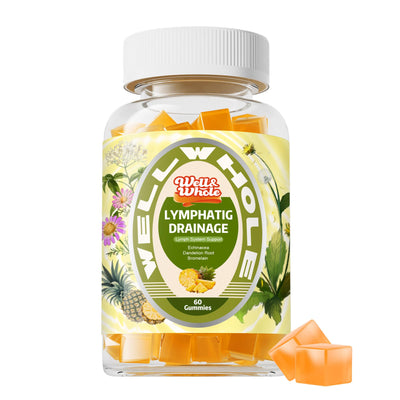
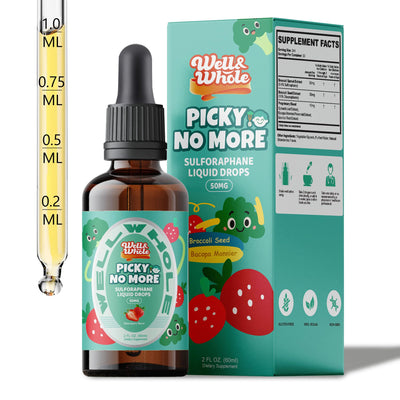
Putting it simply: if this is something you want to add to your routine, our Lymphatic Drainage Supplements Gummies with Echinacea Dandelion Burdock for Adults with Immune and Energy Support and Sulforaphane Broccoli Supplement Liquid Drops for Kids with Sulforaphane, Glucoraphanin, Bacopa Monnieri are a good place to start. The wider Immune Support collection is worth a look, and the Health Benefits range covers related formats.
These statements have not been evaluated by the Food and Drug Administration. This product is not intended to diagnose, treat, cure, or prevent any disease.