L-Lysine: What It Does and Who Actually Needs It

L-lysine is an essential amino acid your body cannot make on its own, so you must get it from food or supplements. It is a building block for protein, collagen and immune function. Most people eating enough protein get enough, but a few groups — and one specific use, cold-sore support — are where supplementation is most often discussed.
L-lysine is an essential amino acid required for protein synthesis, collagen formation and normal immune function. Dietary protein usually covers needs, but targeted supplementation is studied for cold-sore frequency and for people with low intake.
Putting lysine in the context of your whole diet
A supplement is easiest to judge once you know your baseline. If meat, fish, eggs or dairy appear daily, your lysine intake is almost certainly adequate, and a supplement would mostly cover a specific goal like cold-sore management. If you eat little animal protein, lysine is worth a deliberate look, either through lysine-rich plants like tofu, lentils and quinoa or through a supplement. The point is to close a real gap, not to add to an already sufficient intake.
What L-lysine is
Amino acids are the letters of the protein alphabet. Nine are "essential," meaning the body cannot synthesize them; lysine is one. It is used wherever the body builds or repairs tissue — muscle, skin, connective tissue, enzymes and immune cells all depend on a steady supply.
Why it is essential
Unlike fat-soluble vitamins that store, amino acids turn over constantly. Lysine specifically contributes to collagen (skin, joints, blood vessels), to calcium absorption, and to the production of carnitine, which the body uses to turn fat into energy. A shortfall shows up as slowed repair and, in severe cases, fatigue and poor concentration.
The cold-sore connection
This is the best-known supplemental use. The herpes simplex virus that causes cold sores needs arginine, another amino acid, to replicate. Lysine competes with arginine for absorption and storage, so higher lysine intake can tilt the balance away from viral activity. Several trials suggest daily lysine reduces cold-sore frequency and healing time for some people, though results are mixed and dose-dependent.
Food sources vs supplements
Lysine is abundant in animal protein — meat, fish, eggs, dairy — and present in smaller amounts in legumes. Vegans and people on very low-protein diets are the most likely to fall short. For them, a supplement or lysine-rich foods (tofu, lentils, quinoa) close the gap more reliably than hoping.
Who may actually need more
- People on low-protein or plant-only diets without deliberate lysine sources.
- Those with frequent cold sores who want to test the lysine-arginine approach.
- Athletes in heavy training with elevated tissue-repair demand.
- Older adults with lower overall protein intake.
What the evidence does and does not say
Lysine's role in protein and collagen is settled biochemistry. The cold-sore benefit is plausible and supported by several human studies, but not universal — some people respond, some do not, and diet (limiting arginine-rich nuts and chocolate during outbreaks) often matters alongside the supplement.
Dosage and common forms
Lysine supplements typically range from 500 mg to 1000 mg per serving. For cold-sore use, studies often use around 1000 mg daily, sometimes higher during an outbreak. Gummies, capsules and powders all deliver the same amino acid; the form matters mainly for convenience and tolerance, not for the core effect.
Cautions and balance
Very high lysine intake can shift the arginine balance, so extreme doses are not automatically better. Staying within labeled ranges and keeping overall protein adequate keeps the amino-acid profile in healthy proportion rather than tipping it the other way.
Key takeaways
- L-lysine is essential; the body cannot make it.
- It supports protein, collagen, calcium use and immune function.
- Most people eating enough protein get enough.
- Cold-sore support is the best-studied supplemental use.
- Low-protein and plant-only diets are the main shortfall risks.
What to try this week
If cold sores are your concern, try lysine daily for a couple of months and note outbreak frequency, while also easing arginine-rich foods during an active outbreak. If you already eat meat or eggs daily, skip the supplement for basics and reserve it for the specific goal. Either way, keep total protein adequate so amino acids stay in balance.
Frequently asked questions
Can L-lysine prevent cold sores completely?
It does not guarantee prevention, but regular use reduces frequency and duration for many people by limiting the arginine the virus needs. Pairing it with lower arginine intake during outbreaks works better than the supplement alone.
Do I need it if I eat meat and eggs?
Probably not for basic needs — animal protein is lysine-rich. Supplementation would only be relevant for a specific goal like cold-sore management.
Is too much lysine harmful?
At typical supplemental doses it is generally well tolerated. Very high long-term intake has been studied for potential effects on arginine balance and, in excess, digestive upset. Stick to labeled doses.
How long before cold-sore benefits appear?
People who respond usually take it daily for consistency rather than only at outbreak, judging effect over a couple of months of recurrent episodes.
Related supplements
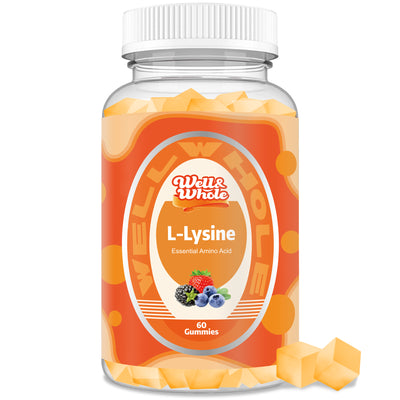
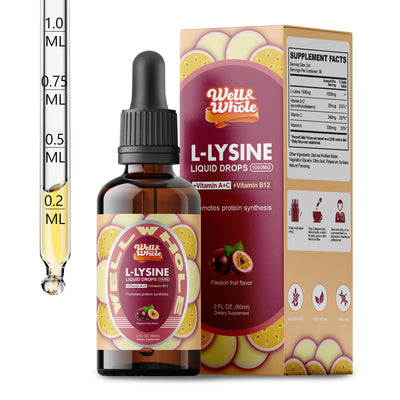
Putting it simply: if this is something you want to add to your routine, our L-Lysine 1000mg Essential Amino Acid Supplement Gummies for Kids and Adults and L-Lysine Supplement Liquid Drops 1000mg are a good place to start. The wider L-lysine collection is worth a look, and the Amino Acids range covers related formats.
These statements have not been evaluated by the Food and Drug Administration. This product is not intended to diagnose, treat, cure, or prevent any disease. Talk to a healthcare professional before starting any new supplement, especially if you are pregnant, nursing, taking medication, or managing a health condition.