L-Lysine and Arginine: The Balance Most People Miss

Lysine and arginine are both amino acids, and they share transport pathways in the body — which is why the ratio between them, not just the absolute amount of each, shapes how much of either one actually gets where it needs to go. That ratio idea is the reason lysine supplements come up in cold sore conversations at all, and it is also why the evidence is more nuanced than the marketing.
Lysine and arginine compete for the same cellular transport, and certain viruses are thought to replicate more readily in an arginine-rich environment. That is the rationale behind lysine supplementation — but human trial results are mixed, and lysine also supports collagen and tissue repair through a separate, better-established route.
Two amino acids, one doorway
Lysine is an essential amino acid, meaning your body cannot make it and you must obtain it from food or supplements. Arginine is classified as conditionally essential: adults usually synthesise enough, but demand can outpace production during growth, illness or significant physiological stress.
The interesting part is transport. Both are handled by the same cationic amino acid transporters in the gut and in cells. When one is present in much higher concentrations, it competes for that shared doorway. This is well-described basic biochemistry, and it is the foundation of the lysine-arginine balance idea.
Where the ratio idea comes from
The most common application is cold sores. In laboratory settings the herpes simplex virus appears to replicate more readily when arginine is abundant, which led to the hypothesis that raising lysine relative to arginine could make the environment less favourable.
Small human studies have looked at lysine supplementation for outbreak frequency, and the results are genuinely mixed: some report fewer or shorter outbreaks, others show no clear difference. The honest summary is that the mechanism is plausible, the human data is limited and inconsistent, and lysine is best understood as something that may help some people rather than as a reliable preventive. It is not a treatment, and it does not replace antiviral medication prescribed by a clinician.
The ratio in your diet
| Higher in lysine | Higher in arginine |
|---|---|
| Meat, poultry, fish | Nuts — especially peanuts and almonds |
| Dairy — cheese, yoghurt | Seeds — sesame, pumpkin |
| Eggs | Chocolate |
| Legumes — beans, lentils | Oats and some whole grains |
A practical reading: a diet heavy in nuts, seeds and chocolate while light on animal protein skews toward arginine. Most people do not need to count this. But if you get recurrent cold sores and your snack drawer is mostly almonds and dark chocolate, this table is worth a look before you reach for anything else.
What lysine does that is not in dispute
Separate from the viral hypothesis, lysine has well-established roles. It is required for collagen cross-linking, which matters for skin, connective tissue and wound healing. It participates in calcium absorption and in carnitine synthesis. These are the reasons lysine shows up in general wellness and skin-focused formulas, and they do not depend on the arginine ratio at all.
That matters for expectations: even if the cold sore hypothesis turns out to be weaker than hoped, lysine remains an essential nutrient with real jobs of its own.
Why the ratio is not the whole story
Two caveats keep this in proportion. First, the shared-transporter competition is real biochemistry, but the body regulates amino acid handling through several overlapping systems, and blood levels do not translate neatly into availability at the tissue level. Second, lysine is abundant in ordinary protein-rich food, so most people eating a mixed diet are not marginal in lysine to begin with.
That is why supplementation is usually discussed for specific situations — a recurrent outbreak pattern, a restricted diet, or a period of higher demand — rather than as a daily essential for everyone. If your reason is a cold sore pattern, the ratio framing is worth a two-month test. If your reason is general wellness, lysine's collagen and tissue-repair roles are the stronger argument.
Dosing and safety context
Supplement labels commonly sit in the 500 to 1000 mg per day range for adults, and studies have used a wide variety of amounts. There is no single accepted dose for any goal. Reported side effects at typical intakes are generally mild and gastrointestinal, though high intakes have been associated with digestive upset and, in older case literature, with other concerns. Long-term high-dose use is not well characterised.
If you are pregnant, nursing, managing kidney or liver disease, or taking regular medication, talk to a healthcare professional first — that applies to lysine as it does to any single amino acid taken well above dietary intake.
Key takeaways
- Lysine and arginine share cellular transport, so the balance between them matters more than either amount alone.
- The cold sore hypothesis is mechanistically plausible but human results are mixed.
- Lysine's role in collagen formation and tissue repair is better established and independent of arginine.
- Nuts, seeds and chocolate are arginine-heavy; dairy, eggs, fish and legumes favour lysine.
- Supplements are not a substitute for prescribed antiviral treatment.
Frequently asked questions
Should I avoid arginine-rich foods if I take lysine?
Most people do not need to eliminate anything. If you take lysine specifically for recurrent cold sores, reducing a very high nut, seed and chocolate intake while supplementing is a common, low-risk approach.
How much lysine per day is typical?
Adult supplements commonly provide 500 to 1000 mg daily. There is no consensus dose for cold sore frequency, and amounts used in studies vary widely — follow the label and check with a clinician.
Is lysine safe for children?
Lysine is a normal dietary amino acid, but supplementation in children should be discussed with a paediatrician, and doses should be adjusted for body size rather than simply scaled down from an adult label.
How long before I know whether it works?
Studies that found an effect generally assessed over weeks to a few months. A few days is not a fair test either way.
Related supplements
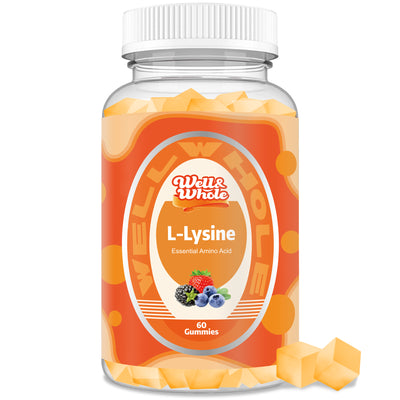
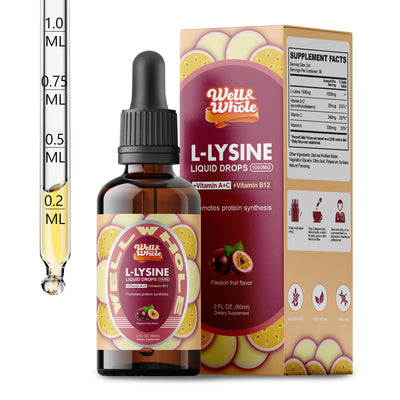
Where to begin? Our L-Lysine 1000mg Essential Amino Acid Supplement Gummies for Kids and Adults and L-Lysine Supplement Liquid Drops 1000mg are a sensible place to start, and the L-lysine collection lays out the other formats side by side with Amino Acids.
These statements have not been evaluated by the Food and Drug Administration. This product is not intended to diagnose, treat, cure, or prevent any disease. Talk to a healthcare professional before starting any new supplement, especially if you are pregnant, nursing, taking medication, or managing a health condition.